Math Flash Cards | Prime & Composite
- Grades
- Grades 3–5, Elementary
- File type
- Preparation
- Print ready


- Subject
- Math, Numbers
- Topic
- math flashcards, prime numbers
- Resource types
- Worksheets & Printables, Flashcards
- Preparation
- Print ready
About this resource
What's inside this resource
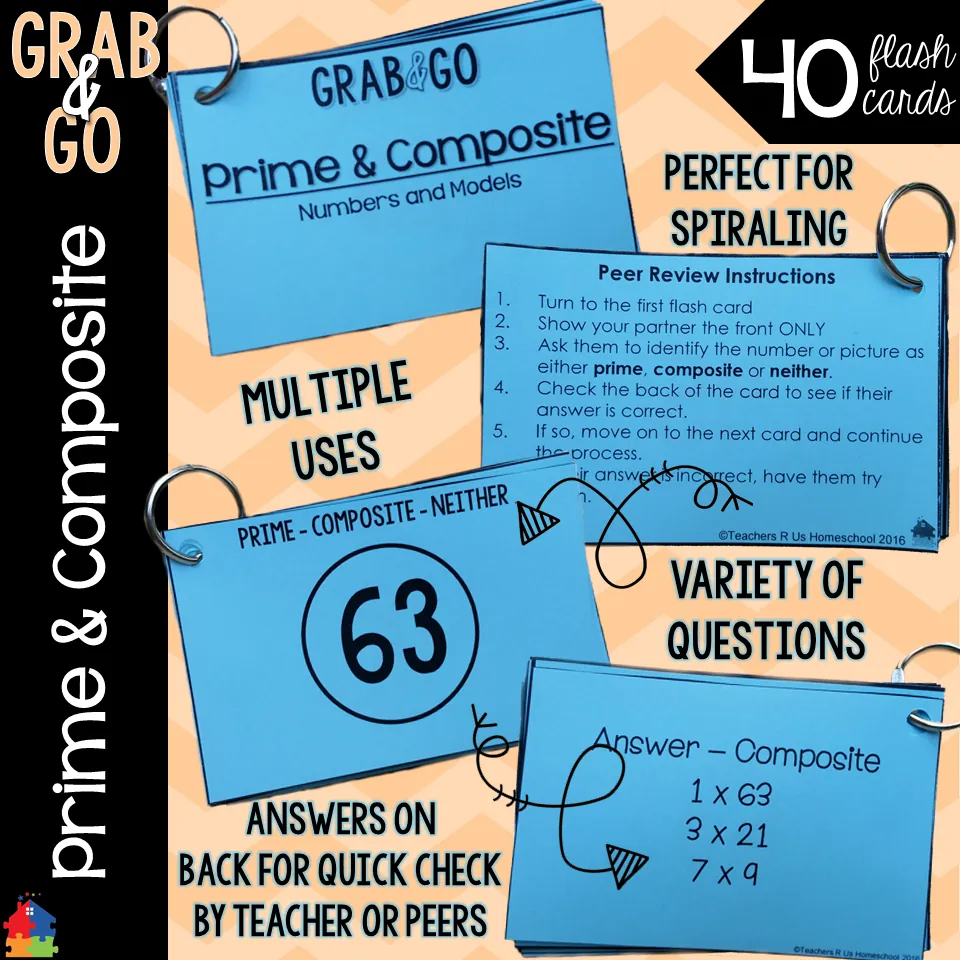
Math Flash Cards | Prime & Composite is an educational resource designed for students in grades 3 through 5. Its purpose is to help them understand the concepts of prime and composite numbers. The package encompasses a set of content-rich flashcards that facilitate effortless learning.
Suitability and Ease-of-use
- This teaching resource consists of 40 flash cards.
- Focused on prime and composite numbers, it ensures an easy grasp of complex numerical concepts.
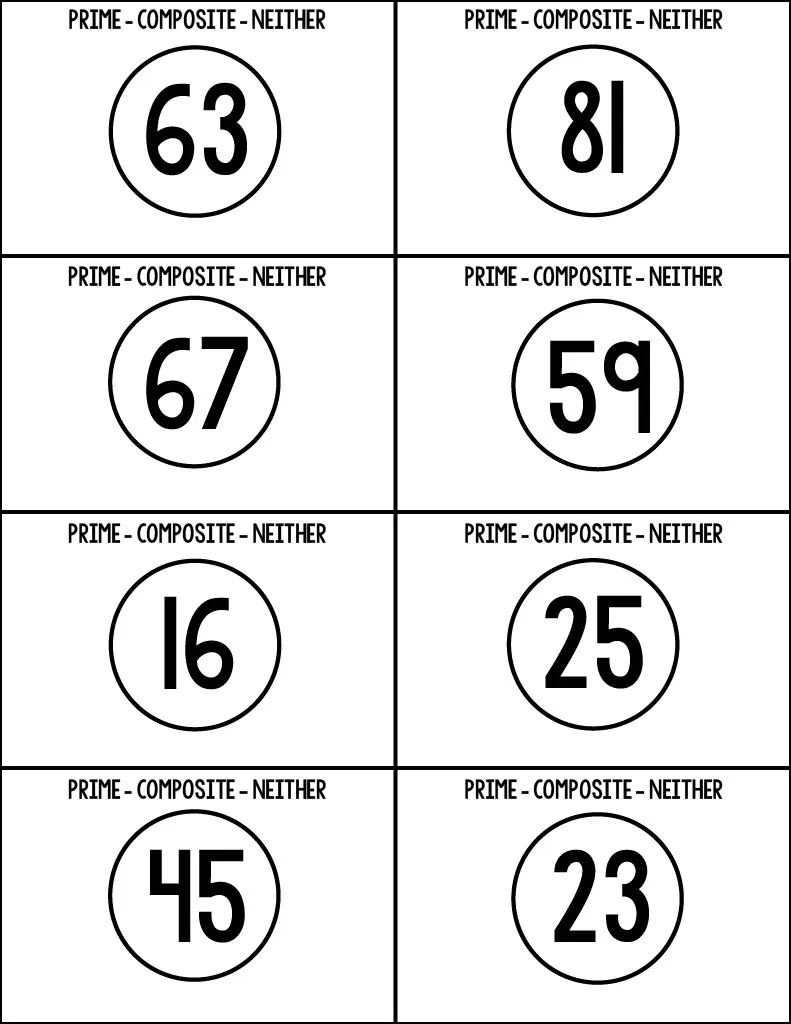
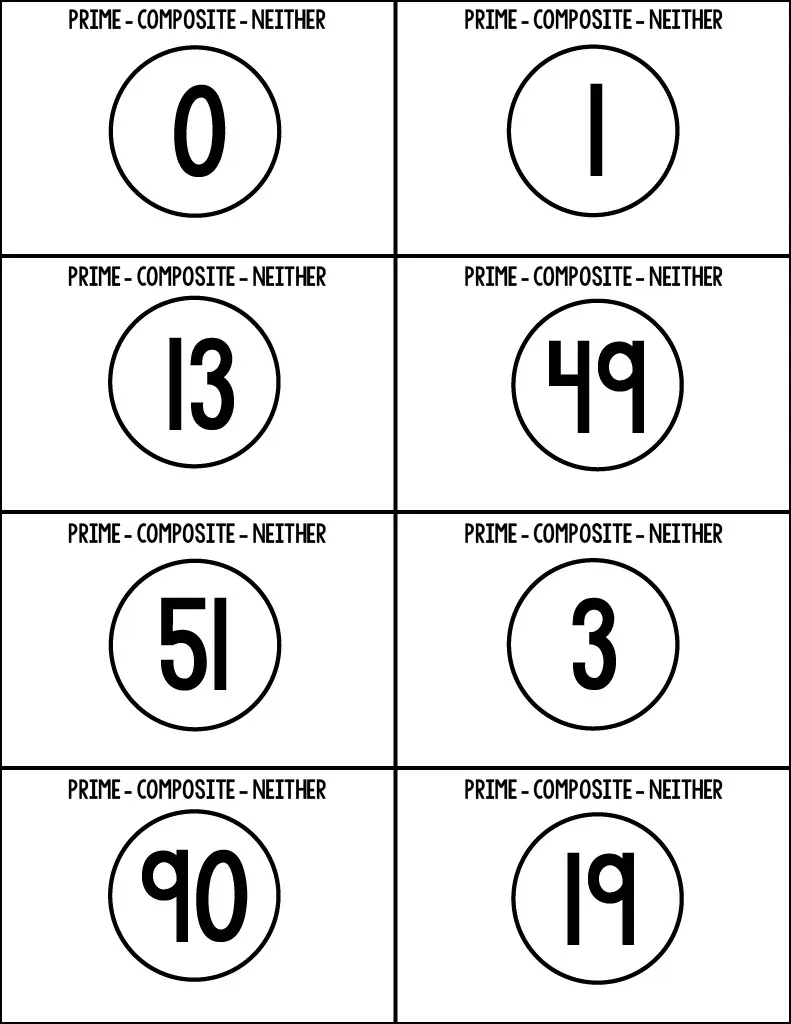
- The cards prompt students to identify if a number is prime, composite or neither - offering them an engaging path to reinforce their knowledge.
- The most prominent feature pertains to its student-friendliness that comes from each page having eight cards printed - requiring only printing on durable card stock or paper followed by punching holes for binder rings during assembly.
Versatile Use Cases
The design caters immensely well over various teaching scenarios:
- Efficacious Whole-Group Instruction Tool- By projecting every card onto a screen for all the students' visibility.
- An Instrument For Formative Assessment- In small group activities.
- A Homework Assignment Resource - Perfect for school after-hours reinforcement sessions!
Beyond Traditional Boundaries:
Echos soundly with home-school procedures or teachers extending over traditional classroom scenarios; it can be used as a dedicated math station facilitating kids' independent engagement while you assist others. The creators took great care not just about academics but also stoking learner’s enthusiasm alongside nurturing lifelong learning interests - making it an invaluable asset for each educator regardless of their teaching mode or level. You can easily download it into your teaching schedule owing to its simple downloadable link (PDF format).
Final Note:
Education should have no halt, nor should confine within walls. Math Flash Cards | Prime & Composite resonates with this philosophy and offer multi-dimensional support to educators.
Related resources
More resources teachers may find useful
24 related resources were found using this product's title, contributor, categories and tags.


In the classroom
Teaching tips & learning objectives

Learning objectives
Students will classify given whole numbers (from 0 through at least 90) as prime, composite, or neither.
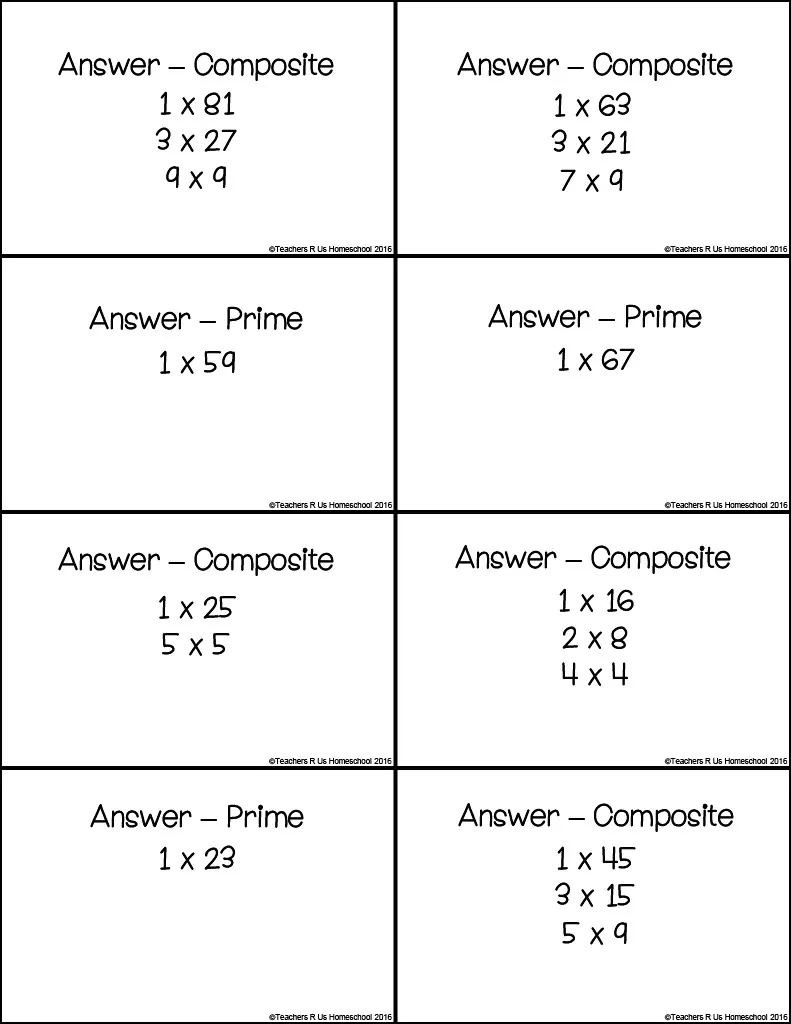
Students will identify the factor pairs of a composite number, such as 1×45, 3×15, and 5×9 for 45.
Students will explain their prime/composite/neither classification to a partner and check it against the answer on the back of the card.

Teaching tips
Print the cards front-and-back onto colored card stock with the printer set to flip on the long edge, then laminate, cut, and hole-punch them onto a binder ring, per the file's own set-up steps.
Rotate the deck through quick-use moments the guide suggests, such as a math center, ticket-out-the-door check, bus duty or car rider line, or early-finisher time.
Run the built-in peer-review protocol: one partner shows the number side only, the other names it prime, composite, or neither, then flips the card to check the back before moving on.

Skills covered
Prime and composite number identification — students classify numbers such as 63, 67, and 90 using the card deck, with 0 and 1 specifically marked 'neither.'
Factor-pair recall — the back of each composite card lists its factor pairs (for example 1×16, 2×8, and 4×4 for 16), reinforcing multiplication facts alongside classification.
Peer-quizzing routine — students use the built-in partner protocol to test and check each other's answers without teacher involvement.
Good to know
Questions teachers ask about this resource
Are 0 and 1 included in the deck, and how are they classified?
Yes — both are included among the 40 cards and marked 'neither,' since neither number is classified as prime or composite.
What appears on the back of a composite-number card?
The classification (Composite) plus the number's factor pairs — for example, 1×51 and 3×17 for the number 51.

No reviews yet
Downloaded this resource? Tell other teachers how it went.
Resource details
Concepts & topics
Core concepts
 Core concepts
Prime numbers
Composite numbers
Factor pairs
 Topics
Explore more
Categories this resource belongs to
Explore related searches
More to explore
You may also like