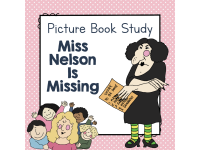
"Miss Nelson Is Missing" | Picture Book Study



- Grades
- Preschool–1, Elementary
- Pages
- 48
- File type
- Preparation
- Print ready


- Subject
- ELA, Reading
- Topic
- Miss Nelson, Reading Activities
- Resource types
- Worksheets & Printables, Novel Studies
- Preparation
- Print ready
About this resource
What's inside this resource
Miss Nelson Is Missing Picture Book Study: An Enriching Teaching Resource
The Miss Nelson Is Missing Picture Book Study is a resource featuring myriad learning activities related to the popular picture book. Ideal for educators, it enhances language arts curricula, catering to pre-school, kindergarten, and first-grade learners.
This no-prep tool consists of 48 pages of imaginative content, diving deeper into the story while integrating multiple disciplines. It caters to different learner levels from preschool to third grade - true versatility!
- Differentiated resources allow customization according to learners' needs and class plans.
- Includes more than reading exercises - a comprehensive exploration into language arts.
- Fuses entertainment with learning via fun activities like jigsaw puzzles and story mazes.
- Incorporates worksheets facilitating motor skill development through cutting and gluing practices.
Add-On Features:
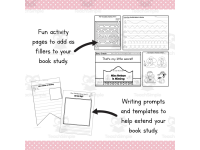
- Nurturing Early Writers: Worksheets that encourage young minds onto their literacy journeys creatively. Additionally includes story-related coloring pages stimulating creativity.
- Critical Thinking Skills: Non-fiction articles foster analytical thinking in young readers.
- Literacy Practices: Handwriting practice sheets featuring 'Teacher', puppet templates enabling role-play, letter writing templates fostering formal writing skills – holistic learning at its best!
- Data Sorting Practice: Activity sheets test knowledge retention improving cognition capacities further.
The study can be used for whole group studies or small group sessions; homework assignments also promote independent personal study practices.
The Miss Nelson Is Missing Picture Book Study transforms 'Miss Nelson is Missing' from just another book on your reading list into an immersive storytelling experience, allowing imagination and academics to bloom together, making education truly delightful!
Related resources
More resources teachers may find useful
24 related resources were found using this product's title, contributor, categories and tags.


In the classroom
Teaching tips & learning objectives

Learning objectives
Retell the story in order, distinguishing what happened first, next, then and last
Describe Miss Nelson and Miss Viola Swamp as characters and name the traits that separate them
Read the high-frequency words THEY and WERE by sight and find them inside sentences about the story

Teaching tips
The opening page is explicit that the set is a menu rather than a sequence: choose the activities that suit your class, and some teachers will use only the colouring page and the crafts
Difficulty spreads widely - line tracing and letter Tt formation sit in the same file as character traits and a Venn comparison - so pull the pages that match your group rather than printing straight through
The nine discussion questions come with suggested answers already written, so the read-aloud discussion can be led without preparing responses in advance

Skills covered
Story sequencing - children order the events with a FIRST/NEXT/THEN/LAST card set and then write their own first, next and last summary of the book.
Character description - separate pages ask for Miss Nelson's traits and Miss Viola Swamp's traits, and the activity page suggests building a class descriptive-word list for each.
Sight-word reading - children trace and write THEY and WERE, then highlight every occurrence inside six sentences retelling the story.
Good to know
Questions teachers ask about this resource
Is the set meant to be worked through in order?
No - the opening page treats it as a menu. It asks you to look through the options, decide which suit your students, and print only those; it explicitly allows for a teacher who uses just the colouring page and the crafts. The difficulty range backs that up, since line tracing and character-trait analysis both appear in the same file.
What does the non-fiction page add to the story work?
It is a short informational text called "Good Behavior In the Classroom", written for children about raising your hand, listening to instructions, helping classmates and thanking a teacher. It carries a fact box and gives the study a fiction-to-non-fiction pairing on the book's own theme.
Does anything in the set need materials beyond paper and pencils?
Several of the crafts do. The finger puppets are taped onto popsicle sticks, the hanging booklet folds over a piece of string, the story crown is stapled or taped to fit a head, and the sorting, patterning, jigsaw and envelope pages all need glue and scissors.

No reviews yet
Downloaded this resource? Tell other teachers how it went.
Resource details
Concepts & topics
Core concepts
 Core concepts
Story elements
Character traits
Story sequence
Sight words
Digraphs
 Topics
Explore more
Categories this resource belongs to
Explore related searches
More to explore
You may also like