


Mitosis and the Cell Cycle Lab Station Activity
Mitosis lab with nine stations and a passport booklet: students draw the four phases, research interphase from a video, write an opinion paragraph on which cells divide more often and read about the Human Genome Project.


- Grades
- Grades 8–11, Middle School, High School
- File type
- Multiple File Types


- Subject
- Science, Life Sciences, Biology
- Topic
- mitosis, cell cycle
- Resource types
- Diagrams, Teacher Tools
About this resource
What's inside this resource
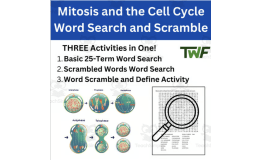
Mitosis and the Cell Cycle - Engaging Lab Station Activity This lab station activity on mitosis and the cell cycle gets students out of their seats and actively learning. The stations allow students to demonstrate their knowledge of cell division concepts in various ways like drawing, answering questions based on videos, or solving word puzzles. Recording sheets help students document their learning. This versatile activity works for both lab lessons or test review. With minimal prep work required from the teacher, the self-directed stations aim to be educational and fun. The activity covers the specifics of mitosis as well as the complete cell cycle. To ensure students stay productive, it also includes complementary word scramble and word search puzzles.
Related resources
More resources teachers may find useful
24 related resources were found using this product's title, contributor, categories and tags.

In the classroom
Teaching tips & learning objectives

Learning objectives
- Draw and name the four phases of mitosis
- Describe interphase and its place in the cell cycle
- Explain which cell types divide more or less often

Teaching tips
- Several stations use linked videos and online research, so each group needs a device with internet access; check the links before class.

Skills covered
- Scientific drawing — sketching prophase, metaphase, anaphase and telophase
- Question writing — creating multiple-choice, true/false and short-answer items with answers
- Reading for information — answering questions on the Human Genome Project
1 review
The links do not work
Resource details
Concepts & topics
Core concepts
 Core concepts
- Mitosis
- Interphase
- Cell cycle
- Human Genome Project
- DNA
 Topics
Explore more
Categories this resource belongs to
Explore related searches
More to explore
You may also like

Labs, Experiments, Activities


Labs, Experiments, Activities

Labs, Experiments, Activities

Teacher Tools, Lesson Plans, Assessments, Quizzes and Tests, Worksheets & Printables, Writing Prompts

Quizzes, Quizzes and Tests, Teacher Tools
Activities, Projects