Narrative Writing Interactive Notebook: Exposition, Plot Elements

- Grades
- Grades 4–8, Elementary, Homeschool Resources, Homeschool Curriculum, Homeschool Templates, Middle School
- Pages
- 92
- File type
- Answer key
- Included


- Subject
- Common Core, ELA, Writing, Creative Writing
- Topic
- narrative writing, plot elements
- Resource types
- Worksheets & Printables, Worksheets, Writing Prompts
- Answer key
- Included
- Standards
- CCSS.W.4.3 CCSS.W.5.3 +3
About this resource
What's inside this resource
Writing a narrative that flows, engages, and actually makes sense can be a challenge for students. But with this Narrative Writing Interactive Notebook, they'll have everything they need to build a strong, structured, and creative story from start to finish—without the overwhelm! This fun and interactive resource walks students through the essential elements of storytelling using engaging templates, scaffolded activities, and creative prompts. Whether your students are budding authors or reluctant writers, this notebook will guide them step by step to writing narratives that captivate and impress—perfect for writing lessons, literacy centers, and state test prep.
What’s Inside?
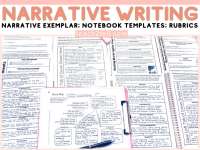
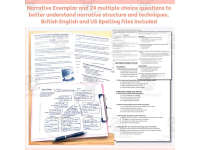
📖 Exemplar Narrative: "The Storm" – A laugh-out-loud model story that helps students break down narrative structure, character development, and plot elements. They’ll map out the key story elements for a deeper understanding.
📝 24 Multiple-Choice Comprehension Questions – Thought-provoking questions designed to help students analyze narrative structure, conflict, and resolution in a fun, engaging way.
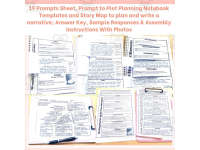
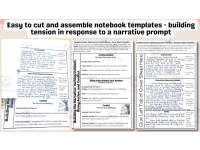
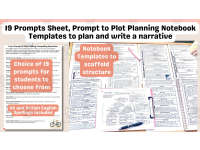
📍 Story Map & Interactive Notebook Templates – No more "Where do I start?" moments! These step-by-step organizers walk students through:
✔ Exposition – Setting the stage for a great story
✔ Inciting Incident – The moment that changes everything
✔ Conflict – Every great story needs some drama!
✔ Rising Action – Pebble, Rock, Boulder method for gradual tension
✔ Climax – The big turning point!
✔ Falling Action & Resolution – Tying up loose ends for a satisfying ending
📌 Narrative Structure Guide – A quick-reference sheet to keep students on track while they write.
✍️ 19 Creative Narrative Writing Prompts – A collection of engaging, quirky, and fun prompts designed to fire up imaginations and get students excited about writing.
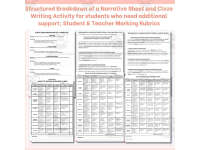
🔍 Cloze Writing Activity – Struggling writers? No problem! This scaffolded writing task breaks down narrative writing into manageable steps, guiding students through the process one piece at a time.
📊 Teacher Marking Rubrics (x2) & Student Self-Assessment Rubric – Grading made easy with clear criteria for structure, creativity, and engagement. Plus, a student self-assessment tool to encourage ownership of their writing.
🖊 Publishing Sheets – Lined sheets to give those final drafts a polished, professional look.
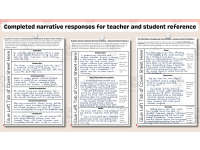
📸 Photos & Teacher’s Key – Includes photos of completed templates, assembly instructions, and detailed answers to comprehension questions for easy teacher implementation.
Why You’ll Love This Resource
✨ Engages Every Student – Whether your students love writing or struggle to get started, the interactive format and scaffolded support make storytelling accessible to everyone.
✨ Takes the Guesswork Out of Teaching – With ready-to-go templates, organizers, and rubrics, you’ll have everything you need to guide your students from brainstorming to final draft—stress-free!
✨ Perfect for Writing Test Prep – Teach narrative writing that checks all the boxes—sizzling starts, structured conflict, clear resolution—while building confidence and fluency under timed conditions.
Who’s It For?
📌 Upper elementary and middle school teachers looking to make narrative writing engaging, structured, and test-ready.
📌 Perfect for literacy centers, writing lessons, or full-class instruction.
📌 Great for state writing test prep, timed writing practice, or boosting storytelling skills in a fun, structured way!
Your Students Will Learn How To:
✔ Analyze a narrative by answering 24 multiple-choice questions
✔ Map out a story’s structure using a Story Map
✔ Write sizzling starts that hook readers instantly
✔ Develop a well-structured story using the 7 key plot elements
✔ Practice timed writing to build fluency and confidence
✔ Edit and refine their work using the interactive notebook templates before publishing their final draft
📥 Download today and help your students craft stories that captivate, engage, and impress!
Related resources
More resources teachers may find useful
24 related resources were found using this product's title, contributor, categories and tags.

In the classroom
Teaching tips & learning objectives

Learning objectives
- Identify the exposition, conflict, climax and resolution in a model narrative
- Plan a narrative with a story map covering seven plot elements
- Revise and publish a narrative and assess it against a rubric

Teaching tips
- The cloze writing activity offers a scaffolded route for students who need support drafting.

Skills covered
- Text structure analysis — students answer 24 multiple-choice questions on The Storm
- Story planning — students map their own story element by element before drafting
- Self-assessment — students score their writing with the student rubric

No reviews yet
Downloaded this resource? Tell other teachers how it went.
Curriculum
Standards, concepts & topics
Standards
 Standards
- CCSS.W.4.3 — Write narratives to develop real or imagined experiences or events using effective technique, descriptive details, and clear event sequences. a. Orient the reader by establishing a situationand introducing a narrator and/or characters; organize an event sequence that unfolds naturally. b. Use dialogue and description to develop experiences and events or show the responses of characters to situations. c. Use a variety of transitional words and phrases to manage the sequence of events. d. Use concrete words and phrases and sensory details to convey experiences and events precisely. e. Provide a conclusion that follows from the narrated experiences or events.
- CCSS.W.5.3 — Write narratives to develop real or imagined experiences or events using effective technique, descriptive details, and clear event sequences. a. Orient the reader by establishing a situation and introducing a narrator and/or characters; organize an event sequence that unfolds naturally. b. Use narrative techniques, such as dialogue, description, and pacing, to develop experiences and events or show the responses of characters to situations. c. Use a variety of transitional words, phrases, and clauses to manage the sequence of events. d. Use concrete words and phrases and sensory details to convey experiences and events precisely. e. Provide a conclusion that follows from the
- CCSS.W.6.3 — Write narratives to develop real or imagined experiences or events using effective technique, relevant descriptive details, and well-structured event sequences. a. Engage and orient the reader by establishing a context and introducing a narrator and/or characters; organize an event sequence that unfolds naturally and logically. b. Use narrative techniques, such as dialogue, pacing, and description, to develop experiences, events, and/or characters. c. Use a variety of transition words, phrases, and clauses to convey sequence and signal shifts from one time frame or setting to another. d. Use precise words and phrases, relevant descriptive details, and sensory language to convey experiences and events. e. Provide a conclusion that follows from the narrated experiences or events.
- CCSS.W.7.3 — Write narratives to develop real or imagined experiences or events using effective technique, relevant descriptive details, and well-structured event sequences. a. Engage and orient the reader by establishing a context and point of view and introducing a narrator and/or characters; organize an event sequence that unfolds naturally and logically. b. Use narrative techniques, such as dialogue, pacing, and description, to develop experiences, events, and/or characters. c. Use a variety of transition words, phrases, and clauses to convey sequence and signal shifts from one time frame or setting to another. d. Use precise words and phrases, relevant descriptive details, and sensory language to capture the action and convey experiences and events. e. Provide a conclusion that follows from and reflects on the narrated experiences or events.
- CCSS.W.8.3 — Write narratives to develop real or imagined experiences or events using effective technique, relevant descriptive details, and well-structured event sequences. a. Engage and orient the reader by establishing a context and point of view and introducing a narrator and/or characters; organize an event sequence that unfolds naturally and logically. b. Use narrative techniques, such as dialogue, pacing, description, and reflection, to develop experiences, events, and/or characters. c. Use a variety of transition words, phrases, and clauses to convey sequence, signal shifts from one time frame or setting to another, and show the relationships among experiences and events. d. Use precise words and phrases, relevant descriptive details, and sensory language to capture the action and convey experiences and events. e. Provide a conclusion that follows from and reflects on the narrated experiences or events.
Core concepts
 Core concepts
- Exposition
- Inciting incident
- Rising action
- Climax
- Resolution
 Topics
Explore more
Categories this resource belongs to
Explore related searches
More to explore
You may also like