Nonfiction Headings & Subheadings Worksheets
- Grades
- Grades 2–4
- Pages
- 18
- File type
- Answer key
- Included


- Subject
- ELA, Reading Comprehension
- Topic
- Headings, Subheadings
- Resource types
- Worksheets
- Answer key
- Included
- Standards
- RI.3.5
Product description
From the author
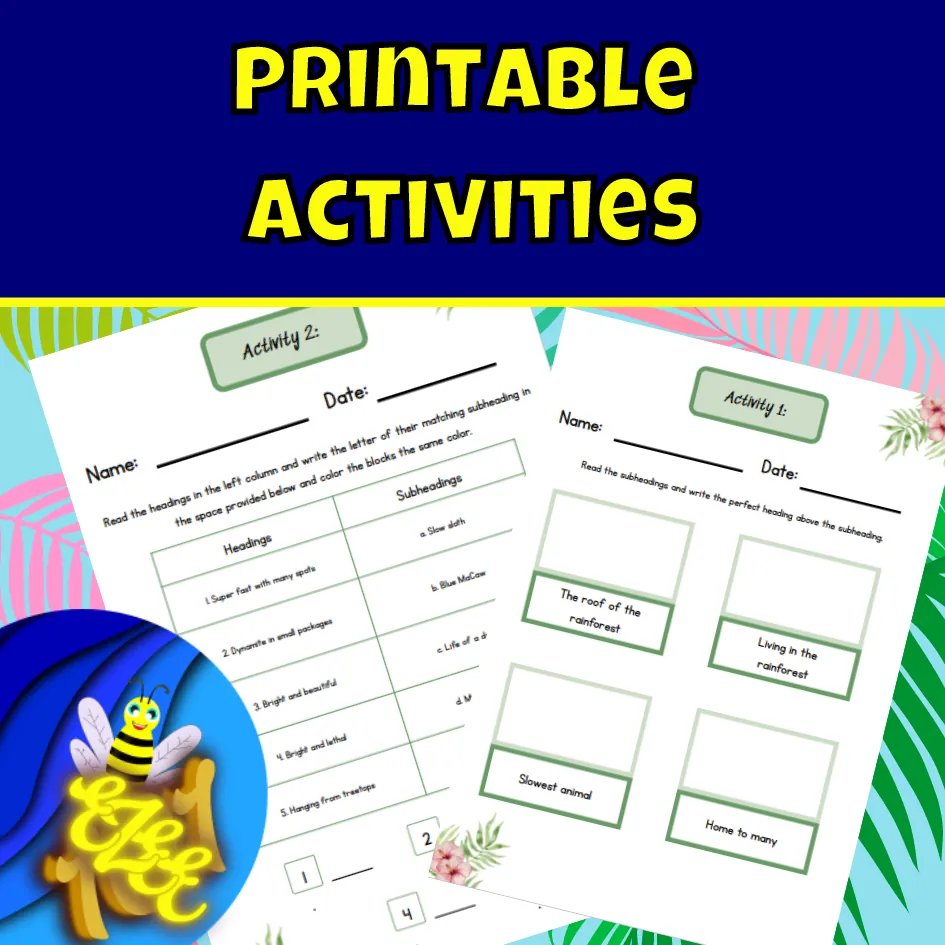
The concept of nonfiction can be very abstract, making it difficult to teach the concept. These worksheets look at the nonfiction text features; headings and subheadings. Within these worksheets are two activities that are designed to help students understand the concept of headings and subheadings.
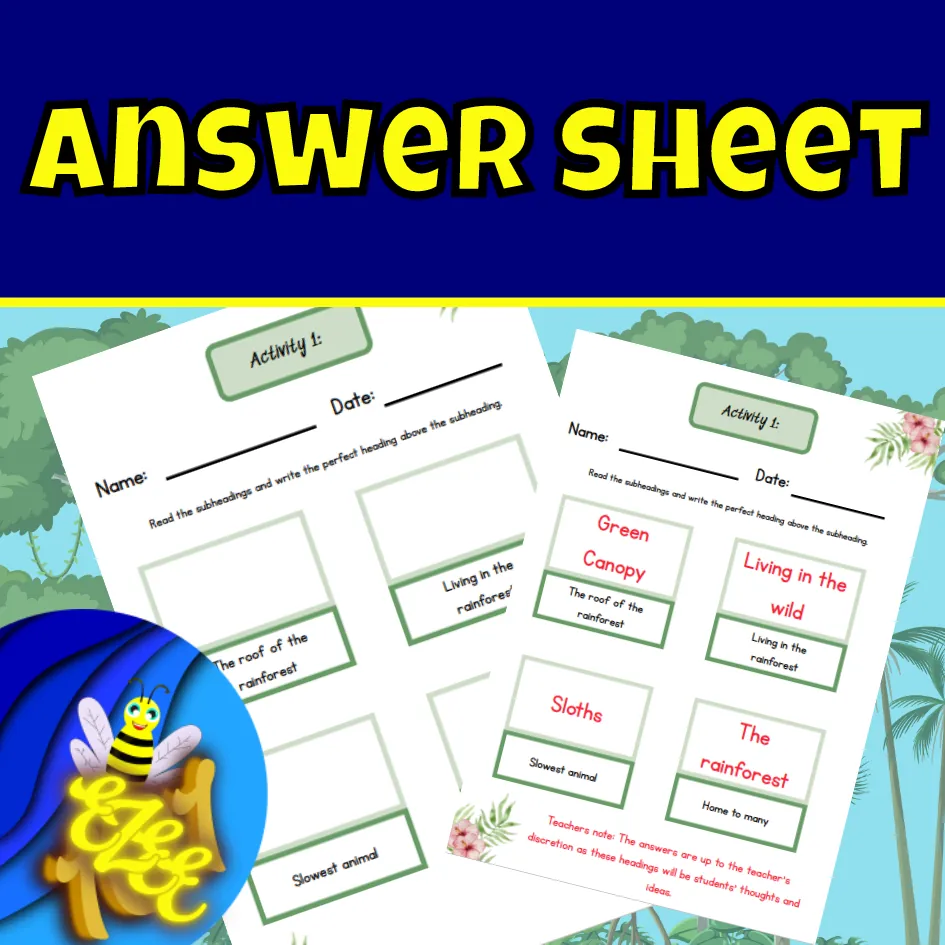
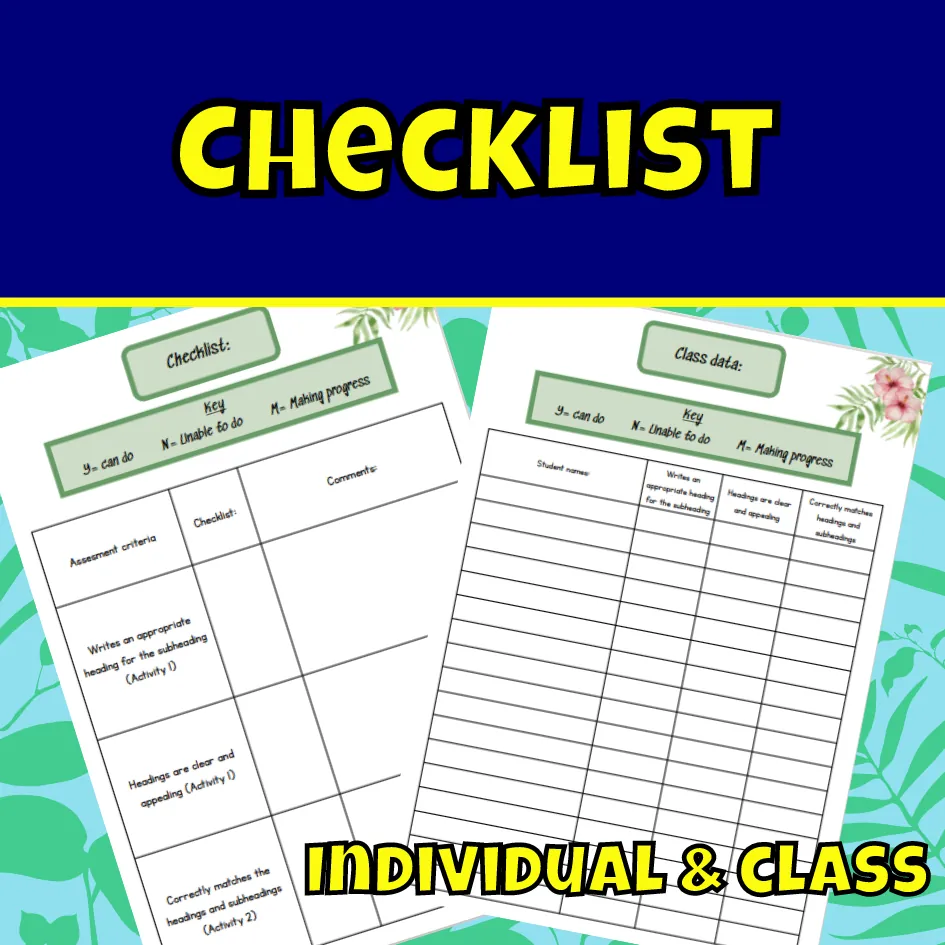
This download includes a printable worksheet with two activities, a printable checklist with a checklist for individual students and for the class and finally an answer sheet with answers to the activities.
The objective of these worksheets is to deepen the understanding of exactly what a heading and subheading is.
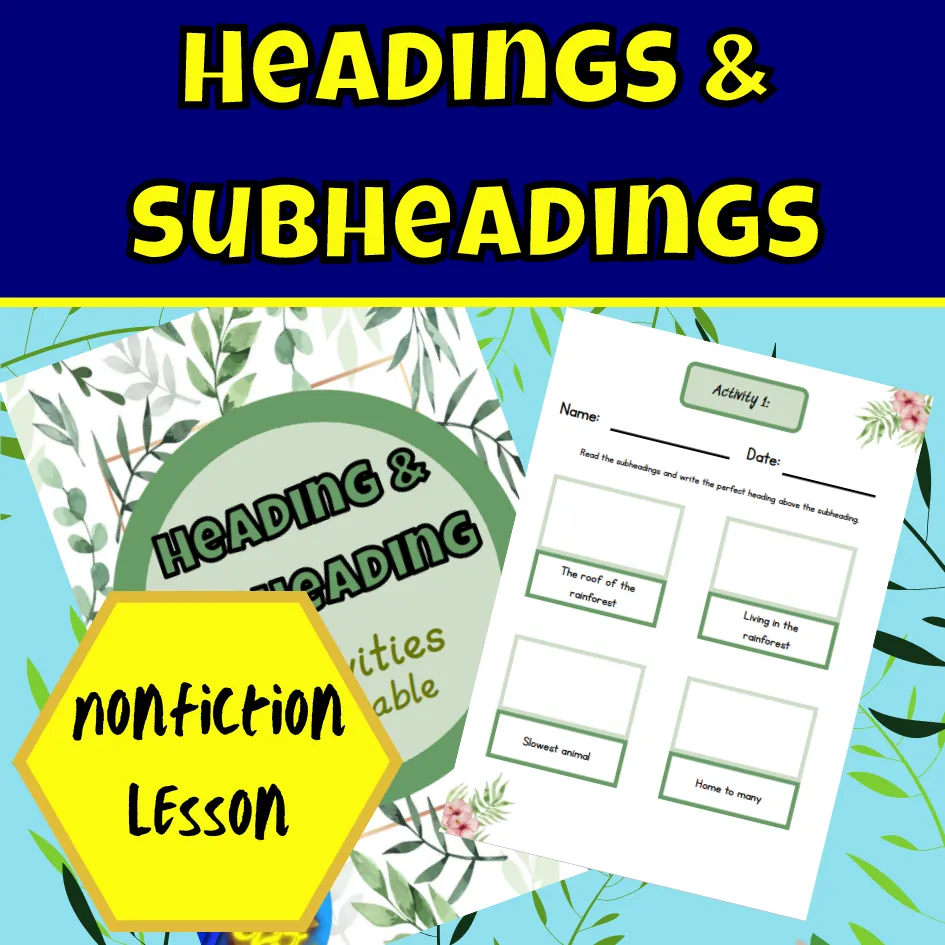
The first activity encourages students to write their very own heading for the subheading provided and the second activity requires students to match the subheadings with the correct heading.
These activities are great for grade 1,2 and 3 and can be used as an introduction, recap, support or enrichment. Simply print the activity and hand them out to students.
If you like these worksheets, have a look at the nonfiction text feature heading and subheading lesson which goes alongside these PDFs and contains the online versions of the activities given as well as lesson slides that are animated with speaker notes.
Number of pages: Activities: 5, Answer sheets: 5, Checklist: 8
Related resources
More resources teachers may find useful
24 related resources were found using this product's title, contributor, categories and tags.


In the classroom
Teaching tips & learning objectives

Learning objectives
Write a heading that fits a supplied subheading, working from clues such as "The roof of the rainforest" or "Slowest animal"
Match five nonfiction headings to their subheadings by working out which animal or place each figurative heading describes
Distinguish a heading from the subheading printed beneath it in a nonfiction layout

Teaching tips
Have coloured pencils out for Activity 2: the instruction asks students to write the matching letter and to colour each matched pair of blocks the same colour, so the colouring is part of the task rather than decoration
Mark Activity 1 against the checklist criteria rather than the sample wording, since the completed copy states outright that the headings are up to the teacher's discretion
All three files begin with a cover, teacher introduction and rainforest-bundle notice, so print from the fourth page of each file when you only want the working sheets

Skills covered
Writing nonfiction headings — students supply their own heading above four given rainforest subheadings, including "The roof of the rainforest" and "Home to many".
Matching headings to subheadings — five lettered pairs ask students to read a heading such as "Dynamite in small packages" and find the subheading it belongs to, "Mighty Bullet ants".
Inferring from descriptive language — headings such as "Super fast with many spots" and "Bright and lethal" name no animal, so the cheetah and the dart frog have to be inferred from the description.
Good to know
Questions teachers ask about this resource
How do the two activities differ in what students produce?
Activity 1 is open: four subheadings are printed and students write a heading of their own above each. Activity 2 is closed: five headings in a left column are lettered to five subheadings in a right column, and each pairing has one correct match.
How is Activity 1 meant to be marked when every student writes something different?
Against criteria rather than against fixed wording. The completed copy carries a teacher's note saying the headings are up to the teacher's discretion because they are students' own thoughts, and the checklist supplies the two criteria to judge them on: "Writes an appropriate heading for the subheading" and "Headings are clear and appealing".
What do students need besides a pencil for Activity 2?
Colouring materials. The direction asks students to write the letter of the matching subheading and to colour the paired blocks the same colour, so at least five colours are needed to keep the five pairs distinct.

No reviews yet
Downloaded this resource? Tell other teachers how it went.
Curriculum
Standards, concepts & topics
Standards
 Standards
- RI.3.5
Core concepts
 Core concepts
Nonfiction text features
Headings and subheadings
Matching
Rainforest vocabulary
 Topics
Explore more
Categories this resource belongs to
Explore related searches
More to explore
You may also like