Our Friend, Martin (1999): Complete Video Guide


- Grades
- Grades 4–7
- Pages
- 4
- File type
- Answer key
- Included


- Subject
- Social Studies, History: USA
- Topic
- Our Friend Martin, Civil Rights
- Resource types
- Activities
- Answer key
- Included
Product description
From the author
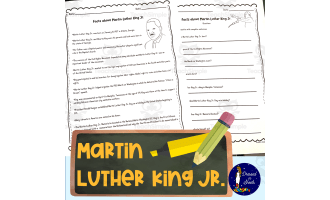
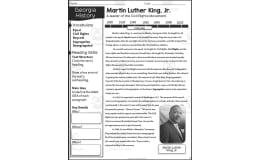
This four-page guide accompanies Our Friend, Martin (1999). Two student pages contain 16 chronological questions, with true/false, short-answer and quotation-completion items. Background paragraphs discuss sit-ins and peaceful marches.
Two matching teacher pages supply answers. Arrange film access separately and pause for responses or discussion as needed. The download contains viewing worksheets, not a separate set of Civil Rights event charts.
Related resources
More resources teachers may find useful
24 related resources were found using this product's title, contributor, categories and tags.

In the classroom
Teaching tips & learning objectives

Learning objectives
Answer comprehension questions while a film is playing, keeping pace with events that arrive in chronological order
Identify civil rights figures and events shown in the film, including Rosa Parks's bus protest and the March on Washington
Explain what the lunch-counter sit-ins involved and what protestors faced, drawing on the guide's background paragraph

Teaching tips
Give out both student pages before pressing play; because the items follow the film's order, students can follow the sequence; pause whenever the group needs response time
Question 5 is the only fill-in and lands on Martin's line about love being the cure for fear and hate — a natural point to stop and discuss
The two background paragraphs are not attached to any numbered question, so they work either as a pre-viewing read or as a written follow-up on non-violent protest

Skills covered
Active viewing — students work through sixteen numbered items while the film runs, guided by the note that answers arrive in chronological order.
Vocabulary in context — question 12 asks what "assassinated" means after the characters see the headline about King's death.
Reading short informational text — the paragraphs on the sit-ins and the Southern marches are set beside the questions for students to read alongside the film.
Good to know
Questions teachers ask about this resource
How are the questions sequenced against the film?
In the film's own order. The printed instruction reads "As you watch the video, please answer each question. The answers are in chronological order," so item 1 lands on the permission slip near the opening and item 16 on the mark Miles earns for his history report at the end.
What do the two shaded paragraphs beside the questions cover?
One explains the sit-ins — young African Americans sitting in the "whites only" section of restaurants, refusing to move until served, and being punched, kicked, spat on and eventually arrested. The other explains the peaceful marches King led across the South, where marchers locked arms, sang "freedom songs" and many were arrested.
How does the Teacher KEY handle the March on Washington item?
Question 11 prints the statement "The March on Washington was in 1964" and the key marks it False (1963), so that item works as a date correction rather than a straight recall check.

No reviews yet
Downloaded this resource? Tell other teachers how it went.
Resource details
Concepts & topics
Core concepts
 Core concepts
Civil Rights Movement
Martin Luther King Jr.
Film comprehension
Segregation
Nonviolent protest
 Topics
Explore more
Categories this resource belongs to
Explore related searches
More to explore
You may also like