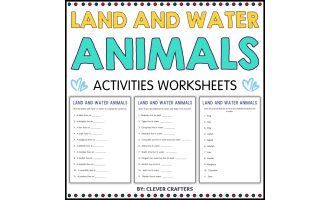
Plants vs Animals Worksheets – Grade 2 Science Set



- Grades
- Grade 2
- Pages
- 10
- File type
- Multiple File Types


- Subject
- Science, Life Sciences
- Topic
- Plants and animals, Grade 2 science
- Resource types
- Worksheets, Activities
Product description
From the author
Introduction
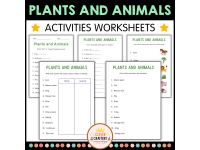
Introduce children to the amazing world of plants and animals with this engaging 10-worksheet collection! Each activity is designed to promote curiosity, support early science learning, and strengthen critical thinking through fun and interactive tasks.
Objective:
To help students build foundational knowledge of plants and animals, including characteristics, differences, and key life science concepts.
What’s Included:
10 printable worksheets (non-editable)
The number of items varies by worksheet.
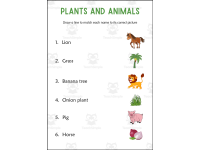
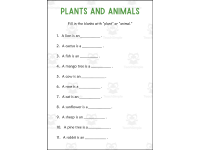
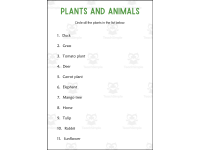
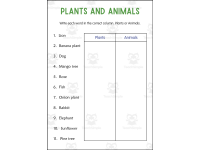
Activities include identifying, matching, categorizing, and comparing plants and animals
Grades / Ages:
Ideal for Grades 1–3
Implementation Format:
Use in classrooms, homeschool settings, or science centers
Great for individual practice, group work, or homework
Answer Key:
Not included
File Type:
Ten-page PDF and ten matching PNG images (non-editable)
Number of Pages:
10 pages total
License:
Paid product – for personal or single-classroom use only
Related resources
More resources teachers may find useful
24 related resources were found using this product's title, contributor, categories and tags.



In the classroom
Teaching tips & learning objectives

Learning objectives
Classify a given living thing as a plant or an animal based on its known characteristics.
Apply the plant/animal distinction across ten different task formats, including matching, sorting, true/false judgment, and word choice.
Associate familiar plants and animals with a basic need (such as sunlight, water, or shelter) appropriate to each.

Teaching tips
- Ask students to explain one sorting choice before moving to a different task format.

Skills covered
Plant/animal classification — across all ten worksheets, students apply the same core distinction to a recurring, overlapping list of familiar living things.
Multi-format task transfer — the same content knowledge is tested through direct labeling, matching, sorting, true/false judgment, bracketed word choice, odd-one-out, and needs-matching formats.
Basic needs of living things — Worksheet 10 extends classification into associating each plant or animal with something it requires, such as sunlight, water, or shelter.
Good to know
Questions teachers ask about this resource
Does every worksheet use the same list of plants and animals, or does the list change?
The same core set of familiar plants and animals (dog, sunflower, elephant, cactus, cow, pine tree, rabbit, and others) recurs across most of the ten worksheets, so students see repeated exposure to the same items in different task formats rather than an ever-expanding vocabulary list.

No reviews yet
Downloaded this resource? Tell other teachers how it went.
Resource details
Concepts & topics
Core concepts
 Core concepts
Plants vs animals
Living things
Classification
Basic needs of living things
 Topics
Explore more
Categories this resource belongs to
Explore related searches
More to explore
You may also like