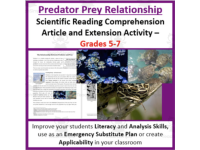
Predator-Prey Relationship - Science Reading Article - Grades 5-7

- Grades
- Grades 5–7
- File type
- Multiple File Types
- Answer key
- Included


- Subject
- Science
- Topic
- Predator prey, Ecosystems
- Resource types
- Worksheets, Activities
- Answer key
- Included
- Standards
- RI.6.1
Product description
From the author
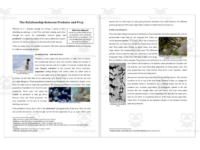
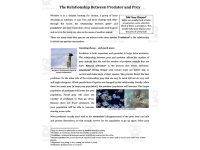
This science reading article introduces predator-prey relationships for grades 5–7 through predation, population cycles, invasive species and human environmental impact. Eight comprehension questions follow the passage, with two extensions: a hypothetical population change and an infographic.
Word and PDF versions include answers to the core questions and guidance for the open extensions. A Google access sheet links to a Google Docs master. Use the reading for whole-class teaching, small groups, homework or a science literacy lesson; choose the extensions and prepare digital access before assigning it.
Related resources
More resources teachers may find useful
24 related resources were found using this product's title, contributor, categories and tags.


In the classroom
Teaching tips & learning objectives

Learning objectives
Define predator, prey, and predation using the passage's explanations.
Explain the population cycle that predation creates between predator and prey species.
Describe how an invasive species (the Burmese python) can disrupt an established ecosystem's predator-prey balance.

Teaching tips
Introduce the core vocabulary (prey, predator, predation, invasive species) before the reading, since the eight comprehension questions test those terms directly.
Use the Burmese python case study as the anchor example when discussing the extension questions, since question 9 specifically builds on it.
Treat the infographic extension question as an optional project extension rather than a required item, since it asks for a different format of response than the other questions.

Skills covered
Scientific reading comprehension — students answer eight questions about predation, population cycles, and invasive species.
Cause-and-effect reasoning — students explain how predator and prey population sizes rise and fall in relation to each other.
Applied ecological reasoning — an extension question asks students to predict what happens if a python predator's population suddenly grew.

No reviews yet
Downloaded this resource? Tell other teachers how it went.
Curriculum
Standards, concepts & topics
Standards
 Standards
- RI.6.1
Core concepts
 Core concepts
Predator-prey relationships
Population cycles
Invasive species
 Topics
Explore more
Categories this resource belongs to
Explore related searches
More to explore
You may also like