Prokaryotic and Eukaryotic Cells Worksheets
- Grades
- Grades 6–10, Middle School, High School
- File type
- Preparation
- Print ready


- Subject
- Science, Life Sciences, Biology
- Topic
- Prokaryotic and Eukaryotic Cells , Prokaryotic Cells
- Resource types
- Worksheets & Printables, Worksheets, Activities, Parts of and Anatomy of
- Preparation
- Print ready
About this resource
What's inside this resource
Are you introducing or reviewing facts about prokaryotic and eukaryotic cells?
Check the list below to see what activities are included in this resource!
This resource includes:
A short read about prokaryotic cells.
A short read about eukaryotic cells.
Questions regarding the reading done over prokaryotic and eukaryotic cells.
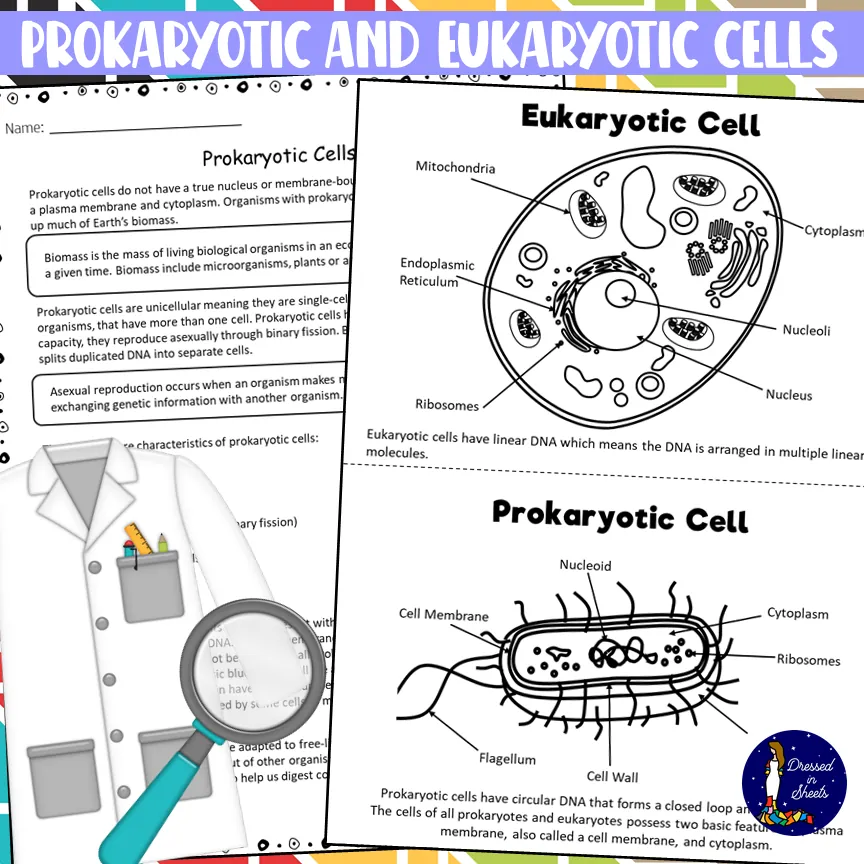
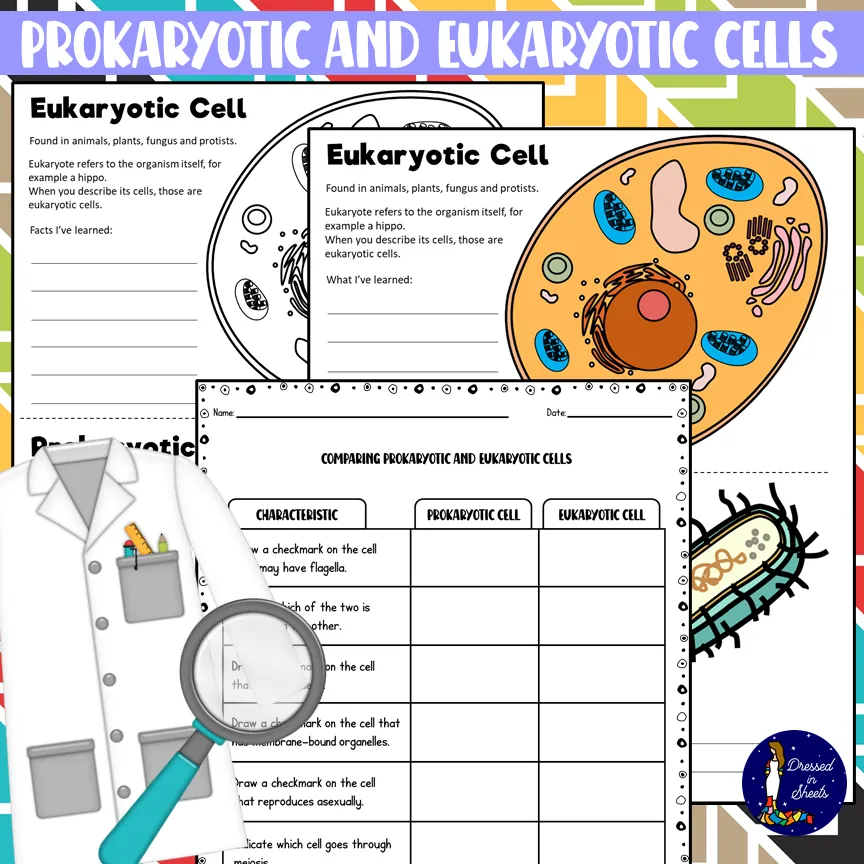
Page showing what a eukaryotic cell and prokaryotic cell may look like and showing parts of interest along with few facts. Perfect to cut and paste in science journals for review.
Side by side facts about prokaryotic and eukaryotic cells and description of what ATP does.
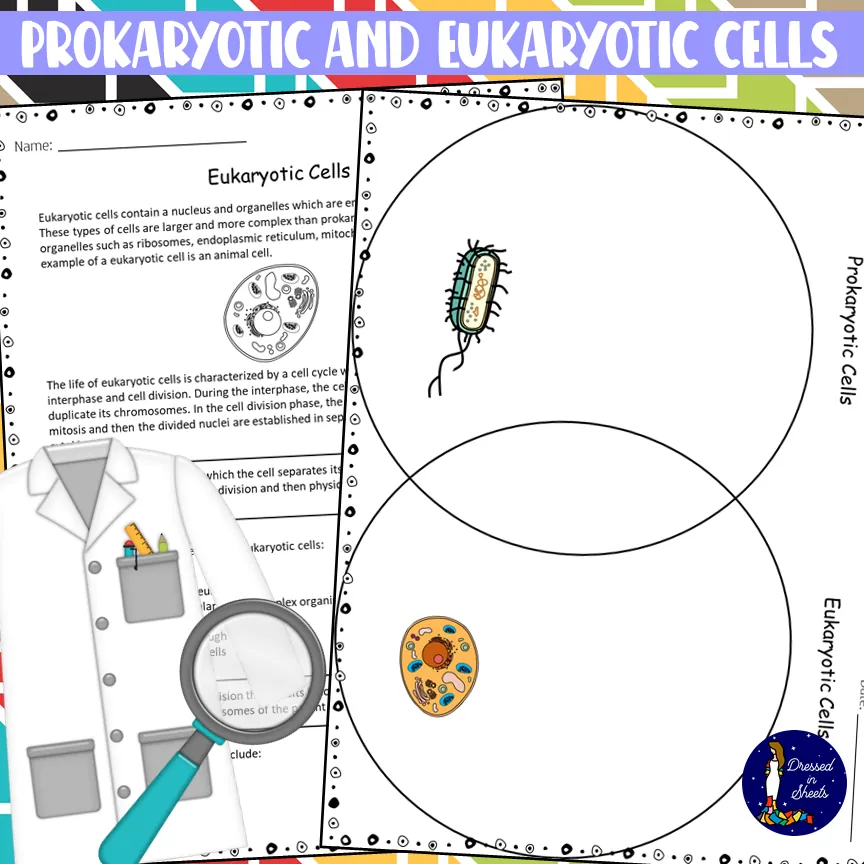
Venn diagram for prokaryotic and eukaryotic cells.
Comparing prokaryotic and eukaryotic cells. Student will read each sentence and fill in the box by given instructions.
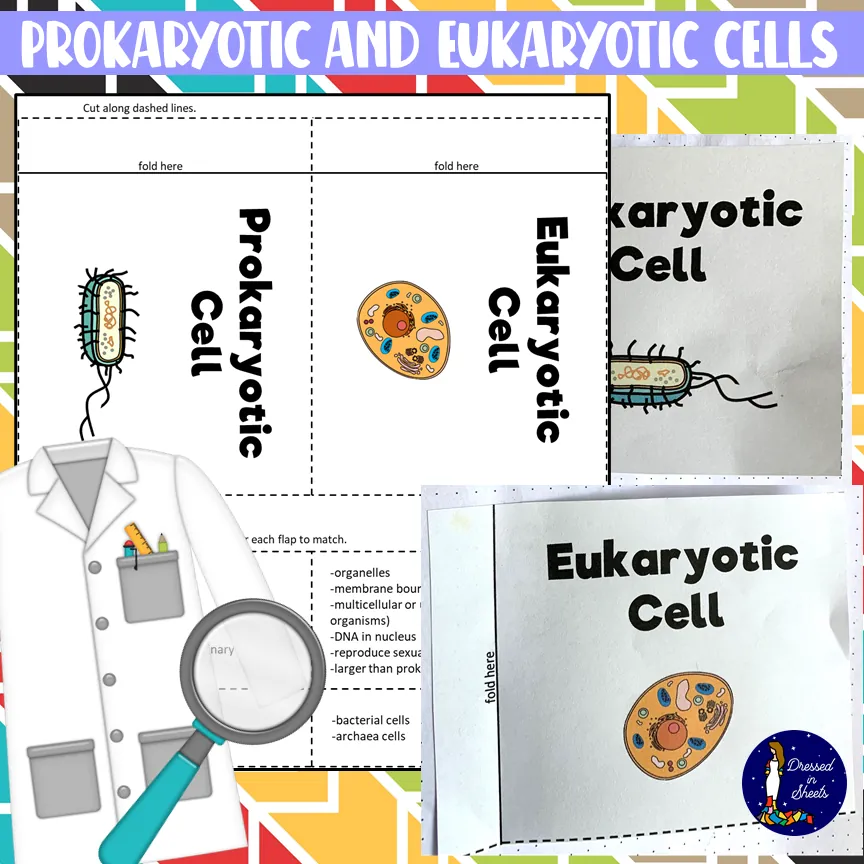
Cut and paste flaps for interactive journal. The student will have to match which descriptions are for prokaryotic and eukaryotic cells and paste underneath each flap.
Describes where prokaryotic and eukaryotic cells can be found and how to use the proper terminology when referring to the organism or its cells. Students will write about what they have learned regarding prokaryotic and eukaryotic cells.
Answer key
This set has what your classroom needs to know the differences and similarities of prokaryotic and eukaryotic cells.
Thank you!
Related resources
More resources teachers may find useful
24 related resources were found using this product's title, contributor, categories and tags.


In the classroom
Teaching tips & learning objectives

Learning objectives
Describe the structural differences between prokaryotic and eukaryotic cells, including nucleus and organelle presence.
Compare how prokaryotic and eukaryotic cells reproduce (binary fission versus mitosis and meiosis).
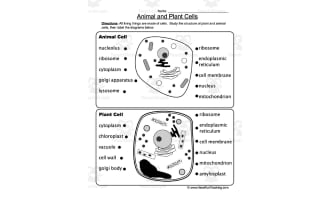
Label key structures of each cell type on a diagram, including flagella, ribosomes, and the nucleus.

Teaching tips
Assign the two reading passages before the diagram-labeling and comparison-chart activities, since later pages assume students already know terms like binary fission and cytokinesis defined in the readings.
Use the cut-and-fold flip-book as a review station after the main packet, since it requires students to sort characteristics already covered in the readings and chart.
Reserve the free-response summary page as an exit ticket to check whether students can explain each cell type in their own words.

Skills covered
Cell structure comparison - students read about and label the distinguishing features of prokaryotic and eukaryotic cells, such as the presence of a nucleus and membrane-bound organelles.
Scientific vocabulary application - students use terms including binary fission, cytokinesis, and meiosis to answer short-response questions about cell reproduction.
Data sorting and classification - students complete a comparison chart and a cut-and-fold flip-book activity sorting characteristics under the correct cell type.
Good to know
Questions teachers ask about this resource
How does the packet have students actively sort cell characteristics rather than just read about them?
A cut-and-fold flip-book activity asks students to cut along dashed lines and paste characteristic and example cards, such as 'no nucleus' or 'bacterial cells,' under the matching flap for the correct cell type.

No reviews yet
Downloaded this resource? Tell other teachers how it went.
Resource details
Concepts & topics
Core concepts
 Core concepts
prokaryotic cells
eukaryotic cells
cell structure
cell reproduction
 Topics
More to explore
You may also like