Free 24 related resources

Reading Comprehension Nonfiction Set 5 Sample: Stingray (PDF)

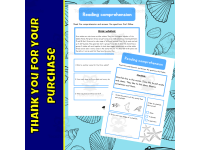
Stingrays star in a free nonfiction sample set: a full passage on the ray's camouflage, electro-receptors, diet, and cartilage skeleton, followed by mixed questions, jumbled spelling, a summarizing page, and word association.
Grades
Grades 4–5, Elementary, Homeschool Resources
Pages
6
File type
PDF
Answer key
Included

Instant download · Updated Mar 28, 2025

Subject
ELA, Reading, Reading Comprehension, Common Core, ESL, Language Development, Spelling, Creative Writing, Writing, Resources for Teachers
Topic
elementary, reading
Resource types
Worksheets & Printables, Worksheets, Assessments, Teacher Tools, Tests, Quizzes and Tests
Answer key
Included

About this resource

What's inside this resource

Reading Comprehension Passages Nonfiction Set 5 Sample

Overview

No prep reading comprehension lessons, with enjoyable articles and topics.

Each lesson has a blend of post-reading activities. Mixed questions to check overall understanding. Vocabulary activities, plus a writing section.

Lessons also contain a bonus extension exercise at the end. Some you may like, some you may not, either way they are there if you wish to use them. Full answer keys are provided.

Passage Included

1.Stingray: Close relatives to sharks, read more about this fascinating animal in this article.

PDF Version

This is the PDF uneditable version. This download is available in GOOGLE Docs, GOOGLE Forms, GOOGLE Slides. PDF, PPT, WORD.

FULL CATALOG OF DOWNLOAD LINKS HERE

Grade 4/5 Links

Fiction Set 1 - Animals

Google Docs

Google Forms

Google Slides

PDF

PPT

Word

Guided Reading Materials

Fiction Set 2 - Family

Google Docs

Google Forms

Google Slides

PDF

PPT

Word

Guided Reading Materials

Fiction Set 3 - Friends

Google Docs

Google Forms

Google Slides

PDF

PPT

Word

Guided Reading Materials

Fiction Set 4 - School

Google Docs

Google Forms

Google Slides

PDF

PPT

Word

Guided Reading Materials

Fiction Set 5 - Sports

Google Docs

Google Forms

Google Slides

PDF

PPT

Word

Guided Reading Materials

Nonfiction Set 1 - Birds

Google Docs

Google Forms

Google Slides

PDF

PPT

Word

Guided Reading Materials

Nonfiction Set 2 - Insects

Google Docs

Google Forms

Google Slides

PDF

PPT

Word

Guided Reading Materials

Nonfiction Set 3 - Mammals

Google Docs

Google Forms

Google Slides

PDF

PPT

Word

Guided Reading Materials

Nonfiction Set 4 - Nature

Google Docs

Google Forms

Google Slides

PDF

PPT

Word

Guided Reading Materials

Nonfiction Set 5 - Sea Animals

Google Docs

Google Forms

Google Slides

PDF

PPT

Word

Guided Reading Materials

Reading Passages Overview

Each passage is especially written for Grade 4-5 students, including key vocabulary required for this age group.

Topics are varied and are accompanied by colorful graphics. Topics are meant to educate, yet entertain the modern student.

These passages are perfect for the modern classroom. Whereas textbooks can become outdated in no time, any changes to technology or the world will result in updates to this product.

Mixed Questions

The mixed questions section of each lesson includes a variation of five comprehension, vocabulary and math questions. In addition, key reading strategies are frequently covered including cause & effect, summarizing, compare & contrast and making conclusions.

Two or three of the questions will be MCQs and other questions will require a written response of some kind.

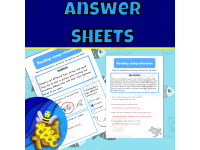
Full answers and example responses appear at the end of the lesson.

Spelling & Vocab

Each reading passage contains a variety of words and phrases designed for Grade 4-5 students. Spelling and vocab activities provide the opportunity to build fluency with these words.

As it can become quite mundane doing the same activities over and over, each lesson in a set will contain a different spelling and vocab activity. Activities include: spelling games, sentence match-ups, mixed-up text and decoding words from the lesson.

Writing Prompts

Writing prompts are designed to continue the theme or lessons learned in the story.

Students are persuaded to write in a variety of ways and each prompt includes several cues to help.

As with the spelling/vocab section, writing prompts will vary. This includes research pieces, reading responses, poetry and creative writing prompts.

Full Answer Keys

Full answer keys and sample responses are provided so no matter how busy you are, you know you're covered!

Mixed question answers provide evidence from the text, math questions contain the relevant workings.

Answers are designed for use by the teacher, but also suitable as a handout to the student.

Just for Fun

Each lesson will have a bonus extension exercise. This is something fun to extend the lesson with. You can find these at the end of each lesson, titled Just for Fun.

Just for Funs are optional. Some you may like, some you may not. Either way, they are there to do with as you wish.

For similar downloads and other frees, do check out Cored Group on TeachSimple.

In the classroom

Teaching tips & learning objectives

Learning objectives

  • Recall and explain key details from a nonfiction passage, citing what stingray receptors do and what stingrays eat.

  • Summarize an informational text in their own words for an audience who has not read it.

  • Decode and spell domain vocabulary such as suction, venomous, cartilage, and specialized.

  • Make personal word associations that connect passage vocabulary to prior knowledge.

Teaching tips

  • Preview the jumbled-spelling page's clue column as a vocabulary warm-up before students read the passage.

  • Use the summarize page's built-in audience ('your friend hasn't read the article') to push students past copying sentences toward genuine retelling.

  • Treat the word-association page as a quick pre/post check: run it before and after reading and compare how associations change.

  • The written-response items reward exact text evidence - have students underline the sentences about receptors, diet, and movement as they answer.

Skills covered

  • Nonfiction comprehension - students answer multiple-choice and written questions on camouflage, predators, and receptors drawn straight from the passage.

  • Summarizing - a dedicated page has students retell the article in their own words and name one thing they learned.

  • Vocabulary and spelling - nine passage words are unscrambled from definition clues, from suction to cartilage.

  • Word association - students record the words each passage term brings to mind, surfacing prior knowledge.

Good to know

Questions teachers ask about this resource

What science does the passage actually cover?

Real stingray biology: body shape and camouflage, shark-like electro-receptors, a diet of crabs, clams, oysters, snails, fish, and squid, natural predators, the venomous tail spine, a cartilage skeleton, and the two swimming motions that put rays in the batoid group.

How do the activity pages vary in difficulty?

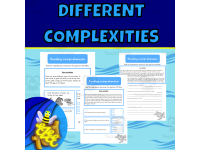
They climb: multiple-choice recall first, then written responses requiring passage evidence, then vocabulary unscrambling from clues, and finally the open summarize and word-association pages where students generate their own language.

No reviews yet

Downloaded this resource? Tell other teachers how it went.

Resource details

Concepts & topics

Core concepts

  • Reading comprehension

  • Nonfiction text

  • Summarizing

  • Domain vocabulary

  • Ocean animals

Explore more

Categories this resource belongs to

Explore related searches

More to explore

You may also like