OO Reading Passages for Grade 2-3 Fluency

- Grades
- Grades 2–3
- Pages
- 4
- File type
- Answer key
- Included


- Subject
- ELA, Phonics, Reading Comprehension
- Topic
- Oo words, Reading fluency
- Resource types
- Worksheets
- Answer key
- Included
- Standards
- RF.2.3.b
Product description
From the author
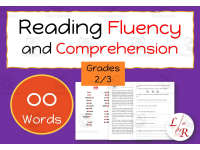
This is a reading fluency passage based on words in the 'oo' family, which doubles as a reading comprehension activity. It is suitable for a reading age of Grade 3.
The target 'oo' words are:
fool cool wood afternoon stoop swoop/ed smooth goodbye hook unhook gloomy choose loose (ex) rook rookery cookery crook brook balloon kangaroo
The words are listed on a chart for practice.
The passage uses mainly decodable words, making it suitable for the dyslexic pupil.
Aims and objectives:
To help the pupil gain confidence in sounding out to read more advanced words in the 'oo' family than those learned in previous grades
To read the words in context and so establish their meaning
To read the passage fluently
To understand the key themes in the passage
Method:
The pupil first finds all the 'oo' words and underlines them.
The pupil then reads the passage three times, colouring a star each time.
The pupil then answers the questions.
Usage:
The reading fluency practice with an added comprehension exercise is suitable for higher-attaining Grade 2 pupils, or for lower-attaining Grade 3 pupils who may need more extended phonics teaching.
It was written for a dyslexic pupil.
It can be used in class or in small groups.
It can be used in the homeschool or by a tutor.
I wrote this passage for a dyslexic, older child who was reading delayed, but is now making progress since I extended his phonics skills to incorporate more complex words. We first study a word family, and then read the words in a short passage.
As a byproduct, his spelling skills improve alongside his reading.
If you have a child who is behind in reading, try doing the same. We tend to teach the basic phonics sounds with words appropriate for a young child and expect the child to automatically apply it to longer words as they age. This does not always happen automatically for the dyslexic pupil.
Related resources
More resources teachers may find useful
24 related resources were found using this product's title, contributor, categories and tags.


In the classroom
Teaching tips & learning objectives

Learning objectives
- Read a passage repeatedly with attention to phrasing and meaning.

Teaching tips
- Model one paragraph, then let partners alternate reader and listener roles.

Skills covered
- Reading fluency, vocabulary, comprehension

No reviews yet
Downloaded this resource? Tell other teachers how it went.
Curriculum
Standards, concepts & topics
Standards
 Standards
- RF.2.3.b
Core concepts
 Core concepts
- Repeated reading; words spelled with oo
 Topics
Explore related searches
More to explore
You may also like