


Reducing Your Own Carbon Footprint: How To Make Your Footprint Smaller And Why You Should Gr. 5-8





About This Product
Reducing Your Own Carbon Footprint: How To Make Your Own Footprint Smaller and Why You Should Gr. 5-8
A comprehensive educational digital resource aimed at teaching students of grades 5 to 8 about climate change, its causes and their own environmental impact.
The Greenhouse Effect
This tool assists in teaching students about the greenhouse effect, exposing them to its causes and outcomes. It encourages critical thinking by identifying energy consumption in a common household space – such as the kitchen.
Farm to Table Carbon Output
An overview of all steps involved in farm-to-table food production—building connections between everyday actions and global carbon output.
Travel-Evoked Carbon Footprint
- Understand how modes of travel contribute heavily to one's carbon footprint.
- A provision for tools that calculate learners' travel footprints with suggestions on reducing the impact..
Waste Management vs Recycling
> "Recycling isn't always enough", hence, this resource provides practical ways learners can manage their waste footprints.Moulding Environmentally-Conscious Communities
>Influencial materials equipping educators to help students understand their place within an environmentally oriented society encouraging them towards contributing actively.
Bonus Resource: This digital guide challenges students problem-solving skills via examples showing how 'green' rules can be part of social contracts effectively reducing a shared carbon footprint.- Pdf based format convenient for use on any device.
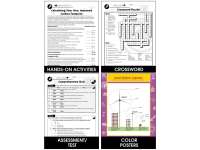
- Bloom's Taxonomy framed graphic organizers along with STEAM focused materials – Underlining environmental science.
- An interactive carbon footprint calculator
- Puzzles and games like a word search game and crossword puzzle.
- A comprehension quiz with an answer key to assess understanding.
Note: This resource is curated specifically for science teachers, homeschooling educators. It can be used flexibly in full-classroom sessions or assigned as smaller group activities such as homework projects.
You need the right tool for teaching students their relationship with the environment? Look no further because "Reducing Your Own Carbon Footprint: How To Make Your Own Footprint Smaller" is available just for you!
What's Included
1 PDF with 30 ready to print pages
0 Reviews
Check out these other great products


