Scientific Notation PowerPoint: Powers of Ten
- Grades
- Grade 8, Middle School
- File type
- Microsoft PowerPoint
- Editable
- Yes


- Subject
- Math, Algebra
- Topic
- Scientific Notation, Powers of Ten
- Resource types
- Presentations, Teacher Tools
- Editable
- Yes
- Standards
- 8.EE.A.3
About this resource
What's inside this resource
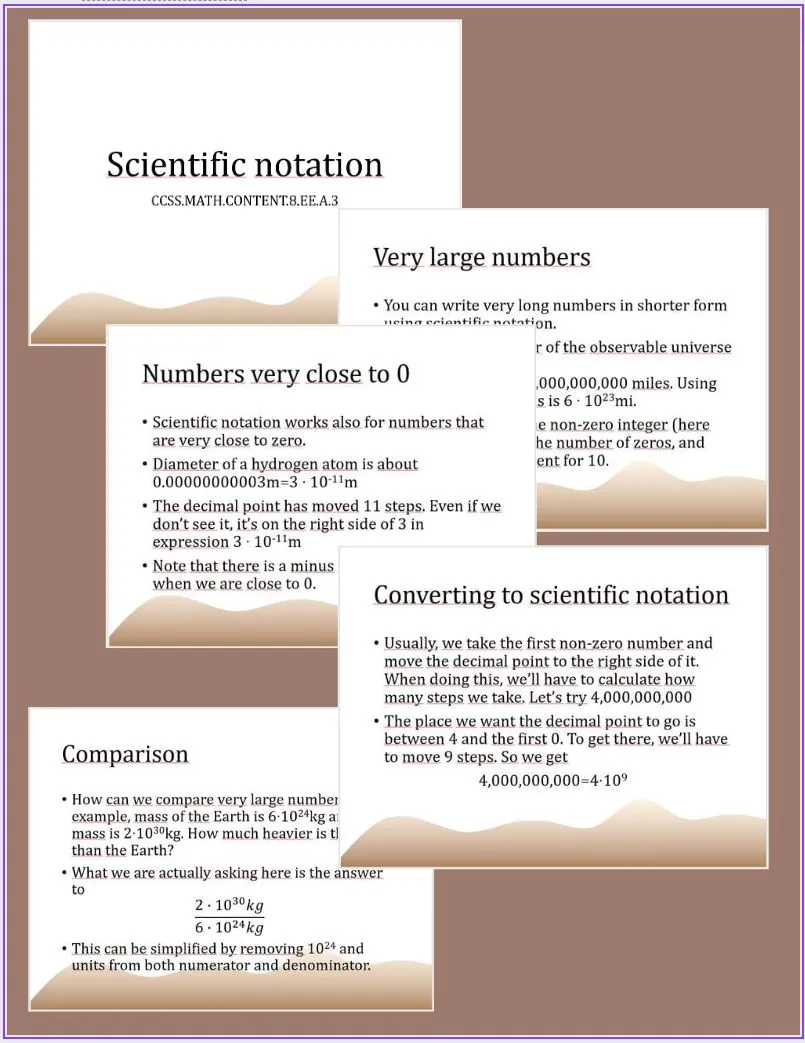
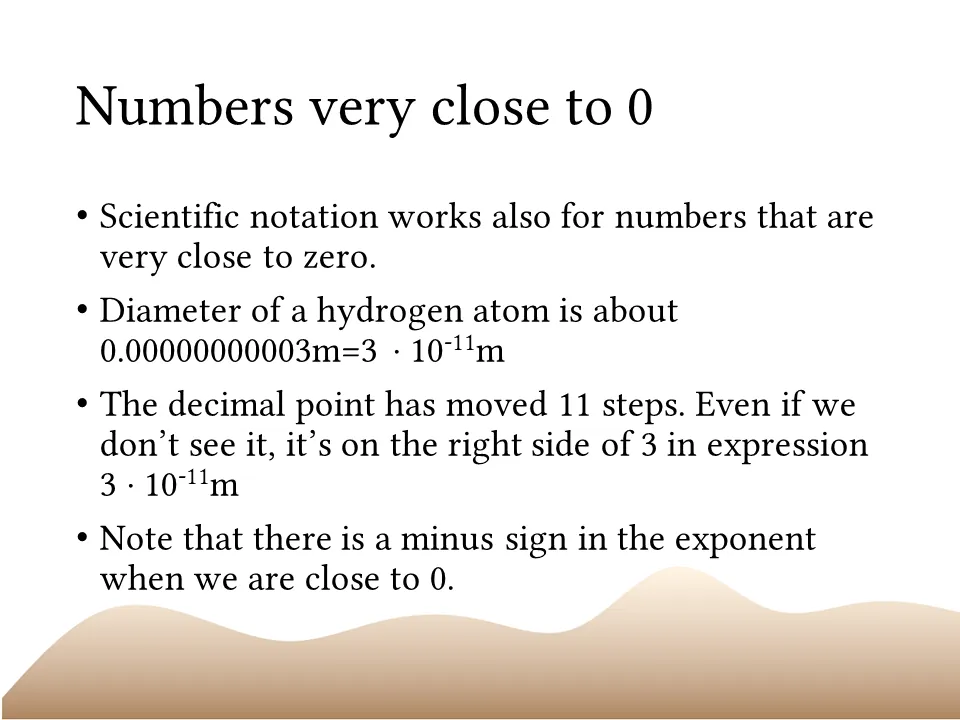
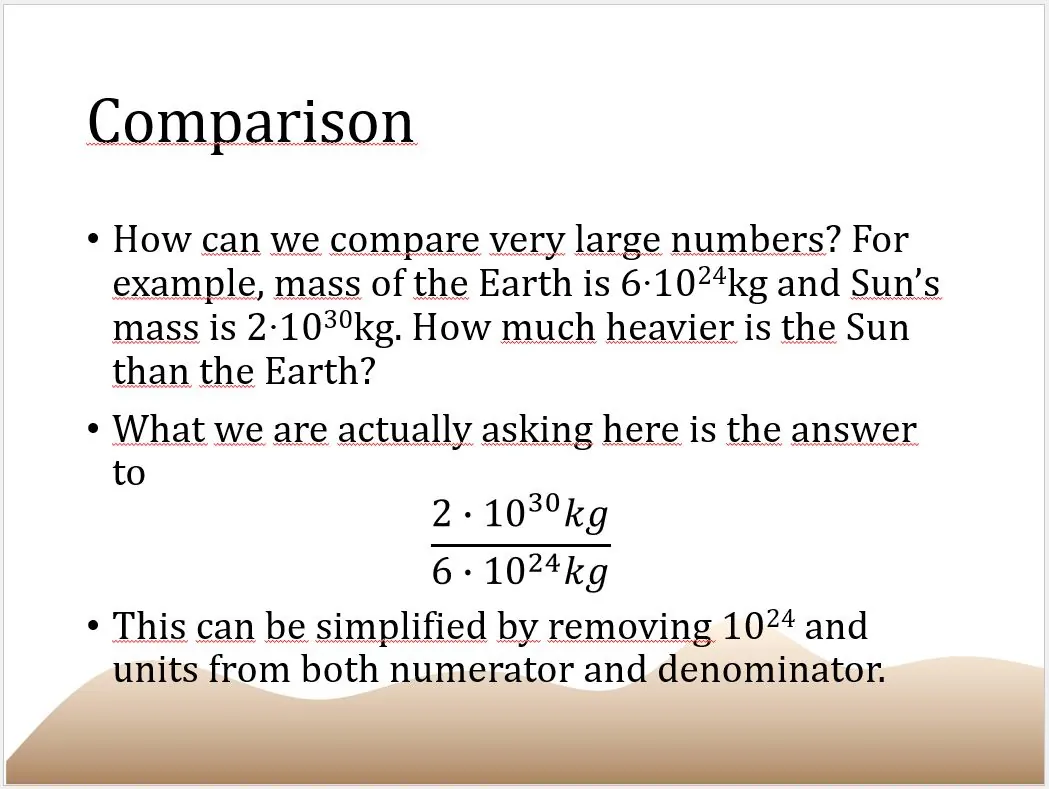
This presentation explains the basics of scientific notation, course 8.EE.A.3
Related resources
More resources teachers may find useful
13 related resources were found using this product's title, contributor, categories and tags.


In the classroom
Teaching tips & learning objectives

Learning objectives
Explain how positive and negative powers of ten change the size of a number.
Connect single-digit scientific notation examples with their ordinary-number equivalents.

Teaching tips
Before revealing a conversion, ask whether the ordinary number should be greater than one or between zero and one. Use that estimate to check the direction of the decimal movement.
Follow the presentation with your own decimal-coefficient example to show why adding zeros is not a general conversion rule.
Good to know
Questions teachers ask about this resource
Does it cover decimal coefficients such as 9.54 × 10¹²?
No. The presentation explicitly leaves those conversions outside its scope and uses examples with a single nonzero digit.

No reviews yet
Downloaded this resource? Tell other teachers how it went.
Curriculum
Standards, concepts & topics
Standards
 Standards
- 8.EE.A.3 — Use numbers expressed in the form of a single digit times an integer power of 10 to estimate very large or very small quantities, and to express how many times as much one is than the other. For example, estimate the population of the United States as 3 × 10⁸ and the population of the world as 7 × 10⁹, and determine that the world population is more than 20 times larger.
Core concepts
 Core concepts
Scientific Notation
Powers of Ten
Place Value
 Topics
Explore more
Categories this resource belongs to
Explore related searches
More to explore
You may also like