Spanish Subject Pronouns Worksheets


- Grades
- Not Grade Specific
- Pages
- 7
- File type
- Preparation
- Print ready


- Subject
- Foreign Languages, Spanish
- Topic
- subject pronouns, los pronombres personales
- Resource types
- Worksheets & Printables, Worksheets
- Preparation
- Print ready
About this resource
What's inside this resource
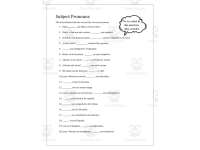
Subject Pronouns worksheet packet! Perfect for beginner students and those looking to review these fundamental concepts. These Grammar in Context activities are designed to support students in understanding the use of Spanish Subject Pronouns in context. This packet activity will fill 60-90 minutes of class, depending on how much time is spent on the topic.
Examples of Activities:
1. Complete Sentences:
Hola, __________ soy María. ¿Cómo estás?
Response: Hola, yo soy María. ¿Cómo estás?
2. Pronoun Identification:
Los niños juegan en el parque. __________ son traviesos.
Response: Ellos son traviesos.
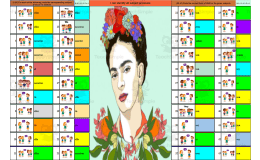
3. Color pronoun:
4. Unscramble senteces:
Soy/ organizado/yo.
Response: Yo soy organizado.
Subject Pronouns worksheet packet! Perfect for beginner students and those looking to review these fundamental concepts. These Grammar in Context activities are designed to support students in understanding the use of Spanish Subject Pronouns in context. This packet activity will fill 60-90 minutes of class, depending on how much time is spent on the topic.
Examples of Activities:
1. Complete Sentences:
Hola, __________ soy María. ¿Cómo estás?
Response: Hola, yo soy María. ¿Cómo estás?
2. Pronoun Identification:
Los niños juegan en el parque. __________ son traviesos.
Response: Ellos son traviesos.
3. Color pronoun:
4. Unscramble senteces:
Soy/ organizado/yo.
Response: Yo soy organizado.
Related resources
More resources teachers may find useful
24 related resources were found using this product's title, contributor, categories and tags.


In the classroom
Teaching tips & learning objectives

Learning objectives
Select the correct Spanish subject pronoun to complete a sentence based on context.
Convert a given name or noun phrase, such as Los estudiantes or Laura y yo, into its matching subject pronoun.
Rewrite full sentences by replacing the subject noun with the correct subject pronoun.

Teaching tips
Work through the fill-in-the-blank page (page 2) first as a warm-up before the two-column matching page (page 3), since the fill-in items provide sentence context that the matching items do not.
Use the two sentence-rewriting pages (4 and 6) as a check for whether students can apply the matching skill from page 3 inside a full sentence rather than in isolation.
Save the word-jumble page (5) and the open-response page (7) for students who are ready to produce original sentences rather than only identify or substitute pronouns, since both pages require constructing rather than selecting an answer.

Skills covered
Subject pronoun selection — students choose the correct pronoun (yo, tú, él, ella, usted, nosotros, ustedes, ellos, ellas) to complete 20 contextual sentences.
Noun-to-pronoun conversion — students convert 36 names and noun phrases, such as Mis padres or El profesor, into their matching subject pronoun.
Sentence transformation — students rewrite 36 full sentences across two pages, replacing the subject noun with the correct pronoun.
Good to know
Questions teachers ask about this resource
Which regional pronoun set does the worksheet use?
The Latin American set throughout — yo, tú, él/ella/usted, nosotros/nosotras, and ellos/ellas/ustedes — so vosotros and vosotras, used in Spain for informal plural “you,” do not appear anywhere in the file.
How do the six exercise pages differ from one another?
They progress through six different task types — filling in a blank, matching a name to its pronoun, rewriting a full sentence, unscrambling a word jumble, and composing an original sentence — so the pronouns are practiced from simple recognition through independent production.

No reviews yet
Downloaded this resource? Tell other teachers how it went.
Resource details
Concepts & topics
Core concepts
 Core concepts
subject pronouns
Spanish grammar
sentence construction
 Topics
Explore more
Categories this resource belongs to
Explore related searches
More to explore
You may also like