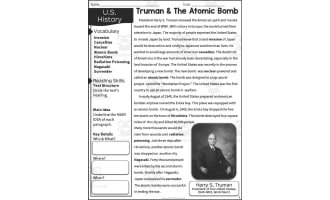
The Dropping of the Atomic Bomb WWII: Document-Based Question (DBQ)


About This Product
Understanding The Dropping of the Atomic Bomb WWII: Document-Based Question (DBQ)
This teaching tool uses primary historical documents to facilitate an in-depth understanding and analysis of a key event in world history. The DBQ aligns with relevant Common Core standards for Social Studies, enhancing students' critical thinking and analytical writing skills.
Grade Level and Subject Area
Teachers instructing grades 8 through 11 can integrate this resource into their World or USA History curriculum.
Subjects Covered
The DBQ examines two related topics:
- The intricacies involved in creating the nuclear bomb.
- An evaluation on whether dropping the bomb was a military necessity.
Sources provided for study:
- A letter from Albert Einstein to FDR.
- Excerpts from Harry Truman's memoirs.
- Casualties tally charts from Hiroshima & Nagasaki.
Note: This also includes firsthand quotes like one from J.Robert Oppenheimer witnessing his creation's destructive capability.
Educational Approach:
This flexible teaching method encourages whole group discussions before students delve into individual research. Small groups can collaboratively invest time in research work that promotes peer-relevant conversations based on factual evidence extracted directly from text history texts.
Included content organising tools:This resource aids homework by providing:
- An outline
- A rubric for essay preparation
Tech Compatibility
This PDF resource is available as multiple file types to ensure convenience irrespective of your tech setup (computer lab hardware or individual student devices).What's Included
Student version
Essay organizer
Prompt
Resource Tags
0 Reviews
Check out these other great products