



Thermal Energy, Temperature & Heat – Slides Lesson
- Grades
- Grades 11–12
- Pages
- 77
- File type
- Multiple File Types
- Answer key
- Included


- Subject
- Science, Physics
- Topic
- Thermal energy, Temperature
- Resource types
- Presentations
- Answer key
- Included
Product description
From the author
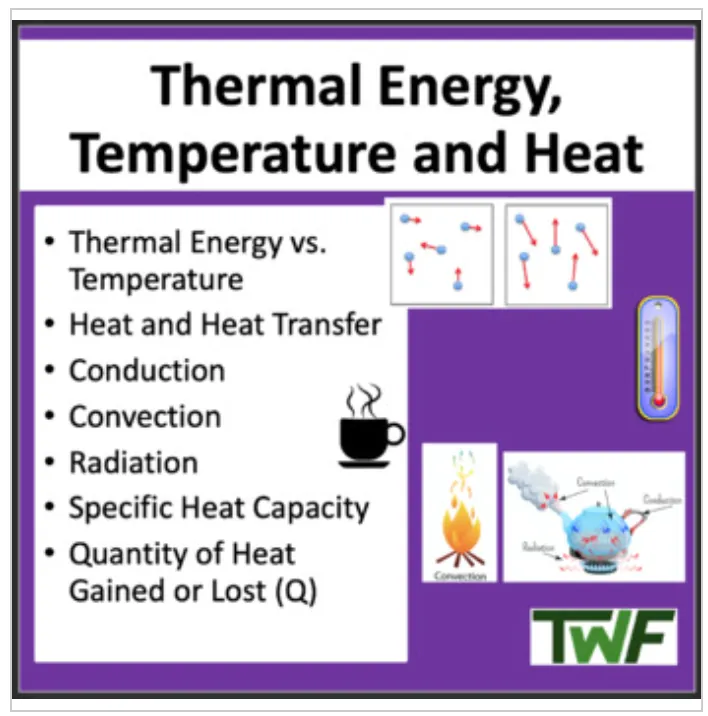
Teach thermal energy, temperature, conduction, convection, radiation and specific heat with teacher and student presentations, guided notes and a calculation worksheet. Native PowerPoint and Word files are editable; a teacher PDF is also supplied.
The Google access page links Google Slides teacher and student versions, Google Docs materials and an exit ticket. Confirm the form’s settings before assignment. The teacher materials explain conceptual answers and give final calculation results; full step-by-step numerical solutions and a separate quiz are not supplied.
Three external lesson/video links and a bonus-resource link document are included. Preview external materials before class.
Related resources
More resources teachers may find useful
2 related resources were found using this product's title, contributor, categories and tags.

In the classroom
Teaching tips & learning objectives

Learning objectives
Distinguish thermal energy, temperature, and heat, and explain how particle motion relates to each
Calculate quantity of heat using Q = mcΔt, given mass, specific heat capacity, and temperature change
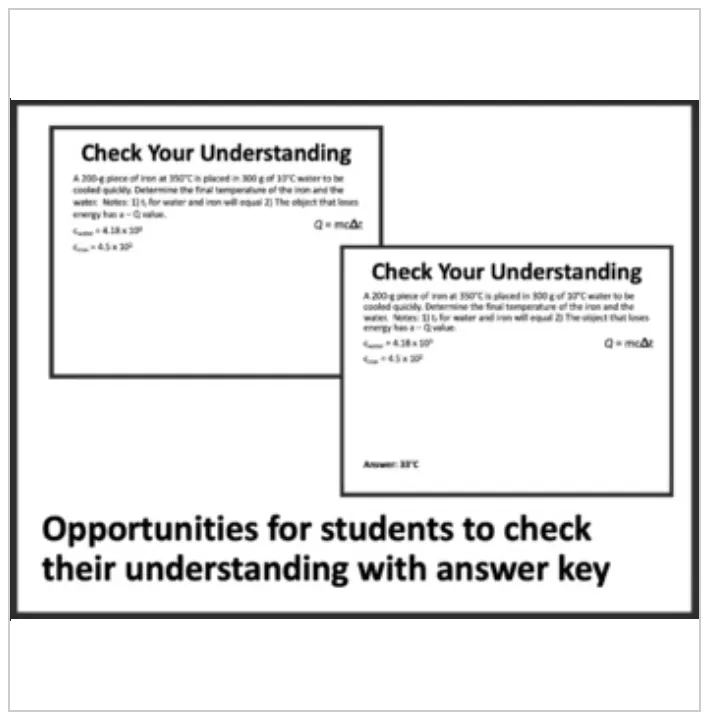
Apply the principle of heat exchange (Qlost = Qgain) to find a final equilibrium temperature between two substances

Teaching tips
Assign the student slide deck alongside the fill-in-blank outline so students complete both together during direct instruction, since the blanks in each match
Use the teacher deck's five conceptual questions (e.g., 'why is the floor the best place to put a heater?') as a discussion warm-up before moving into the quantitative Q = mcΔt problems
Save the final iron-and-water heat-exchange problem for last, since it requires combining specific heat capacity with the Qlost = Qgain principle taught only at the end of the lesson

Skills covered
Conceptual distinction of thermal energy, temperature, and heat — students learn that temperature measures average kinetic energy while thermal energy is a substance's total energy, tested directly in two comparison-based Check Your Understanding problems.
Quantitative heat calculation (Q = mcΔt) — students calculate heat gained or lost using mass, specific heat capacity, and temperature change across multiple worksheet and slide-deck problems, several with numeric answers given.
Heat-exchange equilibrium problems — students apply Qlost = Qgain to find a final shared temperature when two substances at different temperatures are combined, with final results provided for checking.
Good to know
Questions teachers ask about this resource
Do the worksheet and slide problems come with worked answers?
The worksheet gives final numeric answers. Teacher slides explain the conceptual questions and provide final calculation results; model the numerical steps yourself.
Does the lesson stay conceptual, or does it require calculations?
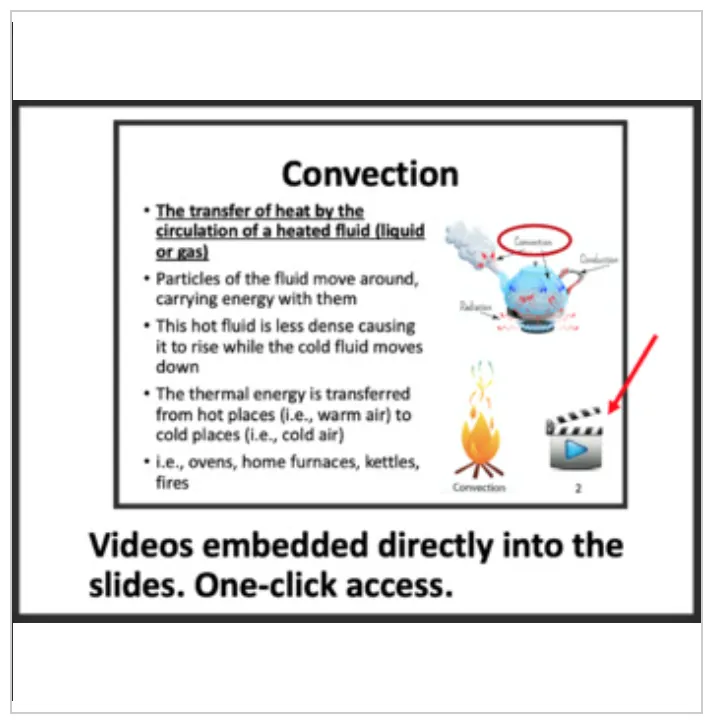
Both — it opens with conceptual definitions and heat-transfer examples, then moves into quantitative Q = mcΔt calculations and multi-step heat-exchange problems.

No reviews yet
Downloaded this resource? Tell other teachers how it went.
Resource details
Concepts & topics
Core concepts
 Core concepts
Thermal energy vs. temperature vs. heat
Conduction, convection, and radiation
Specific heat capacity and Q = mcΔt
Principle of heat exchange
 Topics
Explore more