Yoga Reading Comprehension Passage - Cored Ed Encyclopedia


ELA, Language Development, Reading Comprehension, Reading, History, Social Studies, Pre-Reading, P.E. & Health, Yoga, Geography
Worksheets & Printables, Worksheets, Teacher Tools, Centers, Activities, Writing Prompts, Assessments, Quizzes and Tests, Quizzes, Lesson Plans


About This Product
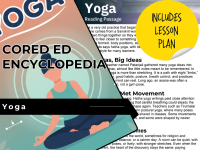
This yoga reading comprehension with lesson plan includes:
Visualization (on the front cover)
Start your lesson by taking a minute to think and share something about the topic.
Read the script aloud (slowly), perhaps prepare some music or sound effects. Student close their eyes and let their imaginations wander.
Students open their eyes, read the question aloud and give them a few minutes to complete. Ask a few students to share or keep answers until the end to compare with what they learn in the passage.
Quick pause—thousands of Cored Education products are included with your TeachSimple membership.
Download links and encyclopedia index available here.
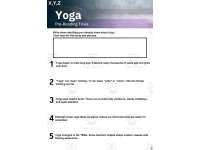
Pre-Reading Trivia
Students will write down one thing they already know about the subject and then read five more facts and discuss. These facts are fun, and the students will enjoy learning about the subject before reading more.
Give 1 minute for students to write what they already know (no pressure—best guess is fine).
Read the five facts together. After each fact, do ask a student for their opinion, was it surprising?
Set a purpose by asking students to highlight/underline one fact they want to learn more about during the reading.
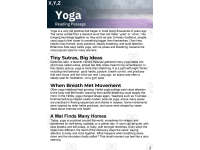
Reading Passage
The text is a high-interest reading passage with set paragraphs, roughly three to four paragraphs long. It contains a variety of themes about the topic, anywhere from history to technology. The passage is between 250 and 350 words in length.
First, ask students to look at the headings and see what they’ll learn about today. What do they know about the topic/heading?
First read options:
Teacher read-aloud (best for support).
Partner reading (paragraph by paragraph).
While reading, students underline important details, and vocabulary words they think may come up in the questions section.
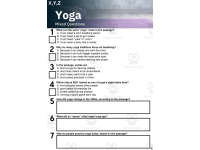
Mixed Questions
The first question page contains four multiple-choice questions, each with a choice of four answers, and three written response questions that require a sentence or two from the student.
Students complete the mcqs first independently, then review quickly as a class.
For the 3 written responses, try to get students giving the answer with some form of evidence:
“I think ___ because the text says ___.”
If students get stuck, send them back to check the passage.
Vocabulary Questions
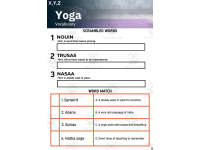
Practice seven key words from the text in this section across two activities. First section is scrambled words where students will unscramble three words given a clue for each. The second section is a word to meaning matching activity.
Before starting, have some students read out words they underlined in the passage. Ask students to say the word and read aloud the sentence(s) around each word.
Ask students to do scrambled words and the matching exercise in pairs then go through answers as a class.
For the scrambled spelling task, get four pairs to come up to the board and write the words for extra practice with the other student reading out the clue.
For the matching task, prompt students to give full sentences: “I matched ___ with ___ because ___.”
Creative Writing
In this question, the student will be required to write a five to eight sentence paragraph on a question related to the topic.
Before starting, ask students write down 3 key ideas they are going to include in their piece. Ask students for ideas to share around the class to help those struggling.
Pro writing expectations:
5–8 sentences
At least 2 facts or details from the passage
At least 2 vocabulary words from the previous page
Students read their paragraphs while classmates listen for facts and vocabulary words.
Extension Activities
This page is optional for fast finishers or to take home. There are several activities, each one requiring a different skill. Do some, do none, do all, completely optional - but you will feel reassured knowing every possibility is planned for. Includes summary writting question.
Answer Key
There are answers for the multiple-choice questions, written response questions have sample answers, vocabulary answers and if there is a summary question then a sample summary will be provided as well.
Lesson Plan Included
Customized lesson plan for this lesson is included.
Lesson Snapshot
Title: Yoga
Genre: Nonfiction (informational text)
Subject: Social Studies & Health/SEL (culture and well-being) / Informational Reading
Primary Topic: Yoga’s origins, key ideas, and modern practice
Estimated Guided Reading Level (A–Z): Q
Support pages present: pre-reading trivia, mixed questions, vocabulary activities, creative writing, extension activities, and an answer key.
What This Lesson Teaches Best
Explains yoga as an old practice that began in India and grew over time.
Defines what the word “yoga” can mean in the passage (“yoke” or “union,” like two things working as one).
Describes key tools in yoga: body positions, steady breathing, and quiet attention (and how breathing can steady the mind).
Introduces “sutras” and explains that Patanjali gathered yoga ideas into short lines meant to be remembered, including a description of yoga as a path with eight “limbs.”
Traces how yoga changed in the 1900s, noting that teachers such as Tirumalai Krishnamacharya helped create modern postural yoga with flowing sequences taught in classes.
Learning Goals
Students will describe what the passage says the word “yoga” can mean.
Students will identify tools the passage says yoga uses (body positions, steady breathing, quiet attention).
Students will explain why careful breathing matters in some yoga traditions, using details from the text.
Students will describe what sutras are and why they were written, according to the passage.
Students will summarize how yoga changed in the 1900s based on the passage’s timeline.
Key Vocabulary From the Text
Sanskrit — a very old language from India.
traditions — ways people practice and pass ideas over time.
sutras — short lines of teaching meant to be remembered.
meditation — a quiet practice to help the mind rest.
asana — a steady seat for meditation, not a gym pose.
FULL CATALOG OF DOWNLOAD LINKS AND ENCYCLOPEDIA INDEX HERE
Resource Tags
0 Reviews
Check out these other great products