Dot To Dot Template

- Pages
- 2
- File type
- Answer key
- Included


- Subject
- Science, Maths
- Topic
- Scientists, Physics
- Resource types
- Dot To Dots
- Answer key
- Included
From the author
About this resource
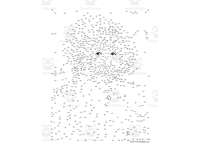
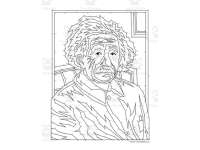
Follow the dots to complete the Albert Einstein Extreme Connect the Dots Puzzle. When students are done connecting all the numbers, many may enjoy colouring the famous physicist. It takes 710 dots to bring the well-known scientist to life.
Albert Einstein helped us increase our understanding of the universe by creating the theory of relativity. He’s perhaps most famous for his equation, E=mc². Include this Printable in a lesson on Einstein, physics, and general science. He was born in 1879 in Germany. His work contributed to the Manhattan Project during WW2.
This dot-to-dot puzzle was created by Tim van de Vall. Copyright Tim’s Printables LLC. Terms of use: To be used for personal and educational purposes only.
The dot-to-dot printable is on page 1. The answer key on page 2. The page are dimensions: 8.5”x11”. Format: PDF. I hope your students enjoy this dot-to-dot! Please have a look at the rest of my printable activities.
Related resources
More resources teachers may find useful
More resources on the same subject and topic.


In the classroom
Teaching tips & learning objectives

Learning objectives
Track a sequence through several hundred values
Connect adjacent numbers with precise lines
Maintain position in a crowded dot field

Teaching tips
Divide the puzzle into planned number ranges before starting.
Pause when visual fatigue leads to repeated searching or skipped values.

Skills covered
Extended number order
Portrait construction
Visual tracking

No reviews yet
Downloaded this resource? Tell other teachers how it went.
Resource details
Concepts & topics
Core concepts
 Core concepts
Extreme dot-to-dot
Portrait puzzle
Hundreds sequence
 Topics
Explore more
Categories this resource belongs to
Explore related searches



More to explore