



How to Start a Counterclaim Paragraph - Guided Practice



- Year groups
- Years 7–9 (Key Stage 3)
- File type
- Preparation
- Print ready


- Subject
- Strategies, English
- Topic
- Writing Station, Argumentative Essay
- Resource types
- Worksheets
- Preparation
- Print ready
From the author
About this resource
our lower secondary students need to practise their argumentative essay counterclaim paragraphs but the thought of writing another essay is crushing! Use this quick, easy, and interactive practice instead!
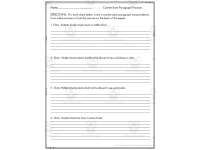
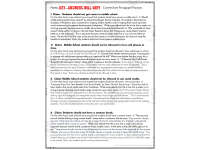
Objective: Students will read 4 claims and use either the paragraph outline and sentence strips to formulate their counterclaim paragraphs or they will use the student worksheet with sources to formulate paragraphs.
Your students will love the hands-on part of the activity and you will love the results!
Teachers like you said...
⭐⭐⭐⭐⭐ Krista A. said, "No matter how many argument essays students write, I find that they need additional practice with counterclaims, so this was an excellent resource. Thanks."
⭐⭐⭐⭐⭐ Jessica L. said, "This is a great, well-organized, and useful resource. My students have been struggling with counterclaim and this gave them much needed practice. Thank you so much!"
Supports Common Core Standards:
CCRA.W.4
Produce clear and coherent writing in which the development, organisation, and style are appropriate to task, purpose, and audience.
CCRA.W.8
Gather relevant information from multiple print and digital sources, assess the credibility and accuracy of each source, and integrate the information while avoiding plagiarism.
CCRA.W.9
Draw evidence from literary or informational texts to support analysis, reflection, and research.
In the classroom
Teaching tips & learning objectives

Learning objectives
Write a counterclaim paragraph that features an opposing viewpoint, rebuts it with evidence, and returns to the essay's original position, following the FAUCET structure.
Select and cite relevant evidence from provided sources to support a rebuttal of an opposing claim.
Sequence the parts of a counterclaim paragraph (feature, affirm, underscore, cite, explain, conclude) in a logical order using sentence strips.

Teaching tips
Copy the student worksheet and sources page back-to-back and pre-cut the sentence strips before class, as the teacher cover letter recommends.
Use the three suggested delivery methods flexibly: sentence-strip sequencing for scaffolded practice, the worksheet alone for independent practice, or a jigsaw approach with groups presenting different claims.
Treat the answer key's model paragraphs as one possible response rather than the single correct answer, since the key itself is labelled 'answers will vary.'

Skills covered
Counterclaim paragraph writing — students follow the FAUCET structure (Feature, Affirm, Underscore, Cite, Explain, Top it off) to write a rebuttal paragraph.
Evidence-based argumentation — students cite quoted source material to support or rebut a claim, such as research on break or cell phone use.
Sentence sequencing — students arrange pre-written sentence strips into the correct FAUCET order for a given claim.
Good to know
Questions teachers ask about this resource
How does the FAUCET mnemonic map onto the parts of a counterclaim paragraph?
Each letter names one paragraph move in order: Feature the opposing view, Affirm it with evidence, Underscore the essay's own position as a rebuttal, Cite evidence for that rebuttal, Explain the evidence with commentary, and Top it off with a conclusion — six moves that build one continuous paragraph.
How do the sentence strips relate to the paragraphs students produce on the worksheet?
Each claim's sentence strips break a complete, correctly ordered FAUCET paragraph into individual sentences presented out of order, so students practice sequencing by physically reconstructing that paragraph before copying a finished version onto the student worksheet.

No reviews yet
Downloaded this resource? Tell other teachers how it went.
Resource details
Concepts & topics
Core concepts
 Core concepts
Counterclaim paragraphs
Argumentative writing
FAUCET structure
Evidence-based writing
 Topics