Author's Purpose Anchor Chart – Reading Reference

- Year groups
- Years 2–4 (Key Stages 1–2)
- File type
- Preparation
- Print ready


- Subject
- Reading, English
- Topic
- Anchor Chart, Reading Chart
- Resource types
- Anchor Charts
- Preparation
- Print ready
From the author
About this resource
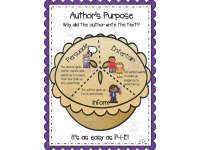
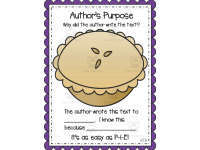
This resource is a set of 2 anchor charts for author's purpose. The first chart is complete. The second chart is a fill in the blank. These charts work well displayed on a bulletin board or inserted into students' reading notebooks.
Related resources
More resources teachers may find useful
More resources on the same subject and topic.


In the classroom
Teaching tips & learning objectives

Learning objectives
Name the three purposes an author writes for — to persuade, to inform, to entertain — using the P-I-E device as the memory hook
Match a purpose to its description: opinion and persuasion, facts and details, or making a reader laugh or cry
State the purpose of a text read in class and back the judgement with evidence, using the printed sentence frame
Ask "Why did the author write the text?" as a routine question when meeting a new text

Teaching tips
Display the completed page as the classroom reference and hand out the blank one, so students build the same chart themselves rather than copying a finished poster
The sentence frame carries the reasoning step — "I know this because" — so it is worth insisting on the second half of the sentence whenever the chart is used
If reducing the blank page for a reading journal, print a sample and check that all text and writing spaces remain usable

Skills covered
Identifying author's purpose — students decide whether a text was written to persuade, inform or entertain, using the three glosses printed on the completed chart.
Evidence-based reasoning — the blank version's sentence frame requires "I know this because ______", so a purpose judgement has to be justified from the text.
Good to know
Questions teachers ask about this resource
In Author's Purpose Anchor Chart – Reading Reference, how do the two pages work together?
The first is finished and the second is not. Page one carries the three purpose descriptions ready to display; page two keeps the title, the question "Why did the author write the text?" and the P-I-E strapline but leaves the purpose boxes empty and adds a sentence frame for students to complete.
What does the P-I-E strapline stand for?
Persuade, Inform and Entertain — the three purposes the chart describes. The chart spells out each one in student language: giving an opinion to talk us into something, giving facts and details, and making us laugh or cry.
What is the RI6 mark in the corner of each page?
A strand reference the designer printed into the chart, pointing at the informational-reading standard that covers author's purpose. It is part of the artwork rather than something students read, and it sits in the lower corner of both the completed and the blank page.

No reviews yet
Downloaded this resource? Tell other teachers how it went.
Resource details
Concepts & topics
Core concepts
 Core concepts
Author's purpose
Persuade, inform, entertain
Reading comprehension
Anchor chart
 Topics
Explore more
Categories this resource belongs to
Explore related searches




More to explore