Marzano's Levels of Understanding – Poster & Rubric


- Pages
- 4
- File type
- Preparation
- Print ready


- Topic
- Marzano Scale, Rubric
- Resource types
- Assessments
- Preparation
- Print ready
From the author
About this resource
Related resources
More resources teachers may find useful
More resources on the same subject and topic.


In the classroom
Teaching tips & learning objectives

Learning objectives
Use student-friendly language to self-assess current understanding of a stated learning target on a 0-4 scale.
Distinguish between partial understanding (levels 1-2) and full or extended understanding (levels 3-4) of a learning target.

Teaching tips
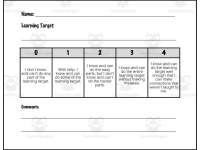
Enlarge the two level-statement pages or cut apart their five level strips as a permanent wall display so students can reference the language during self-assessment.
Have students fill in the blank assessment form with a specific learning target before a unit, then revisit it to track growth over time.
Use the same 0-4 language during teacher feedback and conferencing so students hear consistent proficiency descriptions from both self- and teacher-assessment.

Skills covered
Learning-target self-assessment — students rate their own understanding of a stated target using the 0-4 descriptive scale and record it on the form.
Rubric-based reflection — teachers or students select the description that best matches current performance, from 'I don't know' to 'I can make connections that weren't taught to me.'

No reviews yet
Downloaded this resource? Tell other teachers how it went.
Resource details
Concepts & topics
Core concepts
 Core concepts
Proficiency scale
Self-assessment
Learning target
 Topics
Explore more
Categories this resource belongs to
Explore related searches


More to explore