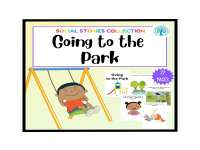
Going to the Park Social Story

- Pages
- 22
- File type
- Preparation
- Print ready


- Subject
- Special Education Needs (SEN), Life Skills, Special Resources
- Topic
- Park Visit, Social Skills
- Preparation
- Print ready
From the author
About this resource
Going to the Park Social Story: An Ideal Teaching Resource
Going to the Park Social Story is a meticulously designed teaching resource with a singular focus on educating children about what they can expect during a park visit. Through this tool, we aim at inculcating key behaviours expected in social situations.
Main Features:
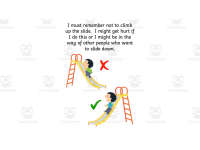
The resource focuses on ensuring safety with swings, slides, roundabouts, and climbing frames.
It emphasises learning about patiently waiting their turn during playtime.
Instills values like obeying adults' instructions and leaving the park without creating any fuss.
Specially Equipped for Special Education Needs (SEN) Students
The teaching instrument involves alluring clip art illustrations from Kari Bolt Children's Illustrator's collection which inherently sparks curiosity in kids about comprehending social norms via lively imagery. Apart from providing valuable lessons on park etiquette, it enlightens children with insights into understanding easily relatable social cues.
A Great Fit for Autistic Children Too!
This illustrative document serves as an effective mechanism of instruction for autistic students who might have trouble deciphering social expectations whilst also trying to anticipate what to expect from certain scenarios as they navigate their day-to-day experiences more comfortably and confidently.
Variety of Formats Available:
In PDF format, these books can be reproduced multiple times over reinforcing crucial points.
Ideal for whole group instruction or small group activities within classrooms along with homeschool setups too!
Educators Across the Globe Can Benefit From This Resource These versatile resources allow educators worldwide transform their teaching techniques concerning practical life skills shaping young minds beyond their academic syllabi. Note: All purchasers have complete permission for unlimited usage, replication, and display restricted only within an educational sphere ensuring compliance to copyright guidelines. Together, let's cultivate a fulfilling environment helping children navigate their experiences with ease!
Clipart images courtesy of Kari Bolt Clipart
Related resources
More resources teachers may find useful
More resources on the same subject and topic.



In the classroom
Teaching tips & learning objectives

Learning objectives
Name a piece of playground equipment and state the one safety rule paired with it (e.g., standing back from a moving swing, climbing the ladder before sliding down).
Describe what to do while waiting for a turn on shared playground equipment.
Identify the expected way to respond when it is time to leave the park, rather than becoming upset.

Teaching tips
Read one or two pages at a sitting before an actual outing so the sequence stays fresh when the child reaches the park.
Walk through the matching real equipment during a pre-visit rehearsal, since the story moves in order through swings, slide, climbing frame, monkey bars, and roundabout.
Use the first-person lines as a script the child can say aloud before a specific transition, such as waiting for a turn or leaving the park.

Skills covered
Turn-taking — the story states directly that the child must wait patiently when someone else is already using the equipment they want.
Playground safety-rule recall — each apparatus (swing, slide, climbing frame, monkey bars, roundabout) is paired with one explicit rule the child can repeat back before using it.
Transition and emotional regulation — the narrative names the sadness of leaving and models the expected response instead of a tantrum, rather than only forbidding the behaviour.
Sequential recall of a real-world routine — the story follows one visit in order from arrival to departure, supporting rehearsal of the actual sequence of a trip.
Good to know
Questions teachers ask about this resource
Which pieces of playground equipment does the story walk through?
Four: the swings, the slide, the climbing frame and monkey bars, and the roundabout, each paired with its own safety reminder.
Is the story written in the child's own voice?
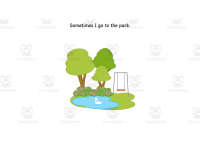
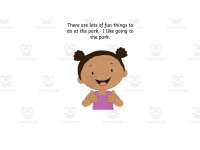
Yes — every page uses first-person phrasing such as “Sometimes I go to the park” and “I should remember,” so it can double as a script for a child to rehearse before a visit.

No reviews yet
Downloaded this resource? Tell other teachers how it went.
Resource details
Concepts & topics
Core concepts
 Core concepts
Playground safety rules
Turn-taking
Transition/emotional regulation
Routine sequencing
 Topics
Explore more
Categories this resource belongs to
Explore related searches


More to explore