Learning About Setting Anchor Chart


- Year groups
- Years 2–4 (Key Stages 1–2)
- File type
- Preparation
- Print ready


- Subject
- Reading, English
- Topic
- Reading Anchor Chart, Interactive Notebook
- Resource types
- Anchor Charts
- Preparation
- Print ready
From the author
About this resource
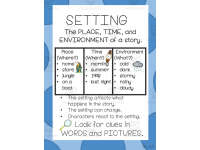
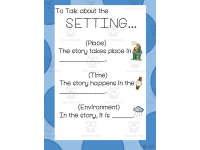
This resource is a set of three anchor charts for learning about setting. The first chart explains setting, and the other two provide fill-in practice. The pages can be used on a reading bulletin board or in students’ interactive reading notebooks.
Related resources
More resources teachers may find useful
More resources on the same subject and topic.


In the classroom
Teaching tips & learning objectives

Learning objectives
Students identify the three components of a story's setting: place, time, and environment.
Students use words and pictures in a text as clues to determine its setting.
Students apply the place/time/environment framework to describe the setting of a specific story using sentence frames.

Teaching tips
Display page one as a permanent classroom anchor chart, then hand out page two for students to complete in their own notes or interactive notebook while referencing the display copy.
Use page three's sentence frames as a quick comprehension check after any read-aloud, having students fill in the blanks for that day's story.
Point to the 'setting can change' bullet when reading a story with multiple locations or time jumps, since the chart's own example lists (home vs. jungle, morning vs. last night) illustrate how varied a single story's settings can be.

Skills covered
Setting identification -- students name the place, time, and environment of a story using the chart's three-category framework.
Text-clue recognition -- the chart directs students to look for setting clues in both words and pictures, not just explicit statements.
Guided note completion -- page two requires filling in the same key terms and bullet wording shown in full on page one.
Applying a concept to a real text -- page three's sentence frames move students from the general framework to describing one specific story's setting.
Good to know
Questions teachers ask about this resource
Are all three pages identical copies of the same chart?
No -- page one is the complete reference chart, page two repeats the same layout with the key terms and bullet wording blanked out for students to fill in, and page three is a separate sentence-frame page for describing a specific story's setting.

No reviews yet
Downloaded this resource? Tell other teachers how it went.
Resource details
Concepts & topics
Core concepts
 Core concepts
Setting
Place time environment
Story elements
 Topics
Explore more
Categories this resource belongs to
Explore related searches




More to explore