Wheelchair Friends

- File type
- Preparation
- Print ready


- Topic
- Inclusion, Empathy
- Preparation
- Print ready
From the author
About this resource
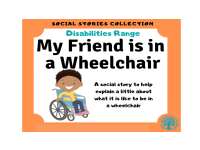
Read a short illustrated social story about a friend who uses a wheelchair. The first-person narrative discusses individual differences, shared activities and ways friends can help one another.
The fifteen-page PDF includes a cover, thirteen story pages and a credits page. Use for guided conversation, asking students to respect each friend’s interests and preferences. Clipart by Kari Bolt.
Related resources
More resources teachers may find useful
More resources on the same subject and topic.



In the classroom
Teaching tips & learning objectives

Learning objectives
Place using a wheelchair among the everyday differences between people rather than apart from them
Give the reasons someone might use a wheelchair, from being born needing one to an illness or injury
Explain that difficulty walking says nothing about how a person thinks
Describe ways a classmate who uses a wheelchair takes part in the same things as everyone else
Offer help where a friend needs it while recognising the help that comes back the other way

Teaching tips
The story builds in order — general difference, then bodies, then wheelchairs — so read it from the start rather than jumping to the wheelchair pages
The page on paralysis introduces the only medical word in the story; have a plain follow-up sentence ready in case a child asks what else it means
Two consecutive pages do the heavy lifting on assumptions about thinking; pause there and let children say what they had assumed before moving on
The closing spread makes help mutual rather than one-directional, which is worth returning to if a class starts treating a classmate as someone to be looked after
Everything is written from the friend's perspective, so it works read aloud to a whole class before a new classmate joins

Skills covered
Understanding difference — the story lists hair, eyes, skin and personality traits before it reaches disability, which places a wheelchair among ordinary differences.
Understanding why a wheelchair is used — three separate pages give being born needing one, an illness and an injury as different routes.
Separating physical from cognitive difference — one page states that trouble walking does not necessarily mean trouble thinking, and the next lists thinking, talking and laughing as things anyone can do.
Reciprocal helping — the closing pages pair things the reader can help a friend with against things that friend might help the reader with.

No reviews yet
Downloaded this resource? Tell other teachers how it went.
Resource details
Concepts & topics
Core concepts
 Core concepts
Social story
Disability awareness
Inclusion
Empathy
 Topics
Explore related searches

More to explore