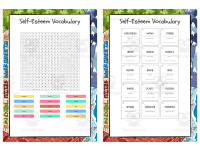
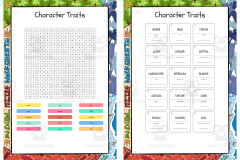
Self-Esteem Vocabulary word search, scramble and crossword puzzle

- Year groups
- Reception (Early Years), Years 1–7 (Key Stages 1–3)
- Pages
- 6
- File type
- Answer key
- Included


- Subject
- Vocabulary, Holiday & Seasonal, Reading, Language Development, English
- Topic
- Word Search, Word Scramble
- Resource types
- Crosswords Puzzles, Word Searches
- Answer key
- Included
From the author
About this resource
I made this self-esteem puzzle set for my 3rd and Year 5 students during our social-emotional learning unit. The kids could be hard on themselves but had no idea what words like confidence, value, or unique meant. So I put together a word search, a word scramble, and a crossword using words like self-esteem, confidence, believe, value, worth, proud, strong, capable, unique, special, talent, skill, effort, improve, mistake, learn, grow, kind, respect, and yourself. Nothing fancy — just puzzles to help the self-esteem vocabulary finally stick.
The PDF is four pages. Three puzzles plus one answer key page. The word search works well for quiet time after break. The scramble gets them talking because they argue about whether everyone is good at something. The crossword I use for partners. I added a couple simple mirror, heart, and star drawings but nothing too busy.
Works for 3rd through Year 6. Print and go. Sometimes I have early finishers write one thing they like about themselves on the back. The kids actually ask for these now.
Related resources
More resources teachers may find useful
More resources on the same subject and topic.


In the classroom
Teaching tips & learning objectives

Learning objectives
Recognise words associated with positive self-concept
Connect an affirming term with its concise definition
Spell wellbeing vocabulary through several puzzle formats

Teaching tips
Review any emotionally loaded terms before independent work.
Use selected words for an optional, nonpersonal sentence rather than requiring disclosure.

Skills covered
Self-concept vocabulary — affirming terms are named.
Definition matching — words connect with concise meanings.
Orthographic recall — puzzles reinforce accurate spelling.

No reviews yet
Downloaded this resource? Tell other teachers how it went.
Resource details
Concepts & topics
Core concepts
 Core concepts
Self-esteem vocabulary
Confidence and worth
Personal boundaries
 Topics
Explore more
Categories this resource belongs to
Explore related searches




More to explore