Solid, Liquid, or Gas – States of Matter Sort


- Year groups
- Years 3–4 (Key Stage 2)
- Pages
- 6
- File type
- Answer key
- Included


- Subject
- Basic Science, Earth Sciences, Earth and Environmental Sciences, Science
- Topic
- Solid, Liquid
- Resource types
- Worksheets
- Answer key
- Included
From the author
About this resource
Solid Liquid or Gas Sorting Activity Printable
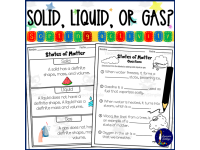
Pupils will examine various states of matter including solids, liquids, and gases. They will categorise the images to identify whether they represent a solid, liquid, or gas. Moreover, they will fill in sentences to describe the type of matter depicted.
Includes:
States of matter review/handout
Sorting activity
States of matter fill in the blanks
Answer key
This practice is great for intro or review on the subject of different states of matter. Include it in your lesson plan today!
Enjoy!
Solid Liquid or Gas Sorting Activity Printable | Solid Liquid or Gas Sorting Activity Printable | Solid Liquid or Gas Sorting Activity Printable | Solid Liquid or Gas Sorting Activity Printable | Solid Liquid or Gas Sorting Activity Printable | Solid Liquid or Gas Sorting Activity Printable | Solid Liquid or Gas Sorting Activity Printable | Solid Liquid or Gas Sorting Activity Printable | Solid Liquid or Gas Sorting Activity Printable | Solid Liquid or Gas Sorting Activity Printable | Solid Liquid or Gas Sorting Activity Printable | Solid Liquid or Gas Sorting Activity Printable | Solid Liquid or Gas Sorting Activity Printable | Solid Liquid or Gas Sorting Activity Printable | Solid Liquid or Gas Sorting Activity Printable |
Related resources
More resources teachers may find useful
More resources on the same subject and topic.


In the classroom
Teaching tips & learning objectives

Learning objectives
Classify everyday objects and substances as a solid, liquid, or gas.
Sort picture cards into the correct state-of-matter category.
Identify and write the correct state-of-matter term for a pictured example.

Teaching tips
Have students cut apart the 12 picture cards before sorting, since the sorting worksheet is designed to receive the cut-out cards.
Use the fill-in-the-blank page as a quick post-sort check, since it revisits the same solid/liquid/gas vocabulary with a different set of pictures.
Check completed work against the two included answer-key pages rather than re-deriving the correct classification for each item.

Skills covered
Matter classification — students sort 12 picture cards (e.g. rain water, helium in a balloon, a chair) into solid, liquid, and gas categories.
Vocabulary application — students write solid, liquid, or gas to label five additional pictured examples.
Cutting and sorting — students cut out picture cards and physically place them into the correct category on the worksheet.
Good to know
Questions teachers ask about this resource
How do the sorting activity and the fill-in-the-blank page differ?
The sorting activity uses twelve cut-out picture cards, such as a block, rain water, and soda, that get physically sorted into columns, while the fill-in-the-blank page presents five different pictured examples for students to label directly with the matching word.

No reviews yet
Downloaded this resource? Tell other teachers how it went.
Resource details
Concepts & topics
Core concepts
 Core concepts
States of matter
Solid
Liquid
Gas
 Topics
Explore more
Categories this resource belongs to
Explore related searches


More to explore