Peer Evaluation Forms for Group Work and Presentations

- Grades
- Grades 4–8
- File type
- Google Docs
- Editable
- Yes


- Subject
- Classroom Management, Resources for Teachers
- Topic
- Peer, Evaluation
- Resource types
- Templates
- Editable
- Yes
From the author
About this resource
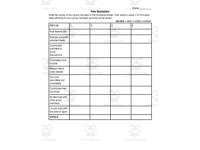
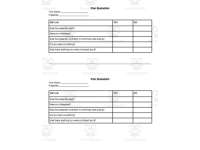
This is a Peer Evaluation For Group Work, Presentations, Cooperative Tasks, and Team Assignments. This package has 12 different peer evaluation forms for larger groups as well as pairs. You can use these Peer Evaluations in any subject at any level.
Included is a printable PDF file as well as an editable Google Doc.
Related resources
More resources teachers may find useful
More resources on the same subject and topic.


In the classroom
Teaching tips & learning objectives

Learning objectives
Practice giving structured, criteria-based feedback to a peer or group member across categories like dependability, contribution, and timeliness.
Reflect on and articulate specific strengths, areas for improvement, and lingering questions about a peer's work or presentation.

Teaching tips
Choose the attribute checklist that matches your group size (2, 3, or 4 members), since three separate versions are included.
Use the open-ended '2 things they did well' or '3 things well / 2 learned / 1 still don't know' reflection templates after presentations, when written qualitative feedback is more valuable than a single score.
Pair a numeric rating scale (1-10 or 0-3) with its 'Explain your reasoning' counterpart when you want students to justify a score rather than just circle a number.

Skills covered
Constructive peer feedback — students rate a group member or presenter against specific behaviours such as dependability, punctuality, and fair contribution.
Reflective evaluation — students write specific strengths, areas for improvement, and open questions after observing a peer's work or presentation.
Collaborative self-assessment — students use the partner-rating templates to numerically score a partner's contribution across five defined collaboration behaviours.
Good to know
Questions teachers ask about this resource
How do the 1-10 rating scale templates differ from the 0-3 rating scale templates?
The 1-10 scale only labels its two endpoints ('1 is terrible' and '10 is great'), leaving the numbers in between open to interpretation, while the 0-3 scale labels every point (3 Excellent, 2 Average, 1 Below Average, 0 Unacceptable), giving each score a defined meaning.
Do the three group-size versions of the attribute checklist evaluate different things?
No — all three versions score the same nine attributes (dependable, accepted tasks, contributed positively, completed work on time, helped others, accurate work, fair share, worked well with others, would work with again) on the same 1-3 scale; only the number of group-member columns changes.

No reviews yet
Downloaded this resource? Tell other teachers how it went.
Resource details
Concepts & topics
Core concepts
 Core concepts
Peer evaluation
Group work assessment
Constructive feedback
 Topics
Explore more
Categories this resource belongs to
Explore related searches


More to explore