



2,796 products added recently
Page 625 - Newest Teaching Resources

 Show filters

The Treasure by Uri Shulevitz Interactive Read-Aloud Activities
ELA, Reading, Reading Comprehension, Language Development, Vocabulary, Grade 2, 3, 4, Literacy Readers, Teacher Tools
This picture book companion is a complete supplemental resource for the book The Treasure by Uri Shulevitz. With 38 print-and-go reading activities to choose from, this resource is ideal for customizing learning to your student's specific needs and academic abilities. Students will practice identifying plot elements, identify characteristics of a folktale, determine the theme, analyze characters, compare & contrast, make predictions, inferences, & connections, answer questions that require them to think within and beyond the text, and much more! Students will love the engaging and fun activities, and you will appreciate the time saved hunting for high-level resources to teach reading concepts that students frequently struggle with. The activities provided are designed to enable students to apply higher-level thinking skills, encourage them to provide text evidence to support their thinking, and challenge them to express their own thoughts and/or perspectives. ⭐️This Resource Includes:⭐️ Elements of a Folktale Anchor Chart or Notes Handout Making Predictions: Before reading the book, students will make predictions about the text. Folktale Checklist: Students fill in the chart with details from the story that characterize it as a folktale. Folktale Tidbits: Students will answer questions with details from the story that prove it's a folktale. Story Elements: Students fill in the boxes with words & pictures to represent the story elements. Sequencing: Students will retell & illustrate the important parts of the story. Recalling events in Chronological Order: Students describe and illustrate four major events in the story in chronological order. Summary: Students complete the Somebody, Wanted, Because, But, So graphic organizer and write a summary of the story. Comic Recall: Students will draw three scenes from the story, complete with speech bubbles, to tell the story's beginning, middle, and end with text and illustrations. Plot: Students will fill in the plot diagram with details from the story (ANSWER KEY included). Story Event Sort: Students will describe a scene or event from the story that fits into each of the categories & explain how the event made them feel & how it relates to the category. Making Connections: Students make connections to an event from the story. Making Inferences: Students use clues & schema to make inferences while reading the story. Character Actions & Reactions: Students read situations that the character(s) experienced in the story and fill in the missing information with details from the text (ANSWER KEY included). Character Inside & Out (Isaac): Students include details from the story to describe what the character says, thinks, does, and feels. Character Inside & Out (Captain of the Guards): Students include details from the story to describe what the character says, thinks, does, and feels. Character Feelings (Isaac): Students describe how the character's feelings change throughout the story & give examples of the events that cause them to feel the way they do. Character Development (Isaac): Students select character traits that best describe the character at different times throughout the story and give examples from the book to support the traits they chose. Character Change (Isaac): Students will explain how the character changed from the beginning to the end of the story and describe the events that caused the change to happen. Sketch a Scene From the Story: Students will illustrate one of the events from the story and explain why this event is important to the plot. Setting Influences the Plot: Students will draw a scene from the story that takes place in one of the settings and write about what happened there and why it was important to the plot. Setting the Scene: Students identify three different settings in the story and explain how they know the setting changed. 3-2-1: Students will identify three details from the text that help them identify the story as a folktale, describe two things that Isaac does when he travels to the capital city, and choose one word that best describes Isaac and explain why. Author's Message: Students describe four important events from the story and put them in chronological order. Then, answer the questions about the author's message. Theme: Students answer the questions to determine which theme best fits the story and provide text evidence to support their choice. Before & After: Students will draw a picture and explain Isaac’s life before he set off on his journey to the capital city, and then draw another picture and describe Isaac’s life after returning home from his journey Thinking About the Text: Students will answer the questions about the story & include examples from the text to support their answers. Thinking Beyond the Text: Students will answer the questions about the story & include examples from the text to support their answers. Compare & Contrast: Students compare and contrast what Isaac’s life was like at the beginning of the story to what his life was like at the end of the story. Then, they compare Isaac’s dream to the captain’s dream. Book Review: Students will rate and review the book. Dear Captain of the Guards: Students imagine they’re Isaac, and write a letter to the captain of the guards explaining why they want to give him the ruby. Dear Isaac: Students imagine they’re the captain of the guards and they just received a letter and a priceless ruby from Isaac. They will write a letter in response, expressing gratitude and explaining how Isaac's generous gift will change to their life. Crossword Puzzle: Students use the definitions and the word bank to fill in the crossword puzzle (ANSWER KEY included). Wait... There's More!: Students will write about what happens next in the story. Dream Board: Students will complete a dream board with text and illustrations. Two versions are included: one that includes question prompts and a blank version in which students come up with their own dreams for the future. Personal Treasures: In the coins and jewels, students describe what they consider to be treasures (money, jewels, happiness, family, etc.). In the treasure chest, they describe the treasure that they value the most and explain why. Writing a Folktale: Students will plan and write their own folktale or origin story. The following pages are included for this activity : Folktale Planning Sheet: Students use the planning sheet to organize their story. Folktale Cover: Students design a book cover for their folktale. Lined Writing Paper: Three different layouts are included. Plot Diagram Graphic Organizers & Anchor Charts: Students can plot out the events of their folktale to organize their thoughts. A variety of plot diagram graphic organizers are included in order to differentiate for your students. This resource is for extension read-aloud activities only. The book is not included.
Author Creatively Gifted
Tags Fountas And Pinnell, Second Grade, Elementary Ela, Reading Comprehension, Character Traits, Guided Reading, Interactive Read-aloud, Picture Book, Folktales, The Treasure By Uri Shulevitz

Why the Sky is Far Away: A Nigerian Folktale Read-Aloud Activities
ELA, Reading, Reading Comprehension, Language Development, Vocabulary, Grade 2, 3, 4, Literacy Readers, Teacher Tools
This picture book companion is a complete supplemental resource for the book Why the Sky is Far Away: A Nigerian Folktale by Mary-Joan Gerson. With 36 print-and-go reading activities to choose from, this resource is ideal for customizing learning to your student's specific needs and academic abilities. Students will investigate illustrations, identify story elements, determine the theme, analyze characters, compare & contrast, make predictions, inferences, & connections, answer questions that require them to think beyond the text, and much more! Students will love the engaging and fun activities, and you will appreciate the time saved hunting for high-level resources to teach reading concepts that students frequently struggle with. The activities provided are designed to enable students to apply higher-level thinking skills, encourage them to provide text evidence to support their thinking, and challenge them to express their own thoughts and/or perspectives. ⭐️This Resource Includes:⭐️ Elements of a Folktale Anchor Chart or Notes Handout Making Predictions: Before reading the book, students will make predictions about the text. Folktale Tidbits: Students will answer questions with details from the story that proves it's a folktale. Story Elements: Students fill in the boxes with words & pictures to represent the story elements. Sequencing: Students will retell & illustrate the important parts of the story. Recalling events in Chronological Order: Students describe and illustrate four major events in the story in chronological order. Summary: Students complete the Somebody, Wanted, Because, But, So graphic organizer and write a summary of the story. Retell the Story: Students retell the beginning, middle, and end of story with text and illustrations. Story Event Sort: Students will describe a scene or event from the story that fits into each of the categories & explain how the event made them feel & how it relates to the category. Problem & Solution: Students will answer questions related to the story’s problem and solution. Making Connections: Students make connections to an event from the story. Making Inferences: Students use clues & schema to make inferences while reading the story. Character Actions & Reactions: Students read different situations that the characters faced in the story and fill in the boxes with the character's missing actions & reactions. (ANSWER KEY included). Character Inside & Out (Adese): Students include details from the story to describe what the character says, thinks, does, and feels. Character Inside & Out (The Sky): Students include details from the story to describe what the character says, thinks, does, and feels. Character Feelings: Students describe how the character's feelings change throughout the story & give examples of the events that cause them to feel the way they do. Character Summary: Students will choose a character from the story to summarize and fill out the graphic organizer. Character Perspective: Students will compare the Sky’s perspective to the people’s perspectives by drawing pictures and adding words to the thought bubbles. Sketch a Scene From the Story: Students will illustrate one of the events from the story and explain why this event is important to the plot. Setting Influences the Plot: Students will draw a scene from the story that takes place in one of the settings and write about what happened there and why it was important to the plot. Setting the Scene: Students identify three different settings in the story and explain how they know the setting changed. 3-2-1: Students will identify three details from the text that help them identify the story as a folktale, describe two reasons the sky was angry, and choose one word that describes Adese the best and explain why. Author's Message: Students describe four important events from the story and put them in chronological order. Then, answer the questions about the author's message. Theme: Students answer the questions to determine which theme best fits the story and provide text evidence to support their choice. Before & After: Students will draw a picture and describe the relationship between the Sky and the people before the Sky warned them about being greedy and wasteful. Then draw a picture and describe the relationship between the Sky and the people after. Thinking About the Text: Students will answer the questions about the story & include examples from the text to support their answers. Thinking Beyond the Text: Students will answer the questions about the story & include examples from the text to support their answers. Crossword Puzzle: Students use the definitions and the word bank to fill in the crossword puzzle (ANSWER KEY included). Book Review: Students will rate and review the book. Thinking About Theme: Students will fill in the stars with answers to the question prompts regarding the theme of the story. Wait... There's More!: Students will write about what happens next in the story. Writing a Folktale: Students will plan and write their own folktale or origin story. The following pages are included for this activity : Folktale Planning Sheet: Students use the planning sheet to organize their story. Folktale Cover: Students design a book cover for their folktale. Lined Writing Paper: Three different layouts are included. Plot Diagram Graphic Organizers & Anchor Charts: Students can plot out the events of their folktale to organize their thoughts. A variety of graphic organizers for plot are included in order to differentiate for your students. Plot Diagram Anchor Charts or Notes for Students This resource is for extension read-aloud activities only. The book is not included.
Author Creatively Gifted
Tags Fountas And Pinnell, Second Grade, Elementary Ela, Reading Comprehension, Character Traits, Guided Reading, Interactive Read-aloud, Picture Book, Folktales, Why The Sky Is Far Away: A Nigerian Folktale

Nine-In-One Grr! Grr! Interactive Read-Aloud Activities
ELA, Reading, Reading Comprehension, Language Development, Vocabulary, Grade 2, 3, 4, Literacy Readers, Teacher Tools
This picture book companion is a complete supplemental resource for the book Nine-In-One Grr! Grr! retold by Blia Xiong. With 38 print-and-go reading activities to choose from, this resource is ideal for customizing learning to your student's specific needs and academic abilities. Students will practice identifying plot elements, identify characteristics of a folktale, determine the theme, analyze characters, compare & contrast, make predictions, inferences, & connections, answer questions that require them to think within and beyond the text, and much more! Students will love the engaging and fun activities, and you will appreciate the time saved hunting for high-level resources to teach reading concepts that students frequently struggle with. The activities provided are designed to enable students to apply higher-level thinking skills, encourage them to provide text evidence to support their thinking, and challenge them to express their own thoughts and/or perspectives. ⭐️This Resource Includes:⭐️ Elements of a Folktale Anchor Chart or Notes Handout Making Predictions: Students will make predictions about the text before reading the book. Folktale Checklist: Students fill in the chart with details from the story that characterize it as a folktale. Folktale Tidbits: Students will answer questions with details from the story that prove it's a folktale. Story Elements: Students fill in the boxes with words & pictures to represent the story elements. Sequencing: Students will retell & illustrate the important parts of the story. Recalling events in Chronological Order: Students describe and illustrate four major events in the story in chronological order. Summary: Students complete the Somebody, Wanted, Because, But, So graphic organizer and write a summary of the story. Retell the Story: Students will tell the story's beginning, middle, and end with text and illustrations. Story Event Sort: Students will describe a scene or event from the story that fits into each of the categories & explain how the event made them feel & how it relates to the category. Making Connections: Students make connections to an event from the story. Making Inferences: Students use clues & schema to make inferences while reading the story. Cause and Effect: Students will identify cause and effect relationships within the story and fill in the missing effects (ANSWER KEY included). Character Traits: Students choose two important traits that best describe each character and provide examples from the text for each characteristic. Character Inside & Out (Tiger): Students include details from the story to describe what the character says, thinks, does, and feels. Character Inside & Out (Bird): Students include details from the story to describe what the character says, thinks, does, and feels. Character Feelings (Tiger): Students describe how the character's feelings change throughout the story & give examples of the events that cause them to feel the way they do. Character Development (Tiger): Students select character traits that best describe the character at different times throughout the story and give examples from the book to support the traits they chose. Character Change (Tiger): Students will explain how the character changed from the beginning to the end of the story and describe the events that caused the change to happen. Character Dialogue: Students read the following character quotes and explain how what they said affected the other characters in the story. Sketch a Scene From the Story: Students will illustrate one of the events from the story and explain why this event is important to the plot. Setting Influences the Plot: Students will draw a scene from the story that takes place in one of the settings and write about what happened there and why it was important to the plot. Setting the Scene: Students identify three different settings in the story and explain how they know the setting changed. 3-2-1: Students will identify three details from the text that describe the great Shao, describe two things that make the land of the great Shao special, and choose one word that best describes the mighty Shao and explain why. Author's Message: Students describe four important events from the story and put them in chronological order. Then, answer the questions about the author's message. Theme: Students answer the questions to determine which theme best fits the story and provide text evidence to support their choice. Thinking About the Text: Students will answer the questions about the story & include examples from the text to support their answers. Thinking Beyond the Text: Students will answer the questions about the story & include examples from the text to support their answers. Wondering What the Future Holds: Students explain why they think Tiger was so anxious to learn about her future from Shao, and write about something they to know about their future and why. Sorry, Not Sorry: Students state their opinion on whether Bird is a villain or a hero based on her actions. Then, based on their opinion, students will write an apology note or an explanation defending Bird’s actions. Suffix -ly: Students will practice adding the suffix -ly to words from the story (ANSWER KEY included). Word Search: Students find the words hidden in the puzzle (ANSWER KEY included). Wait... There's More!: Students will write about what happens next in the story. Book Review: Students will rate and review the book. All About Laos: Students will conduct research to learn more about the country of Laos. All About Tigers Brochure: Students will conduct research to learn more about tigers using the guiding questions in the brochure. Writing a Folktale: Students will plan and write their own folktale or origin story. The following pages are included for this activity : Folktale Planning Sheet: Students use the planning sheet to organize their story. Folktale Cover: Students design a book cover for their folktale. Lined Writing Paper: Three different layouts are included. Plot Diagram Graphic Organizers & Anchor Charts: Students can plot out the events of their folktale to organize their thoughts. A variety of plot diagram graphic organizers are included in order to differentiate for your students. This resource is for extension read-aloud activities only. The book is not included.
Author Creatively Gifted
Tags Fountas And Pinnell, Second Grade, Elementary Ela, Reading Comprehension, Character Traits, Guided Reading, Interactive Read-aloud, Picture Book, Nine-In-One Grr! Grr! , Folktales
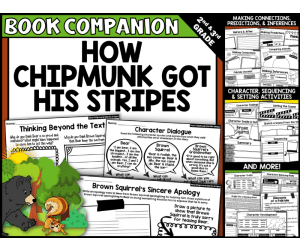
How Chipmunk Got His Stripes Interactive Read-Aloud Activities
ELA, Reading, Reading Comprehension, Language Development, Vocabulary, Grade 2, 3, 4, Literacy Readers, Teacher Tools
This picture book companion is a complete supplemental resource for the book How Chipmunk Got His Stripes by Joseph Bruchac and James Bruchac. With 37 print-and-go reading activities to choose from, this resource is ideal for customizing learning to your student's specific needs and academic abilities. Students will investigate illustrations, identify story elements, determine the theme, analyze characters, compare & contrast, make predictions, inferences, & connections, answer questions that require them to think beyond the text, and much more! Students will love the engaging and fun activities, and you will appreciate the time saved hunting for high-level resources to teach reading concepts that students frequently struggle with. The activities provided are designed to enable students to apply higher-level thinking skills, encourage them to provide text evidence to support their thinking, and challenge them to express their own thoughts and/or perspectives. ⭐️This Resource Includes:⭐️ Elements of a Folktale Anchor Chart or Notes Handout Making Predictions: Before reading the book, students will make predictions about the text. Folktale Checklist: Students fill in the chart with details from the story that characterize it as a folktale. Folktale Tidbits: Students will answer questions with details from the story that proves it's a folktale. Story Elements: Students fill in the boxes with words & pictures to represent the story elements. Sequencing: Students will retell & illustrate the important parts of the story. Recalling events in Chronological Order: Students describe and illustrate four major events in the story in chronological order. Summary: Students complete the Somebody, Wanted, Because, But, So graphic organizer and write a summary of the story. Comic Recall: Students will draw three scenes from the story, complete with speech bubbles, to tell the story's beginning, middle, and end with text and illustrations. Story Event Sort: Students will describe a scene or event from the story that fits into each of the categories & explain how the event made them feel & how it relates to the category. Making Connections: Students make connections to an event from the story. Making Inferences: Students use clues & schema to make inferences while reading the story. Character Traits: Students choose two important traits that best describe each character and provide examples from the text for each characteristic. Character Inside & Out (Brown Squirrel): Students include details from the story to describe what the character says, thinks, does, and feels. Character Inside & Out (Bear): Students include details from the story to describe what the character says, thinks, does, and feels. Character Feelings (Brown Squirrel): Students describe how the character's feelings change throughout the story & give examples of the events that cause them to feel the way they do. Character Feelings (Bear): Students describe how the character's feelings change throughout the story & give examples of the events that cause them to feel the way they do. Character Development (Brown Squirrel): Students select character traits that best describe the character at different times throughout the story and give examples from the book to support the traits they chose. Character Development (Bear): Students select character traits that best describe the character at different times throughout the story and give examples from the book to support the traits they chose. Character Change (Bear): Students will explain how the character changed from the beginning to the end of the story and describe the events that caused the change to happen. Character Dialogue: Students read the following character quotes and explain how what they said affected the other characters in the story. Characters Behaving Badly: Students give two examples of Bear behaving badly and 2 examples of Brown Squirrel behaving badly. Then, write down how Bear & Brown Squirrel should have behaved or what they could have done instead. Sketch a Scene From the Story: Students will illustrate one of the events from the story and explain why this event is important to the plot. Setting Influences the Plot: Students will draw a scene from the story that takes place in one of the settings and write about what happened there and why it was important to the plot. Setting the Scene: Students identify three different settings in the story and explain how they know the setting changed. 3-2-1: Students will identify three details from the text that help them identify the story as a folktale, describe two lessons the characters learn in the story, and choose one word that best describes Brown Squirrel or Bear and explain why. Author's Message: Students describe four important events from the story and put them in chronological order. Then, answer the questions about the author's message. Theme: Students answer the questions to determine which theme best fits the story and provide text evidence to support their choice. Before & After: Students will draw a picture and explain how Bear behaved and looked before meeting Brown Squirrel, and then draw another picture and describe Bear after meeting Brown Squirrel. Thinking About the Text: Students will answer the questions about the story & include examples from the text to support their answers. Thinking Beyond the Text: Students will answer the questions about the story & include examples from the text to support their answers. Squirrel’s Sincere Apology: Students write an apology note to Bear from Brown Squirrel apologizing for teasing him. Then, they will draw a picture of Brown Squirrel apologizing to Bear or doing something kind for him. Book Review: Students will rate and review the book. Wait... There's More!: Students will write about what happens next in the story. Comparing Animals: Students will compare and contrast chipmunks to squirrels. Then, compare bears to an animal they think is similar. Writing a Folktale: Students will plan and write their own folktale or origin story. The following pages are included for this activity : Folktale Planning Sheet: Students use the planning sheet to organize their story. Folktale Cover: Students design a book cover for their folktale. Lined Writing Paper: Three different layouts are included. Plot Diagram Graphic Organizers & Anchor Charts: Students can plot out the events of their folktale to organize their thoughts. A variety of graphic organizers for plot are included in order to differentiate for your students. This resource is for extension read-aloud activities only. The book is not included.
Author Creatively Gifted
Tags Fountas And Pinnell, Second Grade, Elementary Ela, Reading Comprehension, Character Traits, Guided Reading, Interactive Read-aloud, Picture Book, Folktales, How Chipmunk Got His Stripes
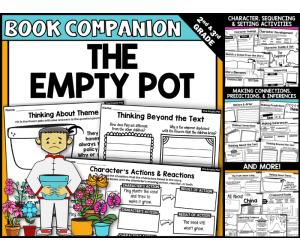
The Empty Pot Interactive Read-Aloud Activities
ELA, Reading, Reading Comprehension, Language Development, Vocabulary, Grade 2, 3, 4, Literacy Readers, Teacher Tools
This picture book companion is a complete supplemental resource for the book The Empty Pot by Demi. With 28 print-and-go reading activities to choose from, this resource is ideal for customizing learning to your student's specific needs and academic abilities. Students will investigate illustrations, identify story elements, determine the theme, analyze characters, compare & contrast, make predictions, inferences, & connections, answer questions that require them to think beyond the text, and much more! Students will love the engaging and fun activities, and you will appreciate the time saved hunting for high-level resources to teach reading concepts that students frequently struggle with. The activities provided are designed to enable students to apply higher-level thinking skills, encourage them to provide text evidence to support their thinking, and challenge them to express their own thoughts and/or perspectives. ⭐️This Resource Includes:⭐️ Making Predictions: Before reading, students will make predictions about the text. Story Elements: Students fill in the boxes with words & pictures to represent the story elements. Sequencing: Students will retell & illustrate the important parts of the story. Recalling events in Chronological Order: Students describe and illustrate four major events in the story in chronological order. Summary: Students complete the Somebody, Wanted, Because, But, So graphic organizer and write a summary of the story. Story Event Sort: Students will describe a scene or event from the story that fits into each of the categories & explain how the event made them feel & how it relates to the category. Making Connections: Students make connections to an event from the story. Making Inferences: Students use clues & schema to make inferences while reading the story. Character Actions & Reactions: Students read different situations that the characters faced in the story and fill in the boxes with the character's missing action, reaction, or both (ANSWER KEY included). Character Inside & Out (Ping): Students include details from the story to describe what the character says, thinks, does, and feels. Character Inside & Out (The Emperor): Students include details from the story to describe what the character says, thinks, does, and feels. Character Feelings: Students describe how the character's feelings change throughout the story & give examples of the events that cause them to feel the way they do. Character Development: Students select character traits that best describe the character at different times throughout the story and give examples from the book to support the traits they choose. Character Summary: Students will choose a character from the story to summarize and fill out the graphic organizer. Sketch a Scene From the Story: Students will illustrate one of the events from the story and explain why this event is important to the plot. Setting the Scene: Students identify three different settings in the story and explain how they know the setting changed. Supporting Evidence: Students fill in the boxes with the provided text evidence that supports each character trait (ANSWER KEY included). 3-2-1: Students will describe three ways in which Ping’s actions show determination and patience, give two likely reasons that the Emperor gives the children seeds that he knows will not grow, and choose one word to describe Ping and explain why. Author's Message: Students describe four important events from the story and put them in chronological order. Then, answer the questions about the author's message. Theme: Students answer the questions to determine which theme best fits the story and provide text evidence to support their choice. Before & After: Students will draw a picture and describe Ping as he’s on his way to the palace to present his pot to the Emperor and draw a picture and describe Ping after. Thinking About the Text: Students will answer the questions about the story & include examples from the text to support their answers. Thinking Beyond the Text: Students will answer the questions about the story & include examples from the text to support their answers. Crossword Puzzle: Students use the definitions and the word bank to fill in the crossword puzzle (ANSWER KEY included). Book Review: Students will rate and review the book. Thinking About Theme: Students will fill in the flower pots with answers to the question prompts regarding the theme of the story, honesty. The Truth About Lying: Students will make a list of the lies that they can remember telling or that have been told to them and organize those lies as unacceptable (harmful) or acceptable (helpful). Then write a response to the question of whether it is ever necessary to tell a lie and explain why or why not. All About China: Students will research to learn more about the country of China. This resource is for extension read-aloud activities only. The book is not included.
Author Creatively Gifted
Tags Fountas And Pinnell, Second Grade, Elementary Ela, Reading Comprehension, Character Traits, Guided Reading, Interactive Read-aloud, Picture Book, Folktales, The Empty Pot

Rainbow Crow Interactive Read-Aloud Activities
ELA, Reading, Reading Comprehension, Language Development, Vocabulary, Grade 2, 3, 4, Literacy Readers, Teacher Tools
This picture book companion is a complete supplemental resource for the book Rainbow Crow by Nancy Van Laan. With 33 print-and-go reading activities to choose from, this resource is ideal for customizing learning to your student's specific needs and academic abilities. Students will identify story elements, determine the theme, analyze characters, compare and contrast, make predictions, inferences, and connections, answer questions that require them to think within and beyond the text, and so much more! Students will love the engaging and fun activities, and you will appreciate the time saved hunting for high-level resources to teach reading concepts that students frequently struggle with. The activities provided are designed to enable students to apply higher-level thinking skills, encourage them to provide text evidence to support their thinking, and challenge them to express their own thoughts and/or perspectives. ⭐️This Resource Includes:⭐️ Elements of a Folktale Anchor Chart or Notes Handout Making Predictions: Students will make predictions about the text before reading the book. Folktale Checklist: Students fill in the chart with details from the story that characterize it as a folktale. Folktale Tidbits: Students will answer questions with details from the story that prove it's a folktale. Story Elements: Students fill in the boxes with words & pictures to represent the story elements. Sequencing: Students will retell & illustrate the important parts of the story. Recalling Events in Chronological Order: Students describe and illustrate four major events in the story in chronological order. Summary: Students complete the Somebody, Wanted, Because, But, So graphic organizer and write a summary of the story. Retell the Story: Students will tell the story's beginning, middle, and end with text and illustrations. Story Event Sort: Students will describe a scene or event from the story that fits into each of the categories & explain how the event made them feel & how it relates to the category. Making Connections: Students make connections to an event from the story. Making Inferences: Students use clues & schema to make inferences while reading the story. Character Traits: Students choose two important traits that best describe each character and provide examples from the text for each characteristic. Character Inside & Out: Students include details from the story to describe what the character says, thinks, does, and feels. Character Feelings: Students describe how the character's feelings change throughout the story & give examples of the events that cause them to feel the way they do. Character Development: Students select character traits that best describe the character at different times throughout the story and give examples from the book to support the traits they chose. Character Change: Students will explain how the character changed from the beginning to the end of the story and describe the events that caused the change to happen. Character Dialogue: Students read the following character quotes and explain how what they said affected the other characters in the story. Sketch a Scene From the Story: Students will illustrate one of the events from the story and explain why this event is important to the plot. Setting Influences the Plot: Students will draw a scene from the story that takes place in one of the settings and write about what happened there and why it was important to the plot. Setting the Scene: Students identify three different settings in the story and explain how they know the setting changed. 3-2-1: Students will identify three details from the text that describe the gift of freedom that Crow receives, explain two ways that the fire changed Rainbow Crow, and choose one word that best describes Crow and explain why. Author's Message: Students describe four important events from the story and put them in chronological order. Then, answer the questions about the author's message. Theme: Students answer the questions to determine which theme best fits the story and provide text evidence to support their choice. Thinking About the Text: Students will answer the questions about the story & include examples from the text to support their answers. Thinking Beyond the Text: Students will answer the questions about the story & include examples from the text to support their answers. Word Search: Students find the words hidden in the puzzle (ANSWER KEY included). Crossword Puzzle: Students use the definitions and the word bank to fill in the crossword puzzle (ANSWER KEY included). Book Review: Students will rate and review the book. All About Crows Brochure: Students will research to learn more about crows using the guiding questions in the brochure. Writing a Folktale: Students will plan and write their own folktale or origin story. The following pages are included for this activity : Folktale Planning Sheet: Students use the planning sheet to organize their story. Folktale Cover: Students design a book cover for their folktale. Lined Writing Paper: Three different layouts are included. Plot Diagram Graphic Organizers & Anchor Charts: Students can plot out the events of their folktale to organize their thoughts. A variety of graphic organizers for plot are included to differentiate for your students. Plot Diagram Anchor Charts or Notes for Students High-Level Plot Diagram (in color and B&W): includes definitions for the plot elements Pictorial Plot Diagram: Includes graphics for the elements of the plot Plot Diagram Graphic Organizers Plot Diagram with guiding prompts Plot Diagram with Multiple Boxes for the rising and falling action events Plot Diagram: with writing lines, one box for the rising action and one box for the falling action events This resource is for extension read-aloud activities only. The book is not included.
Author Creatively Gifted
Tags Fountas And Pinnell, Second Grade, Elementary Ela, Reading Comprehension, Character Traits, Guided Reading, Interactive Read-aloud, Picture Book, Folktales, Rainbow Crow
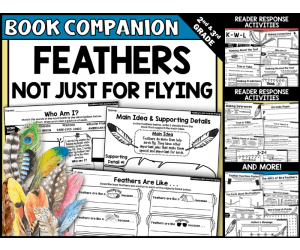
Feathers: Not Just for Flying Interactive Read-Aloud Activities
ELA, Reading, Reading Comprehension, Language Development, Vocabulary, Grade 2, 3, 4, Read Alouds, Activities
This picture book companion is a complete supplemental resource for the book Feathers: Not Just for Flying by Melissa Stewart. With 24 print-and-go reading activities to choose from, this resource is ideal for customizing learning to your student's specific needs and academic abilities. Students will apply listening and note-taking skills, investigate the functions and importance of bird feathers, make inferences and connections, learn and apply new vocabulary, identify and gain information using text and graphic features, answer questions that require them to think beyond the text, and so much more! Students will love the engaging and fun activities, and you will appreciate the time saved hunting for high-level resources to teach reading concepts that students frequently struggle with. The activities provided are designed to enable students to apply higher-level thinking skills, encourage them to provide text evidence to support their thinking, and challenge them to express their own thoughts and/or perspectives. ⭐️This Resource Includes:⭐️ Making Predictions: Before reading, students will make predictions about the book. KWL graphic organizer: Before reading about bird feathers, students will fill in the first two columns of the chart with what they already know and what they hope to learn. Then, after reading the book, they fill in the last column with the new information they learned. Word Scramble: Students use the details from the book to unscramble the words (ANSWER KEY INCLUDED). Who Am I?: Students will match the words in the word bank to the descriptions and draw and color a picture of each bird (ANSWER KEY INCLUDED). True or False (bubble answers ONLY): Students read the statements and determine if they are true or false (ANSWER KEY INCLUDED). True or False (bubble answers and correct the false statement): Students determine if the statements are true or false, and rewrite the false statements to make them true (ANSWER KEY INCLUDED). Main Idea and Supporting Details: Students will identify three details to support the main idea (ANSWER KEY INCLUDED). 3-2-1: Students describe three ways that feathers protect birds, describe two ways that feathers help birds in the water, and choose one word that best describes feathers and explain why. Thinking About the Text: Students will answer the questions about the story and include examples from the text to support their answers. Thinking Beyond the Text: Students will answer the questions about the story and include examples from the text to support their answers. Making Sense of Similes: Students identify the two things that are being compared in each simile and explain why the author included it in their writing (ANSWER KEY INCLUDED). Feathers are Like... Students will describe how feathers are similar to each of the objects pictured. Making Connections: Students make connections to an event from the story. Making Inferences: Students use clues and schema to make inferences while reading the story. Author's Message: Students describe four important events from the story and put them in chronological order. Then, answer the questions about the author's message. Theme: Students answer the questions to determine which theme best fits the story and provide text evidence to support their choice. The ABCs of Bird Feathers: Students write words or phrases that begin with each letter of the alphabet to show what they learned about bird feathers. Acrostic Poem: Students create an acrostic poem to describe bird feathers. Feather Functions Poster: Students will create an informative poster about the different functions of bird feathers including illustrations, key facts, and at least three new vocabulary words from the book. Word Search Puzzle: Students use the clues to fill in the puzzle. Words can go across or down. Letters are shared when the words intersect (ANSWER KEY INCLUDED). Crossword Puzzle: Students use the clues and the word bank to fill in the crossword puzzle (ANSWER KEY INCLUDED). Fun Facts about Bird Feathers: Students will record interesting information and fun facts about bird feathers. New Vocabulary: Students choose four new words that they learned while reading about feathers, find the meanings, and draw a picture for each word. Book Review: Students will rate and review the book. This resource is for extension read-aloud activities only. The book is not included.
Author Creatively Gifted
Tags Fountas And Pinnell, Second Grade, Elementary Ela, Reading, Nonfiction, Science, Feathers: Not Just For Flying , Birds, Informational, Feathers

White Owl, Barn Owl Interactive Read-Aloud Activities
ELA, Social Studies, Reading, Reading Comprehension, Language Development, Vocabulary, Grade 2, 3, 4, Literacy Readers, Teacher Tools
This picture book companion is a complete supplemental resource for the book White Owl, Barn Owl by Nicola Davies. With 30 print-and-go reading activities to choose from, this resource is ideal for customizing learning to your student's specific needs and academic abilities. Students will apply listening and note-taking skills, investigate the facts about barn owls, make inferences and connections, learn and apply new vocabulary, identify and gain information using text and graphic features, answer questions that require them to think beyond the text, and so much more! Students will love the engaging and fun activities, and you will appreciate the time saved hunting for high-level resources to teach reading concepts that students frequently struggle with. The activities provided are designed to enable students to apply higher-level thinking skills, encourage them to provide text evidence to support their thinking, and challenge them to express their own thoughts and/or perspectives. ⭐️This Resource Includes:⭐️ Making Predictions: Before reading the book, students will make predictions about the text. Story Elements: Students fill in the boxes with words & pictures to represent the story elements. Sequencing: Students will retell & illustrate the important parts of the story (ANSWER KEY INCLUDED). Summary: Students complete the Somebody, Wanted, Because, But, So graphic organizer and write a summary of the story. Making Connections: Students make connections to an event from the story. Making Inferences: Students use clues & schema to make inferences while reading the story. Visualizing: Students will read the sentences from the story and draw a picture of the images they visualized. Word Scramble: Students use the details from the book to unscramble the words (ANSWER KEY INCLUDED). Narrative & Nonfiction Details: Students will label each detail from the text as either narrative or nonfiction (ANSWER KEY INCLUDED). Fact or Fiction: Students determine whether the details are facts from the story or made-up (ANSWER KEY INCLUDED). True or False: Students read the details and determine if they are true or false (ANSWER KEY INCLUDED). Barn Owl Adaptations Match Up: Students match up the barn owl adaptations to the reasons why they're important for their survival (ANSWER KEY INCLUDED). 3-2-1: Students describe three characteristics that barn owls have to help them catch their prey, name two facts they learned about barn owls, and choose one word that best describes barn owls and explain why. Barn Owl Diagram: Students label the parts of a barn owl (ANSWER KEY INCLUDED). Thinking About the Text: Students will answer the questions about the story & include examples from the text to support their answers. Thinking Beyond the Text: Students will answer the questions about the story & include examples from the text to support their answers. Theme: Students answer the questions to determine which theme best fits the story and provide text evidence to support their choice. Making SENSE of the Text: Students read the descriptive language from the story and write the sense it appeals to the most (ANSWER KEY INCLUDED). Crossword Puzzle: Students use clues & the word bank to fill in the puzzle (ANSWER KEY INCLUDED). Word Search Puzzle: Students use the clues to fill in the puzzle (ANSWER KEY INCLUDED). Book Review: Students will rate and review the book. Owl ABCs: Students write words or phrases that begin with each letter of the alphabet to show what they learned about owls. Research Activities: Students or teachers can choose from the following activities and graphic organizers to use while researching to learn more about owls. KWL graphic organizer Owls - CAN - HAVE -ARE Owls - WHO - WHAT -WHERE - HOW Fun Facts about Owls New Vocabulary Owls Research Report: key points, picture, and summary Owls Research One-Page Report: Students research to learn more about owls and complete a one-page report with facts regarding the habitat, features, diet, movement, and interesting facts. Owl Roll & Research: Students roll a die to see what type of owl species they will learn more about. Then, they research using teacher-approved websites and informational texts to find information to answer the questions. This resource is for extension read-aloud activities only. The book is not included.
Author Creatively Gifted
Tags Reading, Fountas And Pinnell, Second Grade, Elementary Ela, Reading Comprehension, Guided Reading, Interactive Read-aloud, Picture Book, Barn Owl , Owls
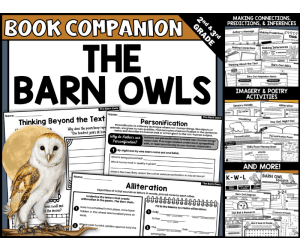
The Barn Owls Interactive Read-Aloud Activities
ELA, Social Studies, Reading, Reading Comprehension, Language Development, Vocabulary, Grade 2, 3, 4, Literacy Readers, Teacher Tools
This picture book companion is a complete supplemental resource for the book The Barn Owls by Tony Johnston. With 41 print-and-go reading activities to choose from, this resource is ideal for customizing learning to your student's specific needs and academic abilities. Students will identify story elements, determine the theme, analyze elements of poetry, compare and contrast, make predictions, inferences, and connections, answer questions that require them to think within and beyond the text, and so much more! Students will love the engaging and fun activities, and you will appreciate the time saved hunting for high-level resources to teach reading concepts that students frequently struggle with. The activities provided are designed to enable students to apply higher-level thinking skills, encourage them to provide text evidence to support their thinking, and challenge them to express their own thoughts and/or perspectives. ⭐️This Resource Includes:⭐️ Making Predictions: Before reading the book, students will make predictions about the text. Story Elements: Students fill in the boxes with words & pictures to represent the story elements. Sequencing: Students will retell & illustrate the important parts of the story (ANSWER KEY INCLUDED). Summary: Students complete the Somebody, Wanted, Because, But, So graphic organizer and write a summary of the story. Recalling Events in Chronological Order: Students describe and illustrate four major events in the story in chronological order. Comic Recall: Students will draw three scenes from the story, complete with speech bubbles, to tell the story's beginning, middle, and end with text and illustrations. Story Event Sort: Students will describe a scene or event from the story that fits into each of the categories & explain how the event made them feel & how it relates to the category. Sketch a Scene From the Story: Students will illustrate one of the events from the story and explain why this event is important to the plot. Setting Influences the Plot: Students will draw a scene from the story that takes place in one of the settings and write about what happened there and why it was important to the plot. Setting the Scene: Students identify three different settings in the story and explain how they know the setting changed. Making Connections: Students make connections to an event from the story. Making Inferences: Students use clues & schema to make inferences while reading the story. Visualizing: Students will read the sentences from the story and draw a picture of the images they visualized. Sensory Details: Students write a detailed description of the barn using all five senses. 3-2-1: Students describe three things that happen in the old barn year after year, name two facts they learned about barn owls, and choose one word that best describes the barn and explain why. Thinking About the Text: Students will answer the questions about the story & include examples from the text to support their answers. Thinking Beyond the Text: Students will answer the questions about the story & include examples from the text to support their answers. Theme: Students answer the questions to determine which theme best fits the story and provide text evidence to support their choice. Day Owl, Night Owl: Students will draw two scenes: one showing what barn owls do during the day and another for nighttime. Alliteration: Students underline the letters that create alliteration in the poem, fill in the blanks to create alliteration, and write their own alliteration sentence (ANSWER KEY included). Author's Message: Students describe four important events from the story and put them in chronological order. Then, answer the questions about the author's message. Crossword Puzzle: Students use clues & the word bank to fill in the puzzle (ANSWER KEY INCLUDED). Word Search Puzzle: Students use the clues to fill in the puzzle (ANSWER KEY INCLUDED). Barn Owl ABCs: Students write words or phrases that begin with each letter of the alphabet to show what they learned about barn owls. Personification: Students identify personification in the text, specify what's being personified, describe the human trait or action assigned to the non-human element, and elucidate the author's purpose for using personification (ANSWER KEY included). Book Review: Students will rate and review the book. Personification Poem Brainstorm: Students choose something related to the story to personify and brainstorm imagery around noun and verb word pairs. Personification Poem: Students will write and illustrate their personification poem. Haiku Poem Planning Sheet: Students will choose a topic or object that relates to the story, brainstorm ideas using the five senses, and list adjectives to describe the topic or object. Haiku Poem Template: Students will write and illustrate their Haiku poem. Cinquain Poem: Students will write a Cinquain poem about something related to owls. Barn Owl Diagram: Students label the parts of a barn owl (ANSWER KEY INCLUDED). Barn Owl Adaptations Match Up: Students match up the barn owl adaptations to the reasons why they're important for their survival (ANSWER KEY INCLUDED). Research Activities: Students or teachers can choose from the following activities and graphic organizers to use while researching to learn more about owls. KWL graphic organizer Barn Owls - CAN - HAVE -ARE Barn Owls - WHO - WHAT -WHERE - HOW Fun Facts About Barn Owls New Vocabulary Barn Owl Research Report: key points, picture, and summary Barn Owl Research One-Page Report: Students research to learn more about barn owls and complete a one-page report with facts regarding the habitat, features, diet, movement, and interesting facts. Owl Roll & Research: Students roll a die to see what type of owl species they will learn more about. Then, they research owls using teacher-approved websites and informational texts to look for information to answer the questions. This resource is for extension read-aloud activities only. The book is not included.
Author Creatively Gifted
Tags Reading, Fountas And Pinnell, Second Grade, Elementary Ela, Reading Comprehension, Guided Reading, Interactive Read-aloud, Picture Book, The Barn Owls, Poetry

Miss Nelson is Missing Interactive Read-Aloud Activities
ELA, Reading, Reading Comprehension, Language Development, Vocabulary, Grade 2, 3, 4, Literacy Readers, Teacher Tools
This picture book companion is a complete supplemental resource for the book Miss Nelson is Missing by James Marshall. With 34 print-and-go reading activities to choose from, this resource is ideal for customizing learning to your student's specific needs and academic abilities. Students will investigate characters, identify story elements, determine the theme, sequence story events, compare & contrast, make predictions, inferences, & connections, answer questions that require them to think beyond the text, and much more! Students will love the engaging and fun activities, and you will appreciate the time saved hunting for high-level resources to teach reading concepts that students frequently struggle with. The activities provided are designed to enable students to apply higher-level thinking skills, encourage them to provide text evidence to support their thinking, and challenge them to express their own thoughts and/or perspectives. ⭐️This Resource Includes:⭐️ Making Predictions: Before reading the book, students will make predictions about the text. Story Elements: Students fill in the boxes with words & pictures to represent the story elements. Sequencing: Students will retell & illustrate the important parts of the story. Summary: Students complete the Somebody, Wanted, Because, But, So graphic organizer and write a summary of the story. Recalling events in Chronological Order: Students describe and illustrate four major events in the story in chronological order. Story Event Sort: Students will describe a scene or event from the story that fits into each of the categories & explain how the event made them feel & how it relates to the category. Problem & Solution: Students will answer questions related to the problem & solution in the story. Problem & Solution: Students will identify four minor problems and solutions in the story. Making Connections: Students make connections to an event from the story. Making Inferences: Students use clues & schema to make inferences while reading the story. Character Inside & Out (Miss Nelson): Students include details from the story to describe what the character says, thinks, does, and feels. Character Inside & Out (Miss Swamp): Students include details from the story to describe what the character says, thinks, does, and feels. Character Feelings (Miss Nelson): Students describe how the character's feelings change throughout the story & give examples of the events that cause them to feel the way they do. Character Feelings (Students): Students describe how the characters' feelings change throughout the story & give examples of the events that cause them to feel the way they do. Character Traits: Students choose 2 important character traits that describe Miss Nelson and Miss Swamp and provide evidence from the text to support their choices. Character Change (Miss Nelson): Students will explain how the character changed from the beginning to the end of the story and describe the events that caused the change to happen. Character Change (Students): Students will explain how the character changed from the beginning to the end of the story and describe the events that caused the change to happen. Students & Teachers: Students will describe how the kids in room 207 behaved and explain how they should’ve behaved instead. Then, they will compare and contrast Miss Nelson and Miss Viola Swamp using a Venn Diagram. Sketch a Scene From the Story: Students will draw a scene from the story & explain why it's important. Setting the Scene: Students identify three different settings in the story and explain how they know the setting changed. Author's Message: Students describe four important events from the story and put them in chronological order. Then, answer the questions about the author's message. Theme: Students answer the questions to determine which theme best fits the story and provide text evidence to support their choice. Details Detective: Students will describe three clues that they noticed about who Miss Swamp really was. Thinking About the Text: Students will answer the questions about the story & include examples from the text to support their answers. Thinking Beyond the Text: Students will answer the questions about the story & include examples from the text to support their answers. Miss Swamp Seems Suspicious: Students will answer questions about how the characters' suspicious appearances, actions, dialogue, and thoughts give the reader clues throughout the story. Before & After: Students will describe and illustrate how the kids behaved before Miss Viola Swamp came to teach the class and how they behaved after Miss Nelson came back. Secret Swap: Students will write about and illustrate the secrets that Miss Nelson and the kids keep from each other in the story. Wait... There's More!: Students will write about what happens next in the story. Crossword Puzzle: Students use the clues & word bank to fill in the puzzle (ANSWER KEY INCLUDED). Missing Poster: Students will create a "Missing" poster for Miss Nelson. Book Review: Students will rate and review the book. Compare & Contrast: Students will compare the books, Miss Nelson is Missing and Miss Nelson is Back. This resource is for extension read-aloud activities only. The book is not included.
Author Creatively Gifted
Tags Fountas And Pinnell, Second Grade, Elementary Ela, Reading Comprehension, Character Traits, Guided Reading, Interactive Read-aloud, Picture Book, Read-aloud Activities, Miss Nelson Is Missing

Galimoto by Karen Williams Interactive Read-Aloud Activities
ELA, Social Studies, Reading, Reading Comprehension, Language Development, Vocabulary, Grade 2, 3, 4, Literacy Readers, Teacher Tools
This picture book companion is a complete supplemental resource for the book Galimoto! by Karen Lynn Williams. With 35 print-and-go reading activities to choose from, this resource is ideal for customizing learning to your student's specific needs and academic abilities. Students will identify story elements, determine the theme, analyze characters, compare & contrast, make predictions, inferences, & connections, answer questions that require them to think within and beyond the text, and so much more! Students will love the engaging and fun activities, and you will appreciate the time saved hunting for high-level resources to teach reading concepts that students frequently struggle with. The activities provided are designed to enable students to apply higher-level thinking skills, encourage them to provide text evidence to support their thinking, and challenge them to express their own thoughts and/or perspectives. ⭐️This Resource Includes:⭐️ Making Predictions: Before reading the book, students will make predictions about the text. Story Elements: Students fill in the boxes with words & pictures to represent the story elements. Sequencing: Students will retell & illustrate the important parts of the story. Recalling events in Chronological Order: Students describe and illustrate four major events in the story in chronological order. Retell the story: Students retell the beginning, middle, and end of the story with text and illustrations. Summary: Students complete the Somebody, Wanted, Because, But, So graphic organizer and write a summary of the story. Story Event Sort: Students describe a scene or event from the story that fits into each of the categories & explain how the event made them feel & how it relates to the category. Making Connections: Students make connections to an event from the story. Cause & Effect: Students fill in the causes and effects (ANSWER KEY included). Making Inferences: Students use clues & schema to make inferences while reading the story. Character Traits: Students choose four words from the list that describe Kondi's character and give examples from the story to explain how he shows each trait. Character Inside & Out: Students include details from the story to describe what the character says, thinks, does, and feels. Character Feelings: Students describe how the character's feelings change throughout the story & give examples of the events that cause them to feel the way they do. Character Development: Students select character traits that best describe the character at different times throughout the story and give examples from the book to support the traits they choose. Character Change: Students will explain how the character changed from the beginning to the end of the story and describe the events that caused the change to happen. Character’s Actions & Reactions: Students read the situations that the character experienced in the story and fill in the missing information with details from the story (ANSWER KEY included). Overcoming Obstacles: Students will pick two physical, emotional, or mental challenges that the character faced in the story, describe how he responded to those challenges, and choose a character trait that developed as a result of his experiences. Sketch a Scene From the Story: Students will draw a scene from the story and describe what happened there and why it was important to the plot. Setting the Scene: Students identify three different settings in the story and explain how they know the setting changed. Setting Influences the Plot: Students answer questions about the setting of the story to gain a better understanding of how a story's setting helps to build the narrative’s mood, plot, and character development. Compare & Contrast: Students will compare and contrast the setting of the story to where they live. Author's Message: Students describe four important events from the story and put them in chronological order. Then, answer the questions about the author's message. Theme: Students answer the questions to determine which theme best fits the story and provide text evidence to support their choice. 3-2-1: Students will describe three obstacles that Kondi had to overcome in order to collect enough wire to build his galimoto, describe two situations in which Kondi’s village supported his efforts to build a galimoto, and choose one word that best describes Kondi and explain why. Thinking About the Text: Students will answer the questions about the story & include examples from the text to support their answers. Thinking Beyond the Text: Students will answer the questions about the story & include examples from the text to support their answers. Letter to Kondi: Students write a letter to Kondi describing the things they would like to do and see while visiting his village. Dear Diary: Students will write a diary entry from Kondi’s point of view about something that happened in the story and include a picture to go along with their writing. Prep for a Podcast: Students pretend they're interviewing Kondi for a podcast and write out three questions they'd like to ask him, as well as his responses. They can then partner up with a classmate to act out the imaginary interview with Kondi. Crossword Puzzle: Students use the definitions and the word bank to fill in the crossword puzzle (ANSWER KEY included). Acrostic Poem: Students will create an acrostic poem to highlight the most important parts of the story. Galimoto Gone Viral: Students create a social media post from Kondi’s point of view showcasing his galimoto. The post should include a picture, caption, name and location, the number of likes, and a fun hashtag. Book Review: Students rate and review the book. Build a Galimoto: Students will design their own galimoto using pipe cleaners to represent their hopes, desires, or a special achievement. They will then answer reflection questions and include a picture of their finished galimoto. All About Malawi: Students conduct research to learn more about the country of Malawi. This resource is for extension read-aloud activities only. The book is not included.
Author Creatively Gifted
Tags Reading, Fountas And Pinnell, Second Grade, Elementary Ela, Reading Comprehension, Character Traits, Guided Reading, Interactive Read-aloud, Picture Book, Galimoto By Karen Williams

Edwina the Emu Interactive Read-Aloud Activities
ELA, Reading, Reading Comprehension, Language Development, Vocabulary, Grade 2, 3, 4, Literacy Readers, Teacher Tools
This picture book companion is a complete supplemental resource for the book Edwina the Emu by Sheena Knowles. With 38 print-and-go reading activities to choose from, this resource is ideal for customizing learning to your student's specific needs and academic abilities. Students will investigate characters, identify story elements, determine the theme, sequence story events, compare & contrast, make predictions, inferences, & connections, answer questions that require them to think beyond the text, conduct research on emus, and much more! Students will love the engaging and fun activities, and you will appreciate the time saved hunting for high-level resources to teach reading concepts that students frequently struggle with. The activities provided are designed to enable students to apply higher-level thinking skills, encourage them to provide text evidence to support their thinking, and challenge them to express their own thoughts and/or perspectives. ⭐️This Resource Includes:⭐️ Making Predictions: Before reading the book, students will make predictions about the text. Story Elements: Students fill in the boxes with words & pictures to represent the story elements. Sequencing: Students will retell & illustrate the important parts of the story. Summary: Students complete the Somebody, Wanted, Because, But, So graphic organizer and write a summary of the story. Recalling events in Chronological Order: Students describe and illustrate four major events in the story in chronological order. Story Event Sort: Students will describe a scene or event from the story that fits into each of the categories & explain how the event made them feel & how it relates to the category. Problem & Solution: Students will answer questions related to the problem & solution in the story. Problem & Solution: Students will identify four minor problems and solutions in the story. Making Inferences: Students use clues & schema to make inferences while reading the story. Making Connections: Students make connections to an event from the story. Character Inside & Out (Edwina): Students include details from the story to describe what the character says, thinks, does, and feels. Character Inside & Out (Edward): Students include details from the story to describe what the character says, thinks, does, and feels. Character Feelings: Students describe how the character's feelings change throughout the story & give examples of the events that cause them to feel the way they do. Character Traits: Students choose 2 important character traits that describe the main character and provide evidence from the text to support their choices. Character Change: Students will explain how the character changed from the beginning to the end of the story and describe the events that caused the change to happen. Character Acrostic Poem: Students will write an acrostic poem to describe Edwina's character. Sketch a Scene From the Story: Students will draw a scene from the story and explain why it's important to the plot. Setting the Scene: Students identify three different settings in the story and explain how they know that the setting changed. 3-2-1: Students will describe the three jobs that Edwina tried, list 2 baby emu names and explain why they have those names, and choose one word that describes Edwina and Edward as parents. Author's Message: Students describe four important events from the story and put them in chronological order. Then, answer the questions about the author's message. Theme: Students answer the questions to determine which theme best fits the story and provide text evidence to support their choice. Thinking About the Text: Students will answer the questions about the story & include examples from the text to support their answers. Jobs for Edwina: Students will come up with other jobs that Edwina could have tried, following the pattern in the story. Then, draw pictures to illustrate their writing. Educating Little Emus: Students respond to questions about being different. Who's Who of the Baby Emus: Using the image from the story, students will identify and label the baby emus based on their special features. Wait... There's More!: Students will write about what happens next in the story. Book Review: Students will color in the stars to rate how much they enjoyed the book and draw a new cover & their favorite character from the story. Then, they will explain why other kids should or should not read it. Crossword Puzzle: Students use the clues and the word bank to fill in the crossword puzzle (ANSWER KEY INCLUDED). Compare & Contrast: Students will Compare and Contrast the books, Edward the Emu and Edwina the Emu. Long Research Project on Emus: Students will research to learn more about emus and complete graphic organizers which include; answering questions, drawing and labeling an illustration, recording fun facts, defining and illustrating new vocabulary, and completing a summary report. One Page Research Project on Emus: Students will research to learn more about emus and complete a one-page report with facts regarding the habitat, features, diet, movement, and interesting facts. This resource is for extension read-aloud activities only. The book is not included.
Author Creatively Gifted
Tags Fountas And Pinnell, Second Grade, Elementary Ela, Reading Comprehension, Character Traits, Guided Reading, Interactive Read-aloud, Picture Book, Read-aloud Activities, Edwina The Emu

Edward the Emu Interactive Read-Aloud Activities
ELA, Reading, Reading Comprehension, Language Development, Vocabulary, Grade 2, 3, 4, Literacy Readers, Teacher Tools
This picture book companion is a complete supplemental resource for the book Edward the Emu by Sheena Knowles. With 36 print-and-go reading activities to choose from, this resource is ideal for customizing learning to your student's specific needs and academic abilities. Students will investigate characters, identify story elements, determine the theme, sequence story events, compare & contrast, make predictions, inferences, & connections, answer questions that require them to think beyond the text, conduct research on emus, and much more! Students will love the engaging and fun activities, and you will appreciate the time saved hunting for high-level resources to teach reading concepts that students frequently struggle with. The activities provided are designed to enable students to apply higher-level thinking skills, encourage them to provide text evidence to support their thinking, and challenge them to express their own thoughts and/or perspectives. ⭐️This Resource Includes:⭐️ Making Predictions: Before reading the book, students will make predictions about the text. Story Elements: Students fill in the boxes with words & pictures to represent the story elements. Sequencing: Students will retell & illustrate the important parts of the story. Summary: Students complete the Somebody, Wanted, Because, But, So graphic organizer and write a summary of the story. Recalling events in Chronological Order: Students describe and illustrate four major events in the story in chronological order. Story Event Sort: Students will describe a scene or event from the story that fits into each of the categories & explain how the event made them feel & how it relates to the category. Problem & Solution: Students will answer questions related to the problem & solution in the story. Problem & Solution: Students will identify four minor problems and solutions in the story. Making Inferences: Students use clues & schema to make inferences while reading the story. Making Connections: Students make connections to an event from the story. Character Inside & Out: Students include details from the story to describe what the character says, thinks, does, and feels. Character Feelings: Students describe how the character's feelings change throughout the story & give examples of the events that cause them to feel the way they do. Character Traits: Students choose 2 important character traits that describe the main character and provide evidence from the text to support their choices. Character Change: Students will explain how the character changed from the beginning to the end of the story and describe the events that caused the change to happen. Character Acrostic Poem: Students will write an acrostic poem to describe Edward's character. Sketch a Scene From the Story: Students will draw a scene from the story and explain why it's important to the plot. Setting Influences the Plot: Students will draw a scene from the story that takes place in one of the settings and write about what happened there and why it was important to the plot. Setting the Scene: Students identify three different settings in the story and explain how they know that the setting changed. 3-2-1: Students will describe three animal behaviors that Edward mimicked, come up with 2 reasons why Edward is so bored at the zoo, and choose one word that describes Edward's character. Author's Message: Students describe four important events from the story and put them in chronological order. Then, answer the questions about the author's message. Theme: Students answer the questions to determine which theme best fits the story and provide text evidence to support their choice. Thinking About the Text: Students will answer the questions about the story & include examples from the text to support their answers. Tomorrow I'll Be . . . Students describe or illustrate the animal behaviors that Edward copied in the story. The Best Exhibit At the Zoo: Students pretend to be a zoo animal who wants everyone to see their exhibit, describe what makes their exhibit the best at the zoo, why visitors should see it, and draw an illustration to go with their writing. Wait... There's More!: Students will write about what happens next in the story. Book Review: Students will color in the stars to rate how much they enjoyed the book and draw a new cover & their favorite character from the story. Then, they will explain why other kids should or should not read it. Crossword Puzzle: Students use the clues and the word bank to fill in the crossword puzzle (ANSWER KEY INCLUDED). Compare & Contrast: Students will Compare and Contrast the books, Edward the Emu and Edwina the Emu. Long Research Project on Emus: Students will research to learn more about emus and complete graphic organizers, which include answering questions, drawing and labeling an illustration, recording fun facts, defining and illustrating new vocabulary, and completing a summary report. One-Page Research Project on Emus: Students will research to learn more about emus and complete a one-page report with facts regarding the habitat, features, diet, movement, and interesting facts. This resource is for extension read-aloud activities only. The book is not included.
Author Creatively Gifted
Tags Fountas And Pinnell, Second Grade, Elementary Ela, Reading Comprehension, Character Traits, Guided Reading, Interactive Read-aloud, Picture Book, Read-aloud Activities, Edward The Emu

Penguins by Seymour Simon Interactive Read-Aloud Activities
ELA, Reading, Reading Comprehension, Language Development, Vocabulary, Research, Grade 2, 3, 4, Read Alouds, Activities
This picture book companion is a complete supplemental resource for the book Penguins by Seymour Simon. With 30 print-and-go reading activities to choose from, this resource is ideal for customizing learning to your student's specific needs and academic abilities. Students will apply listening and note-taking skills, investigate different species of penguins, compare & contrast, make inferences and connections, learn and apply new vocabulary, determine text structure, answer questions that require them to think beyond the text, and much more! Students will love the engaging and fun activities, and you will appreciate the time saved hunting for high-level resources to teach reading concepts that students frequently struggle with. The activities provided are designed to enable students to apply higher-level thinking skills, encourage them to provide text evidence to support their thinking, and challenge them to express their own thoughts and/or perspectives. ⭐️This Resource Includes:⭐️ Making Predictions: Before reading the book, students will make predictions about the text. Who Am I?: Students will match the words in the word bank to the descriptions and draw and color a picture of each penguin (ANSWER KEY INCLUDED). Word Scramble: Students use the details from the book to unscramble the words (ANSWER KEY INCLUDED). Fact or Fiction: Students determine whether the details are facts from the story or made-up (ANSWER KEY INCLUDED). True or False (bubble answers ONLY): Students read the details and determine if they are true or false (ANSWER KEY INCLUDED). True or False (bubble answers and correct the false details): Students determine if the details are true or false, and rewrite the false statements to make them true (ANSWER KEY INCLUDED). Penguin Playing Cards: Students create playing cards that include one or two facts they learned about each penguin and include a colored illustration. Penguin ABCs: Students write words or phrases that begin with each letter of the alphabet to show what they learned about penguins. 2 - Crossword Puzzles: Students use the clues and the word bank to fill in the crossword puzzle (ANSWER KEYS INCLUDED). Word Search Puzzle: Students use the clues to fill in the puzzle. Words can go across or down. Letters are shared when the words intersect (ANSWER KEY INCLUDED). Compare & Contrast: Students compare and contrast penguins and other birds. Text Structure: Students take note of how the author organized and presented the information about penguins on the selected pages given. Then, they determine the main idea, supporting details, and text structure the author used to organize the information. All About Penguins Flipbook: While reading or listening to the story, students will take notes in their flipbooks. This activity includes 6 pages (ANSWER KEY included). Acrostic Poem: Students create an acrostic poem to describe penguins. Book Review: Students will rate and review the book. Long Research Project on Penguins: Students conduct research to learn more about penguins and complete graphic organizers, which include; answering questions, drawing and labeling an illustration, recording fun facts, defining and illustrating new vocabulary, and completing a summary report. One-Page Research Project on Penguins: Students conduct research to learn more about penguins and complete a one-page report with facts regarding the habitat, features, diet, movement, and interesting facts. Penguin Roll & Research: Students roll a die to see which penguin they will research to learn more about. Then, they conduct research using teacher-approved websites and informational texts to look for information to answer the provided questions. ENRICHMENT ACTIVITY - Endangered Penguin Species Research Project: Students will research an endangered penguin species and create a final product (brochure, infographic, digital presentation, etc.) Teacher Notes: This includes instructions, final product options, and a list of linked websites that students can use to get started. Infographic Planning Sheet: Students will complete the planning sheet and create an infographic for the endangered penguin species they researched. Informational Brochure: Two template options are included (with writing lines, & without writing lines). This resource is for extension read-aloud activities only. The book is not included.
Author Creatively Gifted
Tags Seymour Simon, Fountas And Pinnell, Second Grade, Elementary Ela, Reading, Nonfiction, Habitat, Science, Animals, Penguins

Miss Nelson is Back nteractive Read-Aloud Activities
ELA, Reading, Reading Comprehension, Language Development, Vocabulary, Grade 2, 3, 4, Literacy Readers, Teacher Tools
This picture book companion is a complete supplemental resource for the book Miss Nelson is Back by James Marshall. With 37 print-and-go reading activities to choose from, this resource is ideal for customizing learning to your student's specific needs and academic abilities. Students will investigate characters, identify story elements, determine the theme, sequence story events, compare & contrast, identify cause & effect, make predictions, inferences, & connections, answer questions that require them to think beyond the text, and much more! Students will love the engaging and fun activities, and you will appreciate the time saved hunting for high-level resources to teach reading concepts that students frequently struggle with. The activities provided are designed to enable students to apply higher-level thinking skills, encourage them to provide text evidence to support their thinking, and challenge them to express their own thoughts and/or perspectives. ⭐️This Resource Includes:⭐️ Making Predictions: Before reading the book, students will make predictions about the text. Story Elements: Students fill in the boxes with words & pictures to represent the story elements. Sequencing: Students will retell & illustrate the important parts of the story. Summary: Students complete the Somebody, Wanted, Because, But, So graphic organizer and write a summary of the story. Recalling events in Chronological Order: Students describe and illustrate four major events in the story in chronological order. Story Event Sort: Students will describe a scene or event from the story that fits into each of the categories & explain how the event made them feel & how it relates to the category. Problem & Solution: Students will answer questions related to the problem & solution in the story. Problem & Solution: Students will identify four minor problems and solutions in the story. Making Connections: Students make connections to an event from the story. Making Inferences: Students use clues & schema to make inferences while reading the story. Character Inside & Out (Mr. Blandsworth): Students include details from the story to describe what the character says, thinks, does, and feels. Character Inside & Out (Miss Swamp): Students include details from the story to describe what the character says, thinks, does, and feels. Character Feelings (Miss Nelson): Students describe how the character's feelings change throughout the story & give examples of the events that cause them to feel the way they do. Character Feelings (Mr. Blandsworth): Students describe how the character's feelings change throughout the story & give examples of the events that cause them to feel the way they do. Character Feelings (Students): Students describe how the character's feelings change throughout the story & give examples of the events that cause them to feel the way they do. Character Traits: Students choose 2 important character traits that describe Mr. Blandsworth and Miss Swamp and provide evidence from the text to support their choices. Character Change (Miss Nelson): Students will explain how the character changed from the beginning to the end of the story and describe the events that caused the change to happen. Character Change (Students): Students will explain how the character changed from the beginning to the end of the story and describe the events that caused the change to happen. Sketch a Scene From the Story: Students will draw a scene from the story & explain why it's important. Setting the Scene: Students identify three different settings in the story and explain how they know the setting changed. 4 - Cause & Effect (differentiated activities for multiple skill levels): Students will identify cause and effect relationships within the story. Includes 2 cut-and-paste activities and 2 activities where students write in their answers (ANSWER KEYS INCLUDED). Author's Message: Students describe four important events from the story and put them in chronological order. Then, answer the questions about the author's message. Theme: Students answer the questions to determine which theme best fits the story and provide text evidence to support their choice. Details Detective: Students will describe three clues that they noticed about who Miss Swamp really was. Thinking About the Text: Students will answer the questions about the story & include examples from the text to support their answers. Thinking Beyond the Text: Students will answer the questions about the story & include examples from the text to support their answers. Before & After: Students will describe and illustrate how the kids behaved before Miss Viola Swamp came to teach the class and how they behaved after. Secret Swap: Students will write about and illustrate the secrets that Miss Nelson and the kids keep from each other in the story. Wait... There's More!: Students will write about what happens next in the story. Crossword Puzzle: Students use the clues & word bank to fill in the puzzle (ANSWER KEY INCLUDED). Word Search Puzzle: Students find the words hidden in the puzzle (ANSWER KEY INCLUDED). Apology Note: Students pretend they are a student in room 207 and write an apology note to Miss Nelson. Book Review: Students will rate and review the book. Compare & Contrast: Students will compare the books, Miss Nelson is Missing and Miss Nelson is Back. This resource is for extension read-aloud activities only. The book is not included.
Author Creatively Gifted
Tags Fountas And Pinnell, Second Grade, Elementary Ela, Reading Comprehension, Character Traits, Guided Reading, Interactive Read-aloud, Picture Book, Read-aloud Activities, Miss Nelson Is Back
Last Stop on Market Street Interactive Read-Aloud Activities
ELA, Reading, Reading Comprehension, Language Development, Vocabulary, Grade 2, 3, 4, Literacy Readers, Teacher Tools
This picture book companion is a complete supplemental resource for the read-aloud book Last Stop on Market Street by Matt de la Peña. With 35 print-and-go reading activities to choose from, this resource is ideal for customizing learning to your student's specific needs and academic abilities. Students will investigate characters, identify story elements, determine the theme, sequence story events, compare & contrast, identify problems & solutions, make predictions, inferences, & connections, answer questions that require them to think beyond the text, and much more! Students will love the engaging and fun activities, and you will appreciate the time saved hunting for high-level resources to teach reading concepts that students frequently struggle with. The activities provided are designed to enable students to apply higher-level thinking skills, encourage them to provide text evidence to support their thinking, and challenge them to express their own thoughts and/or perspectives. ⭐️This Resource Includes:⭐️ Making Predictions: Before reading the book, students will make predictions about the text. Story Elements: Students fill in the boxes with words & pictures to represent the story elements. Sequencing: Students will retell & illustrate the important parts of the story. Recalling events in Chronological Order: Students describe and illustrate four major events in the story in chronological order. Summary: Students complete the Somebody, Wanted, Because, But, So graphic organizer and write a summary of the story. Story Event Sort: Students will describe a scene or event from the story that fits into each of the categories & explain how the event made them feel & how it relates to the category. Making Connections: Students make connections to an event from the story. Problem & Solution: Students will answer questions related to the problem & solution in the story. Figuring Out Figurative Language: Students will read the text taken from the story to identify what two things are being compared and explain the meaning of each example. (ANSWER KEY included). Making Inferences: Students use clues & schema to make inferences while reading the story. Visualizing: Students read the text from the story, draw a picture of what they visualized, and explain what the author is trying to communicate (ANSWER KEY included). Character Traits: Students choose the most important character traits that describe each of the characters and give one to two examples from the story that support the traits they chose. Character Inside & Out (CJ): Students include details from the story to describe what the character says, thinks, does, and feels. Character Inside & Out (Nana): Students include details from the story to describe what the character says, thinks, does, and feels. Character Feelings (CJ): Students describe how the character's feelings change throughout the story & give examples of the events that cause them to feel the way they do. Character Feelings (Nana): Students describe how the character's feelings change throughout the story & give examples of the events that cause them to feel the way they do. Character Development (CJ): Students select character traits that best describe the character at different times throughout the story and give examples from the book to support the traits they chose. Character Change (CJ): Students will explain how the character changed from the beginning to the end of the story and describe the events that caused the change to happen. Setting Influences the Plot: Students will draw a scene from the story that takes place in one of the settings and write about what happened there and why it was important to the plot. Setting the Scene: Students identify three different settings in the story and explain how they know the setting changed. Author's Message: Students describe four important events from the story and put them in chronological order. Then, answer the questions about the author's message. Theme: Students answer the questions to determine which theme best fits the story and provide text evidence to support their choice. 3-2-1: Students will list the three things that CJ complained about, describe two of the passengers that were on the bus with CJ and Nana, and come up with one word that describes Nana and explain why. Before & After: Students will describe and illustrate how CJ felt about his outing with Nana before she showed him how to notice the beauty all around him and what he felt like after. Thinking About the Text: Students will answer the questions about the story & include examples from the text to support their answers. Thinking Beyond the Text: Students will answer the questions about the story & include examples from the text to support their answers. CJ & Nana’s Bus Ride: Students will draw and label a map of the bus route CJ and Nana took and describe three things that happened on their bus ride. Sunday Afternoon: Students will recall CJ and Nana’s Sunday afternoon by drawing illustrations with captions to describe each event and including information from the story. Making a Difference: Students will write a paragraph explaining how Nana and CJ are making a difference in their community by volunteering at the soup kitchen every Sunday after church and draw an illustration to go with their writing. What are Your Thoughts: Students respond with opinions to thought-provoking open-ended questions regarding the story. Vocabulary Crossword Puzzle: Students use the definitions and the word bank to fill in the crossword puzzle (ANSWER KEY included). Book Review: Students will rate and review the book. Compare & Contrast: Students will compare the books Last Stop on Market Street and Something Beautiful. Community Project Flyer: Students will create a flyer for a community service project that will persuade others to help or improve something in their community. Discovering Beauty Using the Five Senses: Students will describe what “beauty” looks, sounds, feels, tastes, and smells like. This resource is for extension read-aloud activities only. The book is not included.
Author Creatively Gifted
Tags Reading, Fountas And Pinnell, Second Grade, Elementary Ela, Last Stop On Market Street, Reading Comprehension, Character Traits, Guided Reading, Interactive Read-aloud, Picture Book

Dogs by Seymour Simon Interactive Read-Aloud Activities
ELA, Reading, Reading Comprehension, Language Development, Vocabulary, Research, Grade 2, 3, 4, Read Alouds, Activities
This picture book companion is a complete supplemental resource for the book Dogs by Seymour Simon. With 30 print-and-go reading activities to choose from, this resource is ideal for customizing learning to your student's specific needs and academic abilities. Students will apply listening and note-taking skills, investigate different breeds of dogs, compare & contrast, make inferences and connections, learn and apply new vocabulary, determine main ideas and supporting details, answer questions that require them to think beyond the text, and much more! Students will love the engaging and fun activities, and you will appreciate the time saved hunting for high-level resources to teach reading concepts that students frequently struggle with. The activities provided are designed to enable students to apply higher-level thinking skills, encourage them to provide text evidence to support their thinking, and challenge them to express their own thoughts and/or perspectives. ⭐️This Resource Includes:⭐️ Making Predictions: Before reading the book, students will make predictions about the text. All About Dogs Flipbook: While reading or listening to the story, students will take notes in their flipbooks. This activity includes 7 pages (ANSWER KEY included). Who Am I?: Students will match the words in the word bank to the descriptions and draw and color a picture of each cat (ANSWER KEY INCLUDED). Word Scramble: Students use the details from the book to unscramble the words (ANSWER KEY INCLUDED). Fact or Fiction: Students determine whether the details are facts from the story or made-up (ANSWER KEY INCLUDED). True or False (bubble answers ONLY): Students read the details and determine if they are true or false (ANSWER KEY INCLUDED). True or False (bubble answers and correct the false details): Students determine if the details are true or false and rewrite the false statements to make them true (ANSWER KEY INCLUDED). Main Idea & Details: Students read the main ideas and fill in the missing supporting details (ANSWER KEY INCLUDED). Thinking About the Text: Students will answer the questions about the story and include examples from the text to support their answers. Dog ABCs: Students write words or phrases that begin with each letter of the alphabet to show what they learned about dogs. 2 - Crossword Puzzles: Students use the clues and the word bank to fill in the crossword puzzle (ANSWER KEYS INCLUDED). Word Search Puzzle: Students use the clues to fill in the puzzle. Words can go across or down. Letters are shared when the words intersect (ANSWER KEY INCLUDED). Compare & Contrast: Students compare and contrast dogs and cats. A Dog's Five Senses: Students will write facts and descriptions for each of the dog's five senses (ANSWER KEY INCLUDED). Book Review: Students will rate and review the book. My New Pet Dog Brochure: Students will create a brochure with information about their new pet dog. Two template options are included. The first template includes questions for students to answer, while the second template is blank so students can fill in their own information. Long Research Project on Dogs: Students conduct research to learn more about dogs and complete graphic organizers, which include; answering questions, drawing and labeling an illustration, recording fun facts, defining and illustrating new vocabulary, and completing a summary report. One-Page Research Project on Dogs: Students conduct research to learn more about dogs and complete a one-page report with facts regarding their habitat, features, diet, movement, and interesting facts. Dog Roll & Research: Students roll a die to see which dog breed they will research to learn more about. Then, they conduct research using teacher-approved websites and informational texts to look for information to answer the provided questions. This resource is for extension read-aloud activities only. The book is not included.
Author Creatively Gifted
Tags Seymour Simon, Nonfiction, Fountas And Pinnell, Reading, Second Grade, Informational, Pets, Elementary Ela, Dogs

Something Beautiful Interactive Read-Aloud Activities
ELA, Reading, Reading Comprehension, Language Development, Vocabulary, Grade 2, 3, 4, Literacy Readers, Teacher Tools
This picture book companion is a complete supplemental resource for the read-aloud book Something Beautiful by Sharon Dennis Wyeth. With 30 print-and-go reading activities to choose from, this resource is ideal for customizing learning to your student's specific needs and academic abilities. Students will investigate characters, identify story elements, determine the theme, sequence story events, compare & contrast, identify problems & solutions, make predictions, inferences, & connections, answer questions that require them to think beyond the text, and much more! Students will love the engaging and fun activities, and you will appreciate the time saved hunting for high-level resources to teach reading concepts that students frequently struggle with. The activities provided are designed to enable students to apply higher-level thinking skills, encourage them to provide text evidence to support their thinking, and challenge them to express their own thoughts and/or perspectives. ⭐️This Resource Includes:⭐️ Making Predictions: Before reading the book, students will make predictions about the text. Story Elements: Students fill in the boxes with words & pictures to represent the story elements. Sequencing: Students will retell & illustrate the important parts of the story. Summary: Students complete the Somebody, Wanted, Because, But, So graphic organizer and write a summary of the story. Recalling events in Chronological Order: Students describe and illustrate four major events in the story in chronological order. Story Event Sort: Students will describe a scene or event from the story that fits into each of the categories & explain how the event made them feel & how it relates to the category. Problem & Solution: Students will identify four minor problems and solutions in the story. Making Connections: Students make connections to an event from the story. Making Inferences: Students use clues & schema to make inferences while reading the story. Character Inside & Out: Students include details from the story to describe what the character says, thinks, does, and feels. Character Feelings: Students describe how the character's feelings change throughout the story & give examples of the events that cause them to feel the way they do. Character Change: Students will explain how the character changed from the beginning to the end of the story and describe the events that caused the change to happen. Sketch a Scene From the Story: Students will draw a scene from the story & explain why it's important. Setting the Scene: Students identify three different settings in the story and explain how they know the setting changed. Setting Influences the Plot: Students will draw a scene from the story that takes place in one of the settings and write about what happened there and why it was important to the plot. Author's Message: Students describe four important events from the story and put them in chronological order. Then, answer the questions about the author's message. Theme: Students answer the questions to determine which theme best fits the story and provide text evidence to support their choice. Thinking About the Text: Students will answer the questions about the story & include examples from the text to support their answers. Thinking Beyond the Text: Students will answer the questions about the story & include examples from the text to support their answers. 3-2-1: Students will describe three things the characters did in the story to make their community more beautiful, describe 2 things that are beautiful in their own community, and explain one way, they, their parents, or friends can make the community in which they live more beautiful. Before & After: Students will describe and illustrate how the girl felt about her home before she discovered how to find beauty and how she felt after. A World of Beauty: Students will list 20 beautiful things in their world that would be missed the most if taken away. Dear Diary: Students will write four diary entries from the character’s point of view. Character Acrostic Poem: Students will write an acrostic poem to describe the word “Beautiful.” Beautiful ABCs: Using the alphabet, students will discover something beautiful for each letter of the alphabet. Discovering Beauty Using the Five Senses: Students will describe what “beautiful” looks, sounds, feels, tastes, and smells like. Book Review: Students will rate and review the book. Compare & Contrast: Students will compare the books, Something Beautiful and Last Stop on Market Street. Wait... There's More!: Students will write about what happens next in the story. Beautiful Thoughts (5 girl & 4 boy templates): Students will respond to open-ended questions about their perceptions of beauty. They can then customize the cartoon image to look like them. This resource is for extension read-aloud activities only. The book is not included.
Author Creatively Gifted
Tags Reading, Fountas And Pinnell, Second Grade, Elementary Ela, Reading Comprehension, Character Traits, Guided Reading, Interactive Read-aloud, Picture Book, Something Beautiful

Brave Irene by William Steig Interactive Read-Aloud Activities
ELA, Social Studies, Reading, Reading Comprehension, Language Development, Vocabulary, Grade 2, 3, 4, Literacy Readers, Teacher Tools
This picture book companion is a complete supplemental resource for the book Brave Irene by William Steig. With 37 print-and-go reading activities to choose from, this resource is ideal for customizing learning to your student's specific needs and academic abilities. Students will identify story elements, determine the theme, analyze characters, compare and contrast, make predictions, inferences, and connections, answer questions that require them to think within and beyond the text, and so much more! Students will love the engaging and fun activities, and you will appreciate the time saved hunting for high-level resources to teach reading concepts that students frequently struggle with. The activities provided are designed to enable students to apply higher-level thinking skills, encourage them to provide text evidence to support their thinking, and challenge them to express their own thoughts and/or perspectives. ⭐️This Resource Includes:⭐️ Making Predictions: Before reading the book, students will make predictions about the text. Story Elements: Students fill in the boxes with words and pictures to represent the story elements. Sequencing: Students will retell and illustrate the important parts of the story. Recalling events in chronological order: Students describe and illustrate four major events in the story in chronological order. Summary: Students complete the Somebody, Wanted, Because, But, So graphic organizer and write a summary of the story. Story Event Sort: Students will describe a scene or event from the story that fits into each of the categories and explain how the event made them feel and how it relates to the category. Making Connections: Students make connections to an event from the story. Cause & Effect: Students fill in the missing causes and effects (answer key included). Making Inferences: Students answer the questions by making inferences about the text. Making Inferences Graphic Organizer: Students use clues and schema to make inferences while reading the story. Visualizing: Students will read the sentences from the story and illustrate what they visualize. Sensory Details: Students choose an event from the story and describe it from the character's perspective using all five senses. Character Traits: Students choose four words from the list that describe the character and give examples from the story to explain how they show each trait. Character Inside & Out: Students include details from the story to describe what the character says, thinks, does, and feels. Character Feelings: Students describe how the character's feelings change throughout the story and give examples of the events that cause them to feel the way they do. Character Development: Students select character traits that best describe the character at different times throughout the story and give examples from the book to support the traits they choose. Character Change: Students will explain how the character changed from the beginning to the end of the story and describe the events that caused the change to happen. Overcoming Obstacles: Students will pick two physical, emotional, or mental challenges that the character faced in the story, describe how they responded to those challenges, and choose a character trait that developed as a result of their experiences. Sketch a Scene From the Story: Students will draw a scene from the story and describe what happened there and why it was important to the plot. Setting the Scene: Students identify three different settings in the story and explain how they know the setting changed. Setting Influences the Plot: Students answer questions about the setting of the story to gain a better understanding of how a story's setting helps to build the narrative’s mood, plot, and character development. Author's Message: Students describe four important events from the story and put them in chronological order. Then, answer the questions about the author's message. Theme: Students answer the questions to determine which theme best fits the story and provide text evidence to support their choice. 3-2-1: Students will describe three obstacles that Irene had to overcome in order to deliver the dress to the duchess, describe two moments in the story when Irene felt like quitting but didn't, and choose one word that best describes Irene and explain why. Thinking About the Text: Students will answer the questions about the story and include examples from the text to support their answers. Thinking Beyond the Text: Students will answer the questions about the story and include examples from the text to support their answers. Making Sense of Similes: Students read the text taken from the story, identify what two things are being compared, and explain what each example of figurative language means (answer key included). Personification: Students identify personification in the text, specify what's being personified, describe the human trait or action assigned to the non-human element, and elucidate the author's purpose for using personification (answer key included). Crossword Puzzle: Students use the definitions and the word bank to fill in the crossword puzzle (answer key included). Word Search Puzzle: Students match the words in the word bank to the definitions below and find the words hidden in the puzzle (answer key included). Dear Diary: Students will write a diary entry from Irene’s point of view about something that happened in the story and include a picture to go along with their writing. Book Review: Students rate and review the book. Haiku Poem Planning Sheet: Students will choose a topic or object that relates to winter, brainstorm ideas using the five senses, and list adjectives to describe the topic or object. Haiku Poem Template: Students will write and illustrate their Haiku poem. Cinquain Poem: Students will write a Cinquain poem about something related to winter. Blizzard ABCs: Students complete the chart with words or phrases that start with each letter of the alphabet to describe a blizzard. All About Blizzards Brochure: Students use the provided questions within the brochure as a guide to research and discover more information about blizzards. This resource is for extension read-aloud activities only. The book is not included.
Author Creatively Gifted
Tags Reading, Fountas And Pinnell, Second Grade, Elementary Ela, Reading Comprehension, Character Traits, Guided Reading, Interactive Read-aloud, Picture Book, Brave Irene By William Steig

Three Cheers For Tacky Interactive Read-Aloud Activities
ELA, Reading, Reading Comprehension, Language Development, Vocabulary, Grade 2, 3, 4, Literacy Readers, Teacher Tools
This picture book companion is a complete supplemental resource for the book Three Cheers for Tacky by Helen Lester. With 31 print-and-go reading activities to choose from, this resource is ideal for customizing learning to your student's specific needs and academic abilities. Students will investigate characters, identify story elements, determine the theme, sequence story events, compare & contrast, make predictions, inferences, & connections, answer questions that require them to think beyond the text, and much more! Students will love the engaging and fun activities, and you will appreciate the time saved hunting for high-level resources to teach reading concepts that students frequently struggle with. The activities provided are designed to enable students to apply higher-level thinking skills, encourage them to provide text evidence to support their thinking, and challenge them to express their own thoughts and/or perspectives. ⭐️This Resource Includes:⭐️ Making Predictions: Before reading the book, students will make predictions about the text. Story Elements: Students fill in the boxes with words & pictures to represent the story elements. Sequencing: Students will retell & illustrate the important parts of the story. Summary: Students complete the Somebody, Wanted, Because, But, So graphic organizer and write a summary of the story. Recalling events in Chronological Order: Students describe and illustrate four major events in the story in chronological order. Story Event Sort: Students will describe a scene or event from the story that fits into each of the categories & explain how the event made them feel & how it relates to the category. Problem & Solution: Students will answer questions related to the problem & solution in the story. Problem & Solution: Students will identify four minor problems and solutions in the story. Making Inferences: Students use clues & schema to make inferences while reading the story. Making Connections: Students make connections to an event from the story. Character Inside & Out: Students include details from the story to describe what the character says, thinks, does, and feels. Character Feelings: Students describe how the character's feelings change throughout the story & give examples of the events that cause them to feel the way they do. Character Traits: Students choose 2 important character traits that describe the main character and provide evidence from the text to support their choices. Character Change: Students will explain how the character changed from the beginning to the end of the story and describe the events that caused the change to happen. Character Summary: Students summarize the main character of the story. Character Acrostic Poem: Students will write an acrostic poem to describe Tacky's character. Sketch a Scene From the Story: Students will draw a scene from the story and explain why it's important to the plot. Setting Influences the Plot: Students will draw a scene from the story that takes place in one of the settings and write about what happened there and why it was important to the plot. Setting the Scene: Students identify three different settings in the story and explain how they know that the setting changed. 3-2-1: Students will list three things Tacky struggled with that his teammates didn't, 2 ways the judges reacted to the other team's performances, and one word that describes Tacky and his team's performance. Author's Message: Students describe four important events from the story and put them in chronological order. Then, answer the questions about the author's message. Theme: Students answer the questions to determine which theme best fits the story and provide text evidence to support their choice. Thinking About the Text: Students will answer the questions about the story & include examples from the text to support their answers. Be a Better Teammate: Students write a note to the penguins on Tacky's team sharing their opinions on how they can be better teammates. Dare to Be Different: Students respond to questions about being different. Cheering Contest Flyer: Students create a flyer to attract penguins to enter the cheering contest. The flyer should include words, colored illustrations, date, time, place, contest categories, and prizes. Then & Now: Students will describe and illustrate what the penguin’s first performance looked like and then draw a picture and describe what their performance would look like if they entered another contest. Wait... There's More!: Students will write about what happens next in the story. Book Review: Students will color in the stars to rate how much they enjoyed the book and draw a new cover & their favorite character from the story. Then, they will explain why other kids should or should not read it. Crossword Puzzle: Students use the clues and the word bank to fill in the crossword puzzle (ANSWER KEY INCLUDED). Compare & Contrast: Students will compare the books Tacky the Penguin and Three Cheers for Tacky. This resource is for extension read-aloud activities only. The book is not included.
Author Creatively Gifted
Tags Fountas And Pinnell, Second Grade, Elementary Ela, Reading Comprehension, Character Traits, Guided Reading, Interactive Read-aloud, Picture Book, Read-aloud Activities, Three Cheers For Tacky

Tacky the Penguin Interactive Read-Aloud Activities
ELA, Reading, Reading Comprehension, Language Development, Vocabulary, Grade 2, 3, 4, Literacy Readers, Teacher Tools
This picture book companion is a complete supplemental resource for the book Tacky the Penguin by Helen Lester. With 31 print-and-go reading activities to choose from, this resource is ideal for customizing learning to your student's specific needs and academic abilities. Students will investigate characters, identify story elements, determine the theme, sequence story events, compare & contrast, make predictions, inferences, & connections, answer questions that require them to think beyond the text, and much more! Students will love the engaging and fun activities, and you will appreciate the time saved hunting for high-level resources to teach reading concepts that students frequently struggle with. The activities provided are designed to enable students to apply higher-level thinking skills, encourage them to provide text evidence to support their thinking, and challenge them to express their own thoughts and/or perspectives. ⭐️This Resource Includes:⭐️ Making Predictions: Before reading the book, students will make predictions about the text. Story Elements: Students fill in the boxes with words & pictures to represent the story elements. Sequencing: Students will retell & illustrate the important parts of the story. Summary: Students complete the Somebody, Wanted, Because, But, So graphic organizer and write a summary of the story. Recalling events in Chronological Order: Students describe and illustrate four major events in the story in chronological order. Story Event Sort: Students will describe a scene or event from the story that fits into each of the categories & explain how the event made them feel & how it relates to the category. Problem & Solution: Students will answer questions related to the problem & solution in the story. Problem & Solution: Students will identify four minor problems and solutions in the story. Making Inferences: Students use clues & schema to make inferences while reading the story. Making Connections: Students make connections to an event from the story. Character Inside & Out: Students include details from the story to describe what the character says, thinks, does, and feels. Character Feelings: Students describe how the character's feelings change throughout the story & give examples of the events that cause them to feel the way they do. Character Traits: Students choose 2 important character traits that describe the main character and provide evidence from the text to support their choices. Character Change: Students will explain how the character changed from the beginning to the end of the story and describe the events that caused the change to happen. Character Summary: Students summarize the main character of the story. Character Acrostic Poem: Students will write an acrostic poem to describe Tacky's character. Sketch a Scene From the Story: Students will draw a scene from the story & explain why it's important. Setting Influences the Plot: Students will draw a scene from the story that takes place in one of the settings and write about what happened there and why it was important to the plot. Setting the Scene: Students identify three different settings in the story and explain how they know the setting changed. 3-2-1: Students will list three ways that Tacky is different or odd, 2 things that Tacky did to scare off the hunters, and one word that describes Tacky's character. Author's Message: Students describe four important events from the story and put them in chronological order. Then, answer the questions about the author's message. Theme: Students answer the questions to determine which theme best fits the story and provide text evidence to support their choice. Thinking About the Text: Students will answer the questions about the story & include examples from the text to support their answers. My Penguin Name: Students choose a penguin name for themselves and describe how the name matches their unique characteristics. They can also color & decorate the penguin at the bottom to reflect their personalities. Dare to Be Different: Students respond to questions about being different. Before & After: Students will describe and illustrate what the penguins thought about Tacky before he got rid of the hunters and what they thought of him after he scared the hunters away. Wait... There's More!: Students will write about what happens next in the story. Book Review: Students will color in the stars to rate how much they enjoyed the book and draw a new cover & their favorite character from the story. Then, they will explain why other kids should or should not read it. Crossword Puzzle: Students use the clues & word bank to fill in the puzzle (ANSWER KEY INCLUDED). Word Search Puzzle: Students use the clues to fill in the puzzle. Words can go across or down. Letters are shared when the words intersect (ANSWER KEY INCLUDED). Compare & Contrast: Students will compare the books Tacky the Penguin and Three Cheers for Tacky. This resource is for extension read-aloud activities only. The book is not included.
Author Creatively Gifted
Tags Fountas And Pinnell, Second Grade, Elementary Ela, Reading Comprehension, Character Traits, Guided Reading, Interactive Read-aloud, Picture Book, Tacky The Penguin Interactive , Read-aloud Activities
Tia Isa Wants a Car by Meg Medina Interactive Read-Aloud Activities
ELA, Reading, Reading Comprehension, Language Development, Vocabulary, Grade 2, 3, 4, Literacy Readers, Teacher Tools
This picture book companion is a complete supplemental resource for the book Tia Isa Wants a Car, by Meg Medina. With 35 print-and-go reading activities to choose from, this resource is ideal for customizing learning to your student's specific needs and academic abilities. Students will identify story elements, determine the theme, analyze characters, compare & contrast, make predictions, inferences, & connections, answer questions that require them to think within and beyond the text, and so much more! Students will love the engaging and fun activities, and you will appreciate the time saved hunting for high-level resources to teach reading concepts that students frequently struggle with. The activities provided are designed to enable students to apply higher-level thinking skills, encourage them to provide text evidence to support their thinking, and challenge them to express their own thoughts and/or perspectives. ⭐️This Resource Includes:⭐️ Making Predictions: Before reading the book, students will make predictions about the text. Story Elements: Students fill in the boxes with words & pictures to represent the story elements. Sequencing: Students will retell & illustrate the important parts of the story. Recalling Events in Chronological Order: Students describe and illustrate four major events in the story in chronological order. Summary: Students complete the Somebody, Wanted, Because, But, So graphic organizer and write a summary of the story. Comic Recall: Students will draw three scenes from the story, complete with speech bubbles, to tell the story's beginning, middle, and end with text and illustrations. Story Event Sort: Students will describe a scene or event from the story that fits into each of the categories & explain how the event made them feel & how it relates to the category. Problem & Solution: Students will identify four minor problems and solutions in the story. Making Connections: Students make connections to an event from the story. Making Inferences: Students make inferences about specific parts of the story. Making Inferences Graphic Organizer: Students use clues & schema to make inferences while reading the story. Identifying Imagery: Students will read the sentences from the story and identify imagery through the author’s use of sensory details. Character Traits: Students choose two key characteristics that describe each character and give examples from the story to explain why they chose those traits. Character Inside & Out (Girl): Students include details from the story to describe what the character says, thinks, does, and feels. Character Inside & Out (Tia Isa): Students include details from the story to describe what the character says, thinks, does, and feels. Character Feelings (Girl): Students describe how the character's feelings change throughout the story & give examples of the events that cause them to feel the way they do. Character Feelings (Tia Isa): Students describe how the character's feelings change throughout the story & give examples of the events that cause them to feel the way they do. Character Development (Girl): Students select character traits that best describe the character at different times throughout the story and give examples from the book to support the traits they choose. Character Development (Tia Isa): Students select character traits that best describe the character at different times throughout the story and give examples from the book to support the traits they choose. Character Change (Girl): Students will explain how the character changed from the beginning to the end of the story and describe the events that caused the change to happen. Character Change (Tia Isa): Students will explain how the character changed from the beginning to the end of the story and describe the events that caused the change to happen. Overcoming Obstacles: Students will pick two physical, emotional, or mental challenges that the characters faced in the story, describe how they responded to those challenges, and choose a character trait that developed as a result of their experiences. Sketch a Scene From the Story: Students will draw a scene from the story and describe what happened there and why it was important to the plot. Setting the Scene: Students identify three different settings in the story and explain how they know the setting changed. Making Sense of Similes: Students read the text taken from the story, identify what two things are being compared, and explain why the author included it in their writing (ANSWER KEY included). Author's Message: Students describe four important events from the story and put them in chronological order. Then, answer the questions about the author's message. Theme: Students answer the questions to determine which theme best fits the story and provide text evidence to support their choice. 3-2-1: Students will describe three things the girl did to earn money so that Tia Isa could buy a car, explain why Tia Isa had two stacks of money saved, and choose one word that best describes either Tia Isa or her niece and explain why. Thinking About the Text: Students will answer the questions about the story & include examples from the text to support their answers. Thinking Beyond the Text: Students will answer the questions about the story & include examples from the text to support their answers. Literary License Plate Design: Students will design a special license plate with pictures and words that remind them of the characters, exciting parts, and big ideas in the story. Then they will write a short explanation of why they picked those things and how they're related to the story. Crossword Puzzle: Students use the definitions and the word bank to fill in the crossword puzzle (ANSWER KEY included). Word Search Puzzle: Students match the words in the word bank to the definitions below and find the words hidden in the puzzle (ANSWER KEY included). Character Dear Diary: Students will write a diary entry from Irene’s point of view about something that happened in the story and include a picture to go along with their writing. Book Review: Students rate and review the book. This resource is for extension read-aloud activities only. The book is not included.
Author Creatively Gifted
Tags Reading, Fountas And Pinnell, Second Grade, Elementary Ela, Reading Comprehension, Character Traits, Guided Reading, Interactive Read-aloud, Picture Book, Tia Isa Wants A Car By Meg Medina

Comet's Nine Lives by Jan Brett Interactive Read-Aloud Activities
ELA, Reading, Reading Comprehension, Language Development, Vocabulary, Grade 2, 3, 4, Literacy Readers, Teacher Tools
This picture book companion is a complete supplemental resource for the book Comet's Nine Lives by Jan Brett. With 33 print-and-go reading activities to choose from, this resource is ideal for customizing learning to your student's specific needs and academic abilities. Students will identify story elements, determine the theme, analyze characters, compare and contrast, make predictions, inferences, and connections, answer questions that require them to think within and beyond the text, and so much more! Students will love the engaging and fun activities, and you will appreciate the time saved hunting for high-level resources to teach reading concepts that students frequently struggle with. The activities provided are designed to enable students to apply higher-level thinking skills, encourage them to provide text evidence to support their thinking, and challenge them to express their own thoughts and/or perspectives. ⭐️This Resource Includes:⭐️ Making Predictions: Students will make predictions about the text before reading the book. Story Elements: Students fill in the boxes with words & pictures to represent the story elements. Sequencing: Students will retell & illustrate the important parts of the story. Recalling Events in Chronological Order: Students describe and illustrate four major events in the story in chronological order. Summary: Students complete the Somebody, Wanted, Because, But, So graphic organizer and write a summary of the story. Comic Recall: Students will draw three scenes from the story, complete with speech bubbles, to tell the story's beginning, middle, and end with text and illustrations. Story Event Sort: Students will describe a scene or event from the story that fits into each of the categories & explain how the event made them feel & how it relates to the category. Making Connections: Students make connections to an event from the story. Cause & Effect: Students match the causes to the effects (ANSWER KEY included). Problem & Solution: Students will identify four minor problems and solutions in the story. Making Inferences: Students use clues & schema to make inferences while reading the story. Character Traits: Students choose character traits that describe the characters at various points in the story, providing examples from the book to support their chosen traits. Character Inside & Out: Students include details from the story to describe what the characters say, think, do, and feel. Character Feelings: Students describe how the characters’ feelings change throughout the story & give examples of the events that cause them to feel the way they do. Character Development: Students select character traits that best describe the characters at different times throughout the story and give examples from the book to support the traits they choose. Character Change: Students will explain how the characters changed from the beginning to the end of the story and describe the events that caused the change to happen. Sketch a Scene From the Story: Students will draw a scene from the story and describe what happened there and why it was important to the plot. Setting the Scene: Students identify three different settings in the story and explain how they know the setting changed. Setting Swap: Students will alter the settings in the story by illustrating scenes in a jungle and a big city. Afterward, they will explain how these new settings would impact elements of the story and identify what remains unchanged. Notice & Note: Students will observe significant details presented by the author in both the text and illustrations, jotting down their observations. Author's Message: Students describe four important events from the story and put them in chronological order. Then, answer the questions about the author's message. Theme: Students answer the questions to determine which theme best fits the story and provide text evidence to support their choice. Thinking About the Text: Students will answer the questions about the story & include examples from the text to support their answers. Thinking Beyond the Text: Students will answer the questions about the story & include examples from the text to support their answers. Idioms: Students will read the sentences below and use context clues to help them determine the meaning of the underlined idioms (ANSWER KEY included). Crossword Puzzle: Students use the definitions and the word bank to fill in the crossword puzzle (ANSWER KEY included). Social Media Post: Students imagine they are a character in the story and create a social media post to share one event from the story. They will include a caption, name, location, the number of likes, and a creative hashtag. Nine Lives on Nantucket Island: Students will retell Comet’s adventures on Nantucket Island with pictures and captions., including details from the story to highlight the most important or memorable parts. Wait... There's More!: Students will write about what happens next in the story. Book Review: Students rate and review the book. Prep for a Podcast: Students imagine interviewing Comet for a podcast, drafting three questions and his responses. They can then pair up with a classmate to role-play the fictional interview with Comet. Compare & Contrast: Students will compare and contrast the books Comet’s Nine Lives and Town Mouse and Country Mouse. Author Study Brochure: Students research to learn more about the author, Jan Brett’s life, and create a brochure. This resource is for extension read-aloud activities only. The book is not included.
Author Creatively Gifted
Tags Fountas And Pinnell, Second Grade, Elementary Ela, Reading Comprehension, Character Traits, Guided Reading, Interactive Read-aloud, Picture Book, Jan Brett, Comet's Nine Lives
Berlioz the Bear by Jan Brett Interactive Read-Aloud Activities
ELA, Reading, Reading Comprehension, Language Development, Vocabulary, Grade 2, 3, 4, Literacy Readers, Teacher Tools
This picture book companion is a complete supplemental resource for the book Berlioz the Bear by Jan Brett. With 27 print-and-go reading activities to choose from, this resource is ideal for customizing learning to your student's specific needs and academic abilities. Students will identify story elements, determine the theme, analyze characters, compare and contrast, make predictions, inferences, and connections, answer questions that require them to think within and beyond the text, and so much more! Students will love the engaging and fun activities, and you will appreciate the time saved hunting for high-level resources to teach reading concepts that students frequently struggle with. The activities provided are designed to enable students to apply higher-level thinking skills, encourage them to provide text evidence to support their thinking, and challenge them to express their own thoughts and/or perspectives. ⭐️This Resource Includes:⭐️ Making Predictions: Students will make predictions about the text before reading the book. Story Elements: Students fill in the boxes with words & pictures to represent the story elements. Sequencing: Students will retell & illustrate the important parts of the story. Recalling Events in Chronological Order: Students describe and illustrate four major events in the story chronologically. Summary: Students complete the Somebody, Wanted, Because, But, So graphic organizer and write a summary of the story. Story Event Sort: Students will describe a scene or event from the story that fits into each of the categories & explain how the event made them feel & how it relates to the category. Making Connections: Students make connections to an event from the story. Cause & Effect: Students fill in the missing causes and effects (ANSWER KEY included). Using Details to Make Inferences: Students will read the text from the story to answer the leading questions and make inferences (ANSWER KEY included). Making Inferences: Students use clues & schema to make inferences while reading the story. Character Traits: Students choose four words from the list that describe the character and give examples from the story to explain how they show each trait. Character Inside & Out: Students include details from the story to describe what the character says, thinks, does, and feels. Character Feelings: Students describe how the character's feelings change throughout the story & give examples of the events that cause them to feel the way they do. Character Development: Students select character traits that best describe the character at different times throughout the story and give examples from the book to support the traits they choose. Character Change: Students will explain how the character changed from the beginning to the end of the story and describe the events that caused the change to happen. Overcoming Obstacles: Students will pick two physical, emotional, or mental challenges that the character faced in the story, describe how they responded to those challenges, and choose a character trait that developed as a result of their experiences. Sketch a Scene From the Story: Students will draw a scene from the story and describe what happened there and why it was important to the plot. Setting the Scene: Students identify three different settings in the story and explain how they know the setting changed. Author's Message: Students describe four important events from the story and put them in chronological order. Then, answer the questions about the author's message. Theme: Students answer the questions to determine which theme best fits the story and provide text evidence to support their choice. Thinking About the Text: Students will answer the questions about the story & include examples from the text to support their answers. Thinking Beyond the Text: Students will answer the questions about the story & include examples from the text to support their answers. Silly Sayings: Students read the text from the story, write the meaning of the underlined sayings, and draw a picture to represent each one. (ANSWER KEY included). Crossword Puzzle: Students use the definitions and the word bank to fill in the crossword puzzle (ANSWER KEY included). Social Media Post: Students imagine they are a character in the story and create a social media post to share one event from the story. They will include a caption, name, location, the number of likes, and a creative hashtag. Book Review: Students rate and review the book. Author Study Brochure: Students research to learn more about the author's life and create a brochure. This resource is for extension read-aloud activities only. The book is not included.
Author Creatively Gifted
Tags Reading, Fountas And Pinnell, Second Grade, Elementary Ela, Reading Comprehension, Character Traits, Guided Reading, Interactive Read-aloud, Picture Book, Berlioz The Bear By Jan Brett