



2,784 products added recently
Page 957 - Newest Teaching Resources

 Show filters

Sing Along Times Tables for 13x1 - 13x15
Creative Arts, Art, Music, Math, Multiplication and Division, Division, Grade 3,
Sing Along Times Tables for 13x1 - 13x15 Sing Along Times Tables for 13x1 - 13x15 is a specially designed resource to make learning multiplication facts enjoyable and simpler. It artfully combines elements of music, art, and math into a unique instructional tool ideal for third-grade students. This teaching aid leverages the enchanting power of melody to bolster learning and memory recall. The effectiveness of this approach has been acknowledged by many educators for engaging both visual and auditory learners, offering an innovative way to learn times tables from 13x1 up to 13x15. Video Material: A fun-filled video featuring a lively times table song serves as the core of this resource. This blend of melody with multiplication facts adds excitement to study time while promoting lasting mathematical skill imprint. Versatility: It can be used in various ways - as an activity under your direction or part of smaller student groups during collaborative learning sessions. You may also weave it throughout your lessons or use it as an independent task or homework assignment providing students extra revision time either at home or school. Durability: Its vibrant design allows multiple revisits without losing appeal - excellent for consistent reinforcement throughout the year; key when dealing with such critical concepts like multiplication. In Conclusion, Sing Along Times Tables brings fun into mathematics while fostering stronger retention capabilities among learners considering their varied learning styles.
Author Audio Memory
Tags Sing Along, Times Tables, Multiplication Facts, Learning Tool, Engagement

MONSTER at the end of this Book: Language-Literacy Book Companion Packet
Special Resources, Special Education Needs (SEN), Speech Therapy, Kindergarten, Preschool, Grade 1, 2, Worksheets & Printables, Novel Studies
MONSTER at the End of This Book: Language-Literacy Companion Bring the classic Sesame Street book to life for students with language delays or disorders. This book companion for Monster at the End of This Book provides educators with resources to target language, literacy, and communication skills during shared reading activities. Instructions guide teachers through interactive read-alouds to increase student participation. Additional printable materials like story props, writing prompts, and comprehension questions further language and literacy goals. Hands-on art and science activities extend learning. This versatile packet can be used one-on-one, in small groups, or with a whole class of preschool through 2nd grade students with special needs.
Author Belleville Area Special Services Cooperative (BASSC)
Tags Core Vocabulary, Aac Book Companion, Aac And Literacy, Aac Language Packet, Monster At The End Of This Book
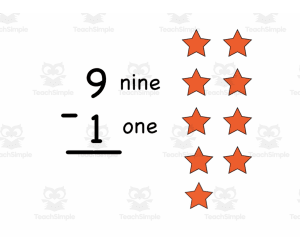
Basic Subtraction Song (1-1 to 9-1)
Math, Addition and Subtraction, Subtraction, Preschool, Grade 1, Songs, Activities
The Basic Subtraction Song: A Teaching Resource for Kindergarten and First Grade The Basic Subtraction Song (1-1 to 9-1) is a teaching resource designed for kindergarten and first-grade educators. This tool effectively caters to the different learning styles of young students through audio and visual stimuli. Key Features: Dynamics: Engaging, enjoyable, and educational 1-minute MP4 video. Purpose: Introduces basic subtraction in a lively manner from 1-1 to 9-1. Tactile Relevance: Offers students an intuitive grasp of subtraction. Supports Differentiated Instructional Strategies: Suitable for: Whole group math lessons - As a warm-up or summarizing activity, Small group interactive learning sessions. - Where students can sing along while solving problems. Ideal For At-home Learning Support: Not confined to classroom use alone, this song serves as an excellent homework supplement. Parents can leverage this resource during family time or homework help sessions at home. Nurture Early Mathematical Comprehension Through Music This delightful musical approach speaks directly to students' interests & engagement levels, making foundational math skills memorable & fun! Over time, educators will likely see noticeable improvements in learners’ numerical problem-solving abilities by persistently using the Basic Subtraction Song (1-1 to 9-1). center ">Diversify Your Teaching Toolbox With Music!
Author Audio Memory
Tags Subtraction, Song, Math Skills, Teaching Aid, Interactive Learning

Animal Groups NGSScience Project – Third Grade Ecosystem and Survival Activity Lesson
Science, Life Sciences, Animals, Grade 3, Teacher Tools
The Animal Groups NGSS Science Project – Third Grade Ecosystem and Survival Activity Lesson This is an educative teaching resource designed to make learning about animal groups interactive and engaging, with a focus on the ecosystem of penguins in Antarctica. It aligns with the Next Generation Science Standards (NGSS) for third grade. Learning by Doing The lesson plan includes a hands-on project that enhances comprehension, and encourages children to explore why scientific principles exist through direct interaction. Included Resources Detailed project instructions (Recording Sheet, Project Explanation, Student Guide) Three Learning Pages for group lessons or individual study An Exit Ticket assessment tool (Answer Key included) A Teacher Guide for smooth navigation through the lesson Supplementary Directed Drawing Worksheets that integrate Art into STEM education (Answer Key included) . Simplicity & Convenience The product requires only standard classroom supplies such as printed worksheets, coloring utensils like crayons or colored pencils, pencils & erasers along with scissors & glue sticks ready at hand - ensuring ease and convenience during setup. Idea! To further engage students you could even consider decorating cardboard boxes to look like Antarctica's snowy landscape! Broaden your students' knowledge on Zoology!! This engaging teaching tool is ideal not only for public school teachers but homeschoolers as well. Students will take an adventure with animals - specifically penguins! They can dive deep into existing ecosystems while discovering how "Animal Groups form Integral Parts of Survival Journeys" in the icy wilds of Antarctica!
Author ARTventurousanimals
Tags Animal Groups, NGSS, Science Project, Ecosystem, Survival
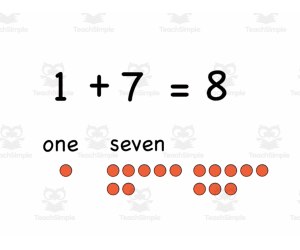
1 + ___ Addition Song
Math, Addition and Subtraction, Addition, Preschool, Grade 1, Songs, Activities
We are always looking for ways to teach our students new skills. Being able to tailor instruction to their learning styles is just one effective way to increase student engagement and set students up for success. Many of our students, from year to year, are visual and auditory learners. Most children (and even adults) can attest to their ability to better retain information that they have learned through music and song. Because of this, my resources seek to teach students skills through song. This particular resource is a1 + ___ Addition Song. This can be used in your math classroom with your kindergarten and 1st grade students. Included in this resource: --Addition Song MP4 video Student will love learning and reviewing this math skill with the options included here. You can use this video to introduce basic addition and then use it again to review later on. You may choose to incorporate it into your lesson’s presentation , so it is easily accessible for you. Students will listen to this song and be able to make connections to the other components of the lesson as well as any independent work they may be doing. I hope you enjoy! You can find more resources at my storefront here: https://teachsimple.com/contributor/audio-memory Here are other similar resources for you to enjoy: https://teachsimple.com/product/prepositions-song https://teachsimple.com/product/noun-song-packet https://teachsimple.com/product/verb-song-packet https://teachsimple.com/product/adverbs-song
Author Audio Memory
Tags Addition Song, Basic Math, Addition Introduction, Addition Review, Math Review Song, Math Videos, Counting, Manipulatives, Ten Frames
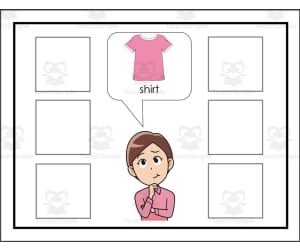
Help Sophia Find the Items: Things You Wear
Special Resources, Special Education Needs (SEN), Speech Therapy, Life Skills, Math, Early Math, Science, Basic Science, Kindergarten, Preschool, Grade 1, 2, Activities
Why we sort by FEATURE - FUNCTION - CLASS Teaching children to sort or group items by feature, function, and classification is important for several reasons: Cognitive development: Sorting and grouping require children to think critically and make connections between items based on their characteristics. This helps to develop their cognitive abilities and improve their problem-solving skills. Organization: Sorting and grouping items based on their features, function, or classification can help children to organize information and make sense of their environment. This can improve their memory and make it easier for them to retrieve information later. Language development: Sorting and grouping can also help to develop children's language skills by providing them with the vocabulary to describe different features, functions, and classifications. This can improve their ability to communicate effectively and express their ideas clearly. Mathematical skills: Sorting and grouping can also help to develop children's mathematical skills, such as counting, categorizing, and comparing. This can lay the foundation for more complex mathematical concepts later on. This activity involves sorting clothing items based on their features, functions, and classes - the items in this activity are commonly seen as "girl" clothes. The learners will be presented with a collection of various clothing items such as shirts, pants, jackets, sweaters, and so on. The objective of the activity is to categorize these items based on their unique features, functions, and classes. To begin the activity , the instructor will introduce the concept of feature, function, and class, providing examples and a brief description of each. The learners will then be given a set of clothing items and asked to sort them into categories based on FEATURE- describing something 'the shirt is red' 'things with zippers' FUNCTION - what it is used for 'wear a coat when it is cold' CLASS - a category 'all shirts' or 'all socks' *For example, the learners could sort clothing items based on the feature of long sleeves, the function of keeping warm, or the class of pants. Overall, teaching children to sort and group items by feature, function, and classification can provide them with a range of cognitive, organizational, language, and mathematical benefits that can support their development in various areas. This activity is easy to create - Print and laminate all cards, cut out the individual sorting cards and velcro to the corresponding activity mat. You can hole punch the mats and put them in a binder for many years of teaching and learning. Enjoy, IFIO girl I'll Figure It Out
Author IFIO girl - I'll Figure It Out
Tags Vocabulary, Clothes For Seasons, Visual Discrimination, Features, Sorting, Occupational Therapy, Tasked Based Teaching, Ablls-r, Feature, Function And Class

Short -a CVC flashcards
ELA, Language Development, Pre-Reading, Phonics, Reading, Kindergarten, Preschool, Grade 1, Worksheets & Printables, Flashcards
Introduce foundational reading skills to emerging readers with this set of high-quality Short -a CVC Flashcards. With 18 flashcards featuring eye-catching graphics, your young readers can practice the CVC words featuring the short -a vowel sound, enhancing their reading skills and building confidence in their reading skills. Reading CVC words is an important strategy when introducing many phonological awareness skills emerging readers need to learn. CVC words follow the simple pattern of consonant-vowel-consonant and make it easier for students to transform individual letter sounds into short and simple familiar words. The short vowel sounds are the foundation of fluent reading. When students begin learning letter names and sounds the first vowel sounds we teach them are the short vowel sounds. You can use these as flashcards for practice, to make anchor charts, for sorting activities, and so much more! The CVC short a words students will read in this activity are: dad, pad, mad, sad, jam, ram, bat, cat, fan, van, nap, map, gas, pan, hat, rat, tag, & bag. RF.K.2d Isolate and pronounce the initial, medial vowel, and final sounds (phonemes) in three-phoneme words (CVC words). RF.K.3b Associate the long and short sounds with common spellings (graphemes) for the five major vowels. RF.K.2a Recognize and produce rhyming words. You can find the same set of CVC flashcards for each short vowel on Teach Simple at the following links: Short -e CVC Flashcards Short -i CVC Flashcards Short -o CVC Flashcards Short -u CVC Flashcards
Author Primary 206 Mix
Tags Short A, Cvc, Flashcards, Early Readers, Emerging Readers

Help Sara Sort Animals - non-identical sorting/grouping activity
Special Resources, Special Education Needs (SEN), Math, Early Math, Science, Basic Science, Kindergarten, Preschool, Grade 1, 2, 3, 4, 5, 6, Activities
Help Sara Sort Animals: A Comprehensive Skill-Enhancer Help Sara Sort Animals is a dynamic activity developed to instill vital life and academic skills in children. An essential tool for Grade 6 down to Preschool, this downloadable PDF is suitable for traditional classrooms as well as homeschoolers. Primarily a foundational tool for Math and Basic Science Education,, this resource aims to improve children's understanding of the world through attributes-based categorization such as colour, size, or function. This strategy fosters critical thinking abilities along with visual discrimination. An Interactive Journey towards Skill Development: The journey begins with an introduction of two animals – a cat and a dog which form the first animal categories. The same concept is gradually complicated by introducing visually similar beings like cows or horses, honing differentiation skills at each step. A Versatile and Adaptive Learning Tool: Variety of card illustrations (22 differently pictured animals) offer flexibility suiting individual needs. The resource can effectively be tailored making it a truly customizable tool appropriate for diverse learning requirements. This exercise also proffers significant benefits in terms of enhancing visual cognizance parameters among Special Education Needs (SEN). Note:In addition to being used in group sessions or personalized assignments—this material invites repeated interaction thereby ensuring better retention over time! A Wholesome Learning Experience Ensured: If you are seeking an engaging yet systematic approach to education, Help Sara Sort Animals promises just that! Observe as your pupils drastically improve their cognitive abilities while thoroughly enjoying the process.
Author IFIO girl - I'll Figure It Out
Tags Animals, Sorting, Categorization, Visual Discrimination, Attributes
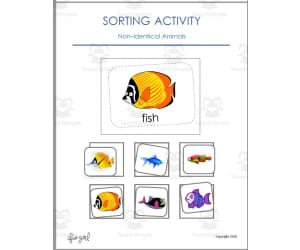
Sorting Activity: Animals - Non-identicals
Special Resources, Special Education Needs (SEN), Math, Early Math, Science, Basic Science, Preschool, Grade 1, 2, 3, 4, 5, 6, Activities
This downloadable PDF is an educational activity that involves sorting non-identical animals. Why we teach sorting and grouping - Sorting and grouping are important skills for young children to learn because they lay the foundation for many other important academic and life skills. Sorting and grouping involve categorizing objects based on common attributes such as color, shape, size, and function. These skills help children to understand and make sense of the world around them. This activity begins by presenting the learner with two large cards, one depicting a dog and the other a cat, to introduce the two animal categories. Then, the learner is given 12 smaller cards, 6 with different pictures of a dog and 6 with different pictures of a cat. The task is to sort the smaller cards into two piles, one for dogs and the other for cats, based on the animal depicted in the picture. The learner is encouraged to observe and compare the pictures to identify the distinguishing features of each animal and group them accordingly. As the learner progresses, the activity can be made more challenging by introducing pictures of animals that are similar such as a horse and a cow, to test their ability to differentiate between similar but unrelated objects. This activity can be used to promote several learning outcomes- visual discrimination classification critical thinking skills It is also a fun and engaging way for learners to explore and learn about different types of animals while practicing essential cognitive skills. This activity was created to be an activity book. However, feel free to print and create to fit your needs. This is a ten-page book with twenty different animals to sort. The different animals can be switched out and rearranged on the different pages to fit the individual learner. Enjoy IFIO girl I'll Figure It Out
Author IFIO girl - I'll Figure It Out
Tags Animals, Non-identicals, Sorting, Visual Discrimination, Problem Solving, Ablls-r, Tasked Based Teaching, Classification, Critical Thinking Skills, Catagorization
Sorting Activity by Feature, Function, and Class - Large Picture Edition
Special Resources, ELA, Special Education Needs (SEN), Social Skills, Speech Therapy, Life Skills, Math, Early Math, Kindergarten, Preschool, Grade 1, 2, 3, 4, 5, 6, Activities
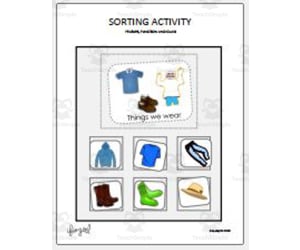
What is FEATURE - FUNCTION - CLASS Sorting or grouping items by feature, function, and classification is a way of categorizing objects or ideas based on specific characteristics or attributes. This method of organization helps to make sense of complex information and allows for easier comparisons and analysis. 1) Feature: Sorting items by feature involves grouping them according to their physical or observable attributes. For example, you could sort a collection of books by their color or size. In this activity - Things that are yellow 2) Function: Grouping items by function involves categorizing them based on what they do or how they are used. For example, you could sort kitchen appliances by their function, such as sorting blenders, mixers, and food processors into one group and toasters, ovens, and microwaves into another group. In this activity - things in the kitchen 3) Classification: Sorting items by classification involves grouping them based on their characteristics or attributes that are intrinsic to their nature . For example, you could sort animals by their things that with wings or things that have fur. In this activity things that we wear. By using these different methods of sorting or grouping, you can provide different perspectives or ways of understanding a set of items or concepts, which can be helpful in teaching and learning. Why we teach sorting by Feature, Function and CLASS Teaching children to sort or group items by feature, function, and classification is important for several reasons: 1) Cognitive development: Sorting and grouping require children to think critically and make connections between items based on their characteristics. This helps to develop their cognitive abilities and improve their problem-solving skills. 2) Organization: Sorting and grouping items based on their features, function, or classification can help children to organize information and make sense of their environment. This can improve their memory and make it easier for them to retrieve information later. 3) Language development: Sorting and grouping can also help to develop children's language skills by providing them with the vocabulary to describe different features, functions, and classifications. This can improve their ability to communicate effectively and express their ideas clearly. 4) Mathematical skills: Sorting and grouping can also help to develop children's mathematical skills, such as counting, categorizing, and comparing. This can lay the foundation for more complex mathematical concepts later on. Overall, teaching children to sort and group items by feature, function, and classification can provide them with a range of cognitive, organizational, language, and mathematical benefits that can support their development in various areas. In this activity the pages are clear of visual distractions which helps the learner focus on the task. This activity is easy to create - Print and laminate all cards, cut out the individual sorting cards and velcro to the corresponding activity mat. You can hole punch the mats and put them in a binder for many years of teaching and learning. Enjoy, IFIO girl
Author IFIO girl - I'll Figure It Out
Tags Sorting Activity, Sorting By Feature, Sorting By Function, Sorting By Class, Visual Discrimination, Early Language Development, Cognitive Development, Organization Skills, ABLLS-R, Problem Solving

Grade 3 Jellybean Math Task Cards
Math, Time, Addition and Subtraction, Addition, Subtraction, Multiplication and Division, Division, Money, Fractions, Geometry, Measurements, Place Value, Grade 3, Task Cards, Worksheets & Printables
Grade 3 Jellybean Math Task Cards A delightful mix of learning and fun, Grade 3 Jellybean Math Task Cards are a perfect addition to your curriculum . These carefully designed cards cover several math topics, readily usable for individual studies or group activities. The product consists of 20 task cards, each diffusing a unique jellybean theme that not only engages third graders but also creates an enjoyable learning environment. The instruction on these learner-centered cards include key grade-3 math practices involving the following - Geometry Multiplication Place value Fractions An understanding of elapsed time. These comprehensive tasks form an excellent tool to revisit and reinforce previously taught concepts. For added ease in teaching methods and resources availability, these Math task cards come in two versions- Please note that both versions present identical content. Spectrum Of Mathematical Areas: Solving multiplication problems using various methods; Measuring to the nearest half inch; Recognizing unit weights; Understanding parallel and perpendicular lines; y combinatorial fractions, In addition, it also assists with rounding off abilities from varying time viewpoints. Incorporation of arithmetic operations like adding 2-digit to 3-digit numbers along with managing missing variables through subtraction exercises and word problems are skillfully handled via appealing jelly bean anecdotes. Pack Inclusions: Five pages with four task cards each focusing on important math areas; One page featuring an answer recording sheet (two sheets per page), minimizing paper waste; and An answer key that enables easy verification of student responses. In summary, the Grade 3 Jellybean Math Task Cards can be deemed as an indispensable tool for every third-grade instructor aiming to create a wholesome enthusiastic experience while covering diverse mathematical learning points.
Author Quail Trail Products
Tags Math Task Cards, Jellybean Theme, Third Grade Math, Geometry, Fractions, Jelly Bean Math

Sorting activity - by Feature Function and Classification
Special Resources, Special Education Needs (SEN), Speech Therapy, Life Skills, Math, Early Math, Kindergarten, Preschool, Grade 1, 2, 3, 4, 5, 6, Activities
This downloadable PDF educational activity can help learners develop their sorting and classification skills. In this activity , learners are presented with a set of picture cards that have different pictures that vary in shape, size, color, and other features, and are asked to sort them based on specific criteria. For example, learners may be asked to sort a set of cards based on their function. This could include things we drink, things we ride in. Another way to approach this exercise is by sorting based on their features. For instance, learners may be given a card "Things with fur" and "Things with wings" then given a set of 12 individual cards 6 cards with pictures of things with fur and another 6 cards with pictures of things that have wings. This helps learners develop their ability to observe and categorize objects based on their physical characteristics. In addition to sorting by features and function, learners may also be asked to sort by classification. Overall, the "Sorting by Feature, Function and Classification" exercise is an engaging and effective way to help learners develop their critical thinking skills, classification abilities, and attention to detail. By practicing this exercise, learners can enhance their ability to analyze information and make informed decisions, which can be beneficial in many different contexts, from academics to everyday life. Have hands on fun expanding the learners imagination and mind! This activity is easy to create and assemble - print, laminate and velcro the individual cards onto the activity - Three hole punch and place in a binder for years of teaching and learning. I'll Figure It Out IFIO girl
Author IFIO girl - I'll Figure It Out
Tags Sorting Activity, Sorting By Feature, Sorting By Function, Sorting By Class, Visual Discrimination, Occupational Therapy, Critical Thinking, Tasked Based Learning, FFC Sorting Activity, ABLL-R
3D Shape Picture Cards
Math, Early Math, Geometry, Kindergarten, Preschool, Grade 1,
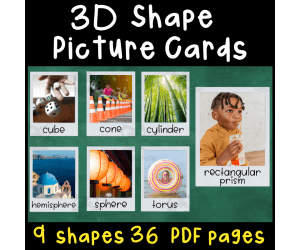
Get your students noticing shapes in the world around them with these posters /cards! With our 3D Shapes Photo Posters , your students can explore 9 different shapes in 3 unique and colorful ways. These 36 vivid posters , featuring real-life images, help your students make connections between the shapes and their own environment. These posters provide an amazing visual representation to aid your students in recognizing three-dimensional shapes all around them. They are perfect for helping young learners build their shape vocabulary. These posters are an especially great tool for practice before a “Shape Hunt.” Show students the many ways objects around them are simply 3D shapes to identify! The 3D shapes in this poster set are: cone, cube, cylinder, sphere, pyramid, rectangular prism, triangular prism, torus, and hemisphere. Each of these nine 3D shapes are represented with a different photograph 3 times and once on a labeled Polaroid without an image. Use the blank Polaroid as you see fit! Maybe as a “running record” of times students have found that shape in their school environment? Or, you can add your own photograph of the 3D shape to personalize this resource! Especially useful in preschool and Kindergarten as students are being introduced to shapes and their names. Pre-formatted in different sizes to make the printing process faster for you! To print as large posters , print only pages 23-58. To print as 1/2 sheet cards (2 polaroids per sheet of paper) print pages 5-22. To print extra small polaroid picture cards, print only pages 1-4. K.G.A.2 Correctly name shapes regardless of their orientations or overall size. K.G.A.3 Identify shapes as two-dimensional (lying in a plane, “flat”) or three-dimensional (“solid”). K.G.B.4 Analyze and compare two- and three-dimensional shapes, in different sizes and orientations, using informal language to describe their similarities, differences, parts (e.g., number of sides and vertices/“corners”) and other attributes (e.g., having sides of equal length).
Author Primary 206 Mix
Tags Picture Cards, Real Life Examples, 3d Shapes, Three Dimensional, Polaroid, 3d Shape Cards, 3d Shape Names And Picture

Sorting Activity: Shapes and Colors - Horizontal
Special Resources, ELA, Special Education Needs (SEN), Speech Therapy, Math, Early Math, Language Development, Pre-Reading, Kindergarten, Preschool, Grade 1, 2, 3, 4, 5, 6, Activities
This educational activity is designed to develop a child's ability to sort and categorize shapes and colors. The activity involves the use of a sorting mat, which is set up horizontally, with various sorting cards with different shapes and colors. The learner will be given a set of cards in different colors, such as red, blue, and yellow, and then given three individual sorting cards for each color or shape and will be asked to sort them horizontally in a line. This activity aims to develop the learner's cognitive skills by helping them recognize similarities and differences between the shapes and colors of the sorting cards. The activity can also help the learner develop their sequencing and writing skills by placing the cards in a specific order horizontally. In this activity there is a sorting mat to sort one color or one shape, as well as a sorting mat to sort two colors and shapes and three colors and shapes. Making this activity easy to individualize for learner. As the learner progresses, the activity can be made more challenging by adding more colors and shapes to the sorting cards. This will help the learner to develop their ability to recognize and differentiate between a wider range of shapes and colors. Overall, this activity is a fun and engaging way for young learners to develop their cognitive and fine motor skills, while also introducing them to basic concepts of sequencing and writing. The pages are clear of visual distractions which helps the learner focus on the task. This activity is easy to create - Print, laminate all cards, cut out the individual sorting cards and velcro to the corresponding activity mat. If you have a coil binding machine you can coil bind the pages, However you can three hole punch the mats and put them in a binder or use binder rings for many years of teaching and learning. Enjoy, IFIO girl I'll Figure It Out
Author IFIO girl - I'll Figure It Out
Tags Sorting Shapes, Sorting Colors, Visual Discrimination, Sorting Activity, Sequencing, Early Writing, Reading, Task Based Learning, Esl, Horizontal Sorting

Short i CVC Worksheets
ELA, Language Development, Pre-Reading, Phonics, Reading, Writing, Handwriting, Kindergarten, Preschool, Worksheets & Printables, Worksheets
Introduce your students to the short i sound and help them develop foundational reading skills with these CVC Worksheets ! This 6 pack of printable worksheets includes activities that help your students matching, reading, writing, and identifying CVC words with the short i sound. With these CVC Worksheets , your students will be able to become confident readers of short i words in no time! Great for in class or as homework! Reading CVC words is an important strategy when introducing many phonological awareness skills emerging readers need to learn. CVC words follow the simple pattern of consonant-vowel-consonant and make it easier for students to transform individual letter sounds into short and simple familiar words. The short vowel sounds are the foundation of fluent reading. When students begin learning letter names and sounds the first vowel sounds we teach them are the short vowel sounds. You can use these worksheets in the classroom or send them home for extra practice. RF.K.2d Isolate and pronounce the initial, medial vowel, and final sounds (phonemes) in three-phoneme words (CVC words). RF.K.3b Associate the long and short sounds with common spellings (graphemes) for the five major vowels. Check out these same CVC worksheets for each short vowel sound available for download on Teach Simple: Short a CVC Worksheets Short e CVC Worksheets Short o CVC Worksheets Short u CVC Worksheets
Author Primary 206 Mix
Tags Short I, Cvc, Write Cvc, Read Cvc, Mach Cvc, Cvc Words, Short A Cvc
Short i CVC words emergent reader
ELA, Language Development, Pre-Reading, Phonics, Reading, Kindergarten, Preschool,
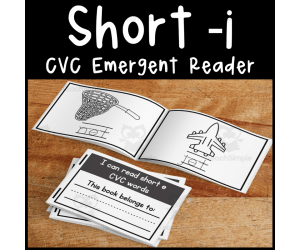
This 14 page Short i CVC word emergent reader is a great resource for your students to use as they develop their reading skills and learn the short i vowel sound. Accompanying worksheets to further practice the short i CVC words in this mini book can be found on Teach Simple here. What’s an emergent reader book? An emergent reader book is a little book, sometimes called “a mini book” that emergent readers use as they are just beginning to learn the conventions of print. Emergent readers books typically have text that is repetitive to help young children learn new words and see patterns within words. Some ways you can use this emergent reader with your students: Morning Work: Have the books printed and ready for students. For morning work students can read the book three times quietly to themselves. Then, have students trace the words. Last, let students color the images in the book. Readers Workshop: Similar to the process of using the book for morning work, students can read the book three times to themselves during independent reading. These are great books for students to keep in their book boxes. Early Finishers: If a student finishes their classwork early, they can grab a printed emergent reader to read to themselves, trace the words, and color. If you do this, be sure to eventually give all students the option to have the same emergent readers in their book box. Send Home: Familiarize students with the process of reading the words, tracing the words, and lastly coloring the book. Then, allow them to take emergent reader books home to use as learning resources outside of school. This is a great option for students that might not have grade level texts available for reading outside of school. Families will appreciate having these extra learning resources at home as it adds to their ability to support what their students are learning in school at home. FIND MORE! ON TEACH SIMPLE: Short a emerging reader Short e emerging reader Short o emerging reader Short u emerging reader
Author Primary 206 Mix
Tags Short I, Cvc Words, Emergent Reader, Cvc Book, Beginning Reader, Minibook

Short a CVC Worksheets
ELA, Language Development, Pre-Reading, Phonics, Reading, Writing, Handwriting, Kindergarten, Preschool, Worksheets & Printables, Worksheets
Introducing Short a CVC Worksheets Help students learn to read short a CVC words with this six-pack of printable phonics worksheets . Young learners will match, read, write, and identify short a words to build early reading skills. These teacher-made worksheets are perfect for whole group, small group, independent work, or homework. Emerging readers need strong CVC word recognition. This consonant-vowel-consonant pattern helps kids sound out simple, short vowel words. Short a is one of the first sounds students learn. Solid CVC skills boost confidence for tackling more complex words and passages. Use these engaging printables to isolate, pronounce, match short vowel graphemes per standards RF.K.2d and RF.K.3b. Download similar short vowel CVC packs from Teach Simple covering short e, short i, short o, and short u. Great for phonological awareness, give your students fun practice with essential short vowel CVC words.
Author Primary 206 Mix
Tags Short A, Cvc, Write Cvc, Match Cvc, Read Cvc, Find Cvc
Short a CVC words emergent reader
ELA, Language Development, Pre-Reading, Reading, Kindergarten, Preschool,
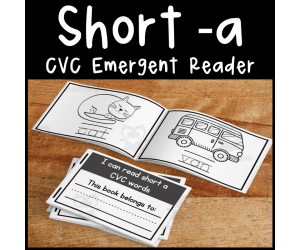
Short a CVC Words Emergent Reader This 14-page short a CVC word emergent reader helps students develop early reading skills and learn the short a vowel sound. The repetitive text and simple CVC words help young readers see patterns and learn new vocabulary. Use this mini book during morning work, reader's workshop, for early finishers, or send home for reading practice. Have students read the book multiple times, trace the words, then color the images. Additional short vowel emergent readers and related worksheets are available on Teach Simple. Other titles include short e, short i, short o, and short u CVC emergent readers to continue building early reading fluency.
Author Primary 206 Mix
Tags Easy Reader, Emergent Reader, Minibook, Short A, Cvc Words
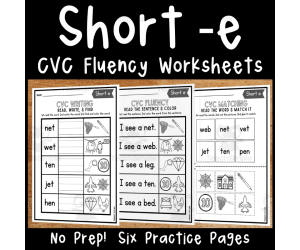
Short e CVC Worksheets
ELA, Language Development, Pre-Reading, Phonics, Reading, Writing, Handwriting, Kindergarten, Preschool, Worksheets & Printables, Worksheets
Short e CVC Worksheets Help students learn to read short e CVC words with this 6-pack of printable worksheets! Activities focus on matching, reading, writing, and identifying consonant-vowel-consonant words containing the short e vowel sound. As emerging readers gain confidence working with CVC words, an important early phonics skill, they build a foundation for fluent reading. Use these worksheets to introduce the short e sound or provide extra short vowel practice. The simple CVC format allows students to sound out and blend letters into familiar vocabulary. Implement during small group instruction, whole class activities, or as independent practice. Other short vowel CVC worksheet packs are also available to continue developing essential early reading skills.
Author Primary 206 Mix
Tags Short E, Cvc, Cvc Match, Cvc Write, Cvc Trace, Cvc Read
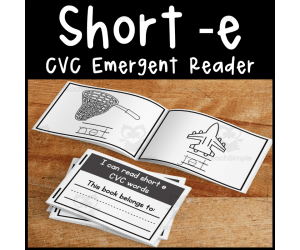
Short e CVC words emergent reader
ELA, Language Development, Pre-Reading, Phonics, Reading, Kindergarten, Grade 1,
Short e CVC Words Emergent Reader This 14-page short e consonant-vowel-consonant (CVC) word emergent reader helps students develop early reading skills and learn the short e vowel sound. Emergent readers allow beginning readers to see letter patterns and repeated words in a story format. Students can read this mini book three times to reinforce recognition of short e words like hen, jet, wet, and red. Additional printables on the Teach Simple website provide more short e CVC word practice. Use this resource for independent reading, morning work, early finishers, or send home for reading practice outside school. Emergent readers add to reading resources available for early learners both in class and at home. Families can help students read the repetitive text to build confidence with early reading skills. With engaging images to color after reading, this book allows students to apply what they have learned about the short e vowel sound in a fun, literacy-rich format.
Author Primary 206 Mix
Tags Short E, Cvc Words, Emergent Reader, Minibook, Beginning Reader

Short o CVC Worksheets
ELA, Language Development, Pre-Reading, Phonics, Reading, Writing, Handwriting, Kindergarten, Preschool, Worksheets & Printables, Worksheets
Introduce your students to the short o sound and help them develop foundational reading skills with these CVC Worksheets ! This 6 pack of printable worksheets includes activities that help your students matching, reading, writing, and identifying CVC words with the short o sound. With these CVC Worksheets , your students will be able to become confident readers of short o words in no time! Great for in class or as homework! Reading CVC words is an important strategy when introducing many phonological awareness skills emerging readers need to learn. CVC words follow the simple pattern of consonant-vowel-consonant and make it easier for students to transform individual letter sounds into short and simple familiar words. The short vowel sounds are the foundation of fluent reading. When students begin learning letter names and sounds the first vowel sounds we teach them are the short vowel sounds. You can use these worksheets in the classroom or send them home for extra practice. RF.K.2d Isolate and pronounce the initial, medial vowel, and final sounds (phonemes) in three-phoneme words (CVC words). RF.K.3b Associate the long and short sounds with common spellings (graphemes) for the five major vowels. Check out these same CVC worksheets for each short vowel sound available for download on Teach Simple: Short a CVC Worksheets Short e CVC Worksheets Short i CVC Worksheets Short u CVC Worksheets
Author Primary 206 Mix
Tags Short O, Cvc Words, Write Cvc, Match Cvc, Read Cvc
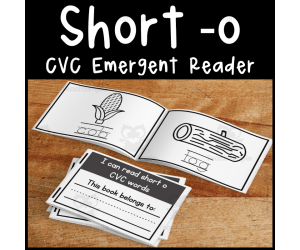
Short o CVC emergent reader
ELA, Language Development, Pre-Reading, Phonics, Reading, Kindergarten, Preschool,
Short o CVC Emergent Reader This 14-page short o CVC word emergent reader helps students develop early reading skills and learn the short o vowel sound. The repetitive text builds familiarity with common short o words. Readers can trace each word after reading to reinforce the letter patterns. Cute illustrations complement the short o words for engaging practice. Teachers can utilize this resource in various ways: individual student practice during independent reading time, as an early finisher activity, or for reading enrichment homework. The simple print, tracing, and coloring format also makes this reader ideal for preschool and kindergarten students. When students are familiar with the reader, consider sending a printed copy home for extra reading support. Check out more vowel sound emergent readers for short a, e, i, and u on Teach Simple to build a comprehensive early reading program.
Author Primary 206 Mix
Tags Short O, Emergent Reader, Cvc Words, Cvc Emergent Reader, Beginning Reader, Minibook

Short u CVC words emergent reader
ELA, Language Development, Pre-Reading, Phonics, Reading, Kindergarten, Preschool,
Short u CVC Words Emergent Reader This 14-page short u CVC word emergent reader helps students develop early reading skills and learn the short u vowel sound. The repetitive text and accompanying worksheets provide practice with short u CVC words. Emergent readers use repetitive, patterned texts to become familiar with print conventions while learning new vocabulary. Suggested uses include independent reading, morning work, early finisher tasks, and at-home reading practice. Students can read the text multiple times, then trace the words and color the images. Send printed copies home for extra reading support. Families can practice the reading, tracing, and coloring process modeled in class. Related short vowel emergent readers also available from Teach Simple: Short a CVC Short e CVC Short i CVC Short o CVC
Author Primary 206 Mix
Tags Short U, Cvc Words, Emergent Reader, Cvc Emergent Reader, Beginning Reader, Minibook

Short u CVC Worksheets
ELA, Language Development, Pre-Reading, Phonics, Reading, Writing, Handwriting, Kindergarten, Preschool, Worksheets & Printables, Worksheets
Short u CVC Worksheets These printable worksheets help early readers practice reading, writing, matching, and identifying words featuring the short "u" vowel sound. The 6-page resource focuses on CVC (consonant-vowel-consonant) words, an important building block that lets emerging readers transform individual letter sounds into simple, familiar words. Students will gain fluency with the foundational short vowel sounds through appealing hands-on activities perfect for whole-group lessons, homework, or center work. Skills align with key kindergarten literacy standards emphasizing phonics, phonemic awareness, and grapheme-phoneme associations. Parents and teachers will find more short vowel CVC worksheets at Teach Simple, supporting early reading success and confidence.
Author Primary 206 Mix
Tags Short U, Cvc Words, Read Cvc, Write Cvc, Match Cvc, Cvc, Cvc Worksheet, Short I Words Cvc, Cvc Words With U In The Middle