Sort by Feature, Function & Class – Large Pictures

- Grades
- K–1
- Pages
- 46
- File type
- Preparation
- Print ready


- Topic
- Feature function class, Picture sorting
- Resource types
- Activities
- Preparation
- Print ready
Product description
From the author
What is feature - function - class
Sorting or grouping items by feature, function, and classification is a way of categorizing objects or ideas based on specific characteristics or attributes. This method of organization helps to make sense of complex information and allows for easier comparisons and analysis.
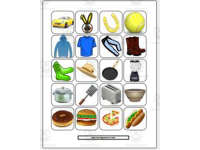
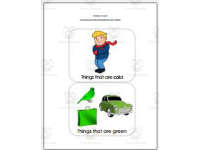
1) Feature: Sorting items by feature involves grouping them according to their physical or observable attributes. For example, you could sort a collection of books by their color or size. In this activity - Things that are yellow
2) Function: Grouping items by function involves categorizing them based on what they do or how they are used. For example, you could sort kitchen appliances by their function, such as sorting blenders, mixers, and food processors into one group and toasters, ovens, and microwaves into another group. In this activity - things in the kitchen
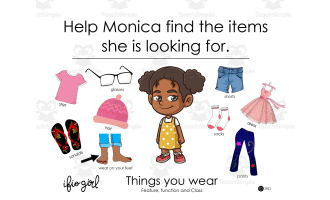
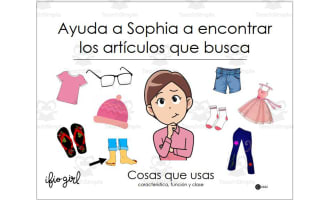
3) Classification: Sorting items by classification involves grouping them based on their characteristics or attributes that are intrinsic to their nature. For example, you could sort animals by their things that with wings or things that have fur. In this activity things that we wear.
By using these different methods of sorting or grouping, you can provide different perspectives or ways of understanding a set of items or concepts, which can be helpful in teaching and learning.
Why we teach sorting by Feature, Function and CLASS
Teaching children to sort or group items by feature, function, and classification is important for several reasons:
1) Cognitive development: Sorting and grouping require children to think critically and make connections between items based on their characteristics. This helps to develop their cognitive abilities and improve their problem-solving skills.
2) Organization: Sorting and grouping items based on their features, function, or classification can help children to organize information and make sense of their environment. This can improve their memory and make it easier for them to retrieve information later.
3) Language development: Sorting and grouping can also help to develop children's language skills by providing them with the vocabulary to describe different features, functions, and classifications. This can improve their ability to communicate effectively and express their ideas clearly.
4) Mathematical skills: Sorting and grouping can also help to develop children's mathematical skills, such as counting, categorizing, and comparing. This can lay the foundation for more complex mathematical concepts later on.
Overall, teaching children to sort and group items by feature, function, and classification can provide them with a range of cognitive, organizational, language, and mathematical benefits that can support their development in various areas.
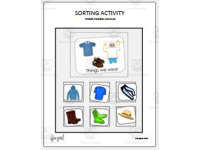
In this activity the pages are clear of visual distractions which helps the learner focus on the task. This activity is easy to create - Print and laminate all cards, cut out the individual sorting cards and velcro to the corresponding activity mat. You can hole punch the mats and put them in a binder for many years of teaching and learning.
Enjoy,
IFIO girl
Related resources
More resources teachers may find useful
24 related resources were found using this product's title, contributor, categories and tags.


In the classroom
Teaching tips & learning objectives

Learning objectives
Sort pictures by an observable feature — colour, temperature, texture or shape
Sort pictures by function, deciding what an object is used for or where it is used
Sort pictures by class, separating fruits from vegetables

Teaching tips
Prepare only the boards and cards needed for the first session; print, laminate, cut and attach hook-and-loop dots as directed.
Begin with a few familiar pictures, then add choices as students become comfortable.
Discuss why a picture can belong to more than one category, such as something green that is also a vegetable.

Skills covered
Sorting by color, shape, texture or other known features
Sorting by an object’s use or familiar location
Naming and explaining picture choices
Good to know
Questions teachers ask about this resource
How many picture spaces are on a board?
Each board has six picture positions plus a category-card position. Teachers can use fewer pictures when introducing a category.
Are the assembly materials included?
The download supplies printable boards and cards. Lamination, cutting tools and hook-and-loop dots are provided separately.

No reviews yet
Downloaded this resource? Tell other teachers how it went.
Resource details
Concepts & topics
Core concepts
 Core concepts
Sorting and categorising
Feature, function and class
Vocabulary
Visual discrimination
 Topics
Explore more
Categories this resource belongs to
Explore related searches
More to explore
You may also like