



3,969 products added recently
Page 14 - Popular Graphic Organizers
Discover a selection of popular graphic organizers suitable for a variety of subjects and grade levels. These versatile tools assist students in structuring information, planning essays, and summarizing content. Utilize these organizers to support critical thinking and improve educational outcomes in your classroom.

 Show filters

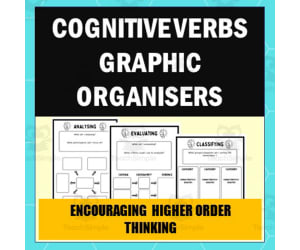
Cognitive Verbs Graphic Organizers
, Grade 7, 8, 9, 10, Teacher Tools, Graphic Organizers
Cognitive Verbs Graphic Organizers : An Essential Teaching Resource Cognitive Verbs Graphic Organizers are crucial teaching tools designed with public school teachers and homeschoolers in mind. They nurture the indispensable skills that students need to display knowledge understanding in various classroom situations. This resource helps advance high-level thinking by prompting students to systematically organize their thoughts and ideas. The organizers come furnished with a set of probing questions that stir critical thought, making them excellent instruments for inspiring intellectual involvement across different subjects. Importantly, both American and British spelling versions are available to cater to different linguistic preferences. List of Included Organizers: Analyzing (Comes with a Music example) Evaluating (Also has a Music example) Comparing & Predicting (Each supported by primary science examples) Contrasting (Illustrated by a Music model) Classifying (Reinforced with another music sample) Justifying & Summarizing (Paired up with an English example), and Inferring The Cognitive Verbs Graphic Organizers have versatile application from Grade 7 through Grade 10, showing their wide range use. Whether for large group discussions for cooperative learning or small team or individual tasks - such as homework - these graphic organizers offer adaptive solutions complementary to varied teaching strategies. The Cognitive Verbs Graphic Organizers come as convenient PDF downloads—a familiar format accessible on several platforms—making them user-friendly resources ready for immediate effective use after download. Bolster Critical Literary Skills With Ease In essence, these cognitive verb graphics significantly alleviate the task of fostering clear comprehension among learners—while increasing their capability to analyze, evaluate, infer, among other vital literary skills—in a structured yet engaging manner. In addition, the organizers serve as handy guides during exams revision as completed examples have been provided with specific organizers thus furnishing learners with first-hand insights into possible quality responses.
Author Marybelle Music and More
Tags Cognitive Verbs, Graphic Organizers, Critical Thinking Skills, Classroom Resources, Intellectual Engagement

Tips on Taking Effective Notes
Social Studies, Not Grade Specific, Teacher Tools, Graphic Organizers
This resource is a set of Tips on Taking Effective Notes. This works for students from 5th grade and up - even higher and adult education. There is no age limit on learning to take effective notes. This presentation will tell your audience why note taking is useful and why it is critical to take GOOD notes. There are slides that show different and creative ways to take notes. With the various options, your students are bound to try at least one, if not all of them!
Author Creating History
Tags Graphic Organizers, Test Prep, Note Taking, Lectures, Study Tips

Venn Diagram Graphic Organizer
ELA, Reading, Grade 1, 2, 3, 4, 5, 6, Graphic Organizers, Teacher Tools
This Venn Diagram Graphic Organizer is a great way for students to compare two topics. It's simple and easy to use, and it helps students visualize the relationships between the two topics.
Author Have Fun Teaching
Tags Compare And Contrast

Popcorn Concept Map Graphic Organizer Worksheet
ELA, Social Studies, Writing, Reading, Grade 3, 4, 5, Teacher Tools, Graphic Organizers, Worksheets & Printables, Worksheets
they are learning about in class. This is a great way for them to organize their thoughts and see the connections between different concepts. This Popcorn Concept Map Graphic Organizer Worksheet is a great way for your students to organize their thoughts and see the connections between different concepts. Filling in the concept map with the topics and related concepts they are learning about in class will help them better understand the material.
Author Have Fun Teaching
Tags Note Taking, Concept Map Graphic Organizer, A Concept Map Is A Graphic Organizer., Graphic Organizer Concept Map, Skill Worksheet Concept Mapping

Brown v. Board of Education – 1954 Case Brief
Social Studies, Government, History, History: USA, Grade 8, 9, 10, 11, Graphic Organizers
Brown v. Board of Education is a landmark United States Supreme Court case that was decided in 1954. The case involved the issue of racial segregation in public schools and had a profound impact on the civil rights movement. The case originated from several lawsuits filed by African American families challenging the segregation of public schools based on race. At the time, racial segregation was widespread in many areas of the United States, and public schools were often segregated, with African American students attending separate schools that were unequal in terms of resources and quality of education. In Brown v. Board of Education, the Supreme Court unanimously ruled that segregation in public schools violated the Fourteenth Amendment's Equal Protection Clause, which guarantees equal treatment under the law. The Court concluded that separate educational facilities for white and African American students were inherently unequal and that racial segregation in public education had a detrimental impact on African American children, damaging their self-esteem and denying them equal educational opportunities. The decision in Brown v. Board of Education overturned the "separate but equal" doctrine established in the 1896 case Plessy v. Ferguson, which had allowed for racial segregation as long as the separate facilities were equal in quality. The Brown decision declared that separate educational facilities were inherently unequal and ordered the desegregation of public schools. However, the implementation of the Brown decision faced significant resistance in many printables/parts-of-and-anatomy-of">parts of the country. Some states and localities resisted desegregation efforts, leading to years of legal battles and social upheaval. It wasn't until years later, through further court rulings, federal legislation, and the efforts of civil rights activists, that significant progress was made in desegregating schools and advancing equal educational opportunities for all students. Overall, Brown v. Board of Education was a pivotal case in the civil rights movement, challenging the legal foundation of segregation and setting the stage for subsequent efforts to end racial discrimination in various aspects of American society. Teacher-prepared notes show students what is important and how ideas relate, and offer a model for how students should take notes themselves (Marzano et al., 2001). These teacher-created notes will help your students grasp the major impact of the Brown v. Board of Education 1954 case. These notes come with a student version and a completed teacher version. These notes work well as a supplement to class readings! Product clipart credit: by Clip Art Emporium
Author EduPal Learning
Rating
Tags Brown V. Board Of Education, Civil Rights Movement, Supreme Court, 1954, Case Brief, Education

States of Matter Worksheet
Science, Physics, Grade 1, 2, 3, 4, Teacher Tools, Graphic Organizers, Worksheets & Printables, Worksheets
worksheet ">States of Matter Worksheet
Author Have Fun Teaching
Tags States Of Matter, Matter, Matters Worksheet, States Worksheet

Making Inferences Graphic Organizer Worksheet
ELA, Reading, Grade 2, 3, 4, 5, Teacher Tools, Graphic Organizers, Worksheets & Printables, Worksheets
This graphic organizer worksheet is a great way for students to record their schema and textual evidences while reading and making inferences. This is a great tool for teachers to use to help their students improve their reading comprehension skills.
Author Have Fun Teaching
Tags Inference, Inference Worksheet 4 Answer Key

Apple Themed Story Maps - Graphic Organizers
ELA, Reading, Reading Comprehension, Grade 1, 2, 3, Teacher Tools, Graphic Organizers
Apple Themed Story Maps - Graphic Organizers is a ready to go resource for your students to demonstrate understanding of a story and its parts.
Author Jessica Richmond
Tags Apples, Graphic Organizers, Story Maps, Story Parts, Reading Comprehension

Plants KWL Graphic Organizer
ELA, Reading, Science, Earth and Environmental Sciences, Earth Sciences, Life Sciences, Biology, Grade 1, 2, 3, 4, 5, 6, Teacher Tools, Graphic Organizers, Worksheets & Printables, Worksheets
Better description: The Plants KWL Graphic Organizer can help students organize what they know, want to know, and learn about plants. This is a great way for students to keep track of their thoughts and discoveries while learning about plants.
Author Have Fun Teaching
Tags KWL And KWHL, Plants, Life Cycle

What I Read What I Know Inference Graphic Organizer Worksheet
ELA, Reading, Grade 2, 3, 4, Teacher Tools, Graphic Organizers, Worksheets & Printables, Worksheets
This graphic organizer can help your students to practice writing summaries of texts. It can also help them to develop their inference skills by having them think about what they read and what they know.
Author Have Fun Teaching
Tags Inference

Limerick Poetry – Posters & Graphic Organizers
ELA, Literature, Poetry, Grade 1, 2, 3, Graphic Organizers, Teacher Tools
This resource is a set of learning posters and graphic organizers for limerick poetry writing. There is a poster to teach about limerick poetry. They will write a limerick poem with a variety of different templates to choose from. This pairs well with your poetry unit in English class. You may also love to print these off and use in a center activity. This resource can be accessed through: PowerPoint Google slides PDF
Author Good Human Project
Rating
Tags Poetry, Graphic Organizers, Writing Poems, Limerick Poetry, Language Arts Unit, Limerick Poems Template
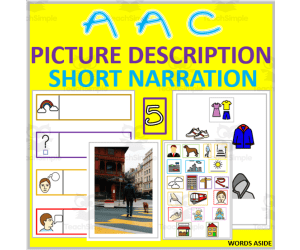
AAC | Picture Description Short Story | Visual Guide Resource 5
Special Resources, ELA, Special Education Needs (SEN), Speech Therapy, Language Development, Pre-Reading, Vocabulary, Writing, Kindergarten, Preschool, Grade 1, 2, Teacher Tools, Graphic Organizers
AAC Picture Description Short Story Visual Guide Resource 5 is an educational resource designed specifically for educators and therapists. Its main goal is improving the language development, communication, and early literacy skills of children with special education needs (SEN), speech therapy patients, as well as mainstream classroom students primarily from preschool through grade two. This resource combines various teaching aids including: Real-life pictures Color-coded sentence strips Familiar themes like WHO / WHAT DOING / WHERE / WHEN / WEATHER / SURROUNDINGS/ THOUGHTS represented on separate pages Description of clothes or individual's appearance etc. The learning journey begins with a real-life photo that serves as the basis for all ensuing activities then leverages color-coded sentence strips to help children formulate narratives around familiar themes. Additional features include descriptions of clothing worn by individuals in photos and sequential answer boards that allow narrative formation through randomized questioning. An added attribute of this resource pack is the inclusion of blank colour coded pages which invite learners to contribute creatively- customizing stories in their unique way thus strengthening their communication roots further. The AAC Picture Description Short Story Visual Guide Resource 5 offers immense flexibility - use it en masse during whole-group instruction sessions or divide it among smaller groups; distribute it for homework assignments enhancing independent thinking; make use of task cards material available within; or even creating minibooks complete with descriptive strips and boards! This package comprises 16 printable PDFs each equipped with: Sentence construction strips Narration boards & Answer cards aiming at improving children's verbal abilities+ Note: The downloaded file can be printed and laminated for use. While this tool is designed primarily for use in educational environments, it can be equally beneficial during one-on-one learning or therapy sessions at home facilitated by parents/guardians and is thus an excellent asset towards children's verbal, cognitive, social and emotional development.
Author WORDS ASIDE
Tags AAC, Picture Description, Short Story, Visual Guide, Communication Skills

The Scientific Revolution: Graphic Organizer
Social Studies, History, History: World, Grade 7, 8, 9, 10, 11, Teacher Tools, Graphic Organizers
The Scientific Revolution refers to a period of profound scientific advancements and changes in the way people viewed and understood the natural world. It took place roughly between the 16th and 18th centuries, starting with the Copernican Revolution and ending with the Enlightenment. During this period, several significant scientific discoveries and advancements were made, leading to a fundamental shift in scientific thinking. Some key figures associated with the Scientific Revolution include Nicolaus Copernicus, Galileo Galilei, Johannes Kepler, Isaac Newton, and Francis Bacon. One of the central developments of the Scientific Revolution was the heliocentric model of the solar system proposed by Copernicus. He argued that the Earth revolves around the Sun, challenging the prevailing geocentric model that placed the Earth at the center of the universe. Galileo's observations with his improved telescope supported Copernicus' heliocentric model and further contributed to the understanding of planetary motion. Galileo also conducted experiments on motion, discovering the principle of inertia and making significant contributions to the field of mechanics. Johannes Kepler formulated three laws of planetary motion, providing mathematical descriptions of how planets move in elliptical orbits around the Sun. His laws helped establish a more accurate understanding of celestial mechanics. Perhaps the most influential figure of the Scientific Revolution was Sir Isaac Newton. His groundbreaking work in physics, laid out in his book "Mathematical Principles of Natural Philosophy" (often referred to as "Principia"), presented the laws of motion and the law of universal gravitation. Newton's laws provided a unified framework for understanding the motion of celestial bodies and objects on Earth. The Scientific Revolution also saw advancements in other fields, including anatomy, biology, chemistry, and optics. It led to the development of new experimental methods and the establishment of scientific institutions, such as the Royal Society in England. The impact of the Scientific Revolution extended beyond the scientific realm. It challenged long-held beliefs and traditional authorities, particularly those of the Catholic Church. The new scientific knowledge and methods encouraged critical thinking and the pursuit of empirical evidence, laying the groundwork for the Enlightenment—an intellectual and philosophical movement that emphasized reason, individualism, and progress. Overall, the Scientific Revolution marked a significant turning point in human history, ushering in a new era of scientific inquiry, experimentation, and a more systematic approach to understanding the natural world. It paved the way for subsequent scientific advancements and continues to shape our understanding of the universe today. Teacher-prepared notes show students what is important and how ideas relate, and offer a model for how students should take notes themselves (Marzano et al., 2001). These notes come with a completed teacher version and a student fill-in-the-blank version. Ready to print and ready to use! Works great with the interactive notebook! Thumbnail Clipart Credit: By PrincePadania
Author EduPal Learning
Tags Scientific Revolution, Graphic Organizer , Galileo, Newton, Copernicus

Cinderella Retelling – Picture Sequencing & Writing
ELA, Reading, Reading Comprehension, Preschool, Grade 1, 2, 3, Teacher Tools, Graphic Organizers
This resource is a story retelling for Cinderella. Students will cut and paste (in order) 6 pictures representing the story. They will paste these pictures into a mini booklet with lines for them to write a sentence or two. There are 2 graphic organizers to retell the story. Finally, there is a blank writing page that students can use to rewrite the story in their own words.
Author Good Human Project
Rating
Tags Story Retelling, Graphic Organizers, Comprehension Practice, Sequence Of Events, Plot, Retell A Story Graphic Organizer
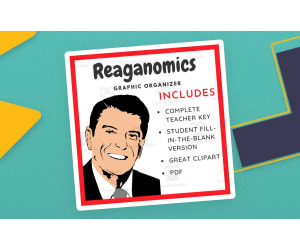
Reaganomics: Graphic Organizer
Social Studies, History, History: USA, Grade 8, 9, 10, 11, Teacher Tools, Graphic Organizers
Reaganomics: Graphic Organizer A valuable teaching resource, this comprehensive tool simplifies the complex subject of Reagan's economic policies. It is designed for students from grades 8 to 11. Particularly, educators working with subjects in Social Studies, specifically within the subdomain of USA History. Key Principles This graphic organizer focuses on 'Reaganomics', the economic approach used by President Ronald Reagan during his tenure from 1981-1989. The strategies covered include: Supply-side economics Monetarism Deregulation The graphics depict how these mechanisms were implemented to stimulate economic growth and boost job creation through decreases in taxes, reductions in government expenditure, and relaxing regulations across industries. Policy Changes Under Reagan's Administration Notably, important policy changes such as Tax Reform Act of 1986 aimed at simplifying tax code while promoting fairness and efficiency are discussed. The reasoning behind reducing government spending within social welfare programs is also explored – an attempt to downsize federal involvement while increasing individual contributions. Critical Perspectives on Reaganomics Included within it is an examination of arguments both praising and critiquing "Reaganomics". This promises exposure to critical thinking exercises around pertinent ongoing debates. An Excellent Classroom Tool This effective method stimulates classroom discussion or debate among peers during group study sessions or even when given as homework assignments. The Package Includes: A detailed teacher version with answers which can serve as a 'key'. A student template for filling in the blanks to confirm an understanding of Reaganomics. Available in a PDF format, this classroom-ready resource can plunge educators and students into the depths of a significant era in American economic history.
Author EduPal Learning
Tags Reaganomics, Economic Policies, Supply-side Economics, Monetarism, Deregulation, What Is Reaganomics, Were Reaganomics Good For The United States

Main Idea Graphic Organizer
ELA, Reading, Grade 2, 3, 4, 5, Teacher Tools, Graphic Organizers, Worksheets & Printables, Worksheets
This Main Idea Graphic Organizer is a great way for students to organize details and determine the main idea as they read independently. This will be a great help for teachers who want their students to be successful readers.
Author Have Fun Teaching
Tags Main Idea, Note Taking, Summarizing, Main Ideas Graphic Organizer
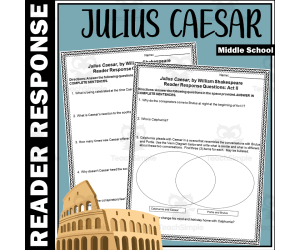
"Julius Caesar" Reader Response Packet
ELA, Reading, Reading Comprehension, Literature, Writing, Grade 6, 7, 8, Worksheets & Printables, Novel Studies, Teacher Tools, Graphic Organizers, Assessments, Activities
We all know how important it is to build literacy skills with our students! With that, we want to find great texts to expose our students to. Selecting texts that can be paired with strong materials is always a necessity for us. My store is complete with a wide variety of novel study products, picture book companions, and more for you to use with lower elementary, upper elementary, and middle school students. The reader response questions are great for students to use while reading Shakespeare's, Julius Caesar. The questions guide students to pay attention to important events, and character actions, analyze other elements of the plot, and more! Questions are sectioned by Acts. Best for 6th - 8th grades. Please note that this product was created to use with the version adapted by Diana Stewart and published by Steck-Vaughn Company. The reader response questions are broken up into sections: Act I (5 short answer questions) Act II (3 short answer questions & 1 graphic organizer ) Act III (5 short answer questions) Acts IV & V (5 short answer questions) I hope you enjoy! Be sure to check out my storefront here for more book companions: https://teachsimple.com/contributor/creatively-gifted
Author Creatively Gifted
Tags Novel Study Guide, Book Companion, Julius Caesar, Shakespeare, Reader Response, Venn Diagram, Compare And Contrast, Middle School, Literature, Quotations Worksheet Julius Caesar

Family Tree Template – Editable Graphic Organizer
Social Studies, Not Grade Specific, Templates, Graphic Organizers
Students can use this template with Google Slides and enter their information into the editable text boxes in the family tree. If students have access to a webcam or other digital camera device, they may be able to insert a picture of themselves into the page of the family tree.
Author Roombop
Tags Family Tree, Graphic Organizer, Template, Family Tree Google Slide Template, Family Tree Graphic Organizer, Google Slides Graphic Organizer, Editable Graphic Organizers, Family, Google, Google Slides, Relationships, Editable

Graphic Organizer Tub Labels
, Grade 7, 8, 9, 10, 11, 12, Graphic Organizers, Teacher Tools
Graphic Organizer Tub Labels: The Perfect Classroom Resource Graphic Organizer Tub Labels provide the perfect solution for categorizing your collection of writing-critical graphic organizers. You'll find potent descriptions on each label as concise references, ideal for students undecided on which organizer to employ. Designed to fit any classroom - from Mathematics to Social Studies - these labels are truly all-encompassing. The primary benefit of this resource is its ability to save precious time by simplifying the process of differentiation between different types of organizers. It significantly reduces ambiguity and confusion, making navigation through educational material a simple task instead of a time-consuming challenge! Usability and Application Whole Group Instruction Small Group Assignments Homework Projects The Benefits: Accessibility & Clarity This seven-page PDF resource emphasizes accessibility and clarity, therefore boosting the teaching-learning experience massively. Each page is thoughtfully designed with an uncomplicated layout suitable for Grade 7-12 requirements. Décor That Engages & Educates! A well-decorated classroom can transform a dull space into an attractive learning environment filled with curiosity and creativity! Graphic Organizer Tub Labels take this concept further by not only effectively organizing resources but also adding considerably to classroom aesthetics. Homeschooling Friendliness If you’re homeschooling your child or considering it, these labels are perfect! They teach organizational skills which could immensely help navigate home-based learning scenarios. In essence, Graphic Organizer Tub Labels provide a seamless blend neglect between functionality and beauty; they help teachers maintain structure in their classrooms while enhancing the educational environment for students! Remember that not just what you teach but how you present the learning environment significantly influences successful education journeys!
Author Fairways and Chalkboards
Tags Graphic Organizers, Organization, Classroom Decor, Teaching Resources, Student Engagement

Comparing Four Texts Graphic Organizer Worksheet
ELA, Reading, Grade 4, 5, 6, Teacher Tools, Graphic Organizers, Worksheets & Printables, Worksheets
This graphic organizer will help your students compare four texts they are reading. By summarizing each text, your students will be able to see the similarities and differences between the texts. This is a great way to help your students engage with the texts they are reading.
Author Have Fun Teaching
Tags Compare And Contrast, Genres

Major and Minor Character Graphic Organizer
ELA, Reading, Grade 2, 3, 4, 5, 6, Teacher Tools, Graphic Organizers, Worksheets & Printables, Worksheets
This Major and Minor Character Graphic Organizer is a great way for students to fill in details and show information about the Major and Minor Characters.
Author Have Fun Teaching
Tags Story Elements

Reading Comprehension What I Read What I Saw Graphic Organizer Worksheet
ELA, Reading, Grade 1, 2, 3, 4, Teacher Tools, Graphic Organizers, Worksheets & Printables, Worksheets
This graphic organizer is a great way for your students to practice reading comprehension. By having them pick a book and write down what they read and saw, they will be able to better understand the material. This is a great resource for any teacher looking to help their students improve their reading comprehension skills.
Author Have Fun Teaching
Tags Reading Comprehension, What Is A Graphic Organizer For Reading, Graphic Organizer Reading Comprehension, Reading Graphic Organizer, Graphic Organizer For Reading, Reading Comprehension Graphic Organizers, Comprehension Graphic Organizers
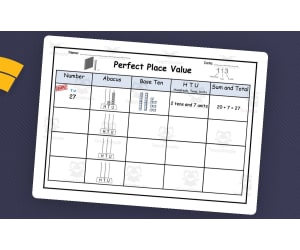
Place Value Graphic Organizer
Math, Place Value, Preschool, Grade 1, 2, Teacher Tools, Graphic Organizers
If you want to give students extra practice with place value, I have just the resource for you. What You Get: This is a Place Value Graphic Organizer that is ideal for kindergarten, 1st and 2nd grade students who have mastered place value or need additional review. It is a 2-page printable with space to complete 8 problems, but the first one is completed for students. How To Implement This Resource: You can print off enough copies of this worksheet for each student to have. You may also choose to print only a few copies and laminate those. If you choose to laminate them, students can use dry erase markers to write answers. This is a great way to turn this into a math center or small group activity. It can be used during or after a place value lesson as a quick informal assessment to determine how well students have mastered the concept. Students will write a number in the first column to begin. These can be numbers you have them choose from or they can come up with numbers all on their own. Then they can complete the remaining columns based on the number they chose to write down. The remaining columns consist of: -- An abacus for students to represent the number -- Base Ten for students to draw blocks representing the number -- Students writing out the amount of each unit that represents the number -- Sum and Total of the number This worksheet can be completed independently. You may also choose to have students work together in partners or small groups to complete it. I hope you enjoy! Here are more of my resources for you to enjoy: Pronouns Worksheet Human Life Cycle Worksheet Animals and Plants Characteristics Venn Diagram Writing to Recount Template Contractions Worksheet Homophones Worksheet Set You can find more resources at my storefront here: https://teachsimple.com/contributor/elementary-resources-4-u
Author Elementary Resources 4 U
Tags Math Graphic Organizer, Place Value Graphic Organizer, Math Worksheet, Base Ten Blocks, Finding The Sum, Abacus Manipulative, Math Small Group, 2nd Grade Graphic Organizer
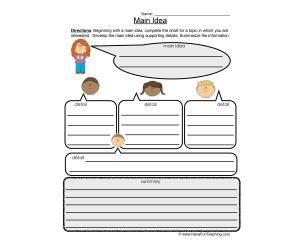
Main Idea Spider Graphic Organizer
ELA, Reading, Grade 2, 3, 4, 5, 6, Teacher Tools, Graphic Organizers, Worksheets & Printables, Worksheets
This Main Idea Spider Graphic Organizer is a great tool for students to use as they read independently. It will help them to organize details and determine the main idea.
Author Have Fun Teaching
Tags Main Idea, Idea Graphic