



2,209 products added recently
Page 109 - 5th Grade Lesson Plans
Prepare your fifth graders for future challenges with lesson plans that promote higher-order thinking and mastery of key concepts. These resources encourage collaboration and in-depth exploration across subjects. Use them to guide your students toward readiness for middle school.

 Show filters


I WONDER - Do Batteries Come In Different Sizes | Animated Video
Physics, Science, Chemistry, Grade 4, 5, 6, 7, 8, 9, 10, Lesson Plans, Teacher Tools
Video Introduction An amazing activity designed for the students to learn more about STEM. I WONDER - Do Batteries Come In Different Sizes | Animated Video Lesson Do you like STEM subjects? what is your favorite one? Have you ever tried to plant a seed? If yes, tell us more about it. Or have you ever tried to invent something? If yes, tell us more about it. And how do you think it will help us? Have you ever seen a microorganism under a microscope? What was it? And how it looked like? Mathematics is a marvelous subject. Let' sharpen our brains and solve some equations. Do you like timetable tricks? What is your favorite one? Do you know how to code? Have you ever created an app or a game before? If yes, how was it like? I WONDER - Do Batteries Come In Different Sizes | Animated Video Lesson The video is perfect for encouraging the researching skills for the students, while learning more about this fantastic topic. I WONDER - Do Batteries Come In Different Sizes | Animated Video Lesson This friendly designed video is suitable for students at school, homeschooling, and as a group activity. Format Available in MP4 format.
Author Educational Voice
Tags Do Batteries Come In Different Sizes, Do Batteries Come In Different Sizes Video, Batteries, Batteries Facts, Batteries Facts For Kids, Batteries Different Sizes, Batteries Different Sizes Video, Batteries Different Sizes Video For Kids

I WONDER - How Many Moons Does Jupiter Have | Animated Video Lesson
Space, Earth and Environmental Sciences, Science, Grade 4, 5, 6, 7, 8, 9, 10, Lesson Plans, Teacher Tools
Video Introduction An amazing video designed for the students to learn more about space facts. I WONDER - How Many Moons Does Jupiter Have | Animated Video Lesson Do you like reading about space? If yes, what is your favorite topic? What do you know about our solar system? What is the smallest planet in our solar system? What is the biggest planet in our solar system? What is the hottest planet in our solar system? And what is the coldest one? Do you think there are aliens? If yes, what do you think they look like? What do they eat and how they speak to each other? Where do they live? What is a galaxy? And what is a milky way? Have you recently saw a shooting star? If yes, tell us more about it, like when did it happen and where? What is a blackhole? Can a blackhole gets bigger by time? Do you like counting the stars? What do you think a star is made of? I WONDER - How Many Moons Does Jupiter Have | Animated Video Lesson The video is perfect for encouraging the researching skills for the students, while learning more about the fantastic space. I WONDER - How Many Moons Does Jupiter Have | Animated Video Lesson This friendly designed video is suitable for students at school, homeschooling, and as a group activity. Format Available in MP4 format.
Author Educational Voice
Tags How Many Moons Does Jupiter Have, How Many Moons Does Jupiter Have Video, Jupiter, Jupiter Facts, Jupiter Facts For Kids, Jupiter Video, Jupiter Video For Kids, Planet, Planets, Planets Facts

Technology & Globalization Gr. 5-8
Social Studies, Economics, Grade 5, 6, 7, 8, Teacher Tools, Lesson Plans
Technology & Globalization Gr. 5-8 Aimed for students in middle school, this resource taps into the intertwined relationship between technology and globalization. The material focuses on demonstrating the technological gaps discernible among developed, developing and underdeveloped nations. A plethora of interactive activities allows deep exploration of these themes. Key Highlights: Writing Tasks: Draft a screenplay centered around an inventor who accelerates globalization through his/her tech innovation. Curation: Organize a show exhibiting diverse modern communication technologies that encourage global interaction. Research: Educate students on the importance of internet in advancing globalization through analyzing online behaviors via student-created surveys. Visioning Future Tech:Create imaginary transportation systems with detailed brochures to illustrate their role in facilitating globalization. Historical Connections:A timeline activity engages learners with tracing events up to electricity's common usage, reinforcing bonds between tech advancements & society's progression over time. Space-tech Trivia:Delve into space technology advancements and discuss their ramifications on global interconnectivity. Assuring State Standards are met along with Bloom’s Taxonomy alignment enhances cognitive skills while creating intriguing hands-on learning experiences fostering comprehensive development. Bonus Features include: - Crossword puzzles for vocabulary enrichment. - Word searches to foster concentration & memory retention. - Comprehension quizzes validating effective knowledge assimilation. This all-inclusive PDF is designed as an educator-friendly tool providing tailored lesson plans suitable for instruction within social studies or economics subsets whether group-wise, in small clusters or as take-home tasks with individual learners.
Author Classroom Complete Press
Tags PDF
Reading Comprehension: Sequencing
ELA, Reading, Reading Comprehension, Common Core, Grade 5, 6, 7, 8, Teacher Tools, Lesson Plans
Reading Comprehension: Sequencing This educational resource is a specialized extract from the comprehensive lesson plan Reading Comprehension. Primarily designed for grades 5 through 8 in Language Arts programs, its main goal is to successfully develop a child's reading comprehension and fluency. Reading is undeniably one of the most critical communication skills in our society. Hence, this guide emphasizes several fundamental aspects of reading. It addresses crucial elements such as context clues utilization, ascertainment of passages or stories' main idea correctly and development of inference skills. The user-friendly layout of this teaching aid allows ease in understanding and seamlessly absorbing shared tips. It teaches students about these core components by defining key terms and providing numerous practice opportunities. Key Concepts in Reading The importance of utilizing context clues Ascertaining the correct primary subject matter from passages or stories Cultivating inference abilities for better understanding A noteworthy feature that sets Reading Comprehension: Sequencing apart from other resources is its alignment with two recognized guidelines - Common Core State Standards and Blooms Taxonomy, ensuring aptness for instructional techniques. This impeccably structured resource would prove highly beneficial for educators executing group sessions or overseeing individual study times at school or home - helping improve your students’ comprehension skills significantly. Possible Implementation Methods: Group work discussions focusing on sequencing elements within texts during class periods Distributing pages as homework assignments Finally, it’s worth mentioning that this guide comes as a PDF file making it conveniently accessible across various devices – integrating seamlessly into any teaching plan with broad objectives ranging from enhancing overall reading comprehension to understanding sequence in the larger context of language arts.
Author Classroom Complete Press
Tags PDF

I WONDER - How Do Roman Numerals Work | Animated Video Lesson
History: Ancient, History, Social Studies, History: Europe, Numbers, Early Math, Math, Grade 4, 5, 6, 7, 8, 9, 10, Lesson Plans, Teacher Tools
Video Introduction An amazing video designed for the students to learn more about history. I WONDER - How Do Roman Numerals Work | Animated Video Lesson Do you like history? Which topic do you really enjoy about history? Have you ever read an interesting fact about the Vikings? If yes, can you mention them? What do you like most about the Victorian era? Can you name all the Tudors? Have you ever wondered how people used to live in ancient Japan and ancient China? Do you know any interesting facts about ancient Egyptians and the Pharaohs? Have you ever visited South America? What do you know about Incas and Aztecs? Celtic culture was really one of a kind, can you name any of the places that Celts used to live in? Imagine yourself living during the ancient Roman empire, how your life will look like? Ancient Greece was an amazing place to live in. What do you know about ancient Greek life? I WONDER - How Do Roman Numerals Work | Animated Video Lesson The video is perfect for encouraging the researching skills for the students, while learning more about history. I WONDER - How Do Roman Numerals Work | Animated Video Lesson This friendly designed video is suitable for students at school, homeschooling, and as a group activity. Format Available in MP4 format.
Author Educational Voice
Tags How Do Roman Numerals Work, How Do Roman Numerals Work Video, Roman Numerals, Roman Numerals Facts, Roman Numerals Facts For Kids, Roman Numerals Video, Roman Numerals Video For Kids
I WONDER - Was The River Nile Used For Irrigation | Animated Video
Geography, Social Studies, Grade 4, 5, 6, 7, 8, 9, 10, Lesson Plans, Teacher Tools
Video Introduction An amazing video designed for the students to learn more about famous places in different countries. I WONDER - Was The River Nile Used For Irrigation | Animated Video Lesson What do you know about this place? Do you know in which part of the world it is? Have you ever visited this place? If yes, can you tell us more about your adventure, and what do you like the most about this place? Do you like reading about Geography? What is your favorite country in the whole world? If you are going on a trip where it will be? Which country? What you are going to see there? Does this country has a famous place to visit? I WONDER - Was The River Nile Used For Irrigation | Animated Video Lesson The activity is perfect for encouraging the researching skills for the students, while learning more about this fantastic place. I WONDER - Was The River Nile Used For Irrigation | Animated Video Lesson This friendly designed video is suitable for students at school, homeschooling, and as a group activity. Format Available in MP4 format.
Author Educational Voice
Tags Was The River Nile Used For Irrigation, Was The River Nile Used For Irrigation Video, River Nile, River Nile Facts, River Nile Facts For Kids, River Nile Video, River Nile Video For Kids, Irrigation, Irrigation Video
I WONDER - Are There Different Types of Galaxies | Animated Video
Space, Earth and Environmental Sciences, Science, Grade 1, 2, 3, 4, 5, 6, 7, 8, Lesson Plans, Teacher Tools
Video Introduction An amazing video designed for the students to learn more about space facts. I WONDER - Are There Different Types of Galaxies | Animated Video Lesson Do you like reading about space? If yes, what is your favorite topic? What do you know about our solar system? What is the smallest planet in our solar system? What is the biggest planet in our solar system? What is the hottest planet in our solar system? And what is the coldest one? Do you think there are aliens? If yes, what do you think they look like? What do they eat and how they speak to each other? Where do they live? What is a galaxy? And what is a milky way? Have you recently saw a shooting star? If yes, tell us more about it, like when did it happen and where? What is a blackhole? Can a blackhole gets bigger by time? Do you like counting the stars? What do you think a star is made of? I WONDER - Are There Different Types of Galaxies | Animated Video Lesson The video is perfect for encouraging the researching skills for the students, while learning more about the fantastic space. I WONDER - Are There Different Types of Galaxies | Animated Video Lesson This friendly designed video is suitable for students at school, homeschooling, and as a group activity. Format Available in MP4 format.
Author Educational Voice
Tags Are There Different Types Of Galaxies, Are There Different Types Of Galaxies Video, Different Types Of Galaxies, Types Of Galaxies, Galaxies, Galaxy, Galaxies Facts, Galaxies Facts For Kids, Galaxies Video
I WONDER - How Do Lizards Travel Across The Desert Sand
STEM, Animals, Life Sciences, Science, Biology, Grade 1, 2, 3, 4, 5, 6, 7, 8, Lesson Plans, Teacher Tools
Video Introduction Animal kingdoms are full of fascinating wonders to learn. This video is designed for the students to learn more about animals in different countries. I WONDER - How Do Lizards Travel Across The Desert Sand | Animated Video Lesson Do you like animals? what is your favorite one? Do you own a pet? If yes, tell us more about it, like what its name? And what do you like most about it? What are the animal kingdoms? Can you write down the characteristics of each animal class like mammals, birds, reptiles, amphibian, fish and mollusks. Do you know that some animals can sing, can you name any of them? What is the largest and the smallest mammal in the world? What is the largest and the smallest bird in the world? What is the largest and the smallest fish in the world? I WONDER - How Do Lizards Travel Across The Desert Sand | Animated Video Lesson The video is perfect for encouraging the researching skills for the students, while learning more about these fantastic animals. I WONDER - How Do Lizards Travel Across The Desert Sand | Animated Video Lesson This friendly designed video is suitable for students at school, homeschooling, and as a group activity. Format Available in MP4 format.
Author Educational Voice
Tags How Do Lizards Travel Across The Desert Sand, How Do Lizards Travel Across The Desert Sand Video, Lizards, Lizard, Lizards Facts, Lizards Facts For Kids, Lizards Video, Lizards Video For Kids
I WONDER - What King Had The Shortest Reign In History
History: Europe, History, Social Studies, Grade 5, 6, 7, 8, 9, 10, 11, Lesson Plans, Teacher Tools
Video Introduction An amazing video designed for the students to learn more about history. I WONDER - What King Had The Shortest Reign In History | Animated Video Lesson Do you like history? Which topic do you really enjoy about history? Have you ever read an interesting fact about the Vikings? If yes, can you mention them? What do you like most about the Victorian era? Can you name all the Tudors? Have you ever wondered how people used to live in ancient Japan and ancient China? Do you know any interesting facts about ancient Egyptians and the Pharaohs? Have you ever visited South America? What do you know about Incas and Aztecs? Celtic culture was really one of a kind, can you name any of the places that Celts used to live in? Imagine yourself living during the ancient Roman empire, how your life will look like? Ancient Greece was an amazing place to live in. What do you know about ancient Greek life? I WONDER - What King Had The Shortest Reign In History | Animated Video Lesson The video is perfect for encouraging the researching skills for the students, while learning more about history. I WONDER - What King Had The Shortest Reign In History | Animated Video Lesson This friendly designed video is suitable for students at school, homeschooling, and as a group activity. Format Available in MP4 format.
Author Educational Voice
Tags What King Had The Shortest Reign In History, What King Had The Shortest Reign In History Video, The Shortest Reign In History, The Shortest Reign, The Shortest Reign In History Facts, The Shortest Reign In History Video

I WONDER - What Is A Fire Whirl | Animated Video Lesson
Earth Sciences, Earth and Environmental Sciences, Science, Grade 4, 5, 6, 7, 8, 9, 10, Lesson Plans, Teacher Tools
Video Introduction An amazing video designed for the students to learn more about famous phenomena in different countries. I WONDER - What Is A Fire Whirl | Animated Video Lesson Weather phenomena can affect our lives, crops and even animals! Can you name any of the weather phenomena that happened in your country? Do you know when hailstorms happen? And what is the most country who has lots of hailstorms happening per year? Do you think the all countries have four seasons? If no, can you name any? Why do some animals sleep at winter? Can you name any of these animals? I WONDER - What Is A Fire Whirl | Animated Video Lesson The video is perfect for encouraging the researching skills for the students, while learning more about this fantastic phenomenon. I WONDER - What Is A Fire Whirl | Animated Video Lesson The video is perfect for encouraging the researching skills for the students, while learning more about this fantastic phenomenon. Format Available in a PDF format.
Author Educational Voice
Rating
Tags What Is A Fire Whirl, Fire Whirl, Fire Whirl Facts, Fire Whirl Video, Fire Whirl Video For Kids, Fire Whirl Facts For Kids, Severe Weather Phenomena, Severe Weather Phenomena Facts, Severe Weather Phenomena Video

I WONDER - What Are Aquatic Plants | Animated Video Lesson
Science, Nature & Plants, Life Sciences, Grade 5, 6, 7, 8, 9, 10, Lesson Plans, Teacher Tools
Video Introduction An amazing activity designed for the students to learn more about STEM. I WONDER - What Are Aquatic Plants | Animated Video Lesson Do you like STEM subjects? what is your favorite one? Have you ever tried to plant a seed? If yes, tell us more about it. Or have you ever tried to invent something? If yes, tell us more about it. And how do you think it will help us? Have you ever seen a microorganism under a microscope? What was it? And how it looked like? Mathematics is a marvelous subject. Let' sharpen our brains and solve some equations. Do you like timetable tricks? What is your favorite one? Do you know how to code? Have you ever created an app or a game before? If yes, how was it like? I WONDER - What Are Aquatic Plants | Animated Video Lesson The video is perfect for encouraging the researching skills for the students, while learning more about this fantastic topic. I WONDER - What Are Aquatic Plants | Animated Video Lesson This friendly designed video is suitable for students at school, homeschooling, and as a group activity. Format Available in MP4 format.
Author Educational Voice
Tags What Are Aquatic Plants, What Are Aquatic Plants Video, Aquatic Plants, Aquatic Plants Facts, Aquatic Plants Facts For Kids, Aquatic Plants Video, Aquatic Plants Video For Kids, Aquatic Plant
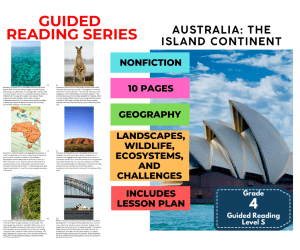
Australia - Island Continent: Guided Reading Level S with Lesson Plan
ELA, Resources for Teachers, Reading Comprehension, Reading, Science, Geography, Social Studies, History, Life Sciences, Earth and Environmental Sciences, Grade 3, 4, 5, Worksheets & Printables, Worksheets, Teacher Tools, Centers, Activities, Literacy Readers, Quizzes, Quizzes and Tests, Assessments, Lesson Plans
This Australia: The Island Continent (level s) guided reading book with lesson plan includes: Guided Reading Color Label (front cover x1) This is a quick way to match the book’s demands to what students can generally handle.. The overall goal is to use the level/color to pick books for several smaller groups. To qualify for a certain level, a student is expected to read a book from that level with about 90–94% accuracy. If a student is consistently accurate and understands, move up a level. If the student is struggling at that level, drop down and add more support. Each student will improve at completely different rates, but it is generally one of the best ways to check progress across the class. DOWNLOAD THE CATALOG TO VIEW ALL GUIDED READING BOOKS AVAILABLE (SORTED LEVELS A-Z) Pre-Reading Question (x1) Teacher asks the prompt aloud, can be while showing the cover or first page. Students share what they already know, or make educated guesses from the cover. Prompt them to use the target vocabulary. Write some of their responses on the board to look back at during the reading. Vocabulary Words (x5) Introduce the five words, best doing it one at a time. Start by saying it, while students repeat and then see if anyone knows what it means before reading further. Read through the meaning and try to briefly connect each word to a picture or gesture so it’s meaningful. Ask students to flip through the book pages and point to where they see each of the vocabulary words. While reading the book pause upon coming across one of the vocab words or read the sentence twice to make sure students understand the word has appeared. Optional: Ask students to raise hands whenever they see/hear one of the new words. Guided Reading Pages (x10) Check the book snapshot (below) for: primary topic - do you need to prep extra reading or intro materials on this? what is taught best - decide on 1-2 bullets to focus on, use the prompt or words provided here for best results. learning goals - what you are checking for students to be able to do after the session, elicit answers using prompts or words provided. key vocabulary (see section above). questions overview - so you know what is coming up and if you need to prep extra materials to assist understanding. Run the lesson You may have already looked at a few of the pages together, but you can show them some of the pictures again first to set meaning. Depending on how much time you have and how familiar your students are with guided reading class, you may want to read the book aloud first with the group first. Students whisper or partner read, while you listen in. If time, do it as a group, one student reading a page each. Use the guided page’s prompts to coach: “Check the picture / does it make sense?” “Point under the words / try the first sound” “Reread the sentence smoothly”. Try to focus more on one student per session (rotating every time), so you can work out if they are ready to move up or need to move down a level. Comprehension Questions (back cover x3) This is your way to check that students didn’t just say the words, but actually understood the text. First, let students answer by pointing to the page/picture and saying a short sentence. After any answer, follow with: “Show me where you found that in the text.” In bigger groups, have partners answer first (10–20 seconds), then call on 2–3 students to share. Differentiation tips: Emerging speakers/struggling readers: oral + pointing On-level: oral in a full sentence Higher: one written sentence or draw + label Book Snapshot Title: Australia: The Island Continent Genre: Nonfiction Subject: Social Studies (Geography/Culture) Primary Topic: Australia’s landscapes, wildlife, ecosystems, and challenges Estimated Guided Reading Level (A–Z): S What This Book Teaches Best Explains Australia’s unique identity as the only country that is also an entire continent, located in the Southern Hemisphere between the Indian and Pacific Oceans. Builds understanding of diverse landscapes, from the arid Outback (including Uluru) to the Great Barrier Reef and the Daintree Rainforest. Teaches how isolation supports unique wildlife, highlighting marsupials (kangaroos, koalas) and monotremes (platypus) with survival traits and behaviors. Connects place to people by describing Uluru’s importance to the Anangu and the long history of Aboriginal and Torres Strait Islander peoples, including “songlines” and rock art sites. Introduces modern Australia through coastal city life in Sydney and present-day environmental challenges like climate change, bushfires, drought, and conservation work. Learning Goals Students will explain why Australia is called the “island continent” using details from the text. Students will describe two Australian environments (such as the Outback, reef, or rainforest) with text evidence. Students will explain what the text says about Uluru, including what it is and why it is sacred to the Anangu people. Students will identify one animal from the text and describe a feature or behavior that helps it survive. Students will describe how the text presents Australia’s long human history through Aboriginal and Torres Strait Islander peoples, “songlines,” and rock art. Students will explain modern challenges Australia faces and summarize how scientists and conservationists respond. Key Vocabulary From the Text Hemisphere — half of the Earth. arid — very dry, with little rain. monolith — one huge rock that stands alone. marsupials — mammals that carry babies in a pouch. biodiversity — many different living things in one place. Discussion Prompts Pre-reading question: What places, animals, or environments do you expect to learn about in Australia? Comprehension questions: Where does the text say Australia is located, and what oceans are nearby? Comprehension questions: What does the text explain about the Great Barrier Reef and what lives there? Comprehension questions: What are two modern challenges Australia faces, according to the text? Printing Tips 1. Best Printing Method (Recommended) “Booklet” Printing (Best if Available) If your printer or PDF viewer supports Booklet Printing , use this. Settings to use: Print mode: Booklet Paper size: Letter or A4 (either works) Orientation: Landscape Print on both sides: Yes Flip on: Short edge Scaling: Fit to printable area Booklet subset: First test: Front sides only Then: Back sides only This will automatically: Pair pages correctly Put the cover on the outside Align everything for folding After printing, fold in half and staple along the spine . 2. If “Booklet” Printing Is NOT Available You can still print this correctly with manual duplex printing . Step-by-step: Open the PDF. Choose Print . Set: Orientation: Landscape Pages per sheet: 1 Print on both sides: Yes Flip on: Short edge Print all pages . Because each PDF page already contains two facing book pages, the result will still fold cleanly into a book. Thousands of Cored Education products are included with your TeachSimple membership. Download links and encyclopedia index available here.
Author Cored Education
Rating
Tags Reading Comprehension, Reading Passages, Reading, Guided Reading, Guided Reading Lesson Plan, Guided Reading Activity, Pre-reading, Social Studies, Geography, History

I WONDER - How Do Animals Adapt To Different Climates | Animated Video
STEM, Animals, Life Sciences, Science, Biology, Grade 1, 2, 3, 4, 5, 6, 7, 8, Lesson Plans, Teacher Tools
Video Introduction Animal kingdoms are full of fascinating wonders to learn. This video is designed for the students to learn more about animals in different countries. I WONDER - How Do Animals Adapt To Different Climates | Animated Video Lesson Do you like animals? what is your favorite one? Do you own a pet? If yes, tell us more about it, like what its name? And what do you like most about it? What are the animal kingdoms? Can you write down the characteristics of each animal class like mammals, birds, reptiles, amphibian, fish and mollusks. Do you know that some animals can sing, can you name any of them? What is the largest and the smallest mammal in the world? What is the largest and the smallest bird in the world? What is the largest and the smallest fish in the world? I WONDER - How Do Animals Adapt To Different Climates | Animated Video Lesson The video is perfect for encouraging the researching skills for the students, while learning more about these fantastic animals. I WONDER - How Do Animals Adapt To Different Climates | Animated Video Lesson This friendly designed video is suitable for students at school, homeschooling, and as a group activity. Format Available in MP4 format.
Author Educational Voice
Tags How Do Animals Adapt To Different Climates, How Do Animals Adapt To Different Climates Video, Animals Adapt To Different Climates, Animals Adaptation, Animals Adaptation Facts, Animals Adaptation Video
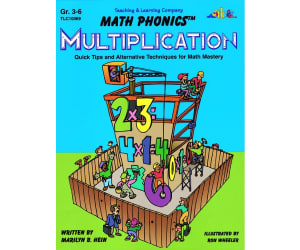
Math Phonics Multiplication: Quick Tips and Alternative Techniques for Math Mastery
Math, Multiplication and Division, Division, Grade 3, 4, 5, 6, Teacher Tools, Lesson Plans
Math Phonics Multiplication: Quick Tips and Alternative Techniques for Math Mastery A versatile teaching resource designed to equip learners with a strong foundation in basic math concepts and multiplication facts. Unique Teaching Approach The unique feature of this program, named as 'Math Phonics', is the application of rules, patterns, and memory techniques alike those utilized in language arts, making it distinctive among other teaching resources. An Effective Learning Tool This tool offers an excellent way to teach multiplication facts from 0 through 12. The lessons are rendered through easy-to-learn rules emphasizing pattern identification and repetition drill practices – keys to mathematical mastery. Inclusive Educational Resource Beneficial for students from grades 3 through grade 6. Designed keeping public school teachers & homeschooling parents in mind. Versatile lesson plans that can be implemented across various educational settings Simplicity Meets Flexibility: Our Design Principle! No need for any complex software or specific digital tools as the curriculum is provided in easy-to-read PDF format. In conclusion, If you're seeking an effective method of teaching multiplication while keeping your scholars motivated towards math literacy – "Math Phonics Multiplication" is your definitive resource!
Author Classroom Complete Press
Tags PDF
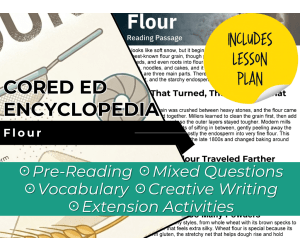
Flour Reading Comprehension Passage - Cored Ed Encyclopedia
ELA, Reading Comprehension, Reading, Science, Technology, Language Development, Social Studies, History, Pre-Reading, Life Sciences, Grade 2, 3, 4, 5, Worksheets & Printables, Worksheets, Teacher Tools, Centers, Activities, Writing Prompts, Assessments, Quizzes and Tests, Quizzes, Lesson Plans
This flour reading comprehension with lesson plan includes: Visualization (on the front cover) Start your lesson by taking a minute to think and share something about the topic. Read the script aloud (slowly), perhaps prepare some music or sound effects. Student close their eyes and let their imaginations wander. Students open their eyes, read the question aloud and give them a few minutes to complete. Ask a few students to share or keep answers until the end to compare with what they learn in the passage. Quick pause—thousands of Cored Education products are included with your TeachSimple membership. Download links and encyclopedia index available here. Pre-Reading Trivia Students will write down one thing they already know about the subject and then read five more facts and discuss. These facts are fun, and the students will enjoy learning about the subject before reading more. Give 1 minute for students to write what they already know (no pressure—best guess is fine). Read the five facts together. After each fact, do ask a student for their opinion, was it surprising? Set a purpose by asking students to highlight/underline one fact they want to learn more about during the reading. Reading Passage The text is a high-interest reading passage with set paragraphs, roughly three to four paragraphs long. It contains a variety of themes about the topic, anywhere from history to technology. The passage is between 250 and 350 words in length. First, ask students to look at the headings and see what they’ll learn about today. What do they know about the topic/heading? First read options: Teacher read-aloud (best for support). Partner reading (paragraph by paragraph). While reading, students underline important details, and vocabulary words they think may come up in the questions section. Mixed Questions The first question page contains four multiple-choice questions, each with a choice of four answers, and three written response questions that require a sentence or two from the student. Students complete the mcqs first independently, then review quickly as a class. For the 3 written responses, try to get students giving the answer with some form of evidence: “I think ___ because the text says ___.” If students get stuck, send them back to check the passage. Vocabulary Questions Practice seven key words from the text in this section across two activities. First section is scrambled words where students will unscramble three words given a clue for each. The second section is a word to meaning matching activity. Before starting, have some students read out words they underlined in the passage. Ask students to say the word and read aloud the sentence(s) around each word. Ask students to do scrambled words and the matching exercise in pairs then go through answers as a class. For the scrambled spelling task, get four pairs to come up to the board and write the words for extra practice with the other student reading out the clue. For the matching task, prompt students to give full sentences: “I matched ___ with ___ because ___.” Creative Writing In this question, the student will be required to write a five to eight sentence paragraph on a question related to the topic. Before starting, ask students write down 3 key ideas they are going to include in their piece. Ask students for ideas to share around the class to help those struggling. Pro writing expectations: 5–8 sentences At least 2 facts or details from the passage At least 2 vocabulary words from the previous page Students read their paragraphs while classmates listen for facts and vocabulary words. Extension Activities This page is optional for fast finishers or to take home. There are several activities, each one requiring a different skill. Do some, do none, do all, completely optional - but you will feel reassured knowing every possibility is planned for. Includes summary writting question and additional facts. Answer Key There are answers for the multiple-choice questions, written response questions have sample answers, vocabulary answers and if there is a summary question then a sample summary will be provided as well. Lesson Plan Included Customized lesson plan for this lesson is included. Lesson Snapshot Title: Flour Genre: Nonfiction (Informational Text) Subject: Science (Food Science) / Reading (Informational Text) Primary Topic: How flour is made from seeds and grains Estimated Guided Reading Level (A–Z): P What This Lesson Teaches Best Explains what flour is made from: flour begins as a seed , and people grind grains (and other plants) into powder used for many foods. Teaches the three main parts inside a grain seed — bran , germ , and endosperm —and what each part is like. Describes how milling changed over time, from heavy stones to steel rollers and lots of sifting to make very fine flour. Builds understanding of why white flour became popular (it kept longer) and what “enriched” flour means in this text. Connects ingredient science to baking by explaining how wheat proteins can form gluten , helping dough rise and hold bubbles of air. Learning Goals Students will explain how flour begins as a seed and becomes powder through grinding. Students will identify the three main parts of a grain seed: bran, germ, and endosperm. Students will describe how modern mills use rollers and sifting to make fine flour. Students will explain why white flour kept longer, based on what the text says about oils. Students will describe what “enriched” flour means in the passage and why it mattered. Students will explain how gluten helps dough rise and hold bubbles of air. Key Vocabulary From the Text bran — the outer part of a grain seed. germ — the tiny part that could sprout. endosperm — the starchy part that feeds the seed. enriched — flour with certain vitamins and iron added back. gluten — stretchy net that helps dough rise and hold air. FULL CATALOG OF DOWNLOAD LINKS AND ENCYCLOPEDIA INDEX HERE
Author Cored Education
Rating
Tags Vocabulary, Reading Comprehension, Reading Passages, Lesson Plans, Ela Lesson Plans, Reading Comprehension Lesson Plans, Pre-reading, Science Lesson Plans, History, Technology

Dictionary Skills
ELA, Strategies, Grade 4, 5, 6, Teacher Tools, Lesson Plans
Dictionary Skills: An Impeccable Teaching Resource Dictionary Skills is a remarkable teaching resource designed explicitly for Grade 4 to 6 educators. It excels in enhancing students' proficiency in language arts. This comprehensive guide showcases the dictionary as an invaluable tool with vast benefits inside and outside the classroom setting. Eradicating Dictionary-Associated Anxiety Incorporation of Dictionary Skills into the curriculum can help teachers eliminate any anxiety that their students might feel towards dictionaries. This resource exhibits immense versatility, allowing application with virtually any type of dictionary, providing educators much-needed flexibility. The usefulness of this resource extends to all learning environments including homeschooling or public school classrooms. Focusing on Comprehension Enhancement The core aim of this product is the enhancement of comprehension skills. Each worksheet emphasizes interpreting keys to dictionary entries, thereby ensuring learners comfort in reading varying definitions and comprehending enclosed information. A distinctive feature is its ability to deepen learners' understanding about various parts of speech through practice using new words identified in different dictionaries. The systematic exercises also introduce synonyms, antonyms, word origin details; presenting opportunities for significant vocabulary expansion and enlightened language comprehension for each learner working through these worksheets. The approach requires minimum assistance from educators during execution but powerfully reinforces concepts while giving learners independence skills they can use beyond school life. Versatility In Implementation Strategies This program's tailor-made lesson plans fit within diverse teaching strategies such as whole group education or small group instruction methods; it could also serve well as homework assignments instilling self-reliance among students. The resource comes packaged within an easily downloadable PDF file which contains only one product. This convenience drastically simplifies a teacher's role when incorporating this important tool into their language arts instruction. There's no better time than now for educators to take advantage of resources like Dictionary Skills, making knowledge transfer that much more simplified yet impactful on students’ overall learning outcomes.
Author Classroom Complete Press
Tags PDF

I WONDER - How Does The Brain Control Breathing | Animated Video
Human Body, Life Sciences, Science, Biology, STEM, Grade 3, 4, 5, 6, 7, 8, 9, Lesson Plans, Teacher Tools
Video Overview The human body is full of fascinating wonders to learn. This video is created to help the students recognize the anatomy and the job of the human body. I WONDER - How Does The Brain Control Breathing | Animated Video Lesson Every part and organ in our human body is vital so let's see how important they are. Have you ever imagined how we look like if we didn't have a skeleton? Did you know that because we have our amazing muscles we can stand! Do you know how many teeth do we have? Have you ever wondered about the food journey inside our body? Can you name all the glands in our body? Why do we have skin? Our nervous system is really good at sending signals. Can you tell us more about it? Are you really good at Mathematics, painting, or any other thing? You should really thank your brain about it! The famous five senses are really doing a great work? Can you explain how every sense works? I WONDER - How Does The Brain Control Breathing | Animated Video Lesson The video is perfect for encouraging the researching skills for the students, while learning more about our fantastic human body. I WONDER - How Does The Brain Control Breathing | Animated Video Lesson This friendly designed video is suitable for students at school, homeschooling, and as a group activity. Format Available in MP4 format.
Author Educational Voice
Tags How Does The Brain Control Breathing, How Does The Brain Control Breathing Video, Breathing, Breathing Facts, Breathing Facts For Kids, Breathing Video, Breathing Video For Kids, Brain, Brain Facts

I WONDER - What Is An Amur Leopard | Animated Video Lesson
STEM, Animals, Life Sciences, Science, Biology, Grade 1, 2, 3, 4, 5, 6, 7, 8, Lesson Plans, Teacher Tools
Video Introduction Animal kingdoms are full of fascinating wonders to learn. This video is designed for the students to learn more about animals in different countries. I WONDER - What Is An Amur Leopard | Animated Video Lesson Do you like animals? what is your favorite one? Do you own a pet? If yes, tell us more about it, like what its name? And what do you like most about it? What are the animal kingdoms? Can you write down the characteristics of each animal class like mammals, birds, reptiles, amphibian, fish and mollusks. Do you know that some animals can sing, can you name any of them? What is the largest and the smallest mammal in the world? What is the largest and the smallest bird in the world? What is the largest and the smallest fish in the world? I WONDER - What Is An Amur Leopard | Animated Video Lesson The video is perfect for encouraging the researching skills for the students, while learning more about these fantastic animals. I WONDER - What Is An Amur Leopard | Animated Video Lesson This friendly designed video is suitable for students at school, homeschooling, and as a group activity. Format Available in MP4 format.
Author Educational Voice
Tags What Is An Amur Leopard, What Is An Amur Leopard Video, Amur Leopard, Amur Leopard Facts, Amur Leopard Facts For Kids, Amur Leopard Video, Amur Leopard Video For Kids, Leopard, Leopards

I WONDER - How Much Of Our Waste Goes To Landfill | Animated Video
Environmental Science, Earth and Environmental Sciences, Science, Earth Sciences, Grade 4, 5, 6, 7, 8, 9, 10, Lesson Plans, Teacher Tools
Video Introduction An amazing video designed for the students to learn more about STEM. I WONDER - How Much Of Our Waste Goes To Landfill | Animated Video Lesson Do you like STEM subjects? what is your favorite one? Have you ever tried to plant a seed? If yes, tell us more about it. Or have you ever tried to invent something? If yes, tell us more about it. And how do you think it will help us? Have you ever seen a microorganism under a microscope? What was it? And how it looked like? Mathematics is a marvelous subject. Let' sharpen our brains and solve some equations. Do you like timetable tricks? What is your favorite one? Do you know how to code? Have you ever created an app or a game before? If yes, how was it like? I WONDER - How Much Of Our Waste Goes To Landfill | Animated Video Lesson The video is perfect for encouraging the researching skills for the students, while learning more about this fantastic topic. I WONDER - How Much Of Our Waste Goes To Landfill | Animated Video Lesson This friendly designed video is suitable for students at school, homeschooling, and as a group activity. Format Available in MP4 format.
Author Educational Voice
Tags How Much Of Our Waste Goes To Landfill, How Much Of Our Waste Goes To Landfill Video, Our Waste, Landfill, Landfill Facts, Landfill Facts For Kids, Landfill Video, Landfill Video For Kids, Our Waste Video
Simple Machines: What Are Simple Machines?
Science, Technology, Engineering, Common Core, Grade 5, 6, 7, 8, Teacher Tools, Lesson Plans
Simple Machines: What Are Simple Machines? This comprehensive teaching resource is perfect for educators in public schools or homeschool settings. Gain an in-depth understanding of simple machines, while making them engaging and enjoyable for students. Concepts Covered: The fundamental principles of force, motion, and work Real-world applications of these machines Different types of simple machines like: Levers Inclined planes Wedges Screws & etc. The learning extends further to include exploration into compound machine examples such as can openers. Learner activities: Crosswords and word searches to consolidate newly acquired facts and reinforce key vocabulary. Fear not! Learning about Simple Machines does not have to be burdensome or challenging. With reader-friendly language selection combined with captivating graphics included - understanding complex engineering principles has never been easier! Tailored delivery: The format lends itself well across different educational settings from whole class sessions to smaller focus groups. An excellent tool for additional homework-based consolidation tasks as well! Note:This resource aligns with the Common Core State Standards ensuring adherence to high teaching benchmarks whilst nurturing STEM-relevant competencies. I A downloadable PDF file designed especially for Grades 5-8: explore scientific and engineering knowledge in a fun, relatable way now!
Author Classroom Complete Press
Tags PDF

Civil War's 54th Massachusetts Regiment: The Shaw Memorial: Historic Monuments Series
Social Studies, History, History: USA, Grade 4, 5, 6, 7, 8, Teacher Tools, Lesson Plans
Civil War's 54th Massachusetts Regiment: The Shaw Memorial: Historic Monuments Series This enriching teaching resource, suited for students in grades 4-8 studying social studies (specifically US history), offers an engaging look at a crucial moment from the Civil War – the formation and bravery of Colonel Robert Shaw's troops. First African American volunteer regiment in Union Army Milestone moment in American history Unique Learning Resources Included Original text from the Emancipation Proclamation: Offers unique perspective through primary documents. In-depth biographies and battle tactics: Contextual understanding of the Battle of Fort Wagner. A Study on Augustus Saint-Gaudens' Memorial:The bronze bas-relief memorial for the 54th Massachusetts Regiment. Facilitates understanding historic representation through sculpture. Versatile and Flexible Lesson Plan Suitable for whole group lessons in classroom, small interactive groups, or solo homework assignments. PDF format ensures easy accessibility for all users without any technological constraints. With this plan, learning extends beyond textbooks into tangible empathy & understanding. Add richness to your curriculum using this lesson plan - guiding students towards critical thinking about historical events along with their implications today.
Author Classroom Complete Press
Tags PDF

Curriculum Map for 5th Grade TEKS - Texas
Common Core, Grade 5, Lesson Plans, Teacher Tools
The 5th Grade TEKS Curriculum Map for Texas provides a comprehensive overview of the 5th grade learning standards for math, language arts, social studies and science. This editable Excel resource empowers educators to strategically plan engaging lessons, tasks, and assessments . With this curriculum map, teachers can identify connections across subjects and standards. They can also adjust the scope and sequence to align with district initiatives or customize pacing for differentiation. Whether planning for whole-group instruction, small groups, homework, or assessment, this map offers flexibility. By mapping out the school year in advance, educators ensure coverage of TEKS while allowing freedom to respond to emerging student needs. This curriculum map helps 5th grade teachers in Texas build student mastery all year long.
Author DK's Creations
Tags Texas, TEKS, Planning, Curriculum Map, State Standards, 5th Math Teks, 5th Grade Social Studies Teks Lesson Plans, 5th Grade Teks Math, 5th Grade Social Studies Teks

I WONDER - What Can We Learn From Sedimentary Rocks | Animated Video
Geography, Social Studies, Earth Sciences, Earth and Environmental Sciences, Science, Grade 4, 5, 6, 7, 8, 9, 10, Lesson Plans, Teacher Tools
Video Introduction An amazing video designed for the students to learn more about famous places in different countries. I WONDER - What Can We Learn From Sedimentary Rocks | Animated Video Lesson What do you know about this place? Do you know in which part of the world it is? Have you ever visited this place? If yes, can you tell us more about your adventure, and what do you like the most about this place? Do you like reading about Geography? What is your favorite country in the whole world? If you are going on a trip where it will be? Which country? What you are going to see there? Does this country has a famous place to visit? I WONDER - What Can We Learn From Sedimentary Rocks | Animated Video Lesson The activity is perfect for encouraging the researching skills for the students, while learning more about this fantastic place. I WONDER - What Can We Learn From Sedimentary Rocks | Animated Video Lesson This friendly designed video is suitable for students at school, homeschooling, and as a group activity. Format Available in MP4 format.
Author Educational Voice
Tags What Can We Learn From Sedimentary Rocks, What Can We Learn From Sedimentary Rocks Video, Sedimentary Rocks, Sedimentary Rock, Sedimentary Rocks Facts, Sedimentary Rocks Facts For Kids, Sedimentary Rocks Video

Rain, Rain, Go Away: Full Lesson Plan w/ PowerPoints & Graphic Organizers
ELA, Reading, Grade 5, 6, 7, 8, Lesson Plans, Teacher Tools
This resource will give you everything you need to complete a full, comprehensive reading lesson plan for Rain, Rain, Go Away text by Isaac Asimov. Files are offered as PDFs and Word documents. Included: -Rain, Rain, Go Away Lesson Plan -Rain, Rain, Go Away Worksheet -Rain, Rain, Go Away Answer Key Graphic Organizers: Author’s Purpose Characterization Chart Figurative Language Chart Historical Analysis Chart Imagery Chart Peer Evaluation Sheet Plot Diagram Read for Detail Setting Style Chart Symbol Chart Symbolism Chart Theme Diagram Tone and Mood Diagram Universal Plot Diagram Venn Diagram PowerPoints: Characterization Imagery, Voice, and Persona Irony and Ambiguity Narrator and Voice Plot Structure Symbolism and Allegory Theme - How to Interpret Theme Thank You Bonus Stuff!
Author Quality Teaching Products
Tags Literature, Fiction Text, Lesson Plan, Reading Powerpoint, Graphic Organizer, Rain Rain Go Away Short Story