



2,384 products added recently
Page 33 - 5th Grade Lesson Plans
Prepare your fifth graders for future challenges with lesson plans that promote higher-order thinking and mastery of key concepts. These resources encourage collaboration and in-depth exploration across subjects. Use them to guide your students toward readiness for middle school.

 Show filters

I WONDER - Do Selkies Have Magical Powers | Animated Video Lesson
History, Social Studies, Common Core, Grade 4, 5, 6, 7, 8, 9, 10, Lesson Plans, Teacher Tools
Video Introduction An amazing video designed for the students to learn more about mythological creatures in different cultures. I WONDER - Do Selkies Have Magical Powers | Animated Video Lesson Mythology is full of wonders and spectacular stories. Ancient civilizations were trying to explore every aspect of life, while they search for new technologies, they wanted to believe in something big and can change the world, so they created mythical creatures and mythical stories. Let's hear about them! What do you know about these creatures? Cyclops, Centaurs, Selkies, Phoenix, Gnomes, Dragons, Gorgons, Orcs, Cerberus, Trolls, Minotaur, Griffins, Mermaids, Elves, Polyphemus, Pegasus, and Ogres. I WONDER - Do Selkies Have Magical Powers | Animated Video Lesson The video is perfect for encouraging the creativity skills for the students, while learning more about this fantastic mythical creature. I WONDER - Do Selkies Have Magical Powers | Animated Video Lesson This friendly designed video is suitable for students at school, homeschooling, and as a group activity. Format Available in MP4 format.
Author Educational Voice
Rating
Tags Do Selkies Have Magical Powers, Do Selkies Have Magical Powers Video, Selkies Magical Powers, Selkies Magical Powers Facts, Selkies Magical Powers Video, Selkies Magical Powers Video For Kids, Selkies Magical Powers Facts For Kids

Washington Monument: Historic Monuments Series
Social Studies, History, History: USA, Grade 4, 5, 6, 7, 8, Teacher Tools, Lesson Plans
Introducing the Historic Monuments Series: The Washington Monument This resource is designed to take students in grades 4 to 8 on an exciting journey through both the life of George Washington and the creation of the landmark named in his honor. Discover a narrative filled with: Key historical events Critical decisions made under pressure Leadership during conflicts like the French and Indian War Strategies employed during the American Revolution The legacy of America's first President A Comprehensive Teaching Resource for U.S History Program: This lesson plan forms a perfect supplement that aligns with any comprehensive U.S History program—blending seamlessly into your existing Social Studies curriculum. Educator-Friendly Format: The convenience associated with accessing these lesson plans makes it extremely suitable for various educators—whether you're teaching in a public school setting or homeschooling. The flexibility allows for use in whole instruction settings, small study groups, or even as enriching homework assignments—making sure students clearly understand what they are learning. User-friendly Medium: In this digital era, ease of sharing resources should never be underestimated. This resource comes in simple PDF format ensuring it can be shared electronically or even printed as physical copies if required. An Investment Towards Enlightened Minds: TeachSimple! No matter how advanced technology gets, educators play an invaluable role by introducing dynamic resources like these to shape young minds. However, despite being packed full of detail our lessons remain simple enough to resonate aptly with our learners' age groups. Come breathe new life into your History lessons with The Washington Monument: Historic Monuments Series and experience the melding of fun, learning, and engagement ever so smoothly.
Author Classroom Complete Press
Tags PDF

Amelia Earhart : Mini Unit
Social Studies, Biographies, History, History: USA, Grade 5, 6, 7, 8, Lesson Plans, Teacher Tools
Amelia Earhart : Mini Unit is a great resource to teach your students about the life and achievements of Amelia Earhart. Included in the file are: Reading sheets covering Earhart's early life, flying achievements, and final journey around the world. Instructions and materials to create either a poster or booklet project. A PowerPoint presentation featuring enlarged readings, images, and movie links. A fun crossword activity which includes the answer key. Image sheets: Including maps showing Amelia Earhart's flight path around the world! Project materials are provided for students to create either a booklet or poster on the life of Amelia Earhart. All needed worksheets are included for students to complete such projects. The file also contains instruction and question sheets, coloring pages, and a PowerPoint presentation. For the booklet or poster project, all expected questions to be answered are included All throughout, this resource is full of information to help guide students through the materials including enlarged reading passages, images, and movie links. All files come in Google Classroom versions which can be easily uploaded to your own website for students to access from home. And also a file with all resources separated so that teachers can access single resources within the whole unit.
Author Mr Gray History
Tags Amelia Earhart, Earhart, Flight Path, Reading Comprehension, Project

Growing Minds in Art: Lessons for Stimulating Thinking
Creative Arts, Art, Grade 4, 5, 6, 7, 8, Teacher Tools, Lesson Plans
Overview: Growing Minds in Art: Lessons for Stimulating Thinking An indispensable teaching resource particularly designed for Grade 4 to Grade 8 educators. This thoughtfully structured resource entails lessons that seamlessly infuse art and critical thinking skills, catering to an assortment of subjects such as Art & Music. Content Description The content encourages students to interpret abstract sketches, respond actively to differing styles and further develop a drawing. Each activity within this resource comes with several levels of student involvement, offering a versatile range of accessibility tailored perfectly for diverging ages and skill levels. Allows teachers flexibility in adapting the material according to their individual classroom needs. Incorporates teacher guides accompanying each lesson. Distinguishing Features What sets Growing Minds in Art: Lessons for Stimulating Thinking apart from other resources is the addition of teacher guides accompanying each lesson. These guides are meticulously designed with convenience in mind, simplifying lesson preparation significantly for busy educators. Tailored Application This teaching tool is notably perfect intended not only for whole-group teaching scenarios but just as effective when implemented within small group activities or even allocated as enriching homework assignments. Included Resources A total of 12 ready-to-print pages are included and shared via PDF format which embodies compatibility making it easily accessible using various devices at hand. In summary Growing Minds in Art: Lessons for Stimulating Thinking proves itself worthy by being fruitful material brimming full with comprehensive lessons that successfully blend art techniques coupled with crucial thinking skills development while maintaining straightforward preparations and easy execution. Tailored perfectly towards educational growth among budding learners regardless they be public-school goers or homeschooled individuals alike. Teachers needing interactive yet informative tools that stimulate cerebral expansion will no doubt find this product exceedingly beneficial inside every classroom landscape they may have before them.
Author Classroom Complete Press
Tags Lesson Plans, Critical Thinking, Thinking Strategies, Growing Minds, Art Lessons

I WONDER - When Was Bronze Discovered | Animated Video Lesson
History: Ancient, History, Social Studies, History: African, History: Asian, History: Europe, History: World, Chemistry, Science, Grade 4, 5, 6, 7, 8, 9, 10, Lesson Plans, Teacher Tools
Video Introduction An amazing video designed for the students to learn more about history. I WONDER - When Was Bronze Discovered | Animated Video Lesson Do you like history? Which topic do you really enjoy about history? Have you ever read an interesting fact about the Vikings? If yes, can you mention them? What do you like most about the Victorian era? Can you name all the Tudors? Have you ever wondered how people used to live in ancient Japan and ancient China? Do you know any interesting facts about ancient Egyptians and the Pharaohs? Have you ever visited South America? What do you know about Incas and Aztecs? Celtic culture was really one of a kind, can you name any of the places that Celts used to live in? Imagine yourself living during the ancient Roman empire, how your life will look like? Ancient Greece was an amazing place to live in. What do you know about ancient Greek life? I WONDER - When Was Bronze Discovered | Animated Video Lesson The video is perfect for encouraging the researching skills for the students, while learning more about history. I WONDER - When Was Bronze Discovered | Animated Video Lesson This friendly designed video is suitable for students at school, homeschooling, and as a group activity. Format Available in MP4 format.
Author Educational Voice
Tags When Was Bronze Discovered, When Was Bronze Discovered Video, Bronze, Bronze Facts, Bronze Facts For Kids, Bronze Video, Bronze Video For Kids, The Discovery Of Bronze, The Discovery Of Bronze Video
I WONDER - What Made Omnivores Different To Other Dinosaurs
Animals, Life Sciences, Science, History, Social Studies, History: Ancient, History: World, Grade 3, 4, 5, 6, 7, 8, 9, Lesson Plans, Teacher Tools
Video Introduction An amazing video designed for the students to learn more about dinosaurs in different countries. I WONDER - What Made Omnivores Different To Other Dinosaurs | Animated Video Lesson Do you like dinosaurs? what is your favorite one? Do you own a pet? If yes, tell us more about it, like what its name? And what do you like most about it? Do you think that your pet has been evolved from a dinosaur? Can you write down the characteristics of your favourite dinosaur like it's shape, their rivals, where did it use to live and what was their favourite food? What is the largest and the smallest dinosaur that ever found? Why is the T-rex is so famous? Have you ever read any interesting facts about it? Can you name any of the carnivores or herbivores dinosaurs? I WONDER - What Made Omnivores Different To Other Dinosaurs | Animated Video Lesson The video is perfect for encouraging the researching skills for the students, while learning more about dinosaurs. I WONDER - What Made Omnivores Different To Other Dinosaurs | Animated Video Lesson This friendly designed video is suitable for students at school, homeschooling, and as a group activity. Format Available in MP4 format.
Author Educational Voice
Rating
Tags What Made Omnivores Different To Other Dinosaurs, What Made Omnivores Different To Other Dinosaurs Video, Omnivores, Omnivores Facts, Omnivores Video, Omnivores Facts For Kids, Omnivores Video For Kids
I WONDER - Where Did The Microraptor Hunt | Animated Video Lesson
History: Ancient, History, Social Studies, History: World, Animals, Life Sciences, Science, Grade 4, 5, 6, 7, 8, 9, 10, Lesson Plans, Teacher Tools
Video Introduction An amazing video designed for the students to learn more about dinosaurs in different countries. I WONDER - Where Did The Microraptor Hunt | Animated Video Lesson Do you like dinosaurs? what is your favorite one? Do you own a pet? If yes, tell us more about it, like what its name? And what do you like most about it? Do you think that your pet has been evolved from a dinosaur? Can you write down the characteristics of your favourite dinosaur like it's shape, their rivals, where did it use to live and what was their favourite food? What is the largest and the smallest dinosaur that ever found? Why is the T-rex is so famous? Have you ever read any interesting facts about it? Can you name any of the carnivores or herbivores dinosaurs? I WONDER - Where Did The Microraptor Hunt | Animated Video Lesson The video is perfect for encouraging the researching skills for the students, while learning more about dinosaurs. I WONDER - Where Did The Microraptor Hunt | Animated Video Lesson This friendly designed video is suitable for students at school, homeschooling, and as a group activity. Format Available in MP4 format.
Author Educational Voice
Rating
Tags Where Did The Microraptor Hunt, Where Did The Microraptor Hunt Video, Microraptor, Microraptor Facts, Microraptor Video, Microraptor Video For Kids, Microraptor Facts For Kids, Dinosaur
Reading Comprehension: Making Inferences
ELA, Reading, Reading Comprehension, Common Core, Grade 5, 6, 7, 8, Teacher Tools, Lesson Plans
Reading Comprehension: Making Inferences Teaching Resource For Grades 5-8 This invaluable teaching resource is designed for educators working with students in grades 5 through 8. Falling under the Language Arts discipline, and the subcategory of Comprehension,, it contains instructional material presented in an easy-to-follow Lesson Plan format. Aim: The principal aim is to bolster a student's ability to read fluently and comprehend intricate text across various subjects within and outside traditional classroom contexts. Proficiency in reading comprehension stands as a core life skill necessary for academic excellence. Skill Acquisition: Utilizing context clues. Determining the main idea from a text. Inferencing or understanding implicit meanings from given data. Each concept introduced lays solid foundational elements that enhances reading acquisition. These concepts are reinforced throughout for easier assimilation by pupils. Pedagogical standards: This product adheres to high pedagogical standards set by Bloom’s Taxonomy of Learning framework. It precisely aligns with Common Core State Standards, making it suitable both for public school teachers seeking consistency with established curriculum guidelines and homeschoolers seeking comprehensive scholastic resources. In Summary This single-file PDF tool is ready-for-use; whether you intend to use it during whole group instruction, small learning circles, or even as independently assigned student homework – its utility will shine through. Get your own copy now!
Author Classroom Complete Press
Tags PDF

Yoga Reading Comprehension Passage - Cored Ed Encyclopedia
ELA, Language Development, Reading Comprehension, Reading, History, Social Studies, Pre-Reading, P.E. & Health, Yoga, Geography, Grade 2, 3, 4, 5, Worksheets & Printables, Worksheets, Teacher Tools, Centers, Activities, Writing Prompts, Assessments, Quizzes and Tests, Quizzes, Lesson Plans
This yoga reading comprehension with lesson plan includes: Visualization (on the front cover) Start your lesson by taking a minute to think and share something about the topic. Read the script aloud (slowly), perhaps prepare some music or sound effects. Student close their eyes and let their imaginations wander. Students open their eyes, read the question aloud and give them a few minutes to complete. Ask a few students to share or keep answers until the end to compare with what they learn in the passage. Quick pause—thousands of Cored Education products are included with your TeachSimple membership. Download links and encyclopedia index available here. Pre-Reading Trivia Students will write down one thing they already know about the subject and then read five more facts and discuss. These facts are fun, and the students will enjoy learning about the subject before reading more. Give 1 minute for students to write what they already know (no pressure—best guess is fine). Read the five facts together. After each fact, do ask a student for their opinion, was it surprising? Set a purpose by asking students to highlight/underline one fact they want to learn more about during the reading. Reading Passage The text is a high-interest reading passage with set paragraphs, roughly three to four paragraphs long. It contains a variety of themes about the topic, anywhere from history to technology. The passage is between 250 and 350 words in length. First, ask students to look at the headings and see what they’ll learn about today. What do they know about the topic/heading? First read options: Teacher read-aloud (best for support). Partner reading (paragraph by paragraph). While reading, students underline important details, and vocabulary words they think may come up in the questions section. Mixed Questions The first question page contains four multiple-choice questions, each with a choice of four answers, and three written response questions that require a sentence or two from the student. Students complete the mcqs first independently, then review quickly as a class. For the 3 written responses, try to get students giving the answer with some form of evidence: “I think ___ because the text says ___.” If students get stuck, send them back to check the passage. Vocabulary Questions Practice seven key words from the text in this section across two activities. First section is scrambled words where students will unscramble three words given a clue for each. The second section is a word to meaning matching activity. Before starting, have some students read out words they underlined in the passage. Ask students to say the word and read aloud the sentence(s) around each word. Ask students to do scrambled words and the matching exercise in pairs then go through answers as a class. For the scrambled spelling task, get four pairs to come up to the board and write the words for extra practice with the other student reading out the clue. For the matching task, prompt students to give full sentences: “I matched ___ with ___ because ___.” Creative Writing In this question, the student will be required to write a five to eight sentence paragraph on a question related to the topic. Before starting, ask students write down 3 key ideas they are going to include in their piece. Ask students for ideas to share around the class to help those struggling. Pro writing expectations: 5–8 sentences At least 2 facts or details from the passage At least 2 vocabulary words from the previous page Students read their paragraphs while classmates listen for facts and vocabulary words. Extension Activities This page is optional for fast finishers or to take home. There are several activities, each one requiring a different skill. Do some, do none, do all, completely optional - but you will feel reassured knowing every possibility is planned for. Includes summary writting question. Answer Key There are answers for the multiple-choice questions, written response questions have sample answers, vocabulary answers and if there is a summary question then a sample summary will be provided as well. Lesson Plan Included Customized lesson plan for this lesson is included. Lesson Snapshot Title: Yoga Genre: Nonfiction (informational text) Subject: Social Studies & Health/SEL (culture and well-being) / Informational Reading Primary Topic: Yoga’s origins, key ideas, and modern practice Estimated Guided Reading Level (A–Z): Q Support pages present: pre-reading trivia, mixed questions, vocabulary activities, creative writing, extension activities, and an answer key. What This Lesson Teaches Best Explains yoga as an old practice that began in India and grew over time. Defines what the word “yoga” can mean in the passage (“yoke” or “union,” like two things working as one). Describes key tools in yoga: body positions, steady breathing, and quiet attention (and how breathing can steady the mind). Introduces “sutras” and explains that Patanjali gathered yoga ideas into short lines meant to be remembered, including a description of yoga as a path with eight “limbs.” Traces how yoga changed in the 1900s, noting that teachers such as Tirumalai Krishnamacharya helped create modern postural yoga with flowing sequences taught in classes. Learning Goals Students will describe what the passage says the word “yoga” can mean. Students will identify tools the passage says yoga uses (body positions, steady breathing, quiet attention). Students will explain why careful breathing matters in some yoga traditions, using details from the text. Students will describe what sutras are and why they were written, according to the passage. Students will summarize how yoga changed in the 1900s based on the passage’s timeline. Key Vocabulary From the Text Sanskrit — a very old language from India. traditions — ways people practice and pass ideas over time. sutras — short lines of teaching meant to be remembered. meditation — a quiet practice to help the mind rest. asana — a steady seat for meditation, not a gym pose. FULL CATALOG OF DOWNLOAD LINKS AND ENCYCLOPEDIA INDEX HERE
Author Cored Education
Rating
Tags Vocabulary, Reading Comprehension, Reading Passages, Lesson Plans, Ela Lesson Plans, Reading Comprehension Lesson Plans, Pre-reading, Social Studies Lesson Plans, Yoga, History
Hands-On - Earth & Space Science: Seasons Gr. 1-5
Science, Earth and Environmental Sciences, Environmental Science, Grade 1, 2, 3, 4, 5, Teacher Tools, Lesson Plans
Hands-On - Earth & Space Science: Seasons Gr. 1-5 A unique teaching resource that offers an extraordinary foundation for inspiring students to appreciate and understand the intricacies of our planet and the universe beyond. The Lesson Plan This chapter, as part of the full lesson plan "Hands-On - Earth & Space Science", enables students to delve into exciting aspects of different seasons. It also ensures it aligns perfectly with STEAM initiatives and Next Generation Science Standards. Potential Utilization Methods: Group Activities:The class may participate collectively in making a weather forecast or create their own rain gauges to quantify rainfall. Individual Homework Assignments or Small Group Projects:Learners are encouraged to construct solar cells, windmills or water wheels as part of group work efforts. Making their own sand dunes enhances understanding how wind operates by practically demonstrating scientific phenomena and fostering engagement. Educational Value Adds : A Lunar Calendar tracking segment facilitates understanding moon movement dynamics related significantly with mainstream space science studies expanding its horizon beyond earth’s realm. The academic package also includes reading passages for meticulous comprehension alongside graphic organizers which encourage logical thinking habits crucial in knowledge structuring exercises. Pre-read activities stimulate curiosity before diving into targeted segments while assessment tasks help gauge progress accurately ensuring balanced learning cycles concerning each concept covered within this teaching tool. In conclusion,"Hands-On - Earth & Space Science: Seasons Gr. 1-5" represents not only an enriching tool for teaching science but also opens avenues for practical experiences yielding deeper comprehension and memorable lessons making it a worthy addition to any teaching arsenal catering to grade 1-5 students.
Author Classroom Complete Press
Tags PDF
I WONDER - What Do Griffins Do | Animated Video Lesson
History, Social Studies, Common Core, Grade 4, 5, 6, 7, 8, 9, 10, Lesson Plans, Teacher Tools
Video Introduction An amazing video designed for the students to learn more about mythological creatures in different cultures. I WONDER - What Do Griffins Do | Animated Video Lesson Mythology is full of wonders and spectacular stories. Ancient civilizations were trying to explore every aspect of life, while they search for new technologies, they wanted to believe in something big and can change the world, so they created mythical creatures and mythical stories. Let's hear about them! What do you know about these creatures? Cyclops, Centaurs, Selkies, Phoenix, Gnomes, Dragons, Gorgons, Orcs, Cerberus, Trolls, Minotaur, Griffins, Mermaids, Elves, Polyphemus, Pegasus, and Ogres. I WONDER - What Do Griffins Do | Animated Video Lesson The video is perfect for encouraging the creativity skills for the students, while learning more about this fantastic mythical creature. I WONDER - What Do Griffins Do | Animated Video Lesson This friendly designed video is suitable for students at school, homeschooling, and as a group activity. Format Available in MP4 format.
Author Educational Voice
Rating
Tags What Do Griffins Do, What Do Griffins Do Video, Griffins, Griffins Video, Griffins Facts, Griffins Facts For Kids, Griffins Video For Kids, Griffin, Griffin Facts, Griffin Video

Simple Machines - Digital Lesson Plan Gr. 5-8 - FLASH-MAC
Science, Physics, Grade 3, 4, 5, 6, 7, 8, Teacher Tools, Lesson Plans
The Simple Machines - Digital Lesson Plan Gr. 5-8 - FLASH-MAC This resource is designed to illuminate the study of simple and compound machines for students ranging from Grade 3 through Grade 8. The comprehensive digital lesson plan brings a fresh, interactive approach to teaching with an engaging 80-page screen guide. Key Topic Areas Levers Inclined Planes Wedges Screws Pulleys Wheel & Axles`/code>`/li>` ul> Prior to introducing these topics, students will begin with learning about force and motion fundamentals . After this foundation they will learn how each of these principals play into how simple machines function on a day-to-day basis. Beyond Individual Components... This digital lesson plan ties concepts together by showing step by step how various elements work together to form compound machines. This experience covers both theory and real-world applications. Aids for Optimal Learning Outcomes ` ` ` Pre-reading activities ` ` ` Post-content interaction for reinforcement retention` ` ` Test prep materials and a memory match game within the module.` Crossword puzzles.` Alignment Designed with Bloom's Taxonomy and State Standards in mind, this digital lesson plan ensures efficiency in teaching. It primarily places focus on Physical Science. Its flexibility makes it adaptable across grades 3 through 8.
Author Classroom Complete Press
Tags Software (Mac)

Gondolas Reading Comprehension Passage - Cored Ed Encyclopedia
ELA, Reading Comprehension, Reading, Science, Technology, Pre-Reading, Language Development, History, Social Studies, Geography, Grade 2, 3, 4, 5, Worksheets & Printables, Worksheets, Teacher Tools, Centers, Activities, Writing Prompts, Assessments, Quizzes and Tests, Quizzes, Lesson Plans
This gondolas reading comprehension with lesson plan includes: Visualization (on the front cover) Start your lesson by taking a minute to think and share something about the topic. Read the script aloud (slowly), perhaps prepare some music or sound effects. Student close their eyes and let their imaginations wander. Students open their eyes, read the question aloud and give them a few minutes to complete. Ask a few students to share or keep answers until the end to compare with what they learn in the passage. Quick pause—thousands of Cored Education products are included with your TeachSimple membership. Download links and encyclopedia index available here. Pre-Reading Trivia Students will write down one thing they already know about the subject and then read five more facts and discuss. These facts are fun, and the students will enjoy learning about the subject before reading more. Give 1 minute for students to write what they already know (no pressure—best guess is fine). Read the five facts together. After each fact, do ask a student for their opinion, was it surprising? Set a purpose by asking students to highlight/underline one fact they want to learn more about during the reading. Reading Passage The text is a high-interest reading passage with set paragraphs, roughly three to four paragraphs long. It contains a variety of themes about the topic, anywhere from history to technology. The passage is between 250 and 350 words in length. First, ask students to look at the headings and see what they’ll learn about today. What do they know about the topic/heading? First read options: Teacher read-aloud (best for support). Partner reading (paragraph by paragraph). While reading, students underline important details, and vocabulary words they think may come up in the questions section. Mixed Questions The first question page contains four multiple-choice questions, each with a choice of four answers, and three written response questions that require a sentence or two from the student. Students complete the mcqs first independently, then review quickly as a class. For the 3 written responses, try to get students giving the answer with some form of evidence: “I think ___ because the text says ___.” If students get stuck, send them back to check the passage. Vocabulary Questions Practice seven key words from the text in this section across two activities. First section is scrambled words where students will unscramble three words given a clue for each. The second section is a word to meaning matching activity. Before starting, have some students read out words they underlined in the passage. Ask students to say the word and read aloud the sentence(s) around each word. Ask students to do scrambled words and the matching exercise in pairs then go through answers as a class. For the scrambled spelling task, get four pairs to come up to the board and write the words for extra practice with the other student reading out the clue. For the matching task, prompt students to give full sentences: “I matched ___ with ___ because ___.” Creative Writing In this question, the student will be required to write a five to eight sentence paragraph on a question related to the topic. Before starting, ask students write down 3 key ideas they are going to include in their piece. Ask students for ideas to share around the class to help those struggling. Pro writing expectations: 5–8 sentences At least 2 facts or details from the passage At least 2 vocabulary words from the previous page Students read their paragraphs while classmates listen for facts and vocabulary words. Extension Activities This page is optional for fast finishers or to take home. There are several activities, each one requiring a different skill. Do some, do none, do all, completely optional - but you will feel reassured knowing every possibility is planned for. Includes summary writting question and additional facts. Answer Key There are answers for the multiple-choice questions, written response questions have sample answers, vocabulary answers and if there is a summary question then a sample summary will be provided as well. Lesson Plan Included Customized lesson plan for this lesson is included. Lesson Snapshot Title: Gondolas Genre: Nonfiction (informational text) Subject: Social Studies (places/culture) Primary Topic: Gondolas in Venice: design, history, and use Estimated Guided Reading Level (A–Z): Q What This Lesson Teaches Best How Venice’s canals and bridges shape daily transportation, making boats important for visiting, carrying food, and crossing town. How a gondolier can steer with one oar using a carved wooden holder called a forcola and a smooth sculling motion. How gondola design supports steering, including being slightly asymmetrical to help one oar work better. How gondolas changed over time (older styles; “banana-shaped” modern gondola in the 1800s; laws affecting appearance). How gondolas are still used today (rides for visitors, traghetti ferries across the Grand Canal, and racing in regattas ). Learning Goals Students will describe why boats are important in Venice using details from the passage. Students will explain how a gondolier steers a gondola with one oar and a forcola. Students will identify one design feature that helps the gondola steer straighter (slight asymmetry). Students will describe how gondolas changed in shape and appearance over time, based on the text. Students will explain what traghetti are and what they do in Venice. Students will describe one way gondola traditions continue today (rides or regattas). Key Vocabulary From the Text forcola — carved wooden holder that supports and guides the oar. sculling — smooth rowing motion used to move and steer. asymmetrical — not the same on both sides. traghetti — small ferries that carry people across the Grand Canal. regattas — boat races where gondoliers race with skill and pride. FULL CATALOG OF DOWNLOAD LINKS AND ENCYCLOPEDIA INDEX HERE
Author Cored Education
Rating
Tags Vocabulary, Reading Comprehension, Reading Passages, Lesson Plans, Ela Lesson Plans, Reading Comprehension Lesson Plans, Pre-reading, Science Lesson Plans, Social Studies Lesson Plans, History
Real Reasons to Write
ELA, Writing, Grade 4, 5, 6, Teacher Tools, Lesson Plans
The Real Reasons to Write Resource: A Comprehensive Guide Ideal for Grade 4 through Grade 6 educators, this guide enhances Writing skills while fostering creative expression. This tool aligns seamlessly with Language Arts syllabus, providing a bridge between academic writing and personal interests. Connects pupils' writings to personal interests. Bolsters enthusiasm via real-world connections. Balances tradition with individuality in Literature responses. This healthy ground laying step offers students real-world reasoning for writing. Not just an ordinary book, it methodically builds the prowess of young writers over time. Adaptable Design & Application The interactive design of the resource is compatible for both whole-group or small-group instruction settings. Furthermore, it can reinforce independent work making it an effective homework assignment complement thereby boosting self-paced learning experiences. A Miniature Copy Editor & Beyond Picturing this resource as their miniature copy editor becomes easier when passion and skill have been tied together systematically and progressively rewarding them on multiple ends like academic triumphs coupled with development of personal interest spheres led by ignited curiosity depicted in every page via lesson plans contained within the product file presented in PDF format. "A Key Stepping Stone" With its focus on connecting art of writing with real world instances, It simplifies teaching the art of writing aligning true life happenings which makes learning fulfilling and engaging especially during crucial learning years thus establishing itself as a key stepping stone for educators.
Author Classroom Complete Press
Tags PDF
Climate Change: Causes Gr. 5-8
Science, Earth and Environmental Sciences, Environmental Science, Grade 5, 6, 7, 8, Teacher Tools, Lesson Plans
Climate Change: Causes GR. 5-8 - An educational resource for grades 5-8 This informative material focuses on blending scientific insights into climate change with hands-on activities, encouraging learners to distinguish between fact and fiction. Main Features: Covers critical topics in Environmental Science, such as the planet's atmosphere and human impact thereon. Fosters understanding through practical activities like color-based radiation absorption tests. Detailed exploration of increasing global temperatures and their effects on oceanic ecosystems. Individual model projects that illustrate carbon cycles and methane control. Ozone impact assessment highlighting its significant effect on human health. An out-of-the-box approach to learning is taken, combining theoretical knowledge with fun-filled yet impactful activities like crossword puzzles or word searches in line with Bloom's Taxonomy and STEAM initiatives. Bonus Features: Inclusive Learning Assistance: This resource also has numerous other types of support such as: Quizzes, answer keys providing immediate feedback for self- assessment , Lectures designed for both full-fledged classroom sessions or small group discussions, Homework assignments reinforcing class lessons ensuring better retention. Concisely wrapping up, Climate Change: Causes Gr. 5-8 can be a perfect tool for educators aiming to shape astute environmental stewards. Easily accessible in PDF format allows swift sharing among student groups. A comprehension quiz along with an answer key ensures expedited issue resolution.
Author Classroom Complete Press
Tags PDF

I WONDER - How Many Books Did Roald Dahl Write | Animated Video Lesson
Biographies, Social Studies, Grade 4, 5, 6, 7, 8, 9, 10, Lesson Plans, Teacher Tools
Video Introduction An amazing video designed for the students to learn more about famous people in different countries. I WONDER - How Many Books Did Roald Dahl Write | Animated Video Lesson Do you know this person? How much do you know about him/her? Who is your idol? Why did you choose this person? Tell us more about him/her? Who is your favorite athlete? Or what is your favorite team? Have you recently heard a story about a famous person? Who was this person? Can you tell us more about him/her. Who is your favorite president, king, or queen? Why you chose that person? In your country, who are the most famous people? What did they do? Can you tell us more about them. What is your favorite invention? Who invented it? Who is your favorite artist? What is the most famous thing he/she have done? What is the most enjoyable you have read before? Who wrote it? I WONDER - How Many Books Did Roald Dahl Write | Animated Video Lesson The video is perfect for encouraging the researching skills for the students, while learning more about this fantastic place. I WONDER - How Many Books Did Roald Dahl Write | Animated Video Lesson This friendly designed video is suitable for students at school, homeschooling, and as a group activity. Format Available in MP4 format.
Author Educational Voice
Rating
Tags How Many Books Did Roald Dahl Write, How Many Books Did Roald Dahl Write Video, Roald Dahl, Roald Dahl Facts, Roald Dahl Video, Roald Dahl Video For Kids, Roald Dahl Facts For Kids, Roald Dahl Books
I WONDER - Are Goats Good At Climbing | Animated Video Lesson
STEM, Biology, Life Sciences, Science, Animals, Grade 1, 2, 3, 4, 5, 6, 7, 8, Lesson Plans, Teacher Tools
Video Introduction Animal kingdoms are full of fascinating wonders to learn. This video is designed for the students to learn more about animals in different countries. I WONDER - Are Goats Good At Climbing | Animated Video Lesson Do you like animals? what is your favorite one? Do you own a pet? If yes, tell us more about it, like what its name? And what do you like most about it? What are the animal kingdoms? Can you write down the characteristics of each animal class like mammals, birds, reptiles, amphibian, fish and mollusks. Do you know that some animals can sing, can you name any of them? What is the largest and the smallest mammal in the world? What is the largest and the smallest bird in the world? What is the largest and the smallest fish in the world? I WONDER - Are Goats Good At Climbing | Animated Video Lesson The video is perfect for encouraging the researching skills for the students, while learning more about these fantastic animals. I WONDER - Are Goats Good At Climbing | Animated Video Lesson This friendly designed video is suitable for students at school, homeschooling, and as a group activity. Format Available in MP4 format.
Author Educational Voice
Tags Are Goats Good At Climbing, Are Goats Good At Climbing Video, Goats, Goats Facts, Goats Facts For Kids, Goats Video, Goats Video For Kids, Goat, Goat Facts, Goat Video

I WONDER - Do Giraffes Live In Herds | Animated Video Lesson
STEM, Biology, Life Sciences, Science, Animals, Grade 1, 2, 3, 4, 5, 6, 7, 8, Lesson Plans, Teacher Tools
Video Introduction Animal kingdoms are full of fascinating wonders to learn. This video is designed for the students to learn more about animals in different countries. I WONDER - Do Giraffes Live In Herds | Animated Video Lesson Do you like animals? what is your favorite one? Do you own a pet? If yes, tell us more about it, like what its name? And what do you like most about it? What are the animal kingdoms? Can you write down the characteristics of each animal class like mammals, birds, reptiles, amphibian, fish and mollusks. Do you know that some animals can sing, can you name any of them? What is the largest and the smallest mammal in the world? What is the largest and the smallest bird in the world? What is the largest and the smallest fish in the world? I WONDER - Do Giraffes Live In Herds | Animated Video Lesson The video is perfect for encouraging the researching skills for the students, while learning more about these fantastic animals. I WONDER - Do Giraffes Live In Herds | Animated Video Lesson This friendly designed video is suitable for students at school, homeschooling, and as a group activity. Format Available in MP4 format.
Author Educational Voice
Tags Do Giraffes Live In Herds, Do Giraffes Live In Herds Video, Giraffes Herds, Giraffes Herds Facts, Giraffes Herds Facts For Kids, Giraffes Herds Video, Giraffes Herds Video For Kids, Giraffes, Giraffe

Classification & Adaptation: Warm-Blooded Animals vs. Cold-Blooded Animals Gr. 5-8
Science, Life Sciences, Biology, Grade 5, 6, 7, 8, Teacher Tools, Lesson Plans
Classification & Adaptation: Warm-Blooded Animals vs. Cold-Blooded Animals Gr. 5-8 This popular teaching resource is designed for grade 5 to 8 students studying biology and ecology. Teachers can rely on it to provide solid, engaging instruction about warm-blooded and cold-blooded animals, including their classification and their adaptation to various environments. Main Features: Information on the difference between vertebrates and invertebrates The basics of evolution and the fossil record Student-interactive activities like 'The Lake Habitat Thermometer' and 'A Day in the Life of a Paleontologist' Friendly language that's easy for middle school students to understand Tangible Resources: This package includes full-color mini posters designed for classroom use along with test preparation materials that help reinforce material learned during class time. Instructional Flexibility: This resource serves well in various teaching scenarios: Caters easily to whole-class discussions on animal classification A useful tool for small learning groups An expansive homework assignment All resources stay true to state educational standards, Bloom's Taxonomy principles, as well as STEM initiatives. Note: A PDF reader will be necessary after purchase * Please cross-check with your state education regulations before incorporating this resource into your syllabus.*-
Author Classroom Complete Press
Tags PDF
I WONDER - Who Invented The World Wide Web | Animated Video Lesson
Biographies, Social Studies, Inventors, Basic Science, Science, Grade 4, 5, 6, 7, 8, 9, 10, Lesson Plans, Teacher Tools
Video Introduction An amazing video designed for the students to learn more about famous people in different countries. I WONDER - Who Invented The World Wide Web | Animated Video Lesson Do you know this person? How much do you know about him/her? Who is your idol? Why did you choose this person? Tell us more about him/her? Who is your favorite athlete? Or what is your favorite team? Have you recently heard a story about a famous person? Who was this person? Can you tell us more about him/her. Who is your favorite president, king, or queen? Why you chose that person? In your country, who are the most famous people? What did they do? Can you tell us more about them. What is your favorite invention? Who invented it? Who is your favorite artist? What is the most famous thing he/she have done? What is the most enjoyable you have read before? Who wrote it? I WONDER - Who Invented The World Wide Web | Animated Video Lesson The video is perfect for encouraging the researching skills for the students, while learning more about this fantastic place. I WONDER - Who Invented The World Wide Web | Animated Video Lesson This friendly designed video is suitable for students at school, homeschooling, and as a group activity. Format Available in MP4 format.
Author Educational Voice
Rating
Tags Who Invented The World Wide Web, Who Invented The World Wide Web Video, The World Wide Web, Sir Tim Berners-Lee, Sir Tim Berners-Lee Video, Sir Tim Berners-Lee Facts, Sir Tim Berners-Lee Video For Kids
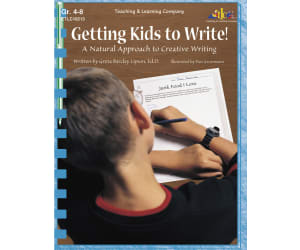
Getting Kids to Write!: A Natural Approach to Creative Writing
ELA, Writing, Grade 4, 5, 6, 7, 8, Teacher Tools, Lesson Plans
Getting Kids to Write!: A Natural Approach to Creative Writing A unique teaching resource targeted towards educators, be it in public school or homeschool settings. This brilliant tool introduces a ground-breaking approach to instil a passion for written expression and creativity in students, catering mainly for grades 4 through 8. Coming with a comprehensive PDF containing 114 ready-to-print pages, this resource includes writing activities across varied genres - fiction and nonfiction alike. A broad spectrum of engaging topics ensures every student's interest is catered to. Whether the budding writer within craves adrenaline-packed adventure stories or thoughtful analyses of reality, there are challenges here sure to spark their imagination. Excellent Guide for Educators! Besides supporting learners, Getting Kids To Write also provides thoughtful guidance on how best to teach creative writing. Benefits include: Practical suggestions on energising classroom discussions that drive idea generation among learners. An insight into sample pieces of writing, showcasing various styles and genres. Tips on fostering the habit of generating unique concepts within your students: a key factor towards producing expressive communicators. The true power behind Getting Kids To Write! is not just its utility as academic support but rather its intention: developing individuals skilled at effective communication who also possess genuine affection for literature composition. Utilize this resource during group instruction scenarios or as potential homework assignments--see your pupils craft gripping narratives like never before! The Perfect Fit For Every Classroom No additional preparation time is needed due thanks largely because these teachings are immediately ready-to-print; streamline your teaching approach without compromising on quality education utilising this creative writing guide from TeachSimple.com. Watch how it transforms everyday classroom conversations into mesmerizing storytelling sessions, empowering children to reignite their passion for language arts.
Author Classroom Complete Press
Tags Creative Writing, Writing Lesson, Writing Topics, Themes, Class Letter

I WONDER - Where Is The Largest Lake In The World | Animated Video
Geography, Social Studies, Grade 1, 2, 3, 4, 5, 6, 7, 8, Lesson Plans, Teacher Tools
Video Introduction An amazing video designed for the students to learn more about famous places in different countries. I WONDER - Where Is The Largest Lake In The World | Animated Video Lesson What do you know about this place? Do you know in which part of the world it is? Have you ever visited this place? If yes, can you tell us more about your adventure, and what do you like the most about this place? Do you like reading about Geography? What is your favorite country in the whole world? If you are going on a trip where it will be? Which country? What you are going to see there? Does this country has a famous place to visit? I WONDER - Where Is The Largest Lake In The World | Animated Video Lesson The activity is perfect for encouraging the researching skills for the students, while learning more about this fantastic place. I WONDER - Where Is The Largest Lake In The World | Animated Video Lesson This friendly designed video is suitable for students at school, homeschooling, and as a group activity. Format Available in MP4 format.
Author Educational Voice
Tags Where Is The Largest Lake In The World, Where Is The Largest Lake In The World Video, The Largest Lake In The World, The Largest Lake In The World Facts, The Largest Lake In The World Video, The Largest Lake In The World Facts For Kids
I WONDER - How Do Comets Get Their Name | Animated Video Lesson
Earth and Environmental Sciences, Science, Space, Grade 4, 5, 6, 7, 8, 9, 10, Lesson Plans, Teacher Tools
Video Introduction An amazing video designed for the students to learn more about space facts. I WONDER - How Do Comets Get Their Name | Animated Video Lesson Do you like reading about space? If yes, what is your favorite topic? What do you know about our solar system? What is the smallest planet in our solar system? What is the biggest planet in our solar system? What is the hottest planet in our solar system? And what is the coldest one? Do you think there are aliens? If yes, what do you think they look like? What do they eat and how they speak to each other? Where do they live? What is a galaxy? And what is a milky way? Have you recently saw a shooting star? If yes, tell us more about it, like when did it happen and where? What is a blackhole? Can a blackhole gets bigger by time? Do you like counting the stars? What do you think a star is made of? I WONDER - How Do Comets Get Their Name | Animated Video Lesson The video is perfect for encouraging the researching skills for the students, while learning more about the fantastic space. I WONDER - How Do Comets Get Their Name | Animated Video Lesson This friendly designed video is suitable for students at school, homeschooling, and as a group activity. Format Available in MP4 format.
Author Educational Voice
Tags How Do Comets Get Their Name, How Do Comets Get Their Name Video, Comets, Comets Facts, Comets Facts For Kids, Comets Video, Comets Video For Kids, Space, Space Video

I WONDER - Did The Archaeopteryx Have Any Special Features
History: Ancient, History, Social Studies, History: World, Animals, Life Sciences, Science, Grade 4, 5, 6, 7, 8, 9, 10, Lesson Plans, Teacher Tools
Video Introduction An amazing video designed for the students to learn more about dinosaurs in different countries. I WONDER - Did The Archaeopteryx Have Any Special Features | Animated Video Lesson Do you like dinosaurs? what is your favorite one? Do you own a pet? If yes, tell us more about it, like what its name? And what do you like most about it? Do you think that your pet has been evolved from a dinosaur? Can you write down the characteristics of your favourite dinosaur like it's shape, their rivals, where did it use to live and what was their favourite food? What is the largest and the smallest dinosaur that ever found? Why is the T-rex is so famous? Have you ever read any interesting facts about it? Can you name any of the carnivores or herbivores dinosaurs? I WONDER - Did The Archaeopteryx Have Any Special Features | Animated Video Lesson The video is perfect for encouraging the researching skills for the students, while learning more about dinosaurs. I WONDER - Did The Archaeopteryx Have Any Special Features | Animated Video Lesson This friendly designed video is suitable for students at school, homeschooling, and as a group activity. Format Available in MP4 format.
Author Educational Voice
Rating
Tags Did The Archaeopteryx Have Any Special Features, Did The Archaeopteryx Have Any Special Features Video, Archaeopteryx, Archaeopteryx Video, Archaeopteryx Facts, Archaeopteryx Video For Kids, Archaeopteryx Facts For Kids