Whole-number operations
Step by Step Word Problems
A classroom anchor-chart-based routine and matching student worksheet that teaches a repeatable 4-step process for solving two-question word problems, reinforced by a rewritten song.




Classroom resources
Practice solving real-world math problems with grade 2 learners. Choose number operations, measurement and money, or problems that ask students to explain their reasoning.
Browse by lesson focus
Choose the topic or kind of practice you need.
Showing 1–24 of 379 resources

 Show filters
 A classroom anchor-chart-based routine and matching student worksheet that teaches a repeatable 4-step process for solving two-question word problems, reinforced by a rewritten song.
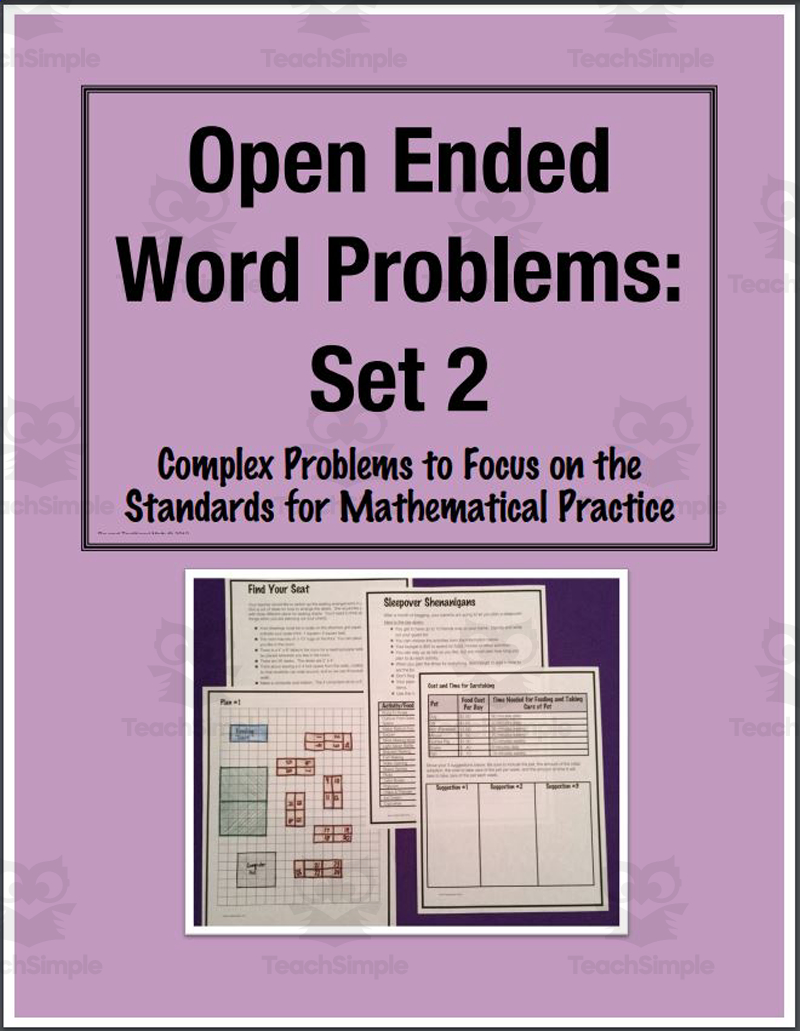
A set of open-ended, multi-step real-world math word problems for enrichment, requiring students to plan, calculate, and justify their reasoning in writing across topics like budgeting, scale drawing, comparative cost analysis, and scheduling.
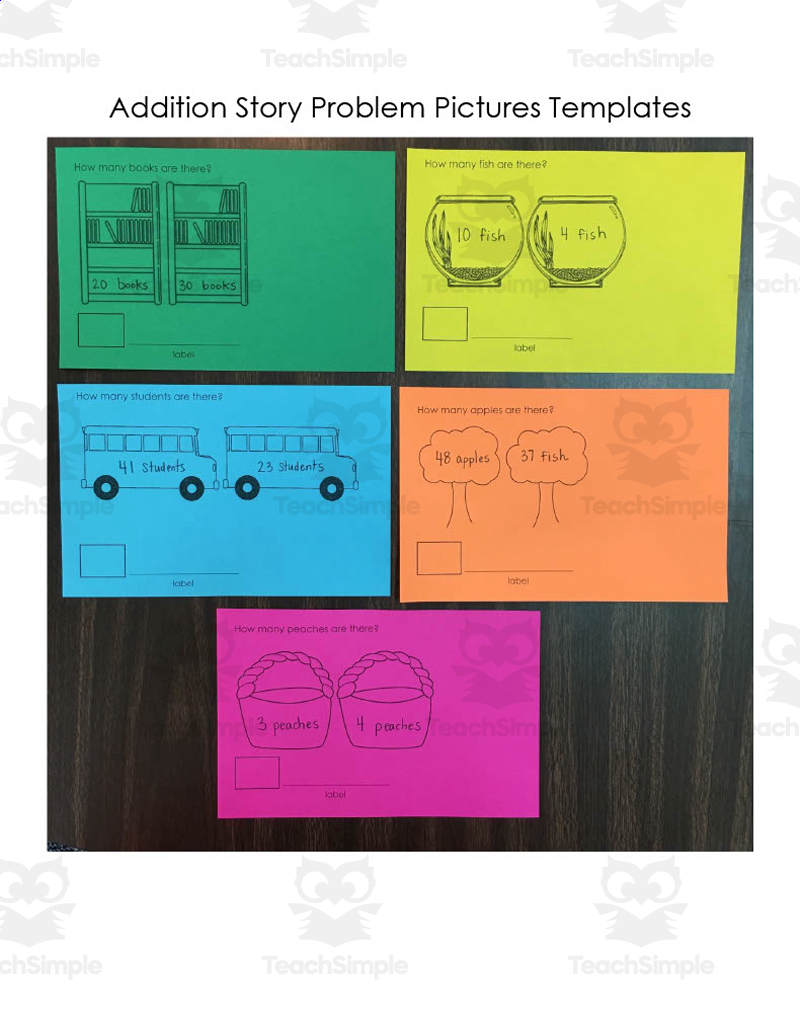
Provide blank picture-based story-problem templates teachers can customize with their own number partners for addition practice, including regrouping.
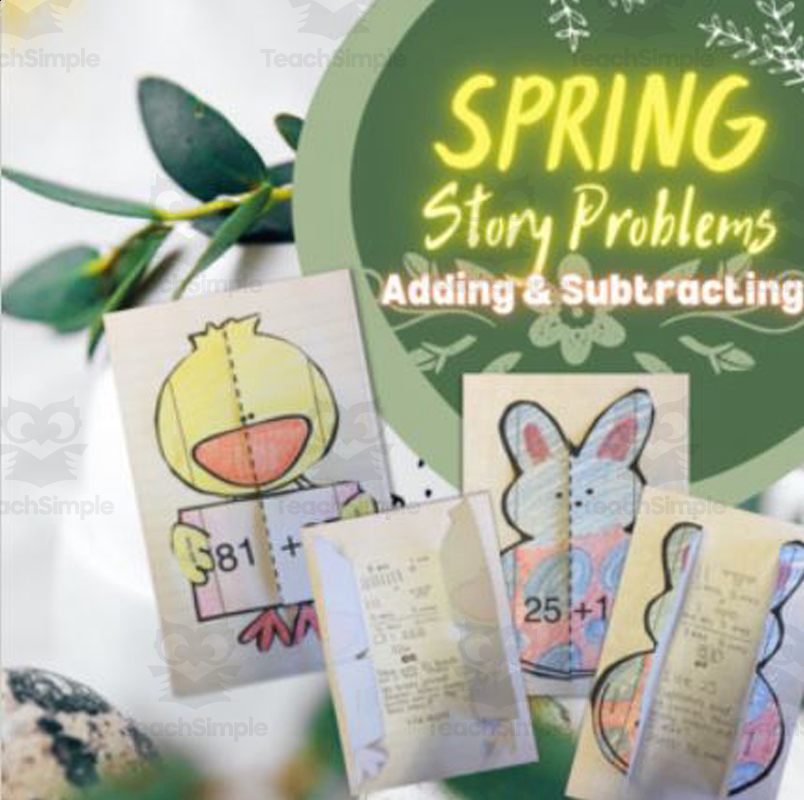
Spring-themed 'craftivity' story-problem worksheets that combine addition/subtraction practice (grades K-2) with a cut-and-fold paper craft and creative writing.
Practice activity for solving two-step word problems using the four operations, writing equations, and matching problems to answers.
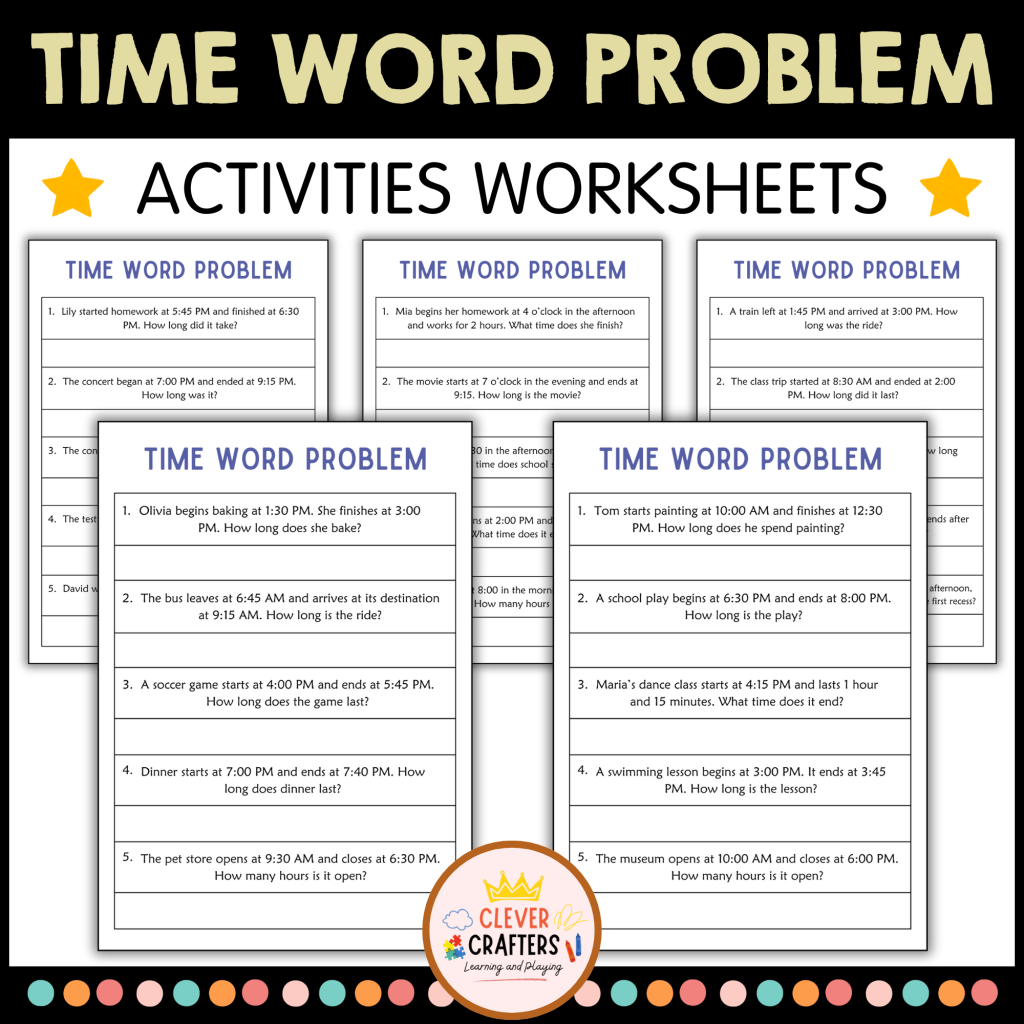
Math worksheet set teaching elapsed-time word problems.

Practice solving simple subtraction word problems using single-digit numbers.
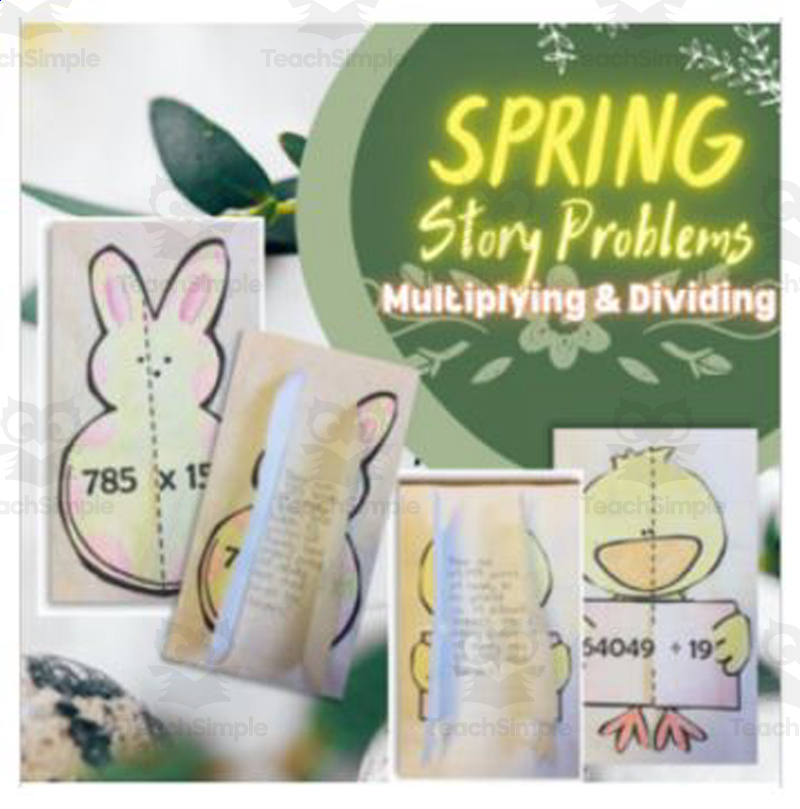
Multiplication and Division Story Problems Introducing the Multiplication and Division Story Problems. Specially designed for educators, this teaching resource aims to engage students' interest in math through a fun, spring-themed activity. Ideal for Kindergarten students up to Grade 2 level, it encompasses the core learning subjects of…
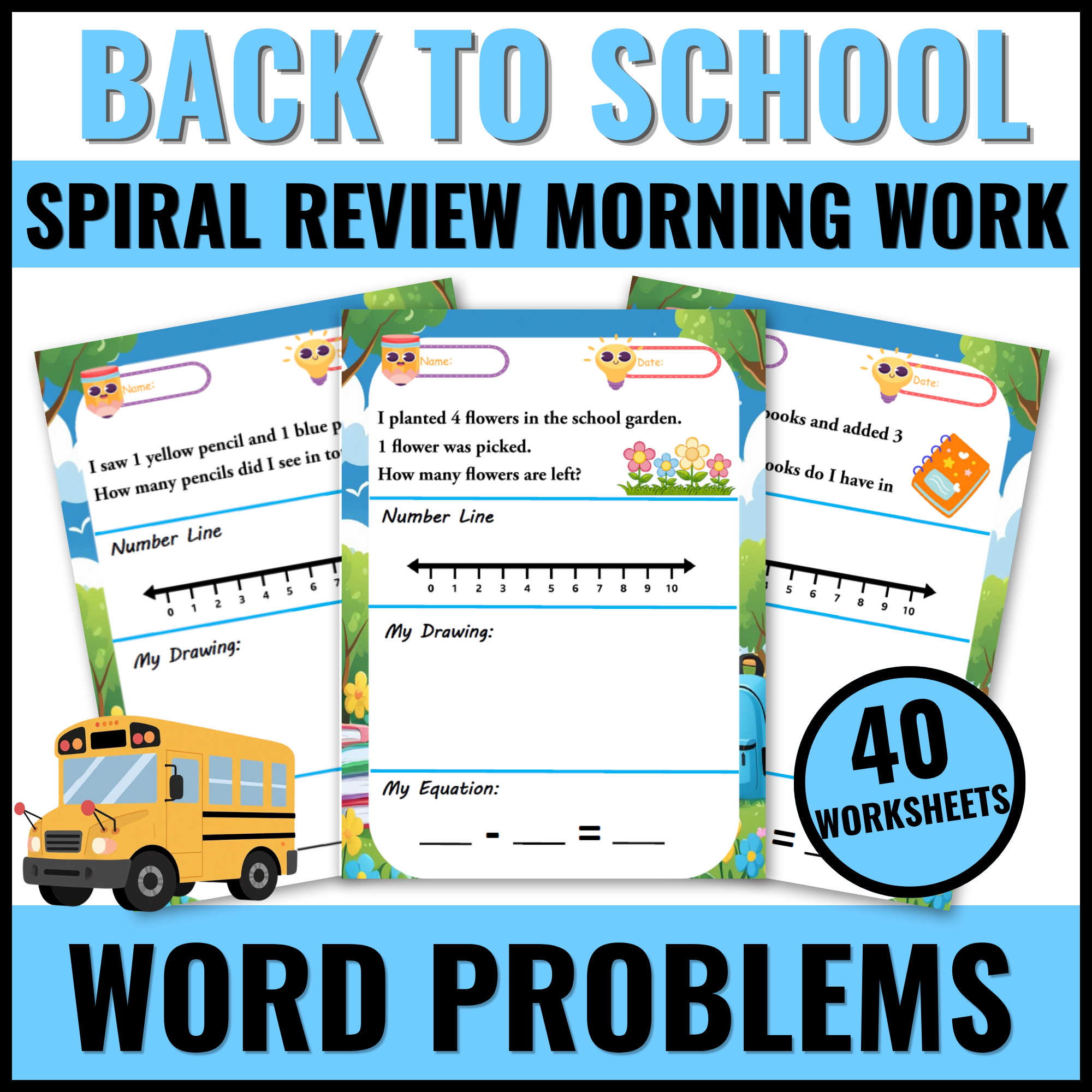
A set of kindergarten addition and subtraction word-problem mats for morning work, spiral review, or assessment.

Apply elapsed-time calculation skills to short narrative word problems, some paired with clock diagrams.
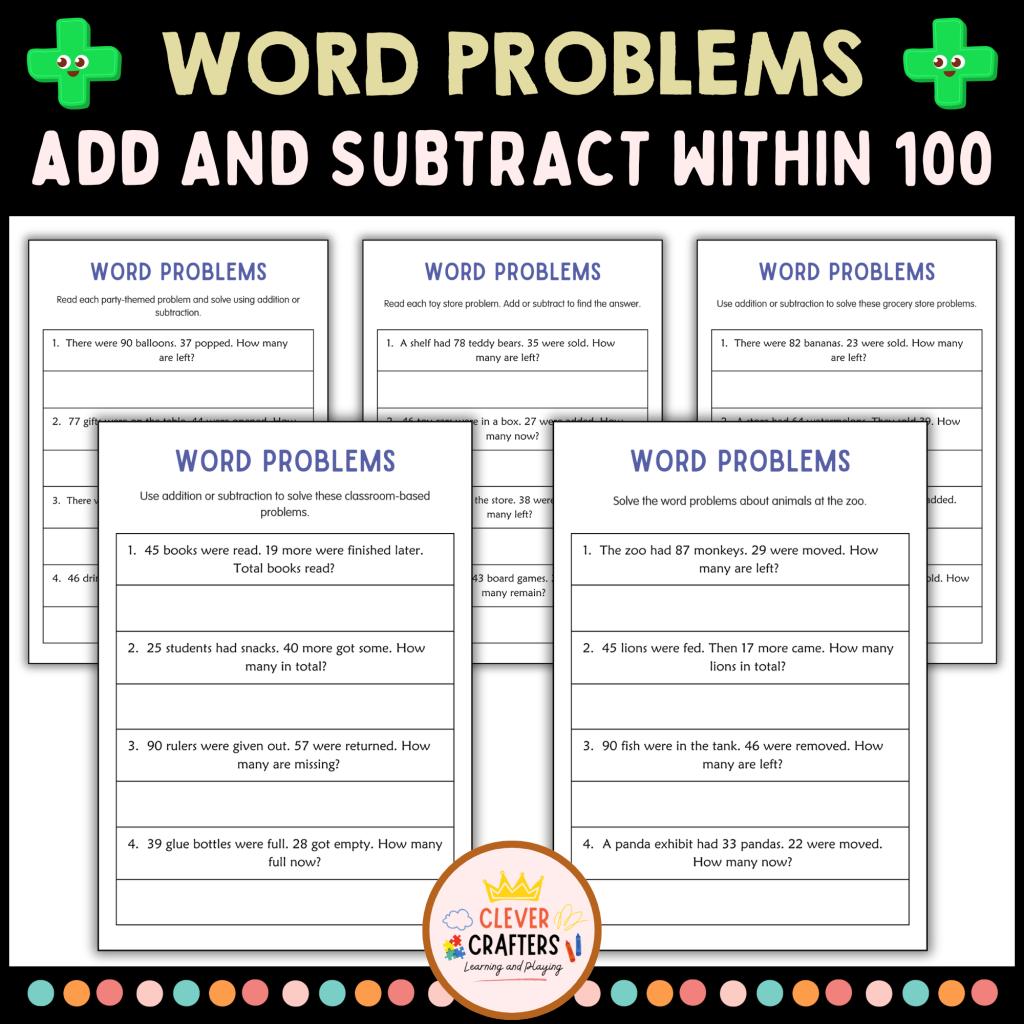
Practice solving addition and subtraction word problems with numbers within 100.
A large binder/interactive notebook set of 2nd grade math word problems organized by problem type, for students to practice identifying and solving addition/subtraction, comparison, grouping, measurement, division, money, and 2-step word problems.
Students build comprehension by solving word problems. With a focus on language skills, students are able to increase their vocabulary and begin learning the problem-solving process at an early age. Through careful attention to detail, students will be able to solve these problems through visualization.
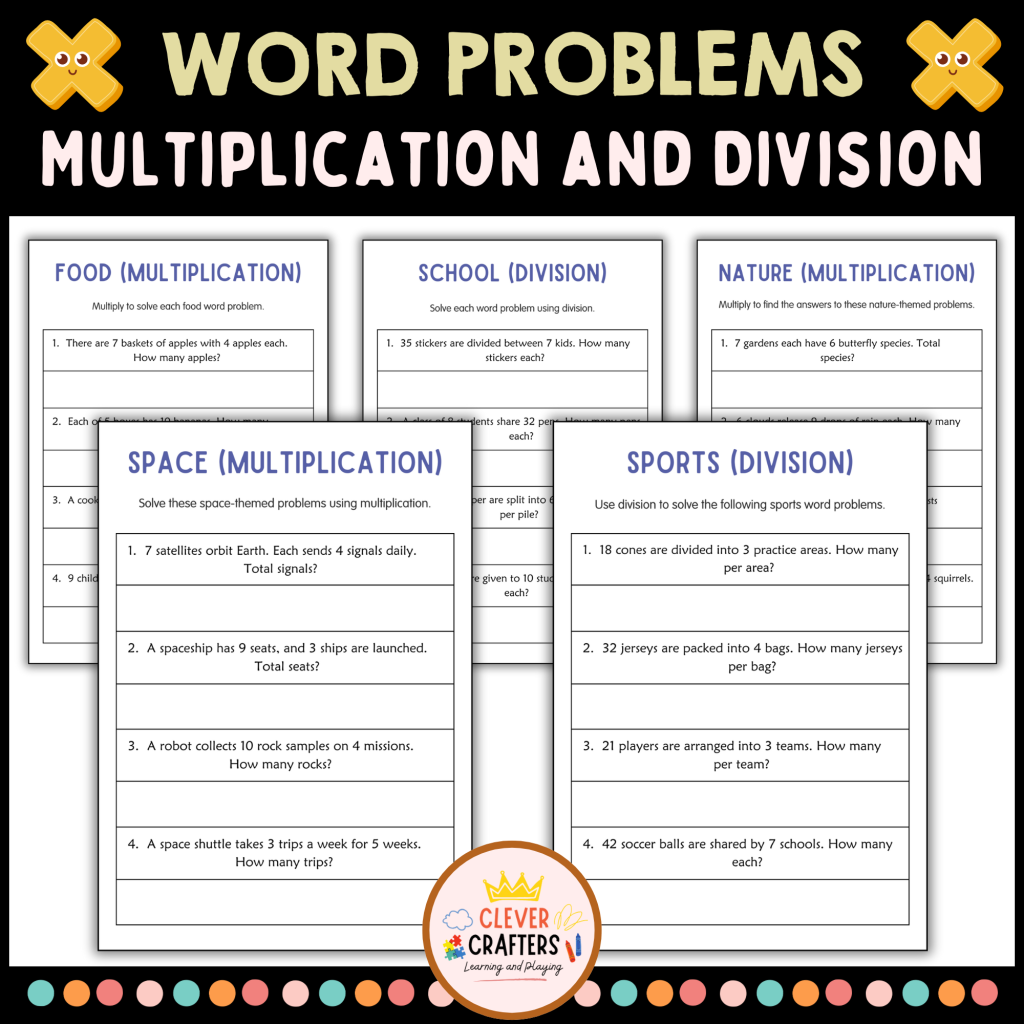
Give students practice solving multiplication and division word problems set in everyday, themed contexts.
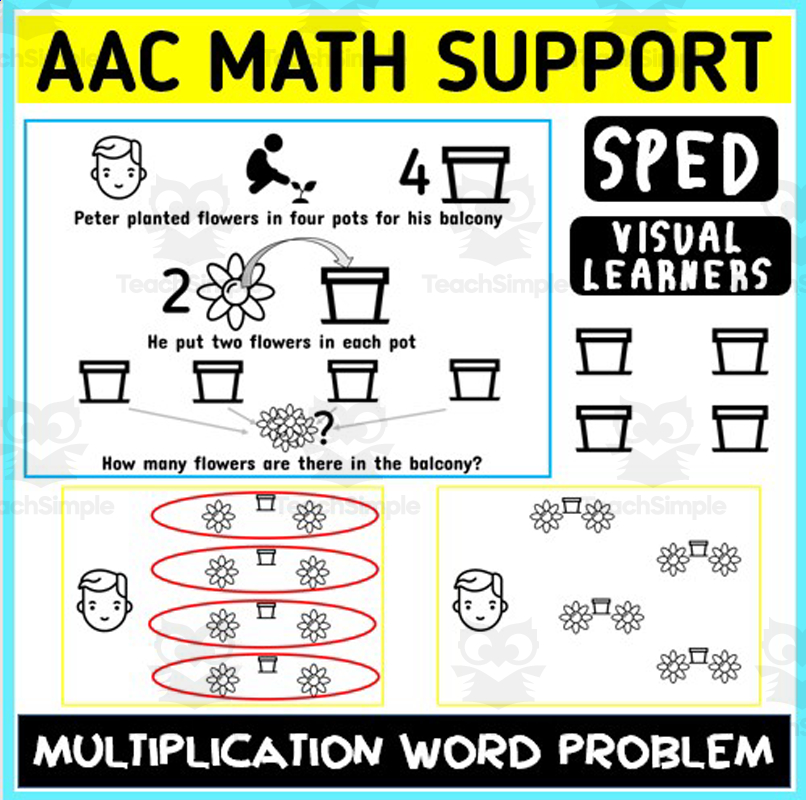
Support students, including those using AAC or needing visual aids, in solving a multiplication word problem through visual/pictorial presentation.
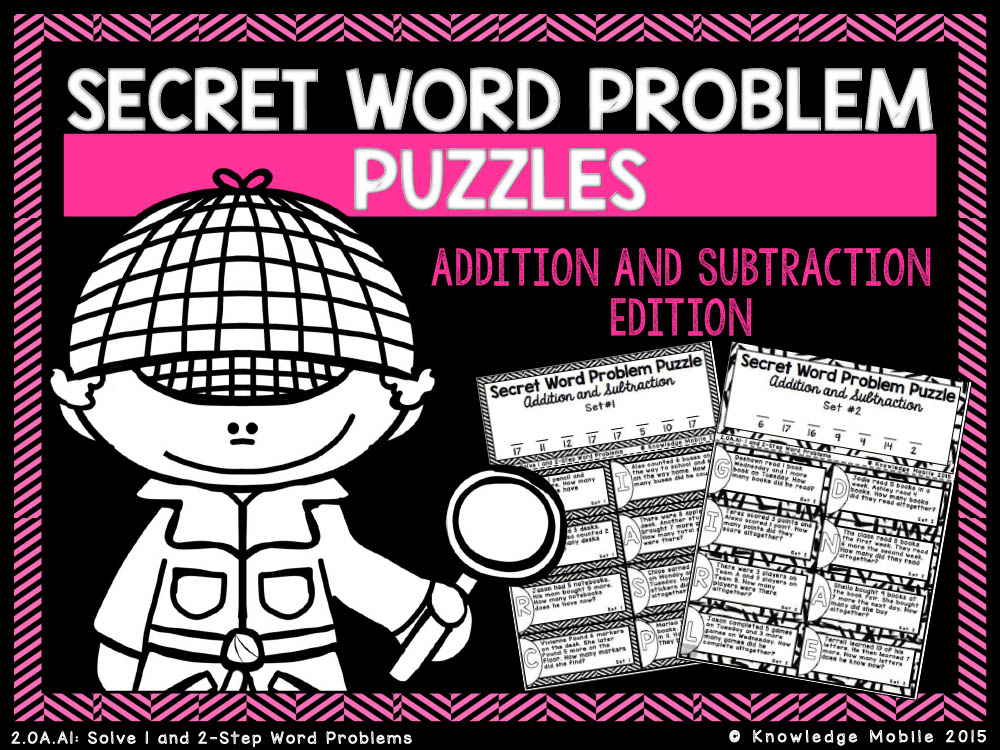
A math center/individual-work activity where students solve addition and subtraction word problems to decode a secret word.
Provide reproducible word-problem practice aligned with national standards for grades 2-3, as reinforcement or enrichment within a basic math skills series.
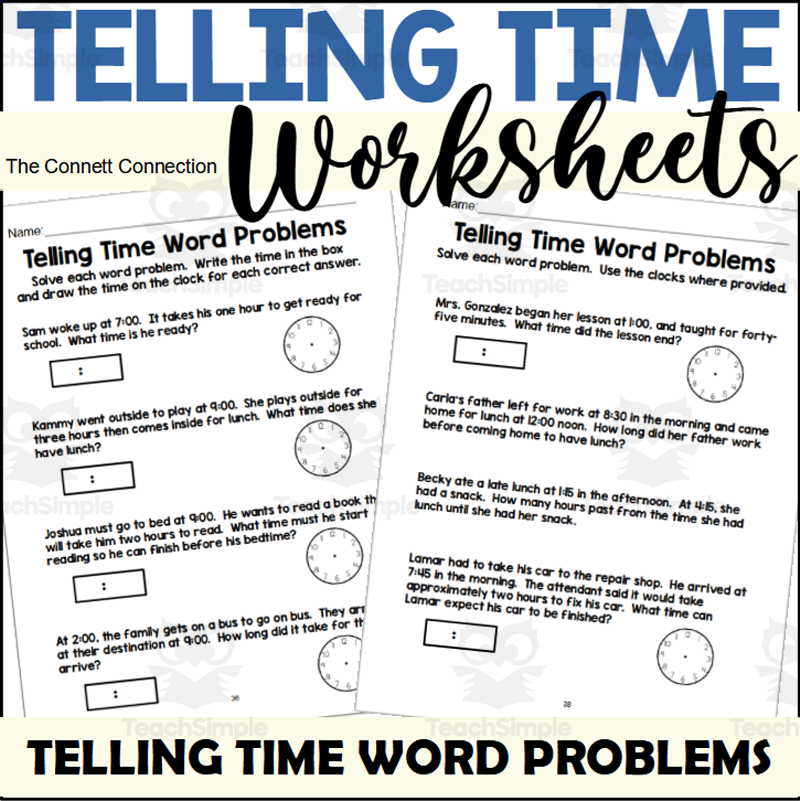
Analog time vocabulary opens the packet, defining o'clock, half past, quarter past, and quarter to with worked examples before moving into matching pages where students draw lines connecting spoken time phrases to analog clock faces and digital times. A dedicated page has students label seven daily activities, such as sunrise and lunchtime, with AM or PM based on the given time. The bulk of the resource is sixteen elapsed-time word problems spread across several pages, asking students to find a start time, end time, or duration from everyday scenarios like getting ready for school, running errands, and doctor's appointments, with a blank box provided to write each answer. Later problems increase in difficulty, moving from round numbers like nine o'clock plus three hours to less even calculations such as 8:28 versus a 9:00 arrival time or a 48-minute GPS estimate against a 10:15 appointment.
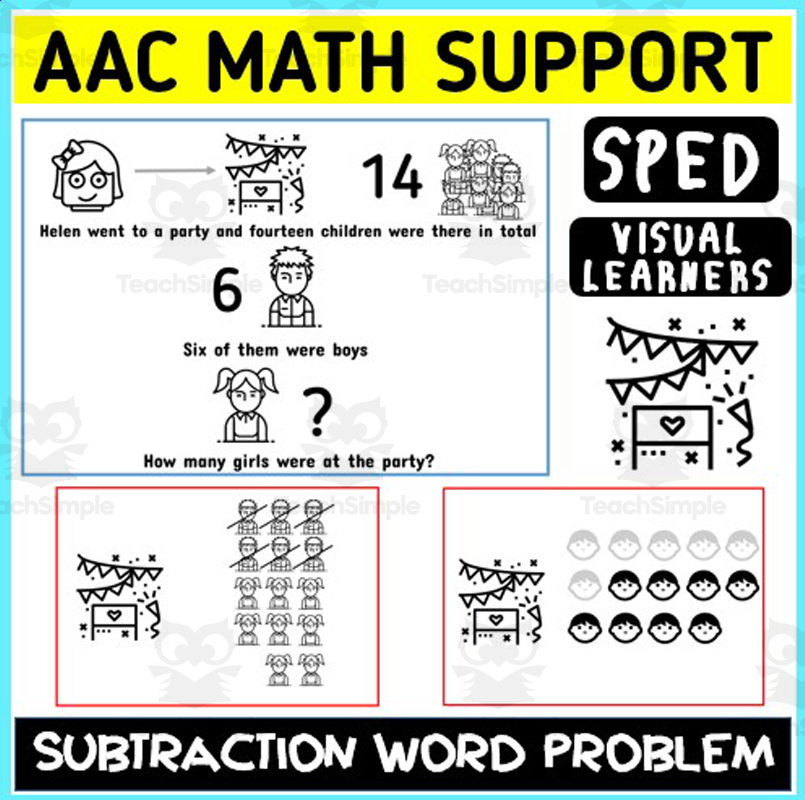
Support subtraction word-problem comprehension for students needing visual/AAC scaffolding by pairing a story-style word problem with a printed number/tally reference (1-20).
Data Analysis & Probability: Word Problems Vol. PK-2 A unique educational resource designed to cater to the mathematical curriculum needs of grades PK-2, with a focus on Data Analysis and Probability.
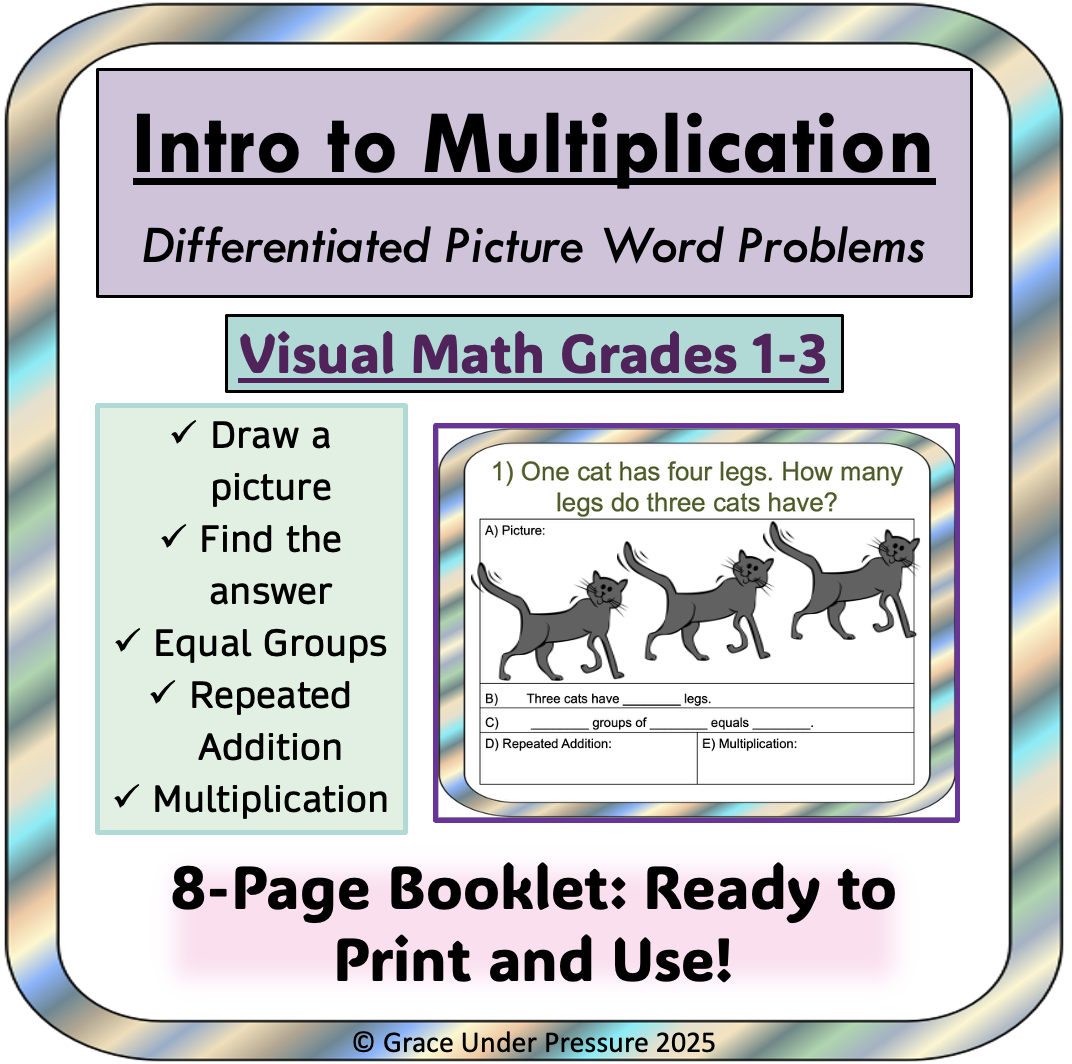
Introduces primary students to the concept of multiplication through differentiated picture word problems, scaffolding from drawing pictures up to writing a multiplication equation.
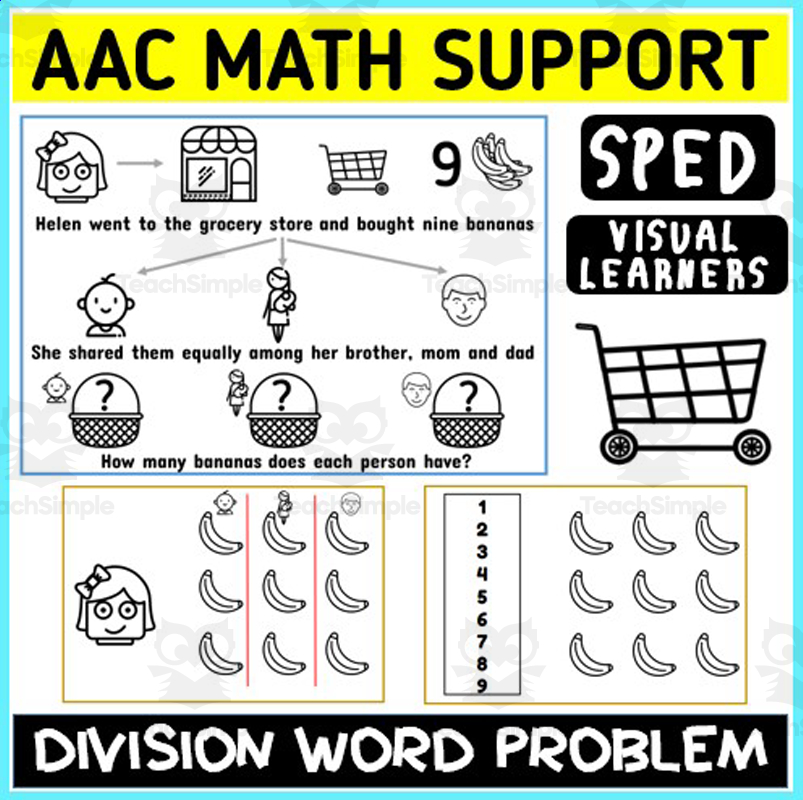
A visual/AAC (augmentative and alternative communication) math support resource that pairs a simple word problem with picture/number-line style visual counting supports, for students with special education needs or visual learners.
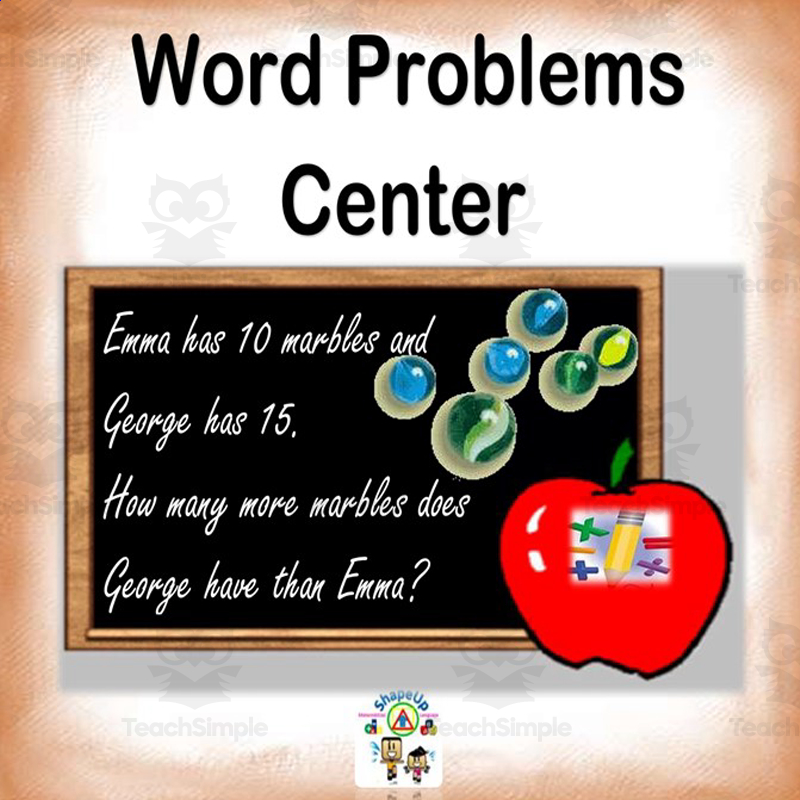 Free download
 Provide a math center activity for practicing addition and subtraction word problems using keyword strategies.
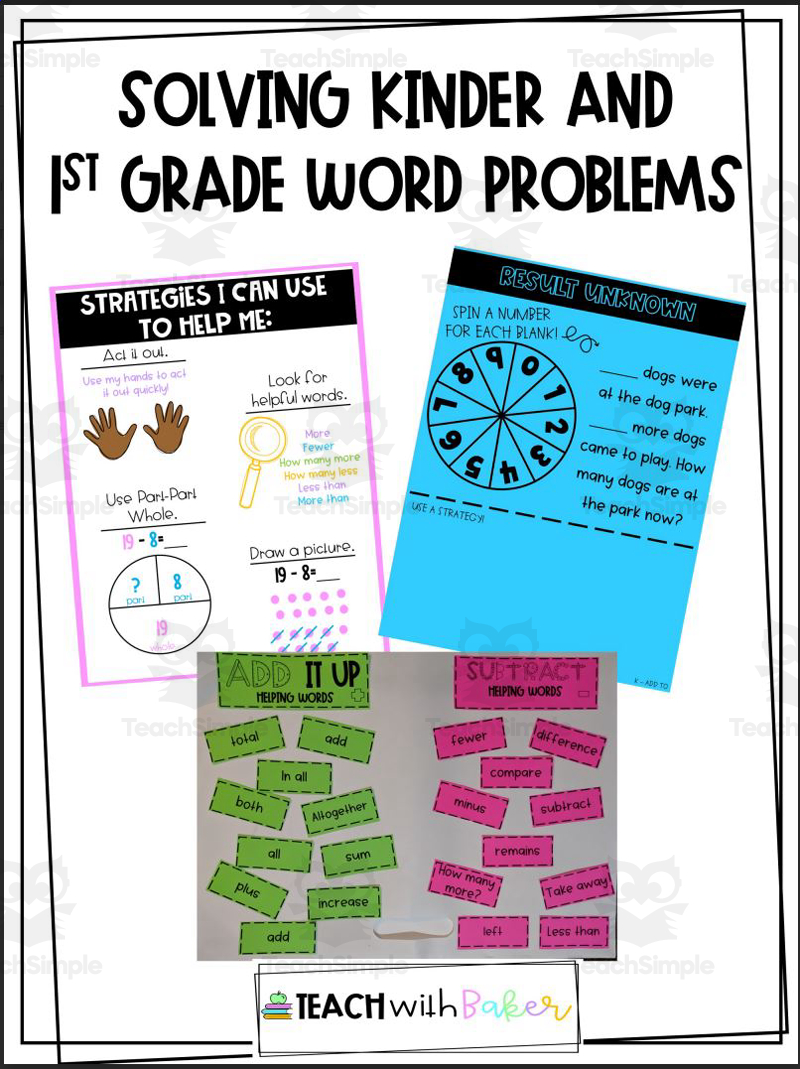
Word Problems for K and 1st Grade: A Comprehensive Teaching Resource The "Word Problems for K and 1st Grade" teaching resource targets to provide problem-solving strategies to students in both kindergarten and first grade. This tool could be a valuable asset for public school instructors, homeschoolers, or other teachers seeking to…