Operations practice
Subtraction
Workbook providing practice in place value and subtraction with and without regrouping, correlated to basic math curricula.
Answers included




Classroom resources
Practice math with worksheets for number skills, operations, measurement, and problem solving. Browse the skill your students need or choose a mixed practice collection.
Browse by lesson focus
Choose the topic or kind of practice you need.
Showing 1–24 of 1308 resources

 Show filters
 Workbook providing practice in place value and subtraction with and without regrouping, correlated to basic math curricula.
A print-and-go booklet of games, worksheets and word problems for practicing addition and subtraction facts from 0 to 18.
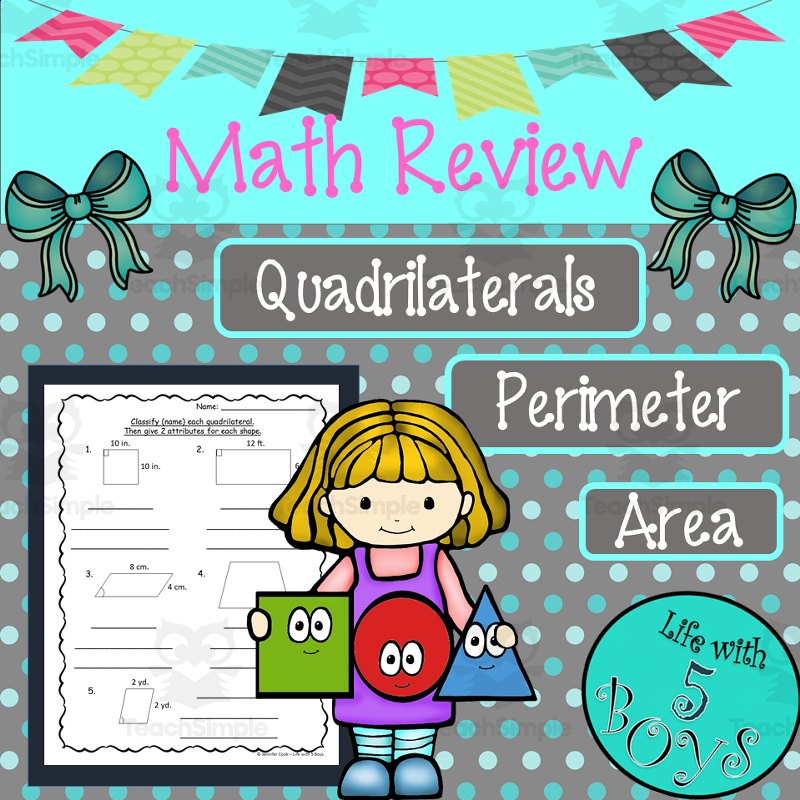
Students begin by naming quadrilaterals and stating two attributes for each. Separate pages then ask for perimeter and area, including figures that can be handled by combining component measurements. The three completed pages show classifications, calculations, and units for checking the work.

A set of 20 themed, timed single-digit subtraction practice worksheets across 3 skill levels, within the number range 0-10, for building subtraction fact fluency.
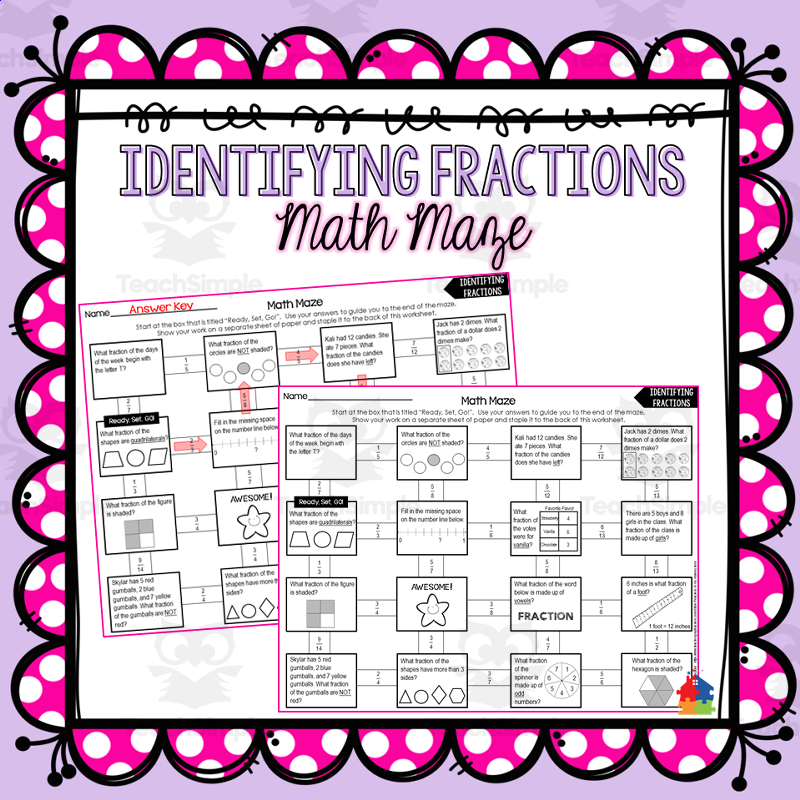
Maze-style worksheet that has students identify and compute fractions from word problems and visual models to navigate from start to finish.

Thirty-six missing-number equations mix addition, subtraction, multiplication and division on a single practice page, with a blank standing in for one term in each problem, such as 4 × ___ = 20 or 70 ÷ ___ = 10. Students are told to solve directly when they can and, when stuck, to work backward using the inverse operation, turning 6 + ___ = 7 into 7 − 6, for example. A running total line at the bottom lets students self-score out of 36 once finished. A second page lays out every solved answer in the same four-column grid, so the full set can be checked without a separate teacher key.
 Free download
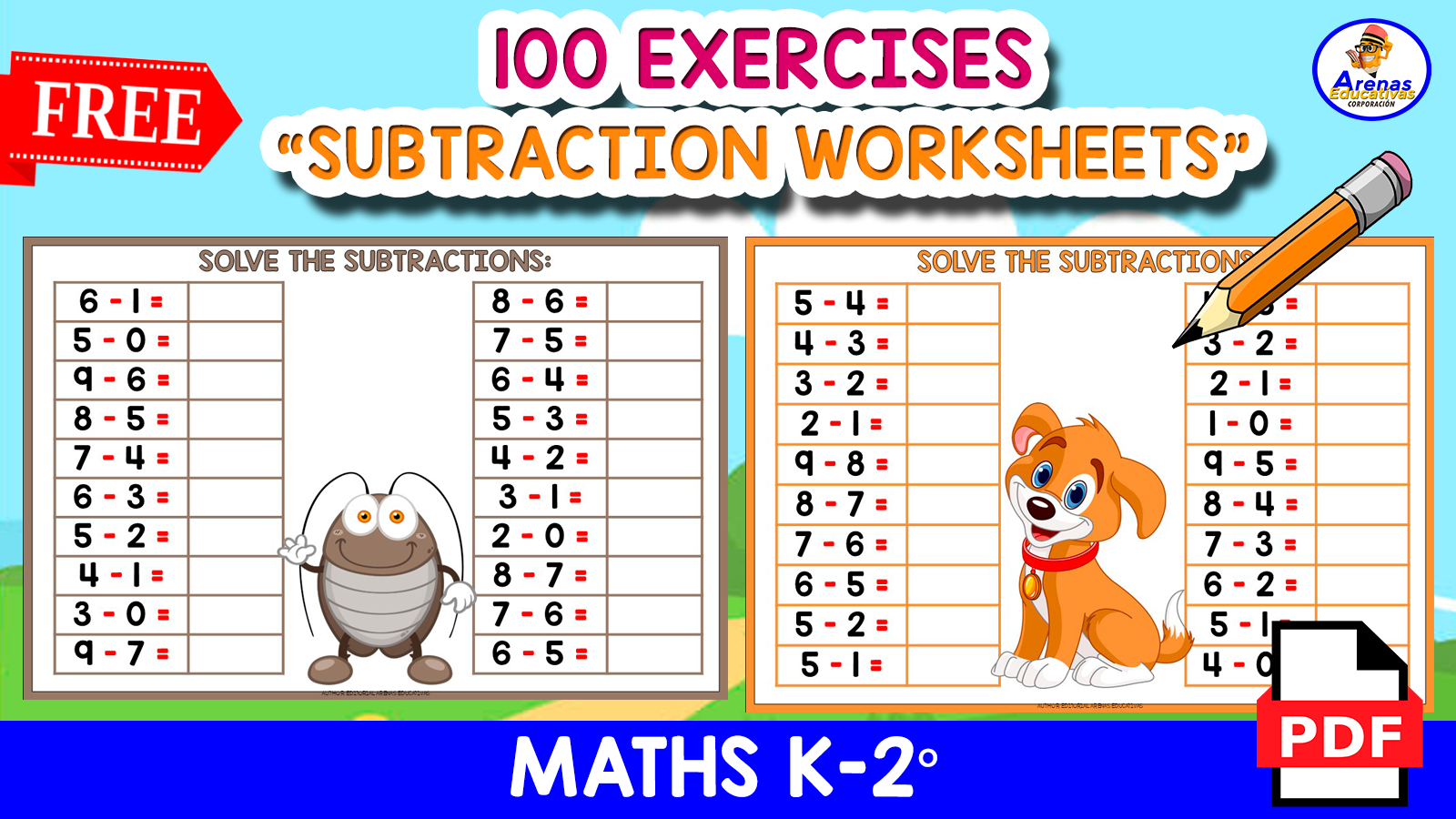
 A set of five single-digit subtraction drill worksheets for basic fact fluency practice.
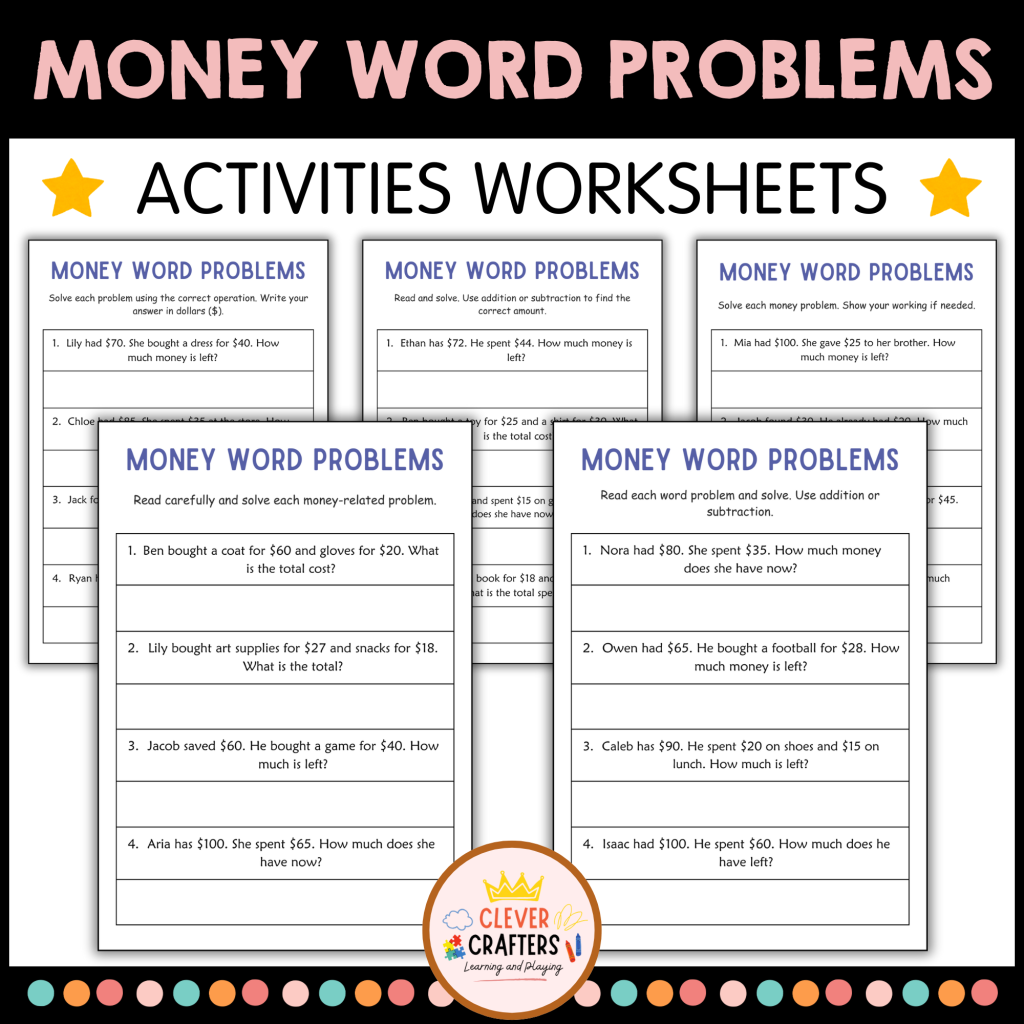
A set of English-language word-problem worksheets giving students practice adding and subtracting dollar amounts in everyday money scenarios.

Twenty vertical subtraction problems use multiples of ten without regrouping. After calculating, students follow directions to color by odd or even differences. Because the given calculations use whole tens, discuss why their differences are even rather than expecting both color groups to appear.
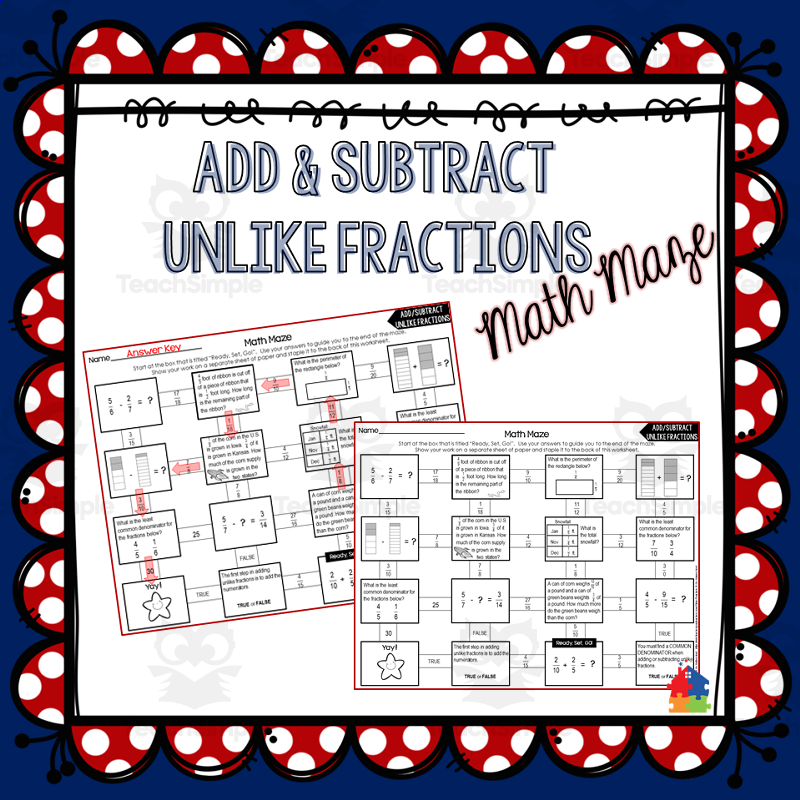
A math maze worksheet where students solve addition and subtraction problems with unlike fractions (including word problems and least-common-denominator questions) and use the answers to navigate through a maze.
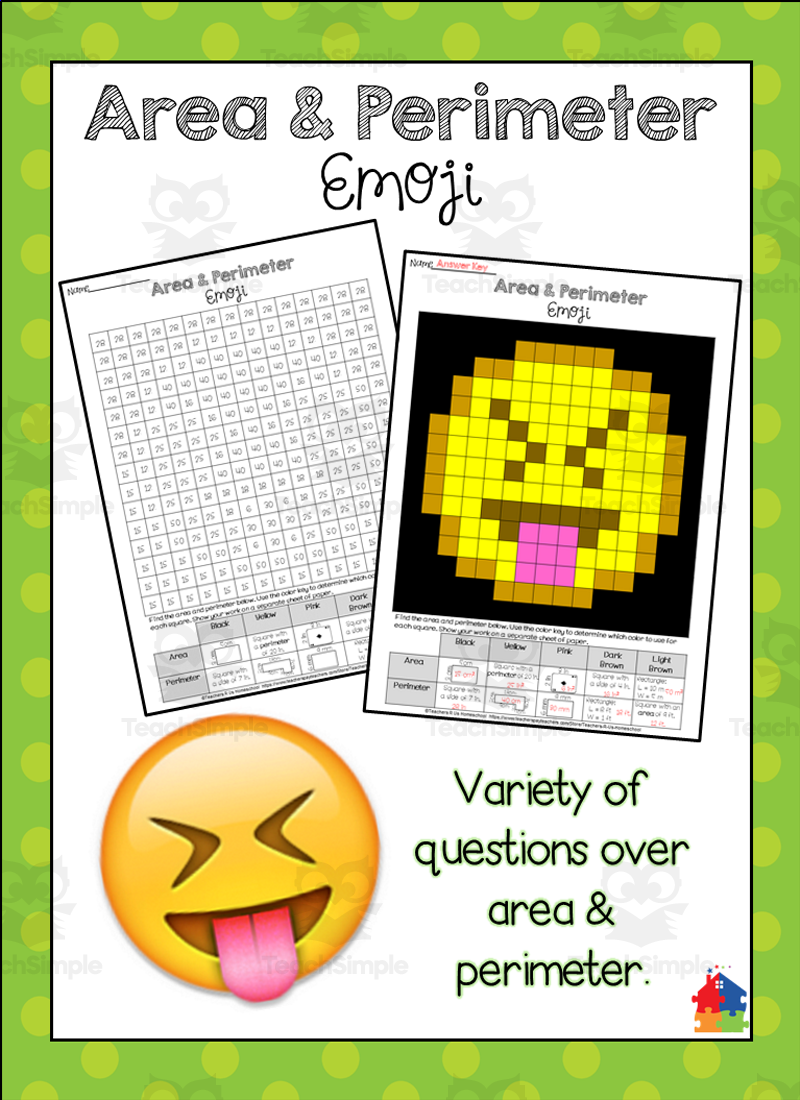
A color-by-number style worksheet where students calculate area and perimeter of given shapes and use their answers to color a grid, revealing an emoji picture.
A daily fact-fluency drill and self-scoring practice book for basic addition and subtraction facts, building speed and accuracy over time.
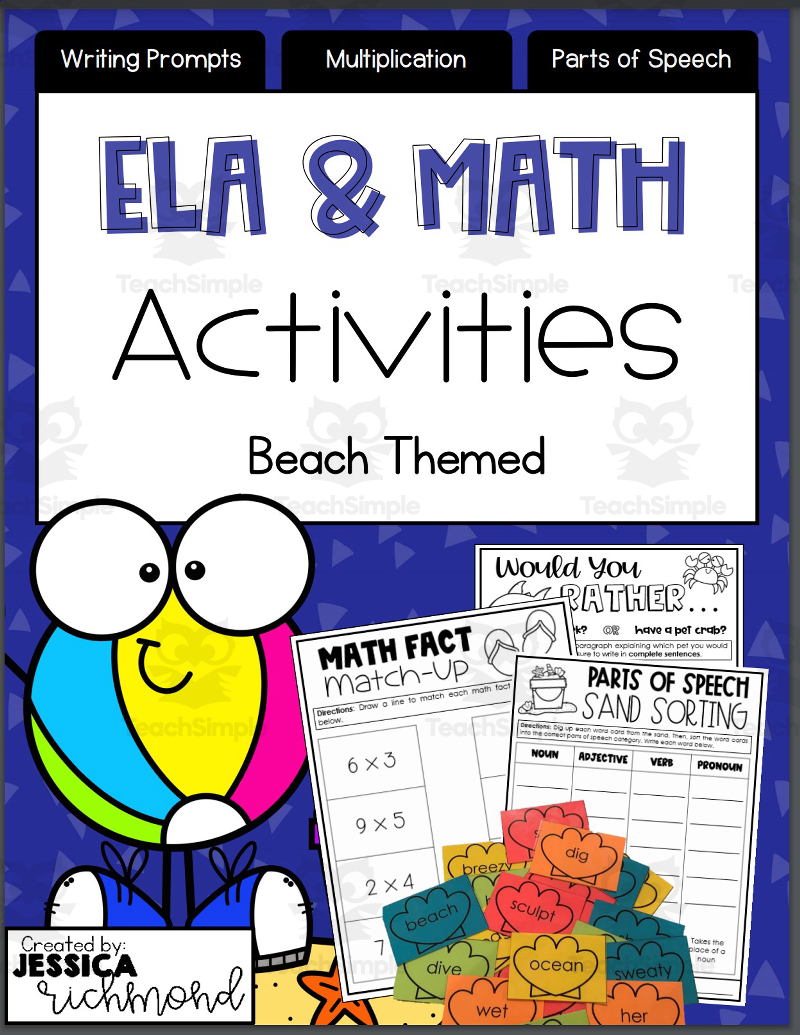
A beach-themed packet of ELA and math practice activities: opinion/persuasive writing prompts, multiplication fact practice, and parts-of-speech sorting.
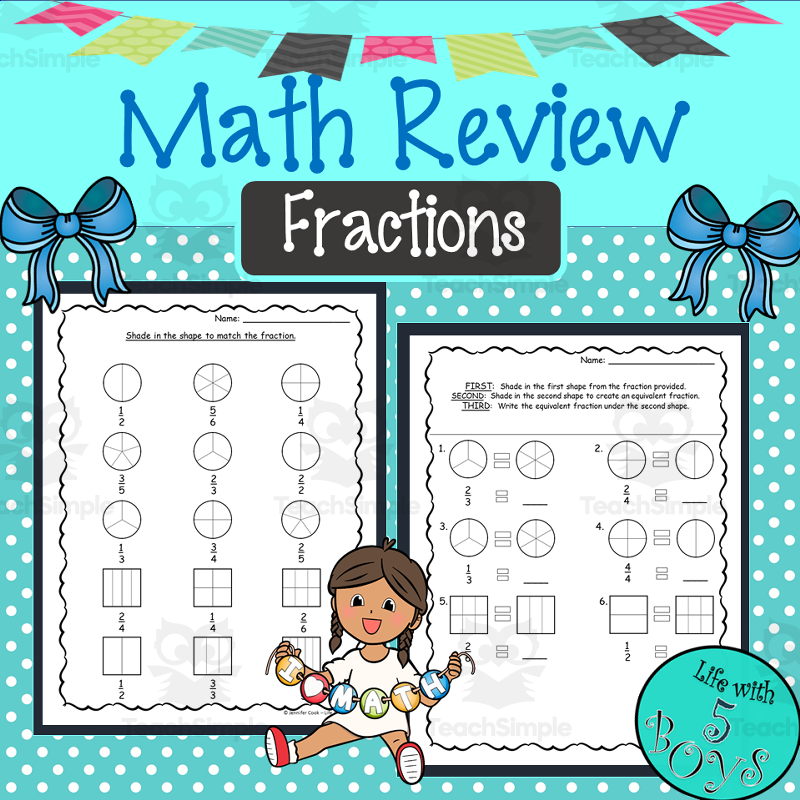
Fraction practice worksheets covering identifying/shading a fraction of a shape and finding equivalent fractions.

Skyscraper windows turn rectangular arrays into a visible connection between skip counting and multiplication. On the first worksheet, students count by threes, fours, and fives and draw their own equal-row buildings. The second asks for row and column equations and window arrays with given totals. Each worksheet has a matching answer key.
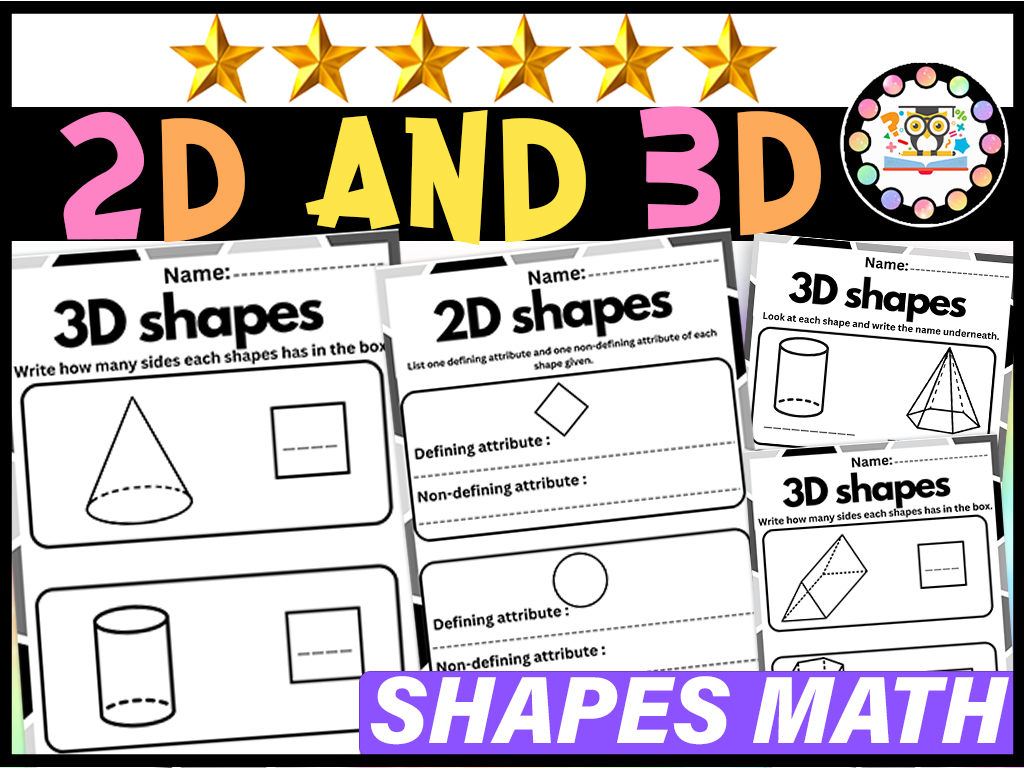
Worksheet set practicing 2D and 3D shape identification, naming, side-counting, and defining/non-defining attributes.
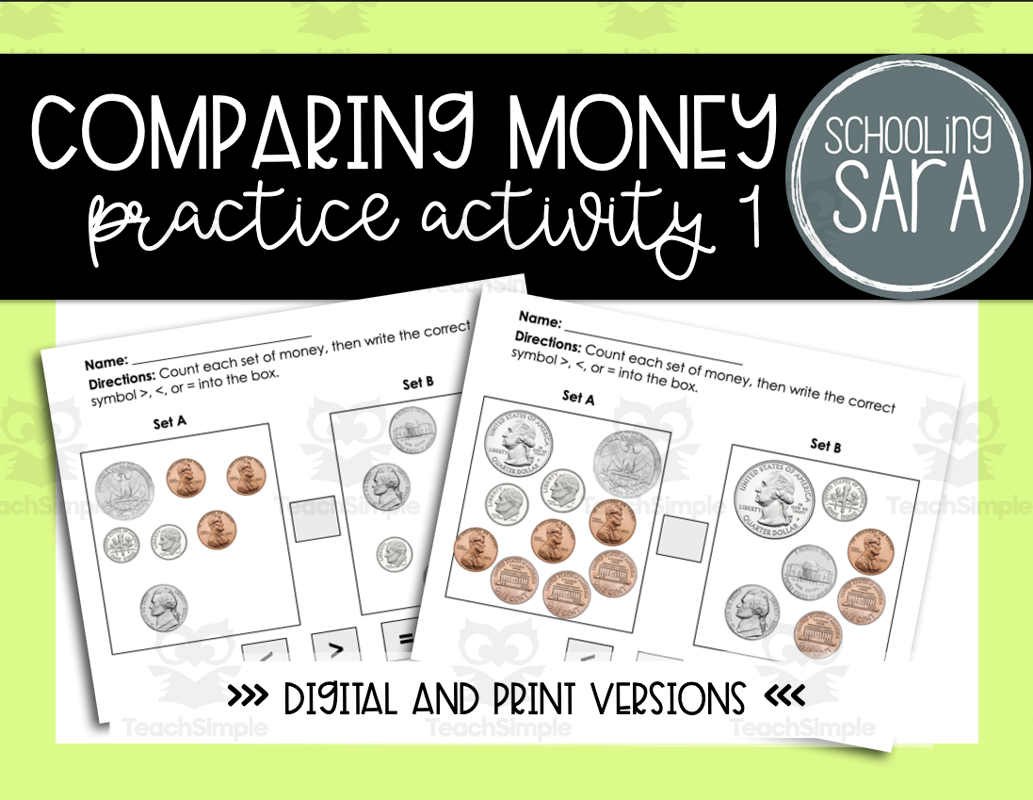
Money-math practice for comparing mixed denominations of coins and bills for students in grades 2-4.

Students solve ten subtraction facts within five on a compact practice page. Time and accuracy fields let you record results when useful, and the answer page supports checking. Leave timing optional while students are developing understanding, and use objects to discuss a subtraction they found difficult.
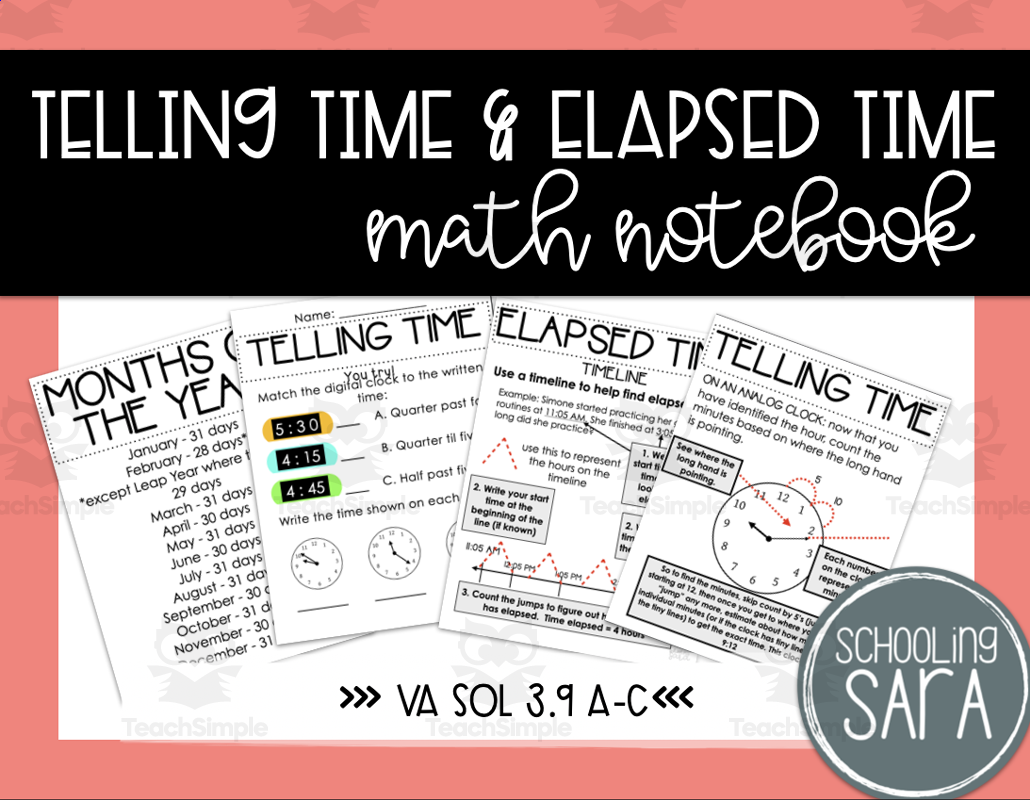
An interactive math notebook covering telling time (analog and digital), elapsed time, and equivalent time periods, aligned to Virginia SOL 3.9.
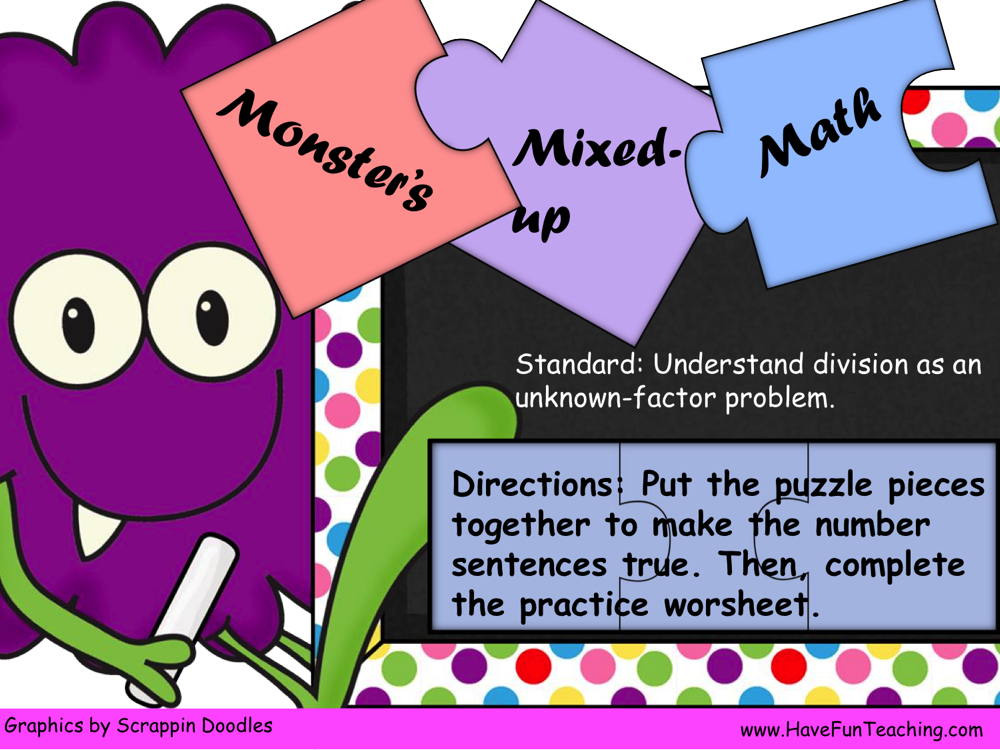
A monster-themed puzzle activity teaching division as an unknown-factor problem, building multiplication fact fluency (explicitly ties to the standard 'Understand division as an unknown-factor problem').

Reference/practice charts for multiplication facts and repeated-addition/skip-counting patterns for factors 1 through 12.
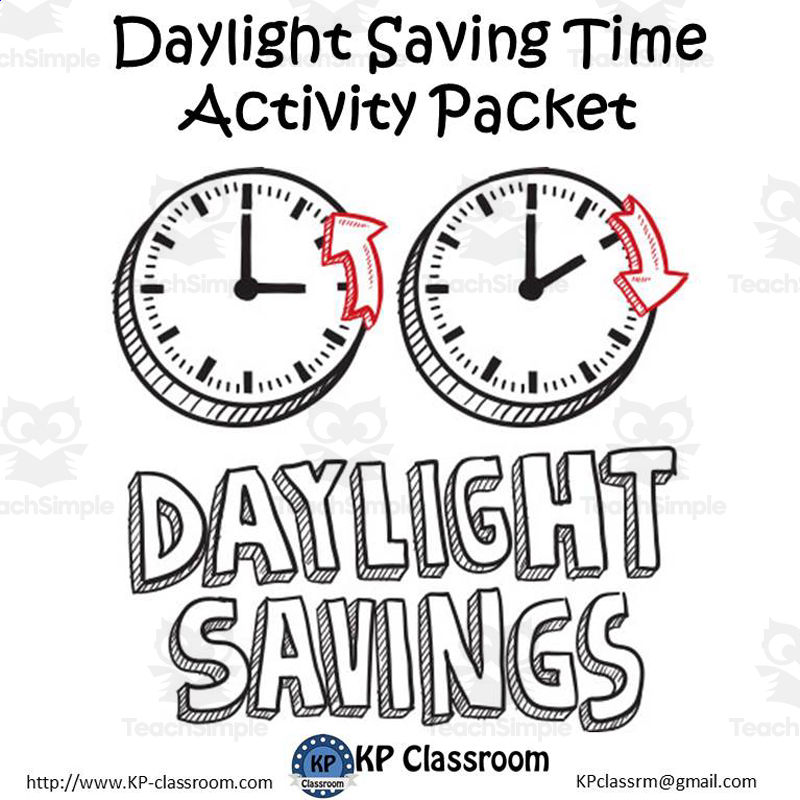
A cross-curricular literacy and (per title) math activity packet teaching what Daylight Saving Time is and its history, with paired-text comparison, vocabulary, and response worksheets.
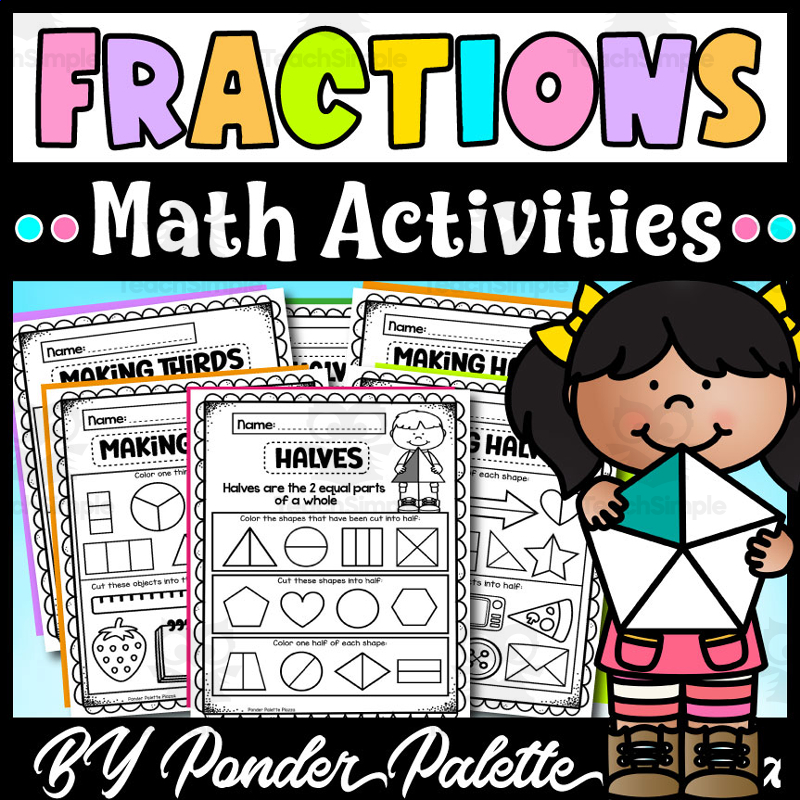
Set of introductory fraction worksheets teaching halves, thirds, and fourths through coloring, cutting, matching, and sorting activities.
A large no-prep telling-time unit packet combining informational text on the history and mechanics of timekeeping with hands-on clock-building activities and practice worksheets.