1984 Introduction Power Point


- Grades
- Grades 9–12
- Pages
- 24
- File type
- Microsoft PowerPoint
- Editable
- Yes


- Subject
- ELA, Literature
- Topic
- 1984, George Orwell
- Resource types
- Presentations
- Editable
- Yes
- Standards
- L.9.6
Product description
From the author
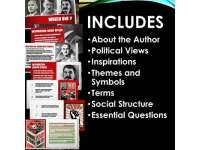
Introduce George Orwell’s 1984 with a 24-slide PowerPoint for grades 9–12. The deck previews Orwell’s background and political views, historical connections, major themes and symbols, and terms such as propaganda, utopia, dystopia, irony and paradox.
Four closing questions invite discussion about government. Use the editable slides for a pre-reading introduction, then revisit selected terms and questions while reading. Supply the novel separately.
Related resources
More resources teachers may find useful
21 related resources were found using this product's title, contributor, categories and tags.


In the classroom
Teaching tips & learning objectives

Learning objectives
Explain how George Orwell's life and political views shaped the writing of 1984.
Connect 1984's totalitarian society to real historical dictators: Hitler, Franco, and Stalin.
Identify major themes and symbols they will encounter while reading 1984.

Teaching tips
Use the Hitler, Franco, and Stalin inspiration slides as a bridge to a short history lesson before starting the novel, since Orwell's totalitarian setting draws directly on all three.
Introduce the terms slides (propaganda, utopia, dystopia, irony, paradox) before reading begins so students recognize the vocabulary as it appears in the text.
Close the introduction with the four essential questions about government to set a discussion purpose for the unit.

Skills covered
Historical-context analysis — students connect 1984's fictional totalitarian regime to real 20th-century dictators (Hitler, Franco, Stalin).
Literary vocabulary acquisition — students learn genre-specific terms such as dystopia, propaganda, and paradox before encountering them in the novel.
Theme and symbol preview — students are introduced to recurring symbols (telescreens, Big Brother, the paperweight) and themes (control, isolation, dehumanization) ahead of reading.
Good to know
Questions teachers ask about this resource
How can I use the essential questions?
Discuss them before reading and record students’ initial views. Revisit selected questions as events and symbols in the novel give students new evidence.

No reviews yet
Downloaded this resource? Tell other teachers how it went.
Curriculum
Standards, concepts & topics
Standards
 Standards
- L.9.6
Core concepts
 Core concepts
Totalitarianism
Dystopian literature
Propaganda
Historical context
Literary symbolism
Topics
 Topics
Explore more
Categories this resource belongs to
Explore related searches
More to explore
You may also like