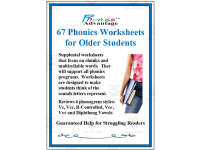
67 Phonics Worksheets for Older Students

- Grades
- Grades 4–8, Middle School, Elementary
- File type
- Preparation
- Print ready


- Subject
- ELA, Language Development, Phonics
- Topic
- Phonics Worksheets, Phonics for Middle School
- Resource types
- Worksheets & Printables, Worksheets
- Preparation
- Print ready
About this resource
What's inside this resource
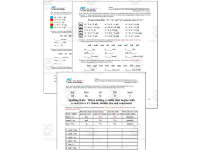
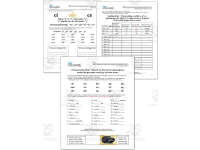
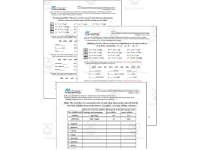
67 printables/worksheets/worksheets-by-subject/ela-worksheets/phonics-worksheets">Phonics Worksheets for Older Students is designed to push the student to think of the sounds letter combinations make. The printables/worksheets/worksheets-by-subject/ela-worksheets/phonics-worksheets">phonics worksheets can be used to supplement any phonics program. These worksheets focus on building decoding skills through analyzing phonograms, observing syllable divisions and reinforcing spelling and pronunciation rules.
The printables/worksheets/worksheets-by-subject/ela-worksheets/phonics-worksheets">phonics worksheets are designed for students in 4th Grade and above. The majority of words students decode are multisyllable. Words with three or more syllables are common. The look is grown-up. There is intentionally no “cutesy” clipart.
Related resources
More resources teachers may find useful
24 related resources were found using this product's title, contributor, categories and tags.


In the classroom
Teaching tips & learning objectives

Learning objectives
Identify phonograms within multisyllable words to support syllable division.
Divide two-syllable words correctly at the syllable boundary.
Apply the soft/hard 'c' rule to correctly pronounce target words.

Teaching tips
Assign the six parts in sequence (Vc, Vcc, R-controlled, Vce, Vvc, diphthong-vowel), since each part builds on phonogram patterns introduced earlier.
Have students read each worksheet's words and phonograms aloud twice, as directed, rather than completing it silently, since the creator notes oral review produces faster gains.
Use the built-in answer sheets for quick self- or peer-checking in a homework or substitute-teacher setting.

Skills covered
Phonogram identification — students locate the repeating letter chunk within each syllable of multisyllable words across six phonogram categories.
Syllable division — students split two-syllable words (e.g., hel'met, cob'web) at the correct syllable boundary using phonogram cues.
Soft/hard C rule application — students sort words by whether 'c' followed by i or e makes a soft or hard sound.
Good to know
Questions teachers ask about this resource
How does this worksheet set relate to a full phonics curriculum?
It's designed as a supplemental companion to the 'Phonics Strategies for Older Students' program -- useful for homework, substitute packets, or extra practice -- but the introduction is explicit that it does not encompass a complete phonics program on its own.
Why does the introduction emphasize reading the worksheets aloud rather than completing them silently?
Because phonics integrates sight and sound, and the creator notes that written work finished in silence advances reading ability slowly compared to review that includes spoken sound practice.

No reviews yet
Downloaded this resource? Tell other teachers how it went.
Resource details
Concepts & topics
Core concepts
 Core concepts
phonograms
syllable division
multisyllable word decoding
phonics for older readers
 Topics
More to explore
You may also like