A fun paper craft to add to your earth science lessons!

- Grades
- Grades 1–4, Elementary
- Pages
- 5
- File type
- Answer key
- Included


- Subject
- Science, Earth and Environmental Sciences
- Topic
- earth science craft, earth sphere craft
- Resource types
- Activities
- Answer key
- Included
About this resource
What's inside this resource
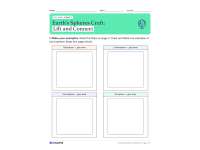
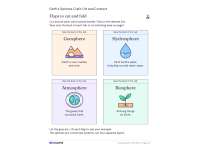
With this lift-the-flap craft, students in grades 3 to 5 build a model of Earth's four spheres and then use it to explain how the spheres interact. On the base page they draw and label their own example of the geosphere, hydrosphere, atmosphere and biosphere. Four illustrated flaps, each with a short definition and a glue tab, are cut out and glued over the drawings so every example sits under its sphere's name.
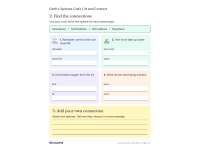
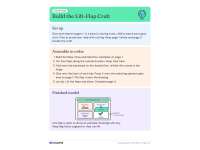
A connections page follows. Students name the sphere for each part of four everyday events, such as rainwater carrying soil downhill or wind moving sand along a beach, and then write a new interaction of their own. A teacher page lists supplies, the assembly steps and a picture of the finished model. The answer key gives sample examples for each sphere, the four pairs and science notes on how the spheres overlap.
- Grades 3-5: Earth science, Earth systems and their interactions
- Five pages: base page, flap page, connections page, teacher guide and answer key
- Two PDFs: full color and black and white for printing
Related resources
More resources teachers may find useful
24 related resources were found using this product's title, contributor, categories and tags.


In the classroom
Teaching tips & learning objectives

Learning objectives
Define the geosphere, hydrosphere, atmosphere and biosphere.
Draw and label one real example of each sphere.
Identify which two spheres are involved in an everyday interaction.

Teaching tips
Print at actual size and keep page 1 whole; it is the base the flaps attach to.
Have students draw their examples before cutting the flaps, following the order on the teacher page.
Remind students to glue only the back of each tab so the flaps still lift.

Skills covered
Earth systems: students learn that the geosphere, hydrosphere, atmosphere and biosphere are connected systems, not four separate layers.
Classifying examples: each student chooses and draws a fitting example, such as a river for the hydrosphere or a seedling for the biosphere.
Interactions: students decide which spheres meet in events like tree roots taking up water or a bird breathing air.
Good to know
Questions teachers ask about this resource
How many pages are there?
Five: a base page, a flap page, a connections page, a teacher guide and an answer key.
Which spheres are covered?
The geosphere, hydrosphere, atmosphere and biosphere. In this model, ice and water vapor are part of the hydrosphere, and the key explains that some models list frozen water separately.
Is there an answer key?
Yes. It gives sample examples for each sphere, the correct spheres for all four interactions and guidance for scoring the student-written connection.
What supplies do students need?
A pencil, coloring tools, child scissors and a glue stick.

No reviews yet
Downloaded this resource? Tell other teachers how it went.
Resource details
Concepts & topics
Core concepts
 Core concepts
Earth's spheres
geosphere
hydrosphere
atmosphere
biosphere
Earth systems
 Topics
Explore more
Categories this resource belongs to
Explore related searches
More to explore
You may also like