America The Story of Us: Episode 1 - "Rebels" (Complete Video Guide)



- Grades
- Grades 6–8, High School
- Pages
- 4
- File type
- Answer key
- Included


- Subject
- Social Studies, History
- Topic
- America The Story of Us Episode 1 Rebels, Viewing questions
- Resource types
- Worksheets
- Answer key
- Included
Product description
From the author
In the television series "America: The Story of Us," the concept of rebels is explored in the context of American history. The term "rebels" refers to individuals or groups who defied established authority or challenged the status quo. Here are some key aspects of rebels as portrayed in the series:
American Revolution: The American Revolution itself is often portrayed as a rebellion against British rule. The series depicts the American colonists as rebels who defied the authority of the British Crown and fought for their independence.
Founding Fathers: The series highlights the Founding Fathers as rebel leaders who challenged British rule and advocated for American independence. Figures such as George Washington, Thomas Jefferson, and John Adams are depicted as leaders who led the rebellion against British authority.
Roots of Rebellion: It delves into the causes of the American Revolution, including the tensions between the American colonists and the British Empire, the issue of taxation without representation, and the protests that arose as a response to British policies.
Boston Tea Party: The episode covers the famous Boston Tea Party of 1773, where colonists, disguised as Native Americans, dumped British tea into the harbor to protest against unfair taxation.
The Shot Heard 'Round the World: It portrays the battles of Lexington and Concord, which marked the beginning of the armed conflict between the American colonists and the British forces. The episode explores the courage and determination of the colonial militias.
George Washington: The series highlights the leadership of George Washington, who became the commander-in-chief of the Continental Army. It showcases his role in leading the rebellion and shaping the American Revolution.
Declaration of Independence: The episode concludes with the signing of the Declaration of Independence in 1776. It emphasizes the significance of this document as a symbol of American unity and determination to break away from British rule.
Episode 1, "Rebels," provides an overview of the early stages of the American Revolution and the spirit of rebellion that led to the formation of the United States. However, it's important to note that this summary is based on the general structure of the series, and specific details may vary within the episode itself.
Thumbnail clipart credit: By Prince Padania
Related resources
More resources teachers may find useful
24 related resources were found using this product's title, contributor, categories and tags.


In the classroom
Teaching tips & learning objectives

Learning objectives
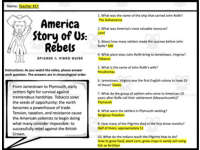
Students identify factual details presented in the video (ships, crops, casualty counts, dates) in the order the episode presents them.
Students track cause and effect across the episode, from Jamestown's founding through the taxation and unrest leading to Lexington.
Students record specific figures and terms from the video, such as the value of the tea dumped in Boston Harbor and the number of Continental Congress delegates.

Teaching tips
Pause the video near each numbered question so students can write the answer immediately rather than relying on memory afterward.
Note that two questions in the original file both share the number 14; renumber on a class copy if a clean sequential count matters for your classroom.
Use the teacher-key page while previewing the video to confirm your own pause points before assigning the guide to the class.

Skills covered
Video-based note-taking — students record specific facts and figures from a documentary in the order they are presented.
Historical sequencing — students trace events from Jamestown's founding through Lexington in chronological order.
Detail retention — students answer 26 factual questions covering names, dates and quantities drawn directly from the episode.
Good to know
Questions teachers ask about this resource
Is the episode included with the viewing guide?
No. The download provides the questions and teacher key. Teachers need separate access to episode 1, Rebels, of America: The Story of Us.

No reviews yet
Downloaded this resource? Tell other teachers how it went.
Resource details
Concepts & topics
Core concepts
 Core concepts
Colonial America
American Revolution
Video guide
Historical sequencing
 Topics
Explore more
Categories this resource belongs to
Explore related searches
More to explore
You may also like