



The Original Thirteen Colonies: Graphic Organizer


- Grades
- Grades 6–9
- Pages
- 2
- File type
- Answer key
- Included


- Subject
- Social Studies, History: USA
- Topic
- Thirteen colonies, Colonial history
- Resource types
- Graphic Organizers
- Answer key
- Included
Product description
From the author
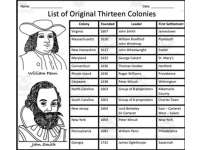
Organize research on the original thirteen colonies with a completed reference chart and a partially filled student version. Columns record colony, founding year, leader and first settlement.
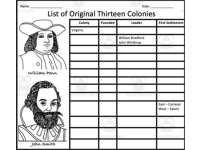
Use the two-page PDF for note-taking and comparison, with additional classroom sources for research. The student chart retains a few entries as prompts.
Product clipart by TeachesThirdinGeorgia.
Related resources
More resources teachers may find useful
24 related resources were found using this product's title, contributor, categories and tags.


In the classroom
Teaching tips & learning objectives

Learning objectives
Identify the founding year of each of the thirteen original American colonies.
Match each colony to its key founding leader, such as John Smith, William Bradford, Roger Williams, or William Penn.
Identify the first permanent settlement established in each of the thirteen colonies.

Teaching tips
Use page 1 as a completed reference or answer key, and assign page 2 as independent practice or a quiz once students have studied the material.
Have students research and fill in one colony at a time using the blank organizer (page 2), rather than completing all thirteen rows in a single sitting.

Skills covered
Historical fact recall -- students identify founding years, leaders, and first settlements for all thirteen original colonies.
Chronological reasoning -- the organizer lists colonies in founding order from 1607 to 1732, letting students trace the sequence of colonization.
Good to know
Questions teachers ask about this resource
Does the student version provide any hints?
Yes. It retains Virginia in the Colony column, William Bradford and John Winthrop in the Leader column, the New Jersey settlement names, and the labeled portraits of William Penn and John Smith. Other entries are left for students to complete.

No reviews yet
Downloaded this resource? Tell other teachers how it went.
Resource details
Concepts & topics
Core concepts
 Core concepts
Thirteen colonies
Colonial America
Colonial leaders and settlements
 Topics
Explore more
Categories this resource belongs to
Explore related searches
More to explore
You may also like


