Animal Farm Post-Reading Creative Writing Assignment: What Would Old Major…


- Grades
- Grades 7–10
- Pages
- 3
- File type
- Multiple File Types
- Editable
- Yes


- Subject
- ELA, Creative Writing
- Topic
- Creative writing, Character analysis
- Resource types
- Novel Studies
- Editable
- Yes
- Standards
- CCSS.W.8.3
Product description
From the author
Related resources
More resources teachers may find useful
24 related resources were found using this product's title, contributor, categories and tags.


In the classroom
Teaching tips & learning objectives

Learning objectives
Compose an original piece of creative writing — a letter, journal entry, song, podcast script, or poem — consistently in a character's first-person voice.
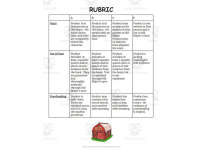
Select and analyze quotations or scenes to support the response; the rubric’s top band calls for at least three.
Compare the outcome described at the end of the novel to the vision set out earlier in the text, and explain the resulting contrast.

Teaching tips
- Reread Old Major’s opening speech before comparing it with the ending.
- Discuss the rubric before drafting; its top band calls for at least three quotations or pieces of text evidence analyzed in his voice.

Skills covered
Character-voice writing — students sustain Old Major's first-person perspective, tone, and word choice across their chosen creative format.
Thematic comparison — students contrast the vision Old Major set out in chapter 1 with the outcome he would witness in chapter 10.
Format flexibility — students translate the same content and voice requirements into one of five different creative formats.

No reviews yet
Downloaded this resource? Tell other teachers how it went.
Curriculum
Standards, concepts & topics
Standards
 Standards
- CCSS.W.8.3 — Write narratives to develop real or imagined experiences or events using effective technique, relevant descriptive details, and well-structured event sequences. a. Engage and orient the reader by establishing a context and point of view and introducing a narrator and/or characters; organize an event sequence that unfolds naturally and logically. b. Use narrative techniques, such as dialogue, pacing, description, and reflection, to develop experiences, events, and/or characters. c. Use a variety of transition words, phrases, and clauses to convey sequence, signal shifts from one time frame or setting to another, and show the relationships among experiences and events. d. Use precise words and phrases, relevant descriptive details, and sensory language to capture the action and convey experiences and events. e. Provide a conclusion that follows from and reflects on the narrated experiences or events.
Core concepts
 Core concepts
Character perspective
Textual evidence
Creative writing
Theme (idealism vs. outcome)
 Topics
Explore more
Categories this resource belongs to
Explore related searches
More to explore
You may also like