Literacy worksheets: Farm animal products

- Grades
- Grades 2–4
- Pages
- 28
- File type
- Preparation
- Print ready


- Subject
- ELA, Vocabulary
- Topic
- Farm animal products, Picture vocabulary
- Resource types
- Activities
- Preparation
- Print ready
Product description
From the author
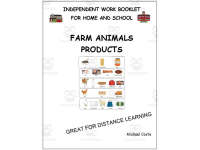
This literacy resource teaches students about products that come from farm animals. The 28-page PDF covers picture vocabulary, writing exercises, graphic organizers, comics, games, and more to strengthen numerous language arts skills. Learners will make connections to agriculture and their own lives while building literacy abilities. Use these versatile printable worksheets for independent practice, small groups, or whole class activities in third to fifth grade. The reading level and content is appropriate for ages 8-11. With a variety of activities spanning multiple ability levels, this resource offers differentiated instruction to suit an array of learners.
Related resources
More resources teachers may find useful
24 related resources were found using this product's title, contributor, categories and tags.


In the classroom
Teaching tips & learning objectives

Learning objectives
Name products that come from farm animals such as bees, pigs, cows, hens, geese, and sheep
Use topic vocabulary in original sentences, riddles, anagrams, and an illustrated story
Find and record a dictionary definition for chosen words and build sentences with them

Teaching tips
Introduce the picture vocabulary sheet and the numbered word list first, since every later page draws on that same list
Use the two comic-strip levels to differentiate: level 1 offers five large panels, level 2 twelve smaller panels plus an extra page
The internet-research and dictionary-study pages need a device or dictionary; the rest of the booklet is pencil-only

Skills covered
Topic vocabulary — students work with twenty words naming six animals and fourteen products, from beeswax candle and pigskin football to wool yarn, first matched to pictures and then reused across every activity.
Sentence and story writing — students write five sentences with chosen list words and a titled, illustrated story using as many of the words as possible.
Comparing and connecting — a Venn diagram compares two pictured products and a making-connections page links the vocabulary to students' own lives.
Good to know
Questions teachers ask about this resource
Which animals and products does the vocabulary list cover?
Six animals and their products: bee (beeswax candle, honey), pig (chops, bacon, pigskin football), cow (milk, leather belt, leather purse, steak), hen (egg, poultry meat), goose (feather pillow), and sheep (wool hat, wool yarn) — twenty words in all.
Do the comic-strip pages come in more than one version?
Yes — level 1 gives five large numbered panels with caption lines, and level 2 gives twelve smaller panels across two pages plus an extra continuation page, so the same task can be assigned at two lengths.

No reviews yet
Downloaded this resource? Tell other teachers how it went.
Curriculum
Standards, concepts & topics
Standards
 Standards
- L.3.6
- W.3.3
Core concepts
 Core concepts
Farm animals
Animal products
Vocabulary
Writing practice
 Topics
Explore more
Categories this resource belongs to
Explore related searches
More to explore
You may also like