Chasing Vermeer Novel Study – Mystery Unit
- Grades
- Grades 3–6, Elementary
- File type
- Preparation
- Print ready


- Subject
- ELA, Reading, Reading Comprehension, Literature, Vocabulary
- Topic
- novel study, vocabulary
- Resource types
- Teacher Tools, Lesson Plans, Worksheets & Printables, Novel Studies, Graphic Organizers, Assessments, Activities, Worksheets
- Preparation
- Print ready
- Standards
- CCSS.RL.5.1 CCSS.RL.5.3 +1
About this resource
What's inside this resource
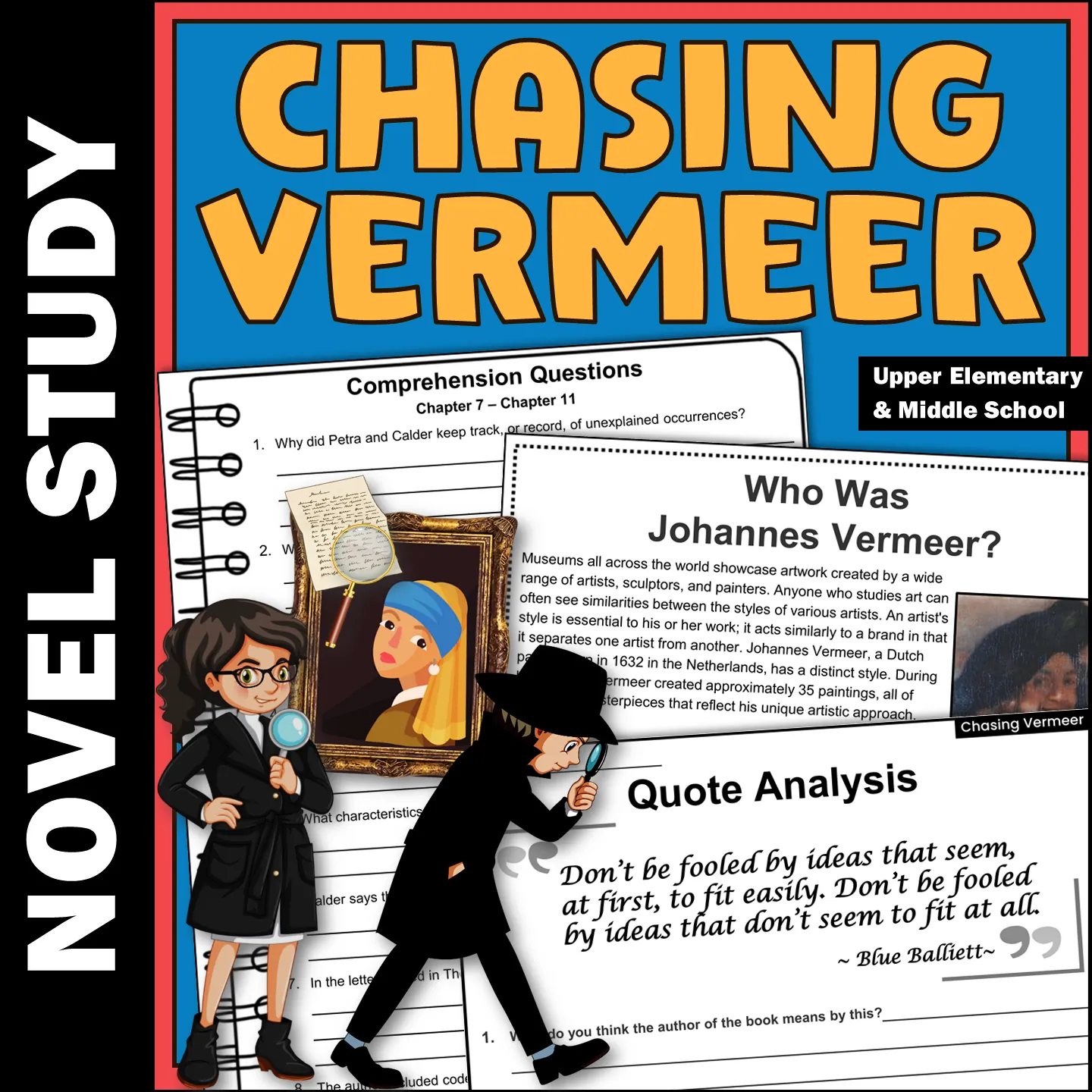
This novel study is a complete supplemental resource for Chasing Vermeer by Blue Balliet. The included activities focus on the genre of mystery, reader response questions, comprehension questions, vocabulary practice, character analysis, the elements of the plot, and more! Graphic organizers are included, along with a clue tracker chart and mystery genre posters.
⭐️This Resource Includes:⭐️
Who Was Johannes Vermeer?: A short biography about Vermeer that includes reader response questions.
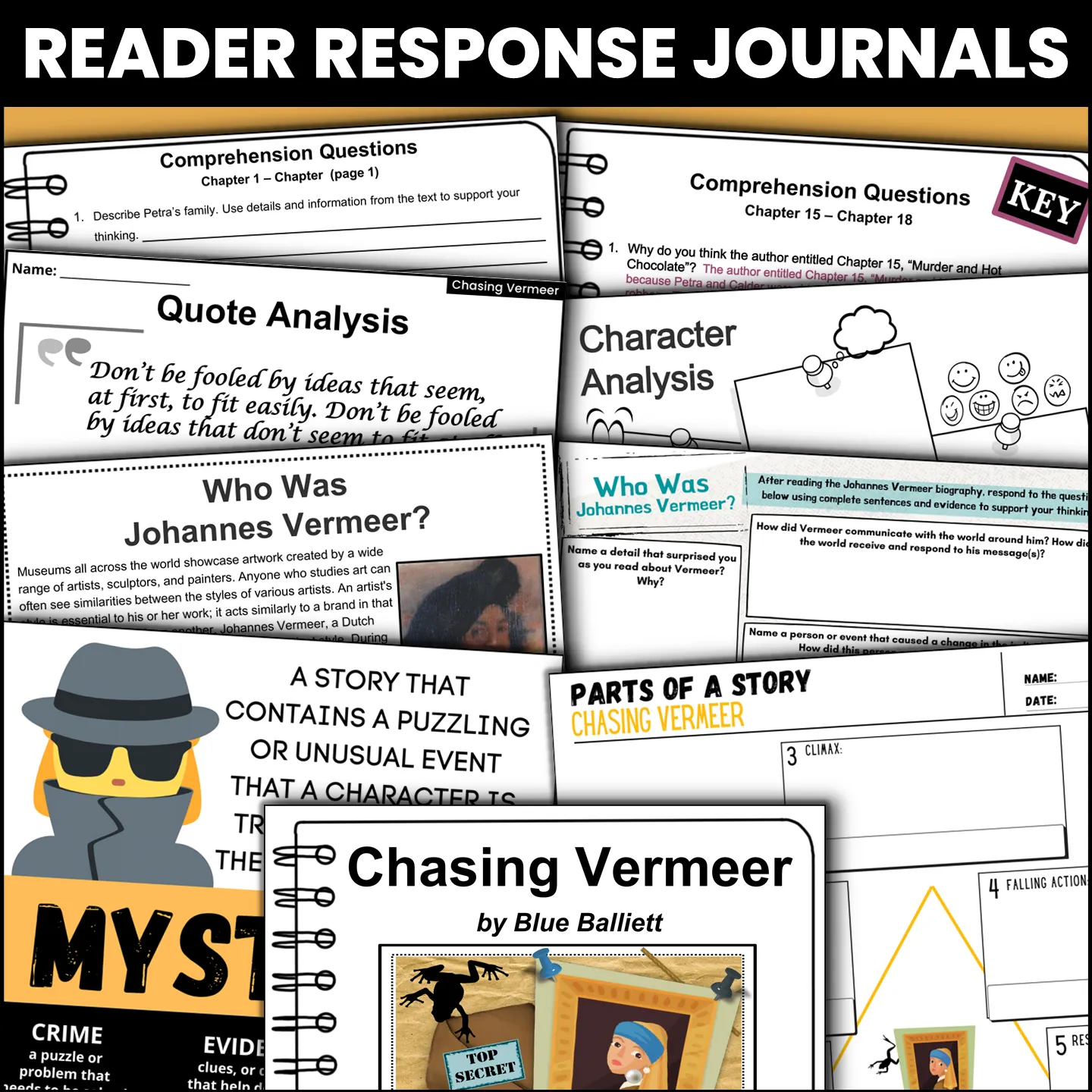
Reader Response Journal: This reader response journal is divided into 5 sections by chapters. Each section includes 1-2 pages of vocabulary practice and 1-2 pages of short answer comprehension questions, and a 4-page final assessment that is mixed with multiple choice questions and short answer questions. Not only can this literature response packet be used for whole group discussion/instruction, but it works great in literature circles, to hold group members accountable for reading and discussing the text. It can also be used as a homework assignment, small group instruction, book clubs, etc.
Mystery Genre Resources - This section includes 2 mystery genre posters (2 color options) and a Clue Tracker to record clues or evidence regarding suspicious people or events from the novel.
Quote Analysis with response questions: a pre-reading activity
Elements of Plot: Graphic Organizer
Character Analysis: This graphic organizer can be used for any character(s) at any point during the reading of the novel that you see fit.
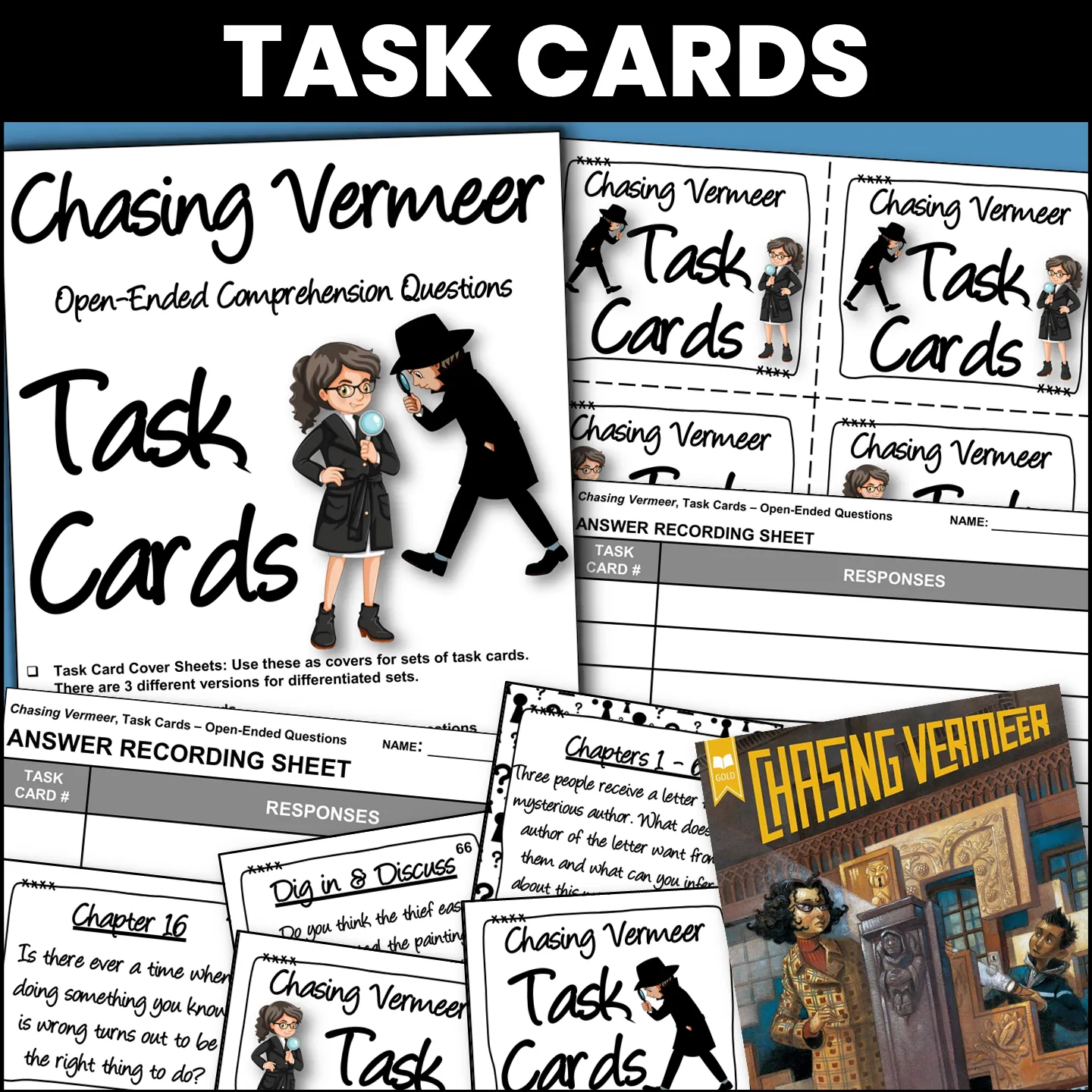
Task Cards: 2 sets of task cards are included. The first set is made up of open-ended questions & digging deeper prompts. The second set are the same questions used in the reader response journals but in a different format. This offers an alternative to the reader response journal activity.
Related resources
More resources teachers may find useful
24 related resources were found using this product's title, contributor, categories and tags.

In the classroom
Teaching tips & learning objectives

Learning objectives
Use context clues to determine the meaning of unfamiliar vocabulary words drawn from each chapter grouping
Cite specific details from the text to answer inferential comprehension questions about plot and character
Track clues, plot developments, and character traits using graphic organizers while reading a mystery novel

Teaching tips
Spread the activities across a week or more rather than one sitting — the resource's own first page notes the components are not meant to be completed in a single day.
Introduce the Vermeer biography and mystery-genre anchor chart before starting the novel, since both are framed as pre-reading background.
Print the task cards on cardstock and laminate them for reuse across multiple class periods, as suggested on the task-card introduction page.

Skills covered
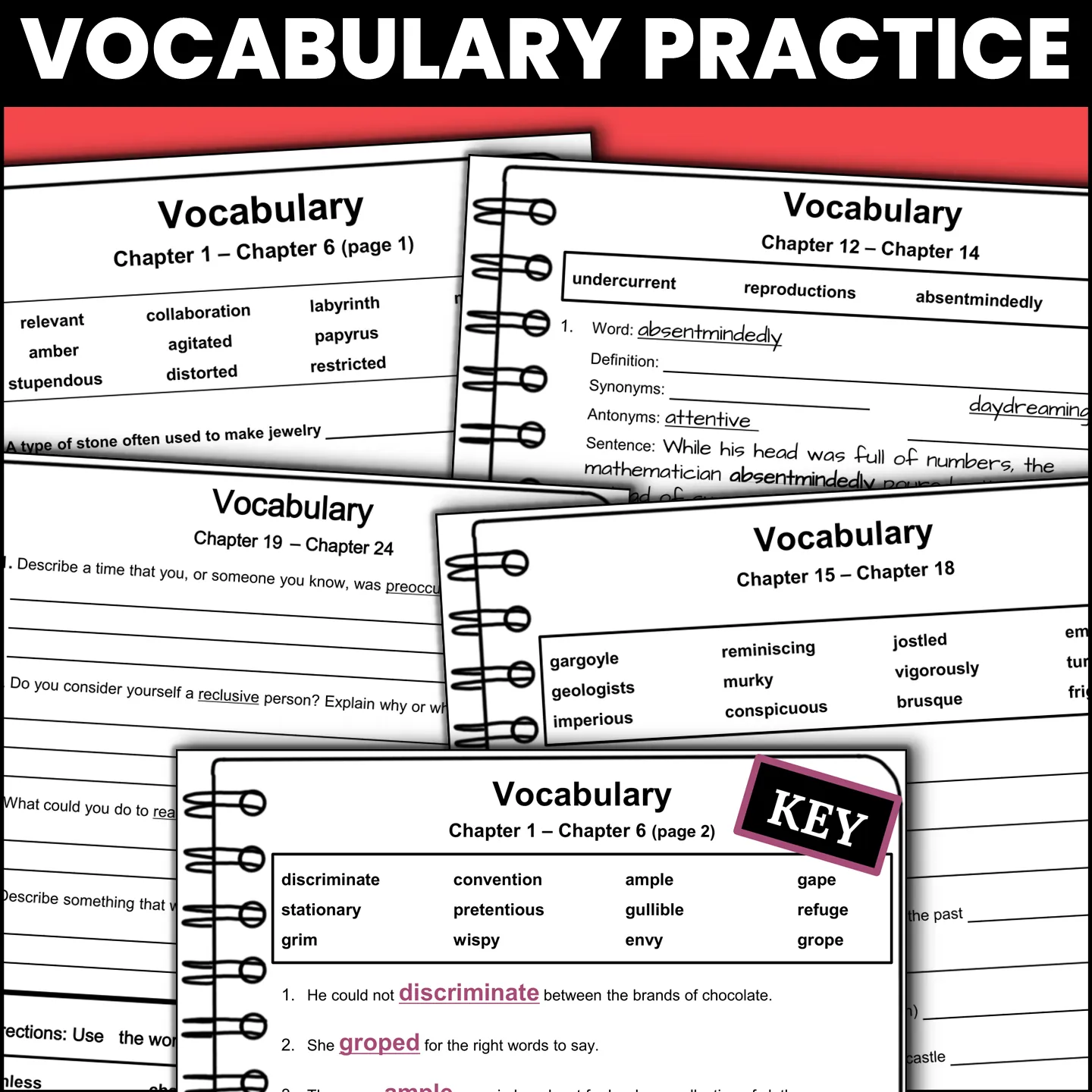
Vocabulary in context — students fill in blanks in chapter-specific sentences using a bank of ten to eleven words drawn from that chapter grouping, such as "discriminate," "pretentious," and "gullible."
Inferential comprehension — students answer open-response questions requiring them to draw conclusions from the text, such as describing what conclusions can be drawn about a character's personality.
Character and plot tracking — students use dedicated graphic organizers to record plot developments and analyze a character's traits as the mystery unfolds.
Good to know
Questions teachers ask about this resource
How is the novel broken up across the reader response journal?
Into five chapter groupings — Chapters 1-6, 7-11, 12-14, 15-18, and 19-24 — each with its own vocabulary page and comprehension questions, followed by a final assessment covering the whole book.
What's the difference between the reader response journal questions and the task cards?
The task cards restate many of the same reader-response questions in a separate card format, giving teachers the option of a written journal, a task-card rotation, or both, depending on the activity.

No reviews yet
Downloaded this resource? Tell other teachers how it went.
Curriculum
Standards, concepts & topics
Standards
 Standards
- CCSS.RL.5.1 — Quote accurately from a text when explaining what the text says explicitly and when drawing inferences from the text.
- CCSS.RL.5.3 — Compare and contrast two or more characters, settings, or events in a story or drama, drawing on specific details in the text (e.g., how characters interact).
- CCSS.L.5.4 — Determine or clarify the meaning of unknown and multiple-meaning words and phrases based on grade 5 reading and content, choosing flexibly from a range of strategies. a. Use context (e.g., cause/effect relationships and comparisons in text) as a clue to the meaning of a word or phrase. b. Use common, grade-appropriate Greek and Latin affixes and roots as clues to the meaning of a word (e.g., photograph, photosynthesis). c. Consult reference materials (e.g., dictionaries, glossaries, thesauruses), both print and digital, to find the pronunciation and determine or clarify the precise meaning of key words and phrases.
Core concepts
 Core concepts
novel study
mystery genre
reading comprehension
vocabulary in context
character analysis
 Topics
Explore more
Categories this resource belongs to
Explore related searches
More to explore
You may also like