Checking Account Project
- Grades
- Grades 6–10, Middle School, High School
- File type
- Multiple File Types


- Subject
- Life Studies, Finance, Math, Money
- Topic
- finances, financial literacy
- Resource types
- Activities, Projects
- Standards
- 6. NS.C.7
About this resource
What's inside this resource
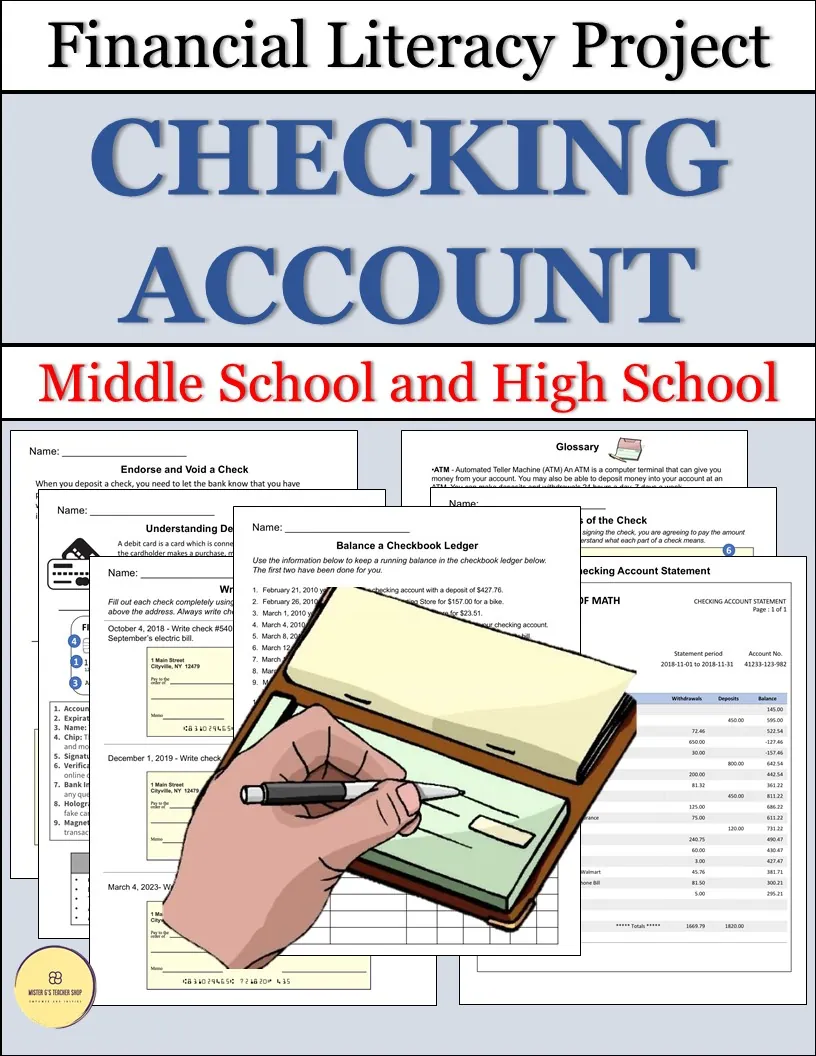
I'm thrilled to introduce you to the Checking Account Project, a tailored resource aimed at middle school and high school students. As educators, we know the value of imparting essential life skills, and that's exactly what this project is designed to do—equip students with a foundational understanding of checking accounts and their benefits.
Here's what you can expect:
Real-World Insight: We all know consumer math can be a bit perplexing, especially for students navigating it for the first time. This product is packed with activities that delve into the workings of checking accounts and how they can be responsibly integrated into daily life.
Flexible Learning: Whether your students prefer working from home or in the classroom, this project accommodates both settings. It's adaptable to different preferences, ensuring a seamless learning experience.
Empowering Students: By offering various activities, from understanding the anatomy of a check to simulating ATM usage, this project empowers students to become savvy consumers with a firm grasp of checking account essentials.
Tailored Adaptation: Education isn't one-size-fits-all, and neither is this project. Feel free to tweak and customize it to align with your students' needs and learning objectives.
Included in the package:
Glossary of Key Terms: A handy reference for students to familiarize themselves with checking account terminology.
Real-World Insight: An activity that encourages students to interview adults with checking accounts, promoting practical understanding.
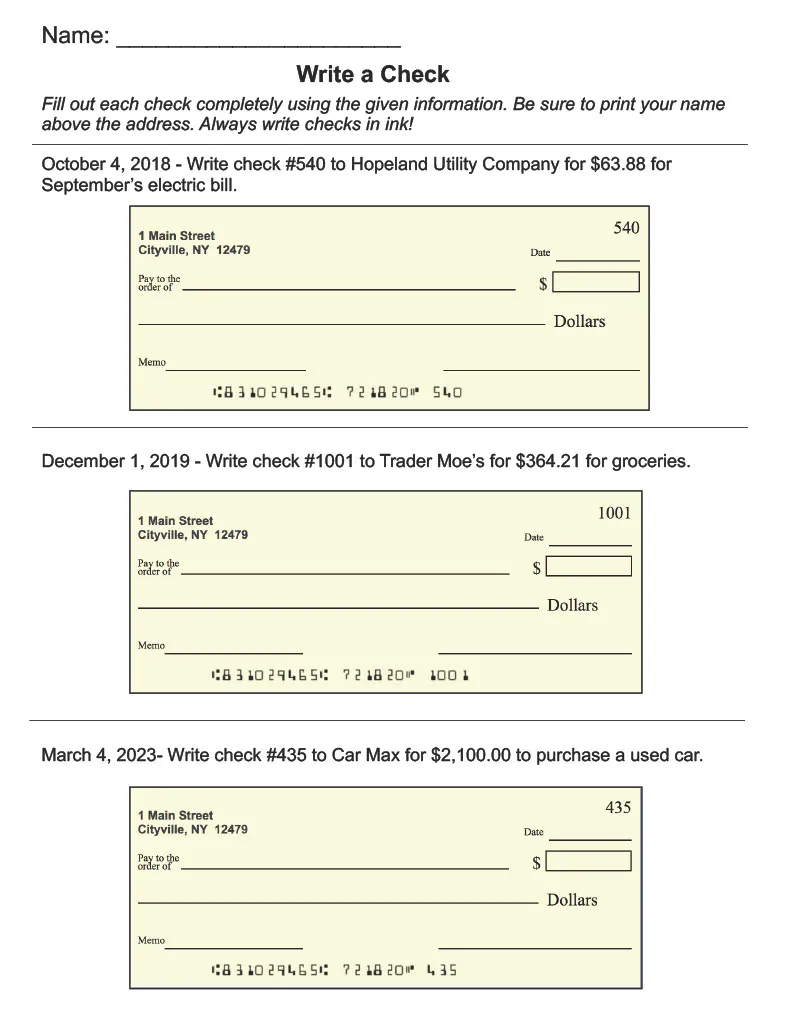
Hands-On Learning: Engaging exercises that teach students how to write checks, endorse and void them, and comprehend the role of debit cards.
Practical Application: Utilizing an online ATM simulator, students gain firsthand experience in using ATMs.
Financial Literacy: Learning how to balance a checkbook ledger—an invaluable skill for personal finance management.
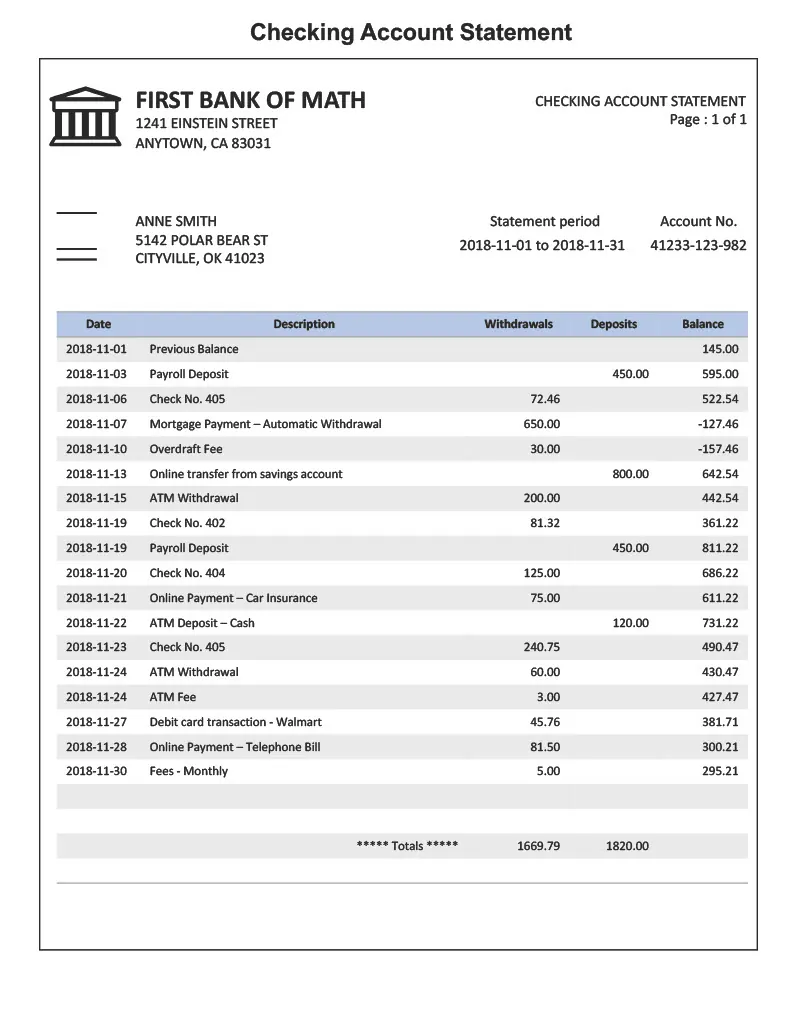
Comprehension Matters: Demystifying checking account statements, equipping students to read and understand them effectively.
The Checking Account Project serves as a stepping stone toward financial literacy, ensuring that your students are well-prepared for the responsibilities of the adult world. Feel free to make it your own, tailoring it to resonate with your students' learning journey.
Let's empower our students to navigate their financial future with confidence. The Checking Account Project lays down the groundwork for responsible and informed financial choices—a skill they'll carry with them for life.
Related resources
More resources teachers may find useful
24 related resources were found using this product's title, contributor, categories and tags.

In the classroom
Teaching tips & learning objectives

Learning objectives
Students will identify the parts of a check and correctly write checks for given real-world scenarios.
Students will endorse and void checks, and identify errors such as a missing signature or a written/numeral amount mismatch.
Students will maintain a running balance in a checkbook ledger given a sequence of deposits, withdrawals, and automatic payments.

Teaching tips
Assign as a full multi-day project or split into standalone activities, as the file explicitly supports either approach.
Use the 'Interview an Adult' activity as a homework kickoff so students connect the project to a real checking-account user before the classroom activities.
Use the answer key's sample completed checks and ledger entries as a model before students attempt their own, since several practice items include a deliberate error for students to find.

Skills covered
Check-writing mechanics — students write checks correctly for 3 given scenarios and identify errors in sample checks.
Checkbook-ledger balancing — students track 11 transactions and compute a running balance.
Bank-statement interpretation — students answer 10 questions using an 18-transaction sample statement, including identifying overdraft fees and an unexplained missing check.
Good to know
Questions teachers ask about this resource
Why does the sample checking account statement not show a record for Check No. 403?
The sample response reasons that check No. 403 was either voided or has not yet cleared the bank, which is why the statement skips from No. 402 to No. 404.

No reviews yet
Downloaded this resource? Tell other teachers how it went.
Curriculum
Standards, concepts & topics
Standards
 Standards
- 6. NS.C.7 — Understand ordering and absolute value of rational numbers. a. Interpret statements of inequality as statements about the relative position of two numbers on a number line diagram. For example, interpret –3 > –7 as a statement that –3 is located to the right of –7 on a number line oriented from left to right. b. Write, interpret, and explain statements of order for rational numbers in realworld contexts. For example, write –3 oC > –7 oC to express the fact that –3 oC is warmer than –7 oC. c. Understand the absolute value of a rational number as its distance from 0 on the number line; interpret absolute value as magnitude for a positive or negative quantity in a real-world situation. For example, for an account balance of –30 dollars, write |–30| = 30 to describe the size of the debt in dollars. d. Distinguish comparisons of absolute value from statements about order. For example, recognize that an account balance less than –30 dollars represents a debt greater than 30 dollars.
Core concepts
 Core concepts
checking accounts
checkbook ledger
bank statements
financial literacy
 Topics
More to explore
You may also like