


Math 8th Grade: Compare Linear Functions Slides

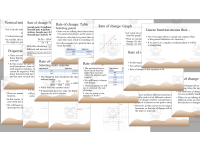


About This Product
This editable PowerPoint covers requirements of the common core math course 8.F.A.2.
Contents:
Meaning of linear function: For every input there is exactly one output and the graph is a straight line
Properties of linear functions: Two properties define linear function; rate of change and vertical intercept
Rate of change: recalling different terms that may be familiar for students
Vertical intercept: Where the graph meets the vertical axis, also know as the y-intercept
Different ways of representing a function: In this course, we will use equations, graphs, tables and verbal descriptions.
Rate of change: Equation Finding rate of change from an equation
Rate of change: Graph Finding rate of change from a graph using change of y (delta y) and change of x (delta x)
Rate of change: Table The example is about flight distance in miles and flight time. This example is a bit more challenging than the other ones.
Rate of change: Verbal description There is a real-life example about gasoline prices.
Vertical intercept: Equation Finding vertical intercept from an equation
Vertical intercept: Graph A simple example about finding y-intercept from a graph in xy-coordinate plane.
Vertical intercept: Table Two examples, of which the first one is easy and the second one requires some calculating.
Vertical intercept: Verbal description In this example, we use the same gasoline price example than earlier, and find out, that there is a $5 service cost in this station (vertical intercept).
Summary: Rate of change To get the rate of change, we usually need two samples. Then we calculate difference of outputs and divide it by difference of inputs.
Summary: Vertical intercept Summarizing how we find vertical intercepts in different situations.
There are 26 slides in this presentation.
For more 8th grade math PowerPoints and worksheets, see my Teach Simple page at:
Resource Tags
0 Reviews
Check out these other great products


