Crash Course Psychology Worksheet | 1 - Introduction to Psychology
- Grades
- Grades 9–12
- File type
- Microsoft Word
- Answer key
- Included


- Subject
- Science
- Topic
- Psychology introduction, Crash Course Psychology
- Resource types
- Worksheets, Activities
- Answer key
- Included
Product description
From the author
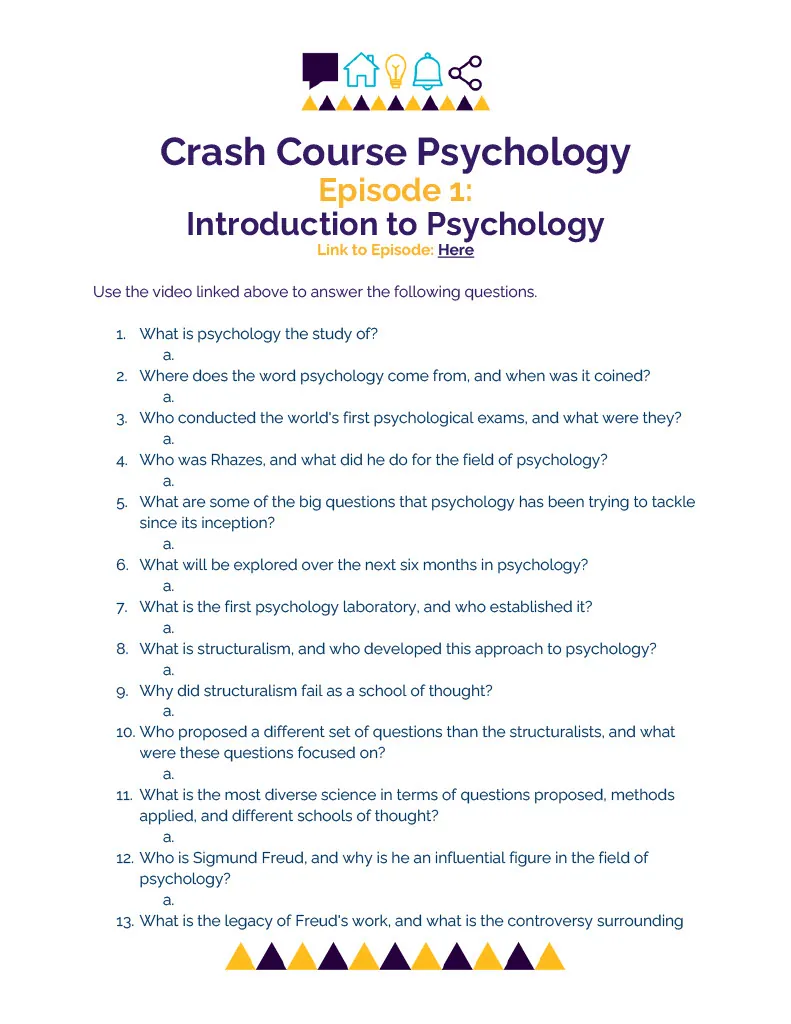
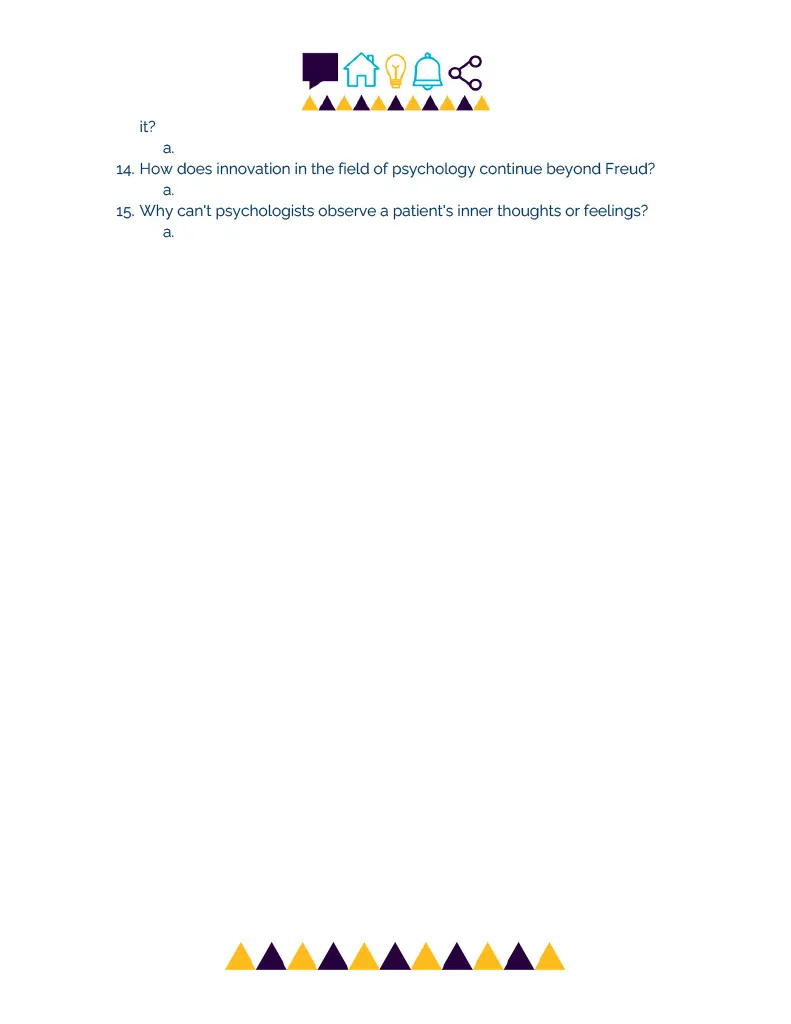
This two-page worksheet contains 15 questions for Crash Course Psychology Episode 1, Introduction to Psychology. A clickable episode link appears at the top. A separate editable Word document provides full-sentence model answers. The episode is about ten minutes long; allow additional time for pausing, replay and discussion.
Related resources
More resources teachers may find useful
24 related resources were found using this product's title, contributor, categories and tags.


In the classroom
Teaching tips & learning objectives

Learning objectives
Students define psychology and trace its historical origins from ancient practices through early psychological science.
Students explain the founding of the first psychology laboratory and the structuralist school of thought, including why it was eventually abandoned.
Students describe Sigmund Freud's influence on psychology and the controversy surrounding his work.

Teaching tips
Play the linked Crash Course episode once through, then have students complete the worksheet during a second viewing, since several questions (such as the Rhazes and structuralism items) require specific historical details.
Use the full-sentence answer key as a model for the depth of response expected, since it writes out complete explanations rather than short phrases.
Assign this as independent work while watching the video at home or in a media center, allowing pauses and replay because some questions reorder the episode’s topics.

Skills covered
Video-based note-taking — students extract specific facts and explanations from a psychology video using pauses and replay to locate the relevant discussion.
Historical sequencing — students trace psychology's development from ancient exams through Wundt, structuralism, James and Freud.
Conceptual explanation — students explain why structuralism failed and why inner thoughts cannot be directly observed, not just recall a name or date.
Good to know
Questions teachers ask about this resource
Do the questions follow the exact video order?
They cover the episode’s topics but some are reordered. Let students pause or replay sections rather than expecting each answer immediately after the previous one.

No reviews yet
Downloaded this resource? Tell other teachers how it went.
Resource details
Concepts & topics
Core concepts
 Core concepts
History of psychology
Structuralism
Wilhelm Wundt
Sigmund Freud
 Topics
Explore more
Categories this resource belongs to
Explore related searches
More to explore
You may also like