Credit Score Board Game for Financial Literacy

- Grades
- Grades 8–12
- Pages
- 4
- File type
- Preparation
- Print ready


- Subject
- Math, Finance
- Topic
- Credit score, Home economics
- Resource types
- Games
- Preparation
- Print ready
Product description
From the author
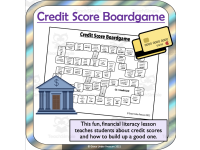
CREDIT SCORE BOARD GAME: A fun financial literacy lesson and finance game!
This engaging financial literacy activity will help teach your high school students all about credit scores- one of the most important numbers you will have as an adult!
How to Use:
• Show your class an online video containing the basic facts about credit scores. You can easily search for one by looking up "What is a FICO score?"
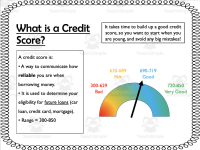
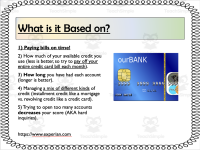
• Present the two PDF information pages to your students to introduce credit scores, their range, and the five main activities that effect them. You can print a double-sided handout for your students or let them take notes themselves.
• Have a board and six-sided die for each group of two to four players.
• Each player also needs a small item to be their counter on the game board.
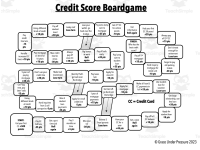
• The players in each group will roll the die and play the board game like any other. They start with a credit score and each square they land on has a financial scenario and a simulated point change. They can use scrap paper or a mini whiteboard to keep a running tally of their score throughout the game.
• Once all players have gotten to the final square, the winner will be the person with the highest credit score.
Many teachers have reported their students want to play this game again and again and get pretty competitive when playing. It's a great way for your students to be practicing tons of quick addition and subtraction (with numbers in the hundreds), while barely noticing they are doing math!
What's Included:
A total of 4 pages in PDF
Title Page
2 Pages of information
Board Game
Check out other fun financial literacy products from my store:
Compound Interest: Hook Students on Financial Literacy
Related resources
More resources teachers may find useful
24 related resources were found using this product's title, contributor, categories and tags.



In the classroom
Teaching tips & learning objectives

Learning objectives
Students will explain what a credit score is and the 300-850 range used to communicate creditworthiness.
Students will identify the five factors that influence a credit score: payment history, credit utilization, account age, credit mix, and new-credit inquiries.
Students will simulate how everyday financial decisions raise or lower a credit score by playing through the board game.

Teaching tips
Preview a suitable introductory video before play, then present the two information pages in the PDF or print them as a handout.
Play in groups of 2-4 with one board, a six-sided die, and a counter per student, as specified in the instructions.
After playing, have students explain why specific squares (e.g., 'Always pay off 2nd CC,' 'Hard inquiries from 3 cell companies') raised or lowered their score, tying gameplay back to the infographic's five factors.

Skills covered
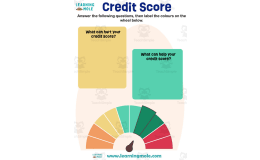
Credit-score literacy — students learn the 300-850 scoring range and what 'fair,' 'good,' and 'very good' bands mean.
Cause-and-effect financial reasoning — students track how specific behaviors (late payments, hard inquiries, on-time mortgage payments) move a simulated score up or down.
Real-world financial vocabulary — students encounter terms like hard inquiry, revolving credit, and credit utilization in game-square text.
Good to know
Questions teachers ask about this resource
Are the point changes predictions of real credit-score changes?
They are values used in the classroom simulation. Discuss the underlying behaviors rather than treating a game result as an individual score forecast.

No reviews yet
Downloaded this resource? Tell other teachers how it went.
Resource details
Concepts & topics
Core concepts
 Core concepts
Credit score
Credit utilization
Loans and mortgages
Financial literacy
 Topics
Explore related searches
More to explore
You may also like