24 related resources

Buy A Car Project

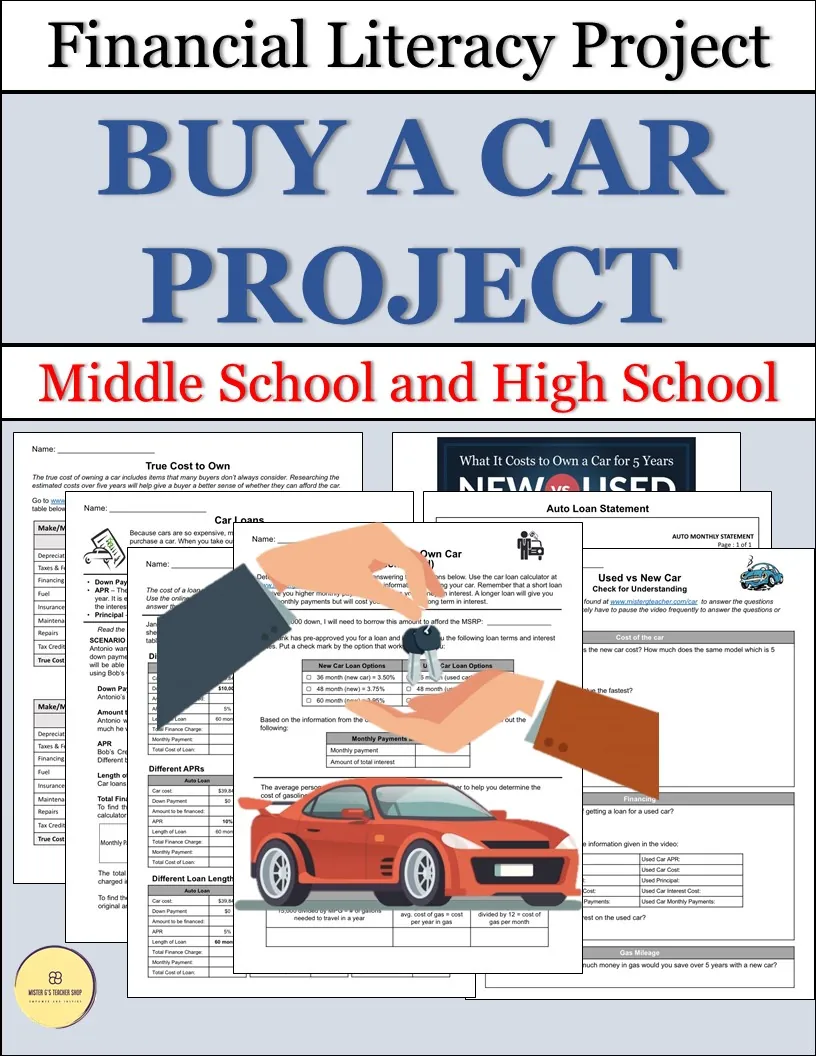
Nine sequenced activities walk students from a car-buying glossary and adult interview through loan math, insurance, and a final purchase decision, with a full answer key.
Grades
Grades 8–12, High School, Middle School
File type
Multiple File Types
Editable
Yes

Updated Sep 16, 2023

Subject
Life Studies, Finance, Home Economics
Topic
project, financial literacy
Resource types
Activities, Projects
Editable
Yes
Standards
7.RP.A.3

About this resource

What's inside this resource

Buy A Car Project: A Practical Guide to Car Ownership for Students

For educators and homeschooling parents, it's pivotal to prepare students not just academically, but also for real-life scenarios. One such significant life skill is understanding the intricacies of purchasing and owning a car. This resource— the Buy A Car Project— serves as a practical guide for students to delve into the financial realities and responsibilities tied to car ownership.

Objective: The aim is to provide students with a foundational grasp of the car purchasing process. By unpacking the various costs and considerations, students can cultivate an informed perspective. This way, when the time comes for them to make such decisions, they'll be equipped to be mindful and responsible consumers.

A Peek Inside the Resource: At its core, this project demystifies the sometimes complex world of consumer math— especially for middle and high school students who might be new to such topics.

  • Glossary: Begins with basic terms linked to car purchases. This ensures students aren't lost in jargon.

  • Real-world Engagement: An activity where students interview an adult about their car-buying experiences. It offers a touch of reality, painting a clearer picture.

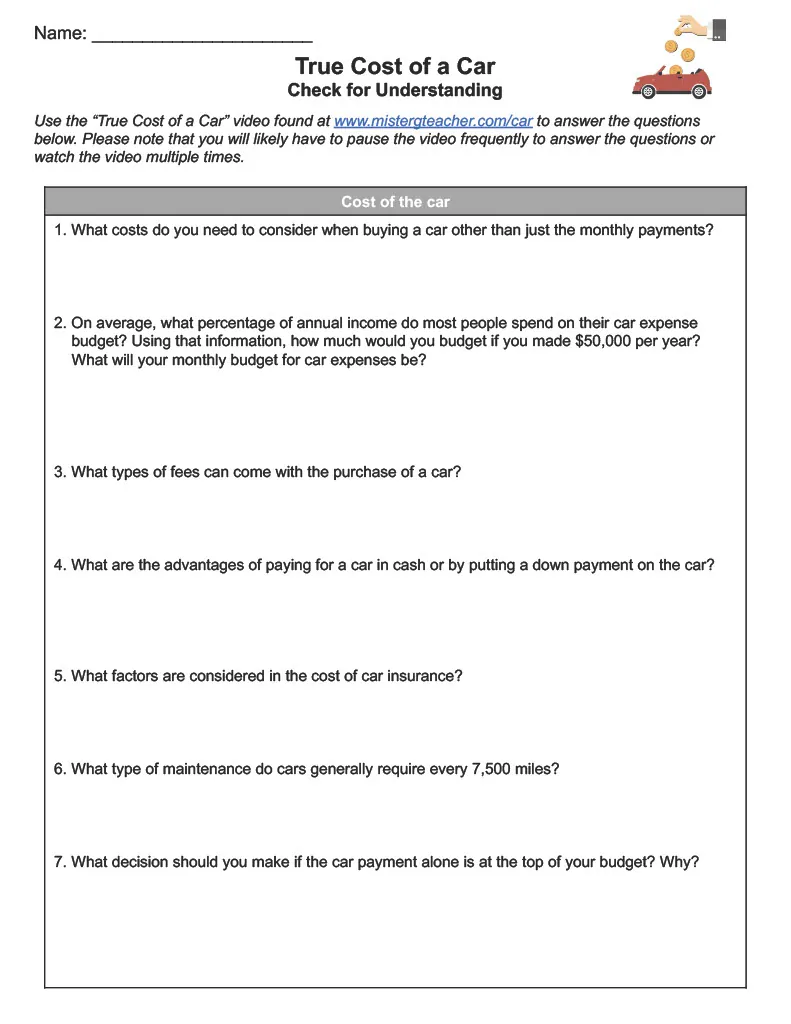
  • Researching and Costs: Activities dedicated to understanding how to find a car online and unraveling the costs associated with car ownership in the first five years.

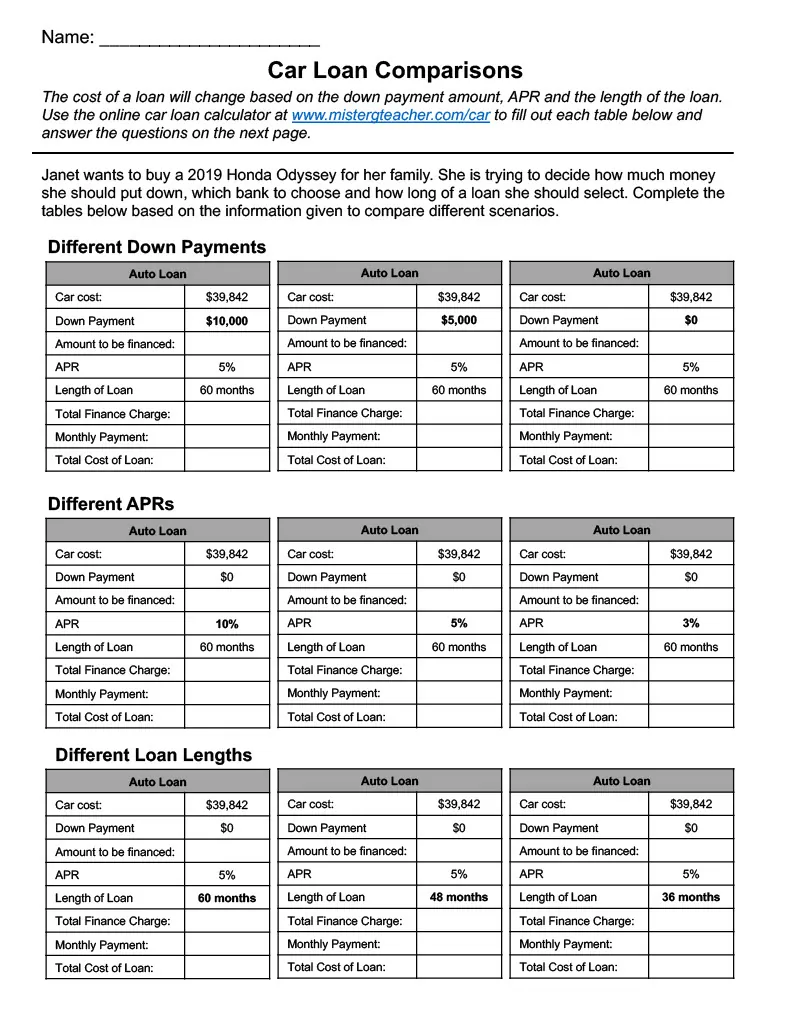
  • Loan Dynamics: Walks students through the mechanics of car loans, helping them interpret auto loan statements and grasp how these loans function.

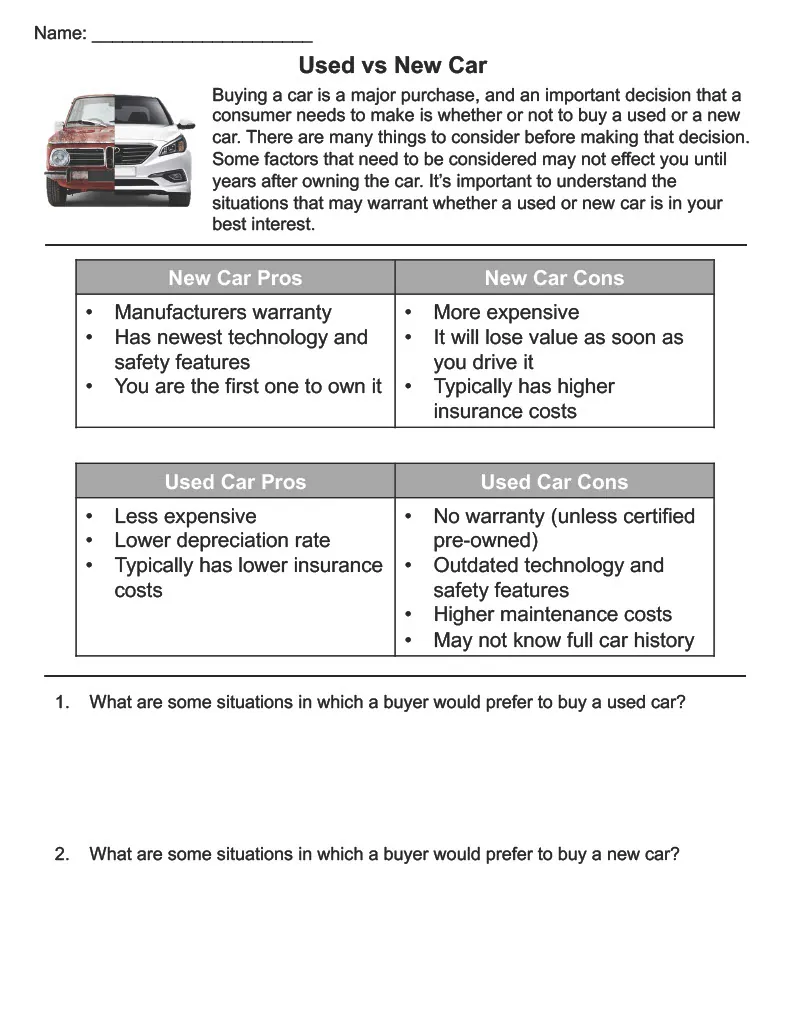
  • New vs. Used: A comparison to help students weigh the pros and cons of opting for a brand new car versus a pre-owned one.

  • Can You Afford It?: A concluding activity where students get to 'purchase' a car and ascertain if they can manage the financial commitment.

Additionally, a self-checking Easel Activity is integrated, ensuring students can gauge their understanding.

Flexibility is Key: Understanding that every classroom or homeschool environment is unique, the resource is editable. You can tweak it to align perfectly with your teaching style, objectives, and the specific needs of your students.

In essence, the Buy A Car Project isn't just a math activity; it's a stepping stone to financial literacy and responsibility. Through hands-on tasks and real-world applications, students will gain insights that serve them well beyond the classroom walls.


In the classroom

Teaching tips & learning objectives

Learning objectives

  • Define car-buying vocabulary such as APR, depreciation, down payment, MSRP, and principal.

  • Research and compare cars using specifications such as MSRP, warranty, fuel economy, and estimated maintenance cost.

  • Calculate the true five-year cost of owning a car, including financing, insurance, gas, and maintenance.

  • Interpret how a car loan's down payment, financing amount, and APR affect the total cost and monthly payment.

  • Apply a fixed budget to select and justify whether a chosen car is affordable.

Teaching tips

  • Have students complete the Interview an Adult activity before the Research a Car activity, since the interview often surfaces real costs students then verify in their own research.

  • Confirm access to the mistergteacher.com/car comparison tool before assigning Research a Car or True Cost to Own, since both activities rely on it for data.

  • Use the included scoring rubric on the Buying a Car Project summary page to grade each activity individually rather than the project as a single score.

Skills covered

  • Financial vocabulary — students define and apply terms like APR, depreciation, and principal throughout the project.

  • Consumer research — the Research a Car and Used vs. New Car activities have students compare vehicles by cost, features, and reviews.

  • Loan and interest math — the Car Loans and Auto Loan Statement activities have students work with financing amounts, APRs, and monthly payments.

  • Budgeting — the Purchase My Own Car activity has students total recurring costs and compare them against a fixed monthly budget.

  • Real-world interviewing — the Interview an Adult activity has students gather and record firsthand car-buying experience.

Good to know

Questions teachers ask about this resource

What budget limits are students given for the final purchase activity?

Students are given a maximum down payment of $1,500, a maximum financing amount of $20,000, and a maximum monthly payment of $425 to work within when choosing and affording their car.

How does the packet address the Research a Car comparison questions, since students choose their own third car?

The packet's solutions section notes that responses will vary based on each student's own car selection, while still modeling the type of reasoning expected, such as explaining why a higher seating capacity or lower maintenance expense matters.

No reviews yet

Downloaded this resource? Tell other teachers how it went.

Curriculum

Standards, concepts & topics

Standards

  • 7.RP.A.3 — Use proportional relationships to solve multistep ratio and percent problems. Examples: simple interest, tax, markups and markdowns, gratuities and commissions, fees, percent increase and decrease, percent error.

Core concepts

  • car loan and APR math

  • true cost of ownership

  • consumer comparison research

  • budgeting for a major purchase

Explore more

Categories this resource belongs to

Explore related searches

More to explore

You may also like