CRQ: "Decolonization and Nationalism+ 3 slide shows, Regents Global 10

- Grades
- Grade 10
- Pages
- 102
- File type
- Multiple File Types
- Answer key
- Included


- Subject
- Social Studies, History, History: World
- Topic
- Decolonization, Nationalism
- Resource types
- Assessments, Presentations
- Answer key
- Included
Product description
From the author
CRQ: "On Decolonization and Nationalism" + 3 slide shows, Regents Global 10
This product is a constructed-response question (“CRQ”) in a Regents-style format for the New York State examination in Global History and Geography.
The CRQ calls upon the student to examine historical sources including primary-source letters and a historical map by providing historical or geographic context, identifying the point of view, intended audience, or purpose of a document and then using the two documents in either compare-contrast, cause-effect analysis, or turning point identification. I advocate a strategy of assigning one CRQ in each unit of study in grades nine and ten without access to notes. I used this as one of the tests at the end of a unit of study. I would tell students about what kinds of documents would appear and what historical context they should be able to recall in advance. It is a challenging task for them.
The first challenge for novices is to understand what it means to provide context. Faced with the question “What is the historical context of this document?”, beginners will retell what the document says. The reason for this mistake is that, since they were little kids, teachers have asked them to relate what a text means to prove they understood it. [Read more at the Innovation blog]
Product includes:
1. Student version
2. Teacher version with suggested answers
3. Three PowerPoint slideshows
Documents:
Sir Henry MacMahon, Letter to Ali ibn Hussein, 1915
Balfour letter, 1917
Map, British India, 1947
Address by Anwar Sadat, 1957
About Innovation Passcodes
Passcodes let your students access selected lessons in my own virtual classroom at InnovationAssessments.com. No registration is required. Use the codes at InnovationAssessments.com/TestDrive.
Related resources
More resources teachers may find useful
24 related resources were found using this product's title, contributor, categories and tags.
In the classroom
Teaching tips & learning objectives

Learning objectives
Explain the historical circumstances behind a document, using the document itself as the starting point
Identify the intended audience of a source and judge how far that audience shapes its reliability
Compare two documents on decolonization and account for a similarity or a difference between them

Teaching tips
Choose a presentation section that matches the document set.
Use the included classroom rubric to discuss the quality of evidence and reasoning.
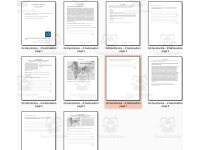
The ZIP contains a 10-page student PDF, a 17-page teacher PDF and editable PowerPoint decks of 26, 22 and 27 slides. Preview the external TestDrive links before class.

Skills covered
Historical contextualisation - Set 1 asks students to explain, using the McMahon letter and relevant historical knowledge, the circumstances that led Britain to make deals with Middle Eastern leaders.
Geographic contextualisation - Set 2 asks for the geographic context of the developments shown on the partition map, and why they happened where they did.
Turning point and comparison analysis - Set 1 closes on identifying and explaining a turning point; Set 2 closes on a similarity or difference between two views of decolonization.

No reviews yet
Downloaded this resource? Tell other teachers how it went.
Resource details
Concepts & topics
Core concepts
 Core concepts
Decolonization
Nationalism
Document-based questions
Source reliability
Nation building
 Topics
Explore more
Categories this resource belongs to
Explore related searches
More to explore
You may also like