Grade 6 Entrepreneur Fair Ideas



About This Product
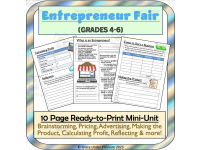
This Entrepreneur Fair Mini Unit is completely ready-to-go for your intermediate or middle school classroom. It walks students through the entire process of starting a small business step-by-step. Use it over several weeks, culminating with an Entrepreneur Fair in your classroom where students can buy each other's products and services. This will be the kind of hands-on, applicable learning students don't soon forget!
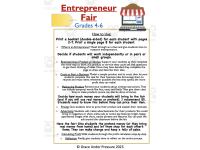
How to Use:
Print a booklet (double-sided) for each student with pages 2-7. Print a single page 8 for each student.
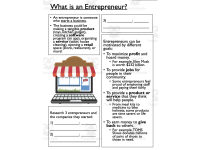
o What is an Entrepreneur?: Read through as a class and give students time to research entrepreneurs.
Decide if students will work independently or in pairs or small groups.
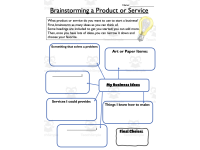
o Brainstorming a Product or Service: Support your students as they complete the mind-map to think of a product or service they could sell. Ask questions to get them thinking of ideas. Once they have decided, they complete the page to draw and describe their idea.
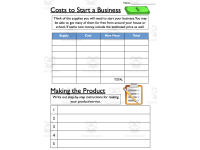
o Costs to Start a Business: Model a sample product and its costs, then let your students complete this task for their business idea. Encourage them to recycle and reuse items whenever possible: the less they spend, the more profit they can make!
o Making the Product: Remind your students about writing instructions. They can include temporal words like first, next, and finally. Then give them class time to make products (some can also be done at home).
Decide how much money your students will bring to the fair (and if you will use real money or pretend). I recommend $5. Students need to know this before they can price their item.
o Pricing: Give students time to price their product and explain their rationale.
o Advertising: Students will create advertisements for their products. You could bring in magazines or show online ads to notice key features: bright, happy, aspirational images with short, catchy phrases and features. You can post the ads around the classroom before the fair.
Give students the pretend money (or they bring real money from home) and let them shop for each other’s items. They can make change and keep a tally of sales.
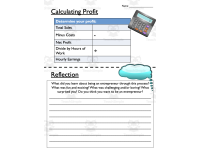
o Calculating Profit: Walk students through the profit calculation step-by-step.
o Reflection: Finally, give students time to reflect on the entire process.
Resource Tags
0 Reviews
Check out these other great products